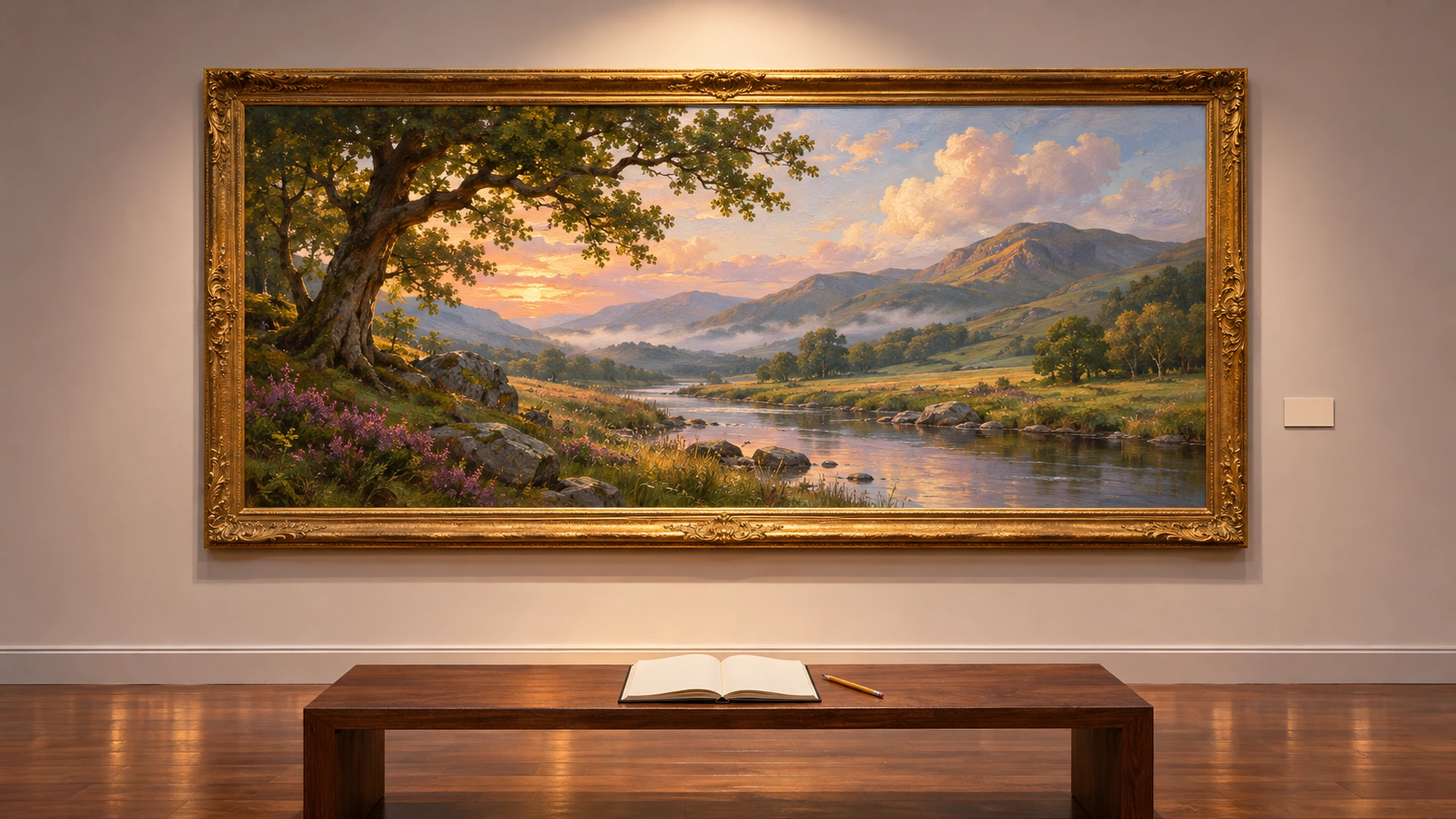
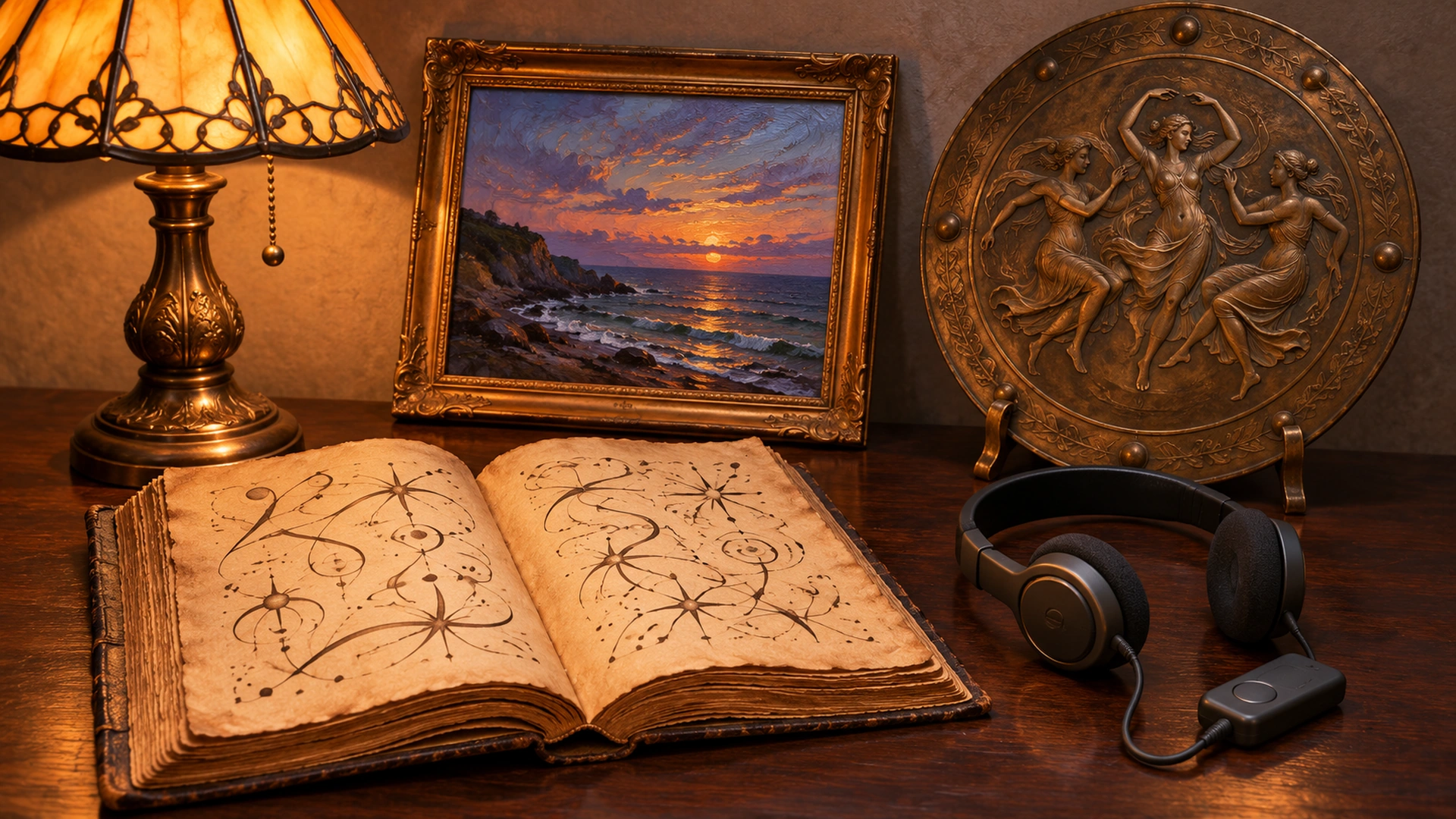
Look first, interpret later
Most people jump straight from 'I like it' to 'it means...'. Art historians do something slower called formal analysis: they first describe what is actually there, the shapes, colours, light and marks, and only then ask what it means. The slower path gives you better words and better interpretations.
The steps below work for any painting, from a Persian miniature to a Rothko. You don't need to use all of them; even three or four will turn a vague reaction into a precise description.
Seeing
Write three words for your immediate reaction before analysing: calm, crowded, eerie.
What is depicted: a portrait, a landscape, a still life, a scene, or nothing recognisable.
How things are arranged: centred or off-centre, symmetrical, diagonal, crowded or empty, where the focal point is.
Deep perspective, shallow stage-like space, or flat decorative surface.
How it is made
Palette, temperature and contrast: warm earth tones, cool blues, complementary clashes, muted or saturated.
Where light comes from, how hard it is, and what it reveals or hides.
Sharp outlines or soft edges, geometric or organic shapes, rhythm of repeated forms.
Medium and brushwork: thick impasto, smooth glazes, flat gouache, visible strokes.
Meaning
The feeling the choices above create, and how.
Who made it, when, where and why; the movement or tradition it belongs to; what symbols might mean.
Words to describe How to Describe a Painting
Precise words for the qualities above. Combine a few of them instead of naming the style or artist alone.
- off-centre focal point
- shallow stage-like space
- warm earthy palette
- cool complementary accents
- single light source from the left
- soft sfumato edges
- thick visible impasto
- rhythmic repeated shapes
- quiet contemplative mood
- flat decorative surface
'A small woman in a blue dress stands off-centre by a tall window. Soft light from the left falls on her face and on a white wall, leaving the rest of the room in warm shadow. The space is shallow, like a stage, and the smooth, almost invisible brushwork makes the moment feel still and private.'
How to describe How to Describe a Painting in words
- Start with what you see, end with what you think it means.
- Tie every interpretation to a visible detail: 'it feels lonely because the figure is small and far from the light'.
- Use precise words from the glossary instead of 'nice', 'beautiful' or 'interesting'.
Where we usually get it wrong
The most common mistake is jumping to meaning or biography before describing the work. The second is listing details without saying what they do. A good description always connects a visual choice to its effect.
Choose any painting from a museum's online collection. Spend five minutes on steps 1 to 8 without reading anything about it. Then read the museum text and see what your looking found that the text missed.