A style is a set of decisions
Most art movements were still images, but each one carries rules that can be translated into movement. The method is simple: extract the decisions behind the style, such as its shapes, color logic, rhythm and attitude, then ask what those decisions mean for timing, easing, transitions, camera and texture.
This avoids the shallow approach of putting a 'Van Gogh filter' on a video. Instead you build a motion language that behaves like the movement thought, which is more original and more convincing.
The method
Which forms define the style? They become the elements that move or transform.
Its palette and contrast become your palette, and color changes become events.
Calm or nervous, ordered or chaotic: this becomes timing and easing.
Flat, deep or layered: this decides camera moves and parallax.
Serious, playful, rebellious: this decides the kind of transitions and cuts.
Its materials and printing become your texture layer.
Movements translated
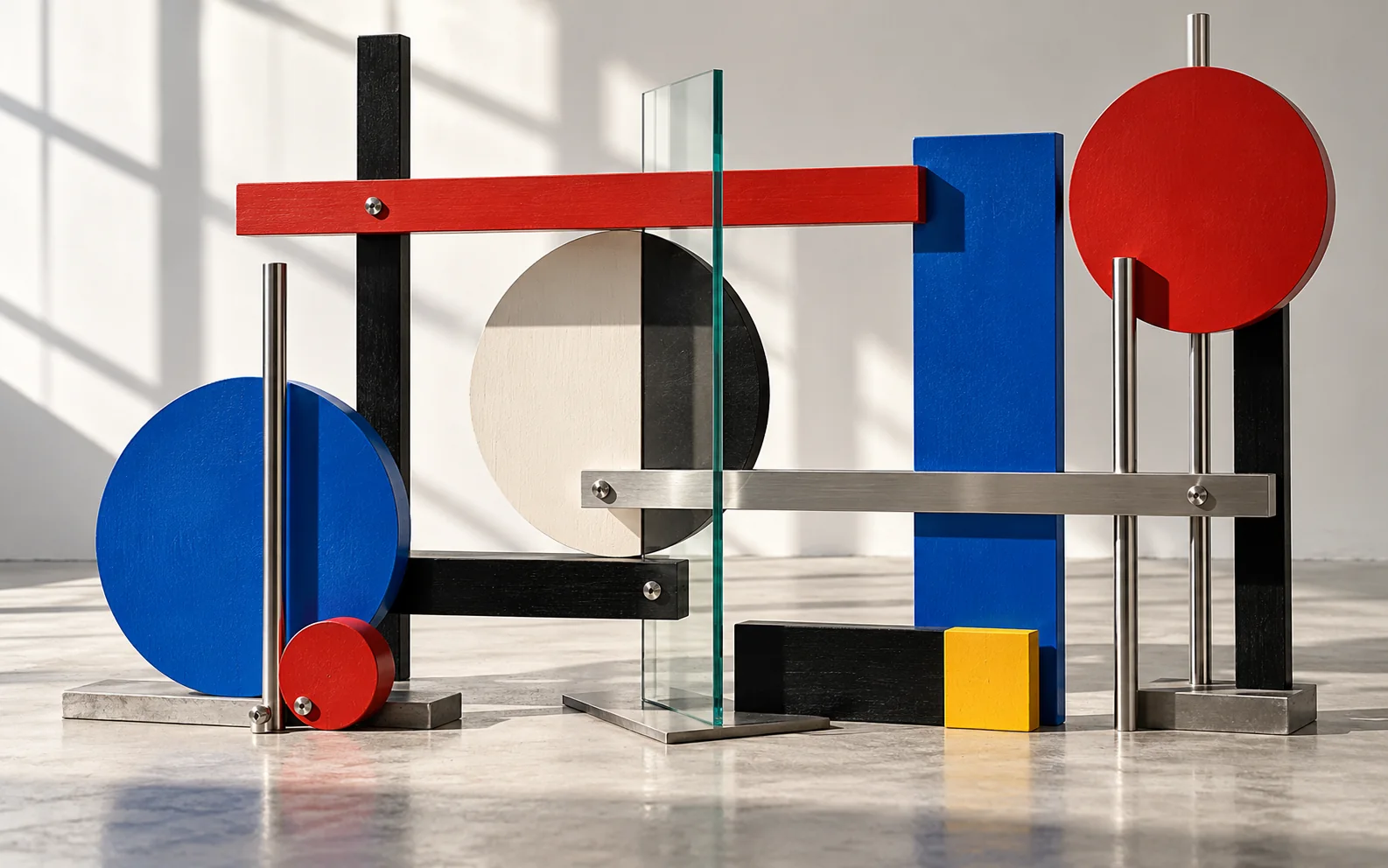
Primary shapes on a grid, snappy ease-out timing, elements sliding along horizontals and verticals, functional type that builds the layout.
Strong diagonals, red and black, type slamming in, photomontage cut-ins, wipes along a diagonal axis.
Weightless shapes drifting slowly on white, gentle rotation, long holds, almost no cuts.
Grid lines that split and slide orthogonally, panels of color opening like doors, never a diagonal.
Flat layers in parallax, looping rain lines and waves, woodblock grain, slow pans across a long scroll.
Shimmering brushstroke dabs, light that changes over a loop, soft dissolves instead of cuts.
Lines that grow like stems, organic morphs, ornament framing the action, elegant slow ease-in-out.
Slow, calm metamorphosis, objects changing one rule at a time, uncanny stillness between moves.
Jittery stop-motion collage, chance cuts, mismatched scales, letters thrown into the frame.
Hard cuts on the beat, halftone and misregistration flicker, repeated grids, saturated flat color.
Looping stripes and moiré that pulse, black and white vibration, perfectly seamless cycles.
Jagged, boiling frame-by-frame lines, tilted camera, unnatural color shifts with emotion.
Words to describe from art styles to motion
Precise words for the qualities above. Combine a few of them instead of naming the style or artist alone.
- Bauhaus motion grid
- constructivist diagonal wipe
- suprematist floating shapes
- De Stijl sliding panels
- ukiyo-e parallax layers
- impressionist shimmering strokes
- art nouveau growing lines
- surreal slow metamorphosis
- dada jitter collage
- pop art halftone flicker
A Bauhaus-inspired title sequence: a red circle, a blue square and a yellow triangle slide in along a strict grid with snappy ease-out, lock into place, then rearrange to form the letters of the title; flat colors on off-white, subtle paper grain, every move under half a second.
How to describe from art styles to motion in words
- Start from the movement's decisions, not its famous images.
- Translate each decision into one motion parameter.
- Write the result as a motion brief: shapes, color, timing, camera, transitions, texture.
Where people get it wrong
Applying an art filter to footage is not translating a style; it keeps the surface and loses the logic. And copying a famous painting's composition into motion is imitation, not translation.
Questions about from art styles to motion
What is from art styles to motion?
How to turn an art movement into a motion language: what its shapes, colors and ideas become in timing, easing, transitions, camera and texture.
How do you describe from art styles to motion in words or a prompt?
Start from the movement's decisions, not its famous images. Translate each decision into one motion parameter. Write the result as a motion brief: shapes, color, timing, camera, transitions, texture.
Choose one movement from this library that is not listed above, such as Op Art's opposite, Minimalism, or Qajar art. Write a six-line motion brief for it using the method: shapes, color, rhythm, space, attitude, texture.