The machine as a collaborator
Collaboration between artists and computers is older than today's image generators. From 1973 the painter Harold Cohen developed AARON, a program that made drawings and later paintings, and he spent decades asking what it meant that a machine could make marks. Since then artists have used machine learning not only as a tool but as a partner, a material and a subject.
Collaboration is a useful word because it moves the question from 'did the AI make it?' to 'who decided what?'. In most strong work, people choose the concept, the data, the process, the selection and the context, and the machine contributes variation, surprise and scale.
Artists and projects
One of the first long-term collaborations between a painter and a drawing program.
Draws together with robotic arms trained on her own gestures, in live performances.
Trained a model on thousands of tulip photographs she took and labelled herself.
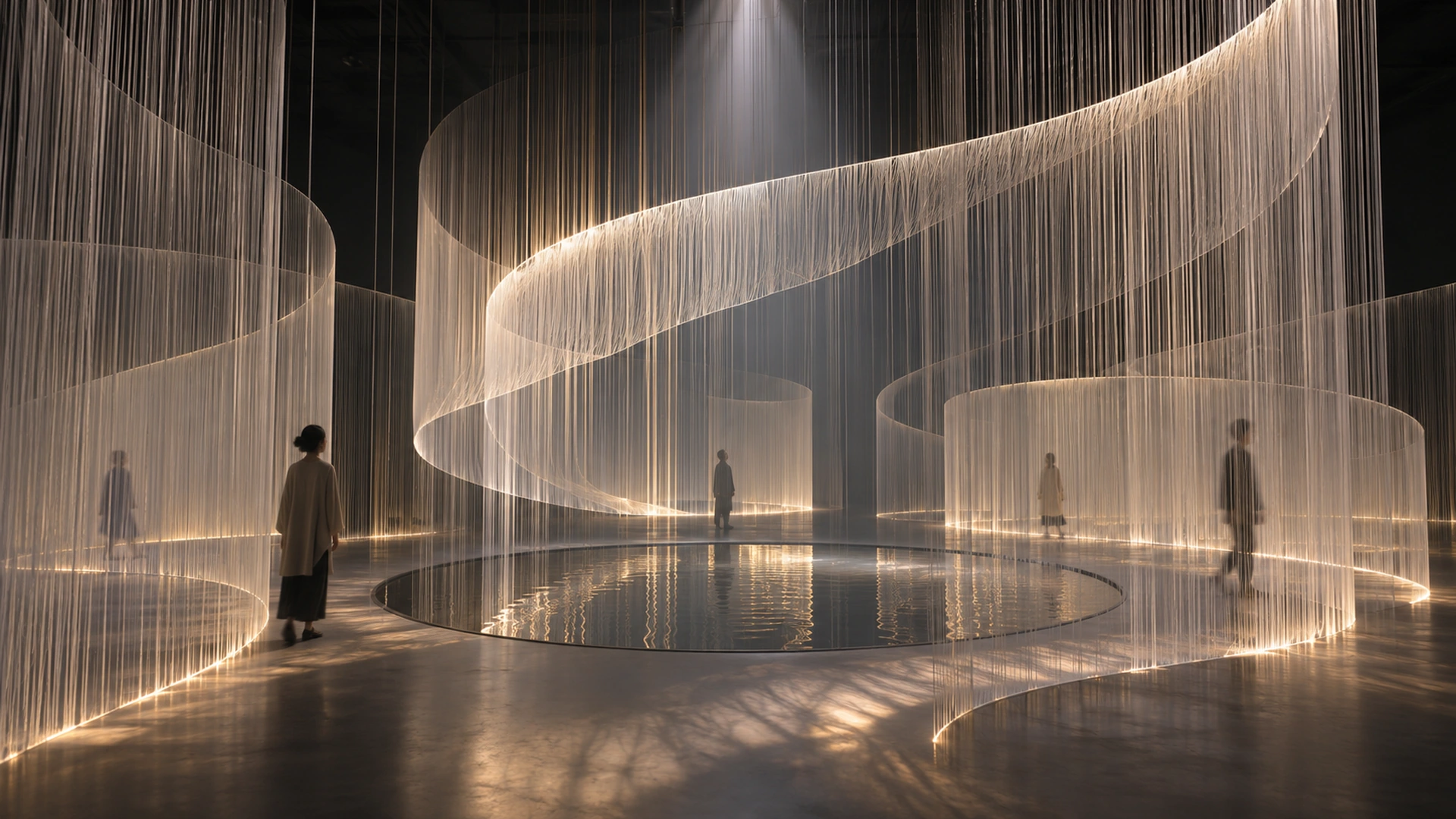
Large immersive installations made from data and machine learning.
A musician who created a public version of her own voice as an AI instrument.
Explores neural networks as a medium, from portraits to generative installations.
Ways of collaborating
The model speeds up or extends a process the artist controls.
The model's errors, styles and artefacts become part of the work.
Back-and-forth exchange, where the system responds and the artist responds back.
The work is about AI itself: data, bias, labour or surveillance.
Open questions
Many legal systems, including the US Copyright Office, require human authorship; purely generated images may not be protected.
Many models were trained on artists' work without permission; using your own data is one answer.
Prompting with a living artist's name to imitate them raises ethical questions.
Saying how a work was made builds trust with audiences and clients.
Words to describe Human-AI Collaborative Art
Precise words for the qualities above. Combine a few of them instead of naming the style or artist alone.
- human-AI collaboration
- co-creative process
- artist-trained model
- own dataset
- AI as material
- AI as subject
- authorship and credit
- consent in training data
- process disclosure
- generative installation
A credit line for a collaborative work: 'Concept, photography and selection: the artist. Images generated with a diffusion model and edited by hand; no living artist's name used in prompts.'
How to describe Human-AI Collaborative Art in words
- Describe who did what: concept, data, process, selection, editing.
- Name the model's role: tool, material, partner or subject.
- Be clear about data and credit when you present the work.
Where we usually get it wrong
Debates about AI art often collapse into 'it's not art' or 'anyone is an artist now'. Neither helps. The more useful questions are about intention, process, data and responsibility, the same questions we ask of photography, collage or sampling.
Describe one of your own projects as a collaboration: list each decision you made and each thing the machine contributed. Then write one honest sentence about how it was made, as you would put it under the work.
Sources and further reading
- Harold Cohen, AARON project and writings (from 1973).
- U.S. Copyright Office, guidance on works containing AI-generated material (2023).
- Anna Ridler, Mosaic Virus (2018–19).
- Holly Herndon and Mat Dryhurst, Holly+ (2021).