Why direction matters more now
Gen AI has moved the bottleneck. Making a plausible image is no longer the hard part; knowing which image the project needs, describing it precisely, choosing among many variants and keeping a whole set coherent is. That is art direction, and it decides whether Gen AI work looks like a brand or like a stock library.
A workflow from brief to final
- Start from a written brief: audience, single message, tone with near-miss adjectives, mandatories.
- Build a moodboard with captions saying what each reference is for.
- Write a visual language in words: light, palette, lens and distance, materials, people, what never appears.
- Compose prompts from that language, not from scratch each time; keep a shared prompt sheet.
- Generate widely, then select hard; judge against the brief, not against novelty.
- Retouch and finish by hand where needed: hands, text, product details, edges.
- Check rights, likeness and accuracy before anything is published.
- Archive the final prompts, references and settings so the series can continue.
Keeping a series consistent
The same words for light, colour and material in every prompt, so the model hears the same brand.
Approved images used as style or composition references where the tool allows it.
Exact descriptions of recurring people or products, checked image by image.
One person makes the final selection so the set has a single taste.
Colour grading and retouching applied across the set, as in photography.
Rights, likeness and disclosure
Responsible Gen AI work treats legal and ethical questions as part of direction, not an afterthought. Read each tool's terms for commercial use. Do not imitate a living artist's distinctive style by name for commercial work, and do not generate real, identifiable people without their consent.
Be careful with product claims: an image must not show a product doing what it cannot do. Where a viewer could mistake a generated image for a real event or real person, label it; platforms such as YouTube and Meta ask for disclosure of realistic altered or synthetic content in many cases. Laws on this differ by country and are changing, so check the rules where the work will appear.
Quality checks before publishing
- Hands, eyes, teeth and fingers counted and correct.
- Text in the image readable and spelled correctly, or removed.
- Product shape, logo and colour exactly right.
- No accidental resemblance to a real person or another brand's asset.
- Cultural details correct: clothing, script, architecture, gestures.
- Image works at its real size and crop on every format.
The director is the writer
Gen AI turned a long tradition visible: images have always been directed in words, in briefs, notes and captions. Now the words go straight to the image. The art director's advantage is the one this library keeps returning to: knowing exactly what you mean, and choosing the word that carries it.
Questions about Gen AI Art Direction
What does an AI art director do?
An AI art director sets the visual direction for Gen AI images, writes the prompts and references that express it, selects and finishes the results, keeps a series consistent with a brand, and checks rights, accuracy and disclosure before publication.
Can Gen AI images be used commercially?
Often yes, depending on the tool's terms and local law. Check the licence of the tool, avoid real people's likeness without consent and living artists' distinctive styles, and follow disclosure rules where you publish.
How do you keep Gen AI images consistent?
Use a fixed written visual language, shared prompt sheets, approved reference images, exact descriptions of recurring characters and products, one final editor, and a finishing pass across the whole set.
Write the visual language for an imaginary brand in six lines: light, palette, distance, materials, people, never. Then write two prompts using only words from those six lines and compare how close the two images feel.
Sources and further reading
- YouTube Help: Disclosing altered or synthetic content.
- Meta: labelling AI-generated images (policy updates, 2024).
- European Union, AI Act (Regulation (EU) 2024/1689), transparency obligations.
- U.S. Copyright Office, Copyright and Artificial Intelligence, Part 2: Copyrightability, 2025.
Words to describe Gen AI Art Direction
Precise words for the qualities above. Combine a few of them instead of naming the style or artist alone.
- Gen AI art direction
- visual language
- prompt sheet
- reference image
- selection
- consistency
- finishing pass
- likeness
- commercial rights
- disclosure
- synthetic content
- quality check
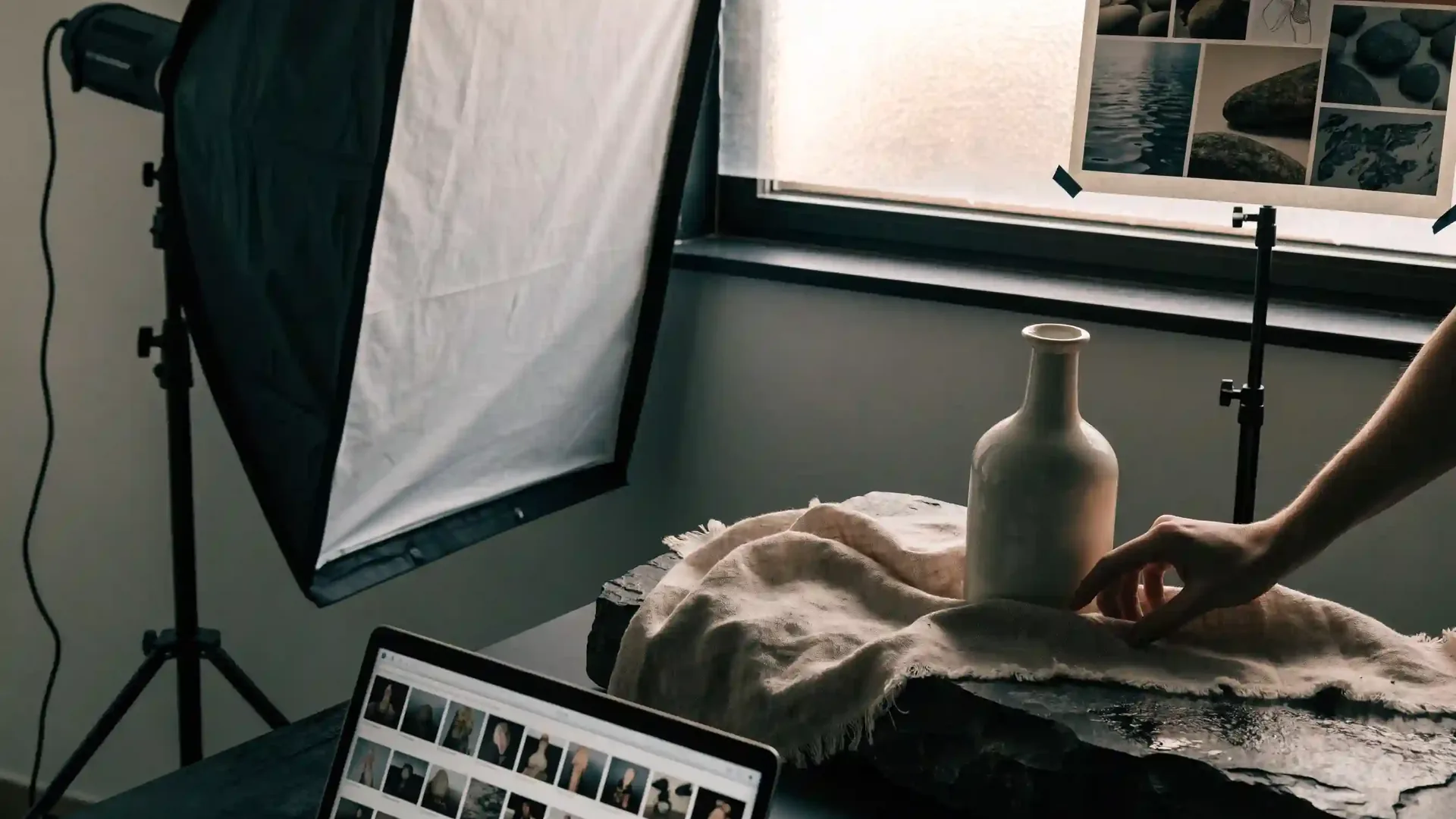
Visual language for a ceramics brand: 'Light: north window, overcast. Palette: clay, oat, iron black. Distance: close, hands in frame. Materials: raw stoneware, linen, wet slip. People: real hands, unpolished nails. Never: gloss, marble, flowers.'