Realism comes to Tehran
Mohammad Ghaffari was born in Kashan around 1848 into a family of painters. He studied at the Dar ul-Funun in Tehran and became a court painter to Naser al-Din Shah, who gave him the title Kamal-ol-molk, 'perfection of the realm'. His painting of the Hall of Mirrors in the Golestan Palace, finished in the 1890s, shows the room with almost photographic precision.
After the Shah's death he travelled to Europe and copied old masters such as Rembrandt and Titian in museums in Florence and Paris. Back in Iran, in 1911 he founded the School of Fine Arts (Madreseh-ye Sanaye-e Mostazrafe), which trained a generation of realist painters. After conflicts with the government of Reza Shah he retired to a village near Nishapur, where he died in 1940. His realism transformed Iranian painting, and its influence is still debated: it opened a new path while pushing older Persian painting traditions aside.
Visual anatomy of Kamal-ol-molk
Accurate perspective, proportion and light, learned from European academic painting.
Soft directional light, careful shadows and reflections, especially on mirrors and fabric.
Court interiors, portraits, everyday people, landscapes around Tehran and Nishapur.
Patient rendering of textures: carpets, glass, beards, metal.
Warm earthy browns and ochres with controlled highlights.
Deep perspective space, a clear break from the flat space of Persian painting.
How to recognize Kamal-ol-molk's work
- Realistic oil painting with deep perspective.
- Careful light on mirrors, fabric and faces.
- Iranian subjects painted in a European academic manner.
Where people get it wrong
Kamal-ol-molk is sometimes seen simply as 'the Iranian Rembrandt' or, on the other side, as the man who ended Persian painting. Both are too simple: he was a highly skilled painter in a time of change, and his school both opened and closed doors.
Words to describe Kamal-ol-molk
Words for what you see and feel in this work. They are for describing and understanding, not a recipe for copying an artist.
- academic realism
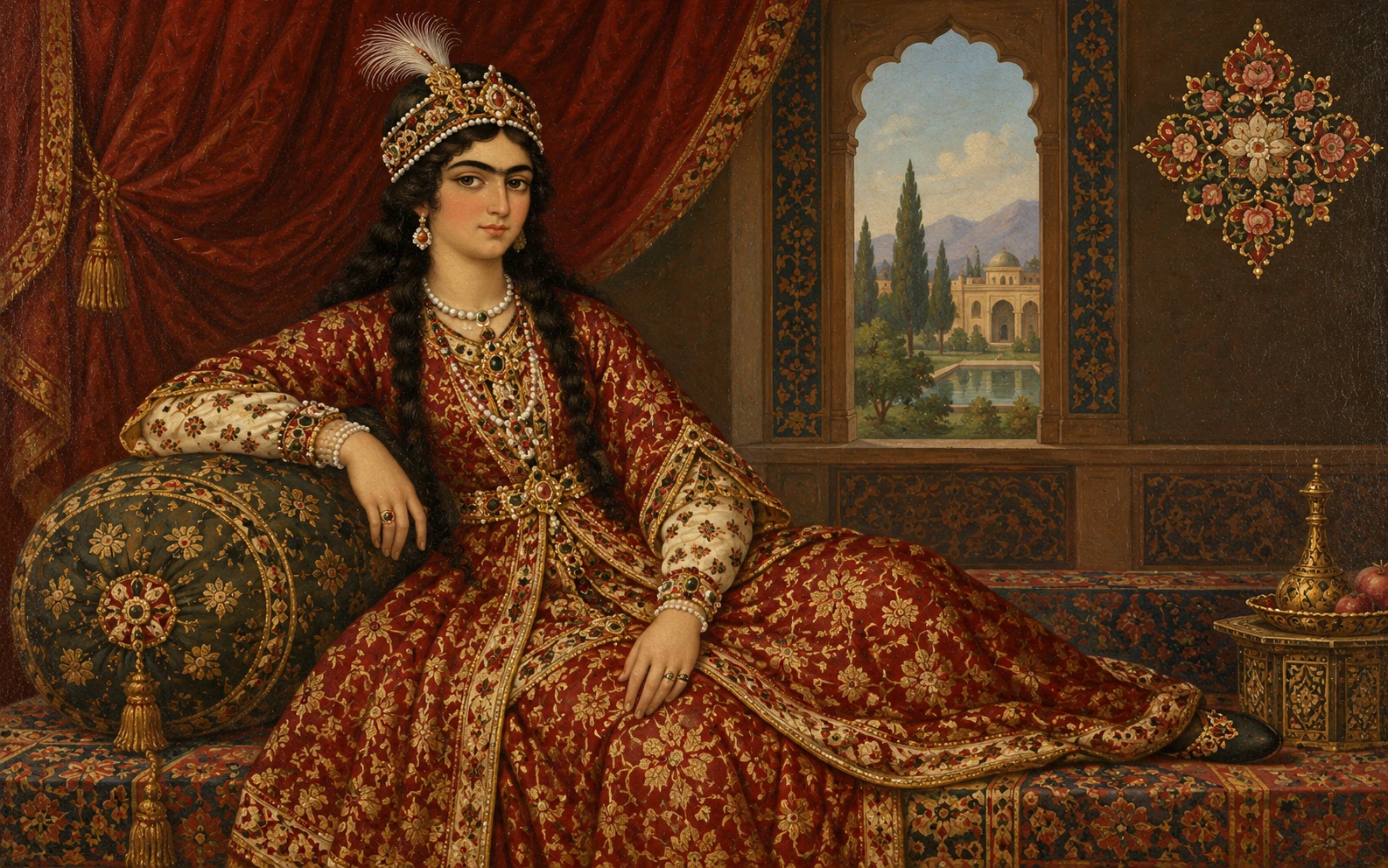
- Qajar court interior
- deep linear perspective
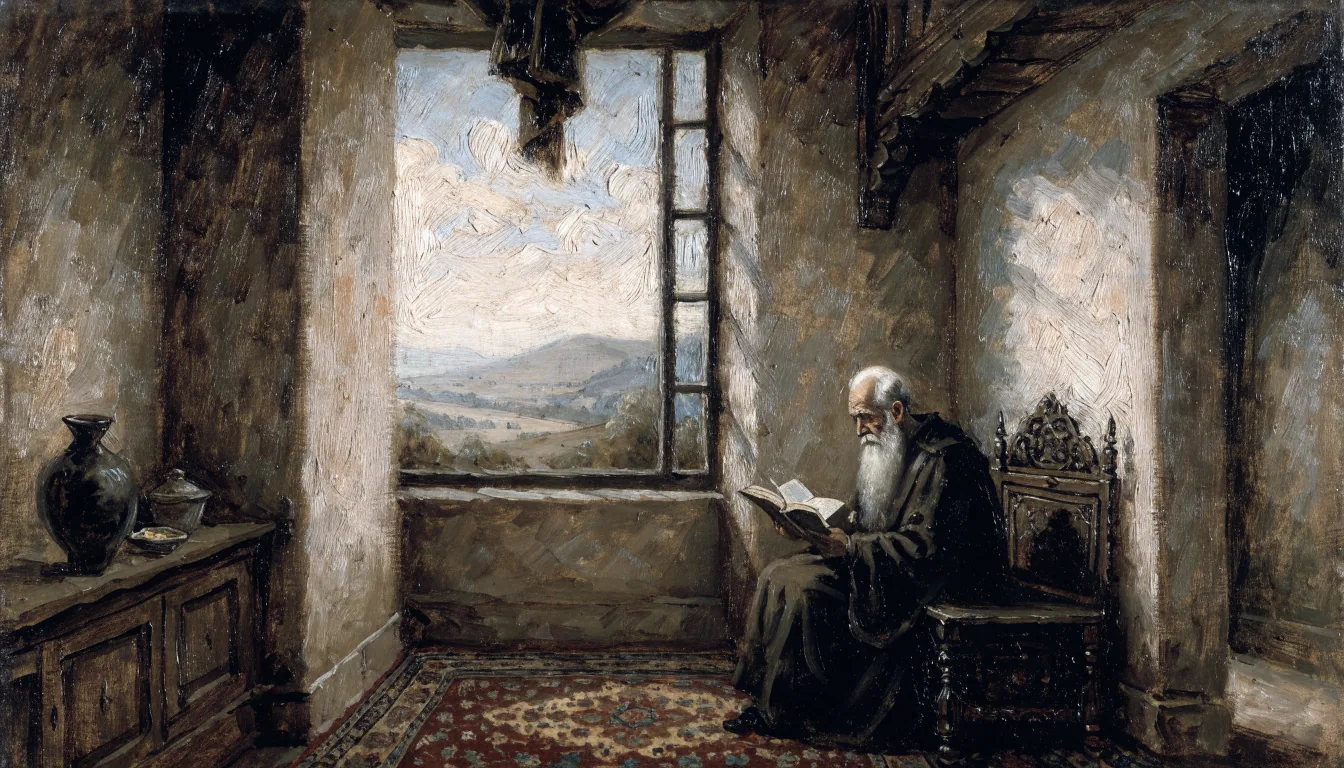
- soft window light
- mirrored hall reflections
- carefully rendered carpet
- warm earthy palette
- realistic portrait of an elder
- oil on canvas
- late 19th-century Iran
An original realist oil painting study in the manner of late Qajar academic painting: an old man in a dark cloak reading by a tall window, soft daylight on his white beard and the pages, a detailed Persian carpet on the floor, warm brown shadows, deep perspective of the room.
What to learn from Kamal-ol-molk
- Describe the light source and how it falls.
- Name the textures rendered: carpet, mirror, cloth.
- Say what is Iranian in the subject and European in the method.
Questions about Kamal-ol-molk
Who was Kamal-ol-molk?
Mohammad Ghaffari, known as Kamal-ol-molk, the Qajar court painter who brought European academic realism to Iran and founded a school that shaped generations.
How do you recognize Kamal-ol-molk's work?
Realistic oil painting with deep perspective. Careful light on mirrors, fabric and faces. Iranian subjects painted in a European academic manner.
How do you describe Kamal-ol-molk in words or a prompt?
Describe the light source and how it falls. Name the textures rendered: carpet, mirror, cloth. Say what is Iranian in the subject and European in the method.
Choose a corner of a room in your home with a carpet, a window and one object. Describe it as a Kamal-ol-molk painting: the direction of light, the perspective lines, the textures and the colour of the shadows.