Ordinary things, impossible together
René Magritte was born in Belgium in 1898 and worked for years in commercial design, painting wallpaper and advertising. Unlike the dreamy, melting Surrealism of Dalí, his paintings are plain, clean and almost matter-of-fact, which makes their impossibilities more unsettling.
The Treachery of Images (1929) shows a pipe above the words 'Ceci n'est pas une pipe', 'this is not a pipe', a joke about images and reality. His bowler-hatted men, the green apple hiding a face in The Son of Man (1964), and the Empire of Light series, with a dark night street under a bright daytime sky, have become some of the most borrowed images in advertising, album covers and film.
Visual anatomy of René Magritte
Clean, flat, illustrative painting with smooth surfaces and clear outlines.
Everyday things: bowler hats, apples, pipes, clouds, curtains, birds, windows.
Familiar objects in the wrong place, scale or material.
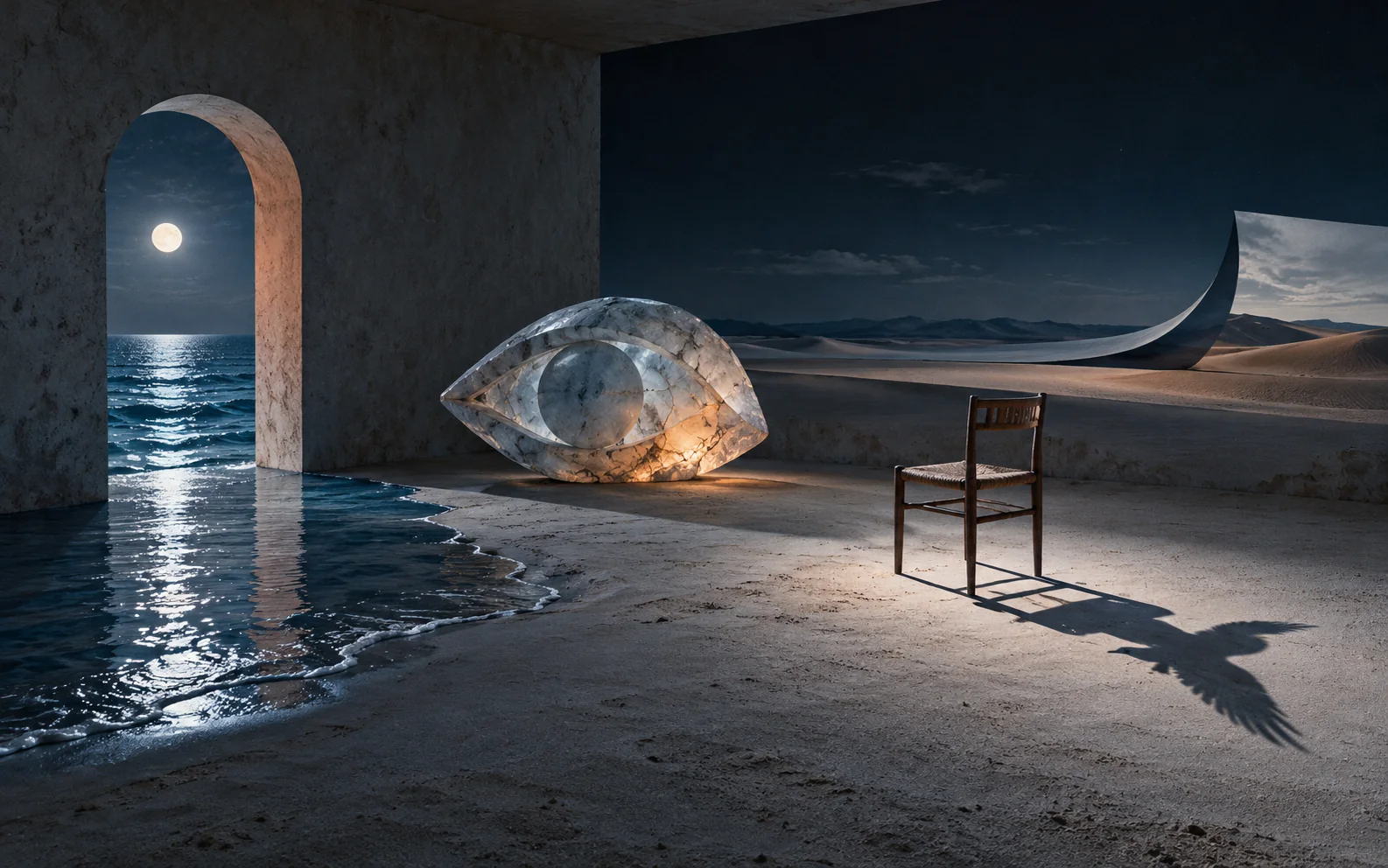
Day and night at once, a painting that continues the view through a window, a face hidden by an object.
Soft blue skies with white clouds, often inside unexpected spaces.
Quiet, deadpan, mysterious; never chaotic.
Key works of René Magritte
Two lovers kissing with their heads wrapped in cloth.
A painted pipe above the words 'This is not a pipe'.
Men in bowler hats suspended like rain over a street.
A man in a bowler hat whose face is hidden by a floating green apple.
How to recognize René Magritte's work
- Ordinary objects in impossible combinations.
- Calm, clean, almost commercial painting.
- Bowler hats, clouds, apples and windows.
Where people get it wrong
Magritte is often lumped together with Dalí. Dalí's world is melting and feverish; Magritte's is cool, quiet and logical, with one rule broken. Copying his bowler hat and apple gives you a cliché; borrowing his method, one calm impossible change, is the useful part.
Words to describe René Magritte
Words for what you see and feel in this work. They are for describing and understanding, not a recipe for copying an artist.
- Magritte-like surrealism
- bowler hat man
- green apple floating
- day sky over a night street
- clouds inside a room
- clean flat painting
- impossible scale
- deadpan mystery
- curtains and windows
- calm visual paradox
An original surreal painting in a calm, clean style: a quiet suburban street at night with lit lamps and dark houses, under a bright blue daytime sky full of white clouds, smooth flat brushwork, no people, a deadpan stillness.
What to learn from René Magritte
- Name the ordinary objects first.
- Describe the one rule that is broken: scale, place, time, material.
- Keep the painting style calm and clear in your description.
Questions about René Magritte
Was Magritte a Surrealist?
Yes, he was the leading Belgian Surrealist. Unlike dreamlike painters, he painted ordinary things in a plain, almost commercial style, then put them in impossible relations.
What does 'This is not a pipe' mean?
It is literally true: the painting is an image of a pipe, not a pipe. Magritte was pointing at the gap between objects, images and words.
Why are the faces hidden?
Hidden faces, by apples, cloth or birds, recur in his work and create the tension between what we see and what is concealed that he described as central to his painting.
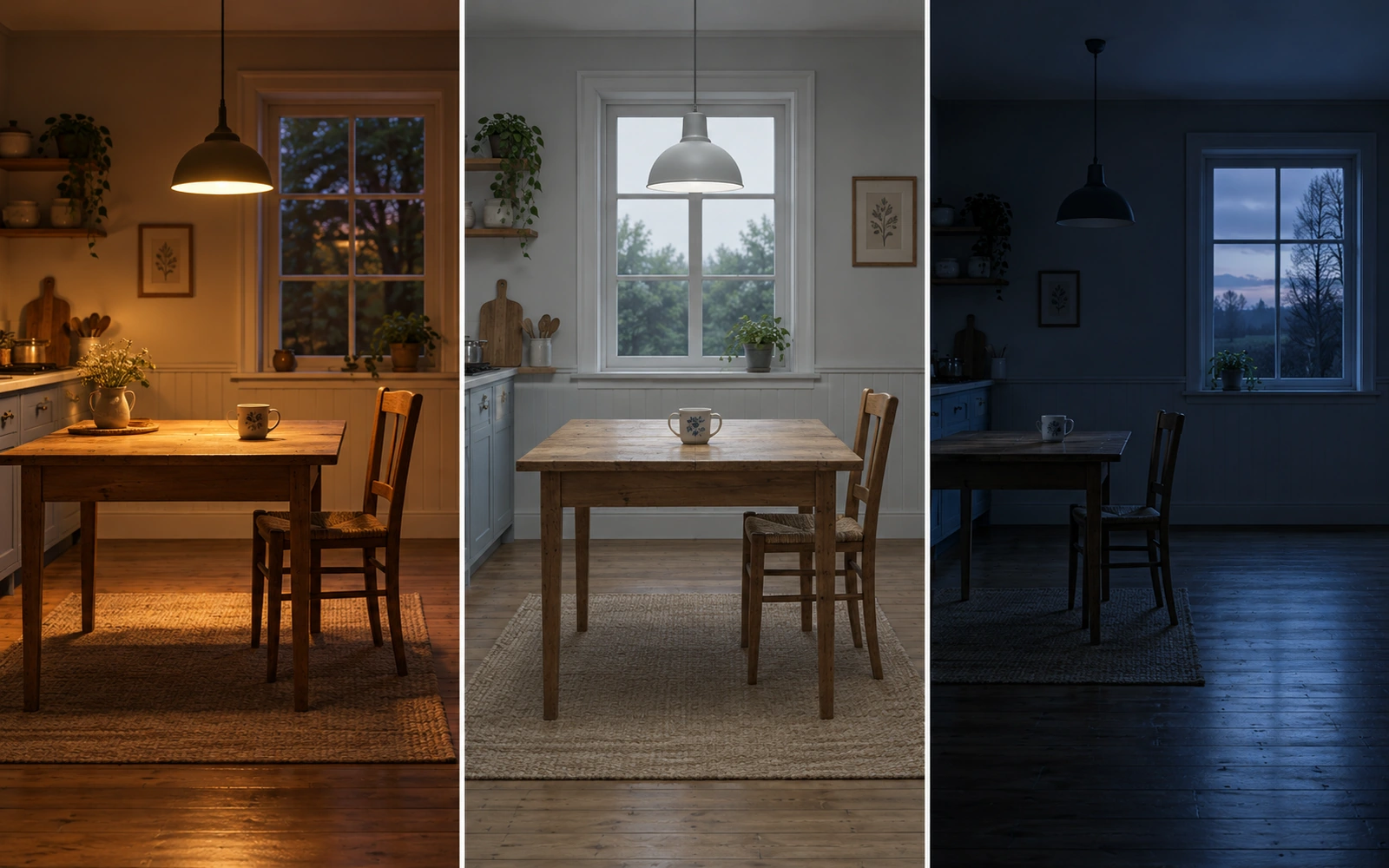
Choose an everyday scene, like a bus stop, and change only one rule: the time of day, the size of an object, or what something is made of. Describe it in a calm, matter-of-fact voice.