A mood is a set of choices
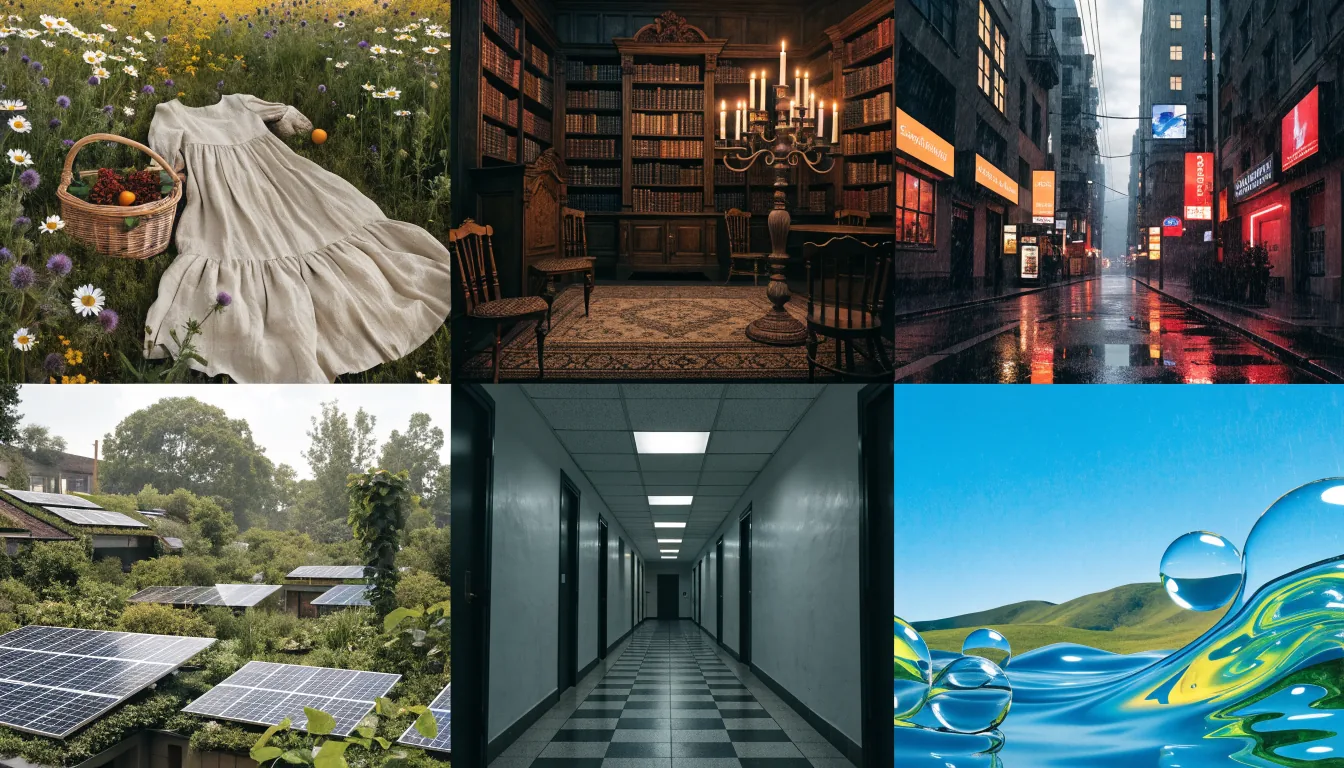
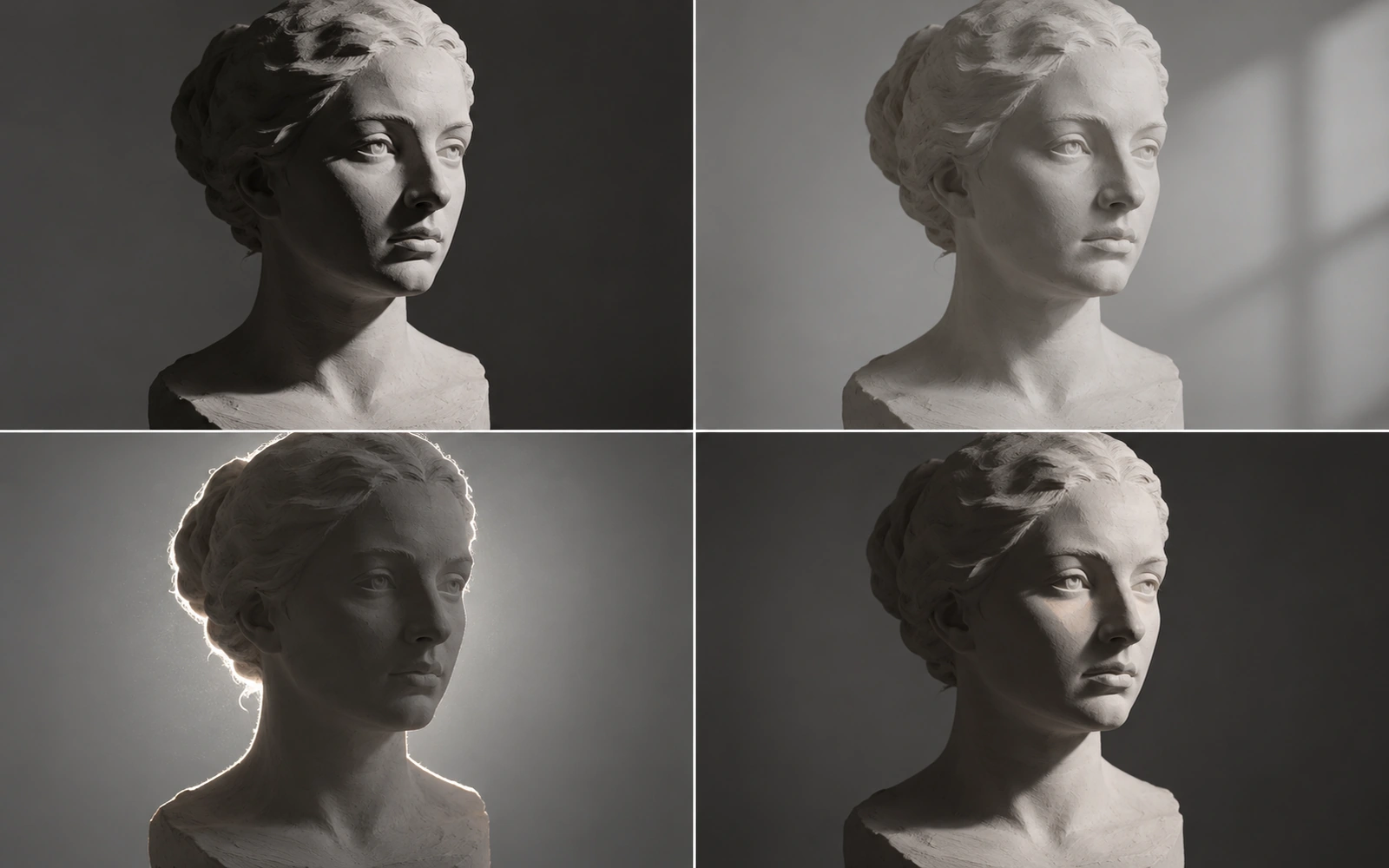
When we say an image feels lonely or tender, we are naming the result, not the cause. The cause is a set of visual decisions: where the light comes from, how saturated the colours are, how much empty space there is, how close the camera stands, how still everything is.
Mood words are useful only when you know what they are made of. 'Moody' alone gives you a generic dark, blue-grey picture. 'Lonely: one small figure, a lot of empty space, a single light source, cool colours, a high camera' gives you something you can actually build, and change.
Quiet and soft
Soft, even light, a limited calm palette, horizontal lines, open space, almost no motion.
Warm, low-contrast light, close framing, soft focus, touch or closeness between figures or objects.
A close camera, a small private space, warm practical light like a lamp, details of hands and textures.
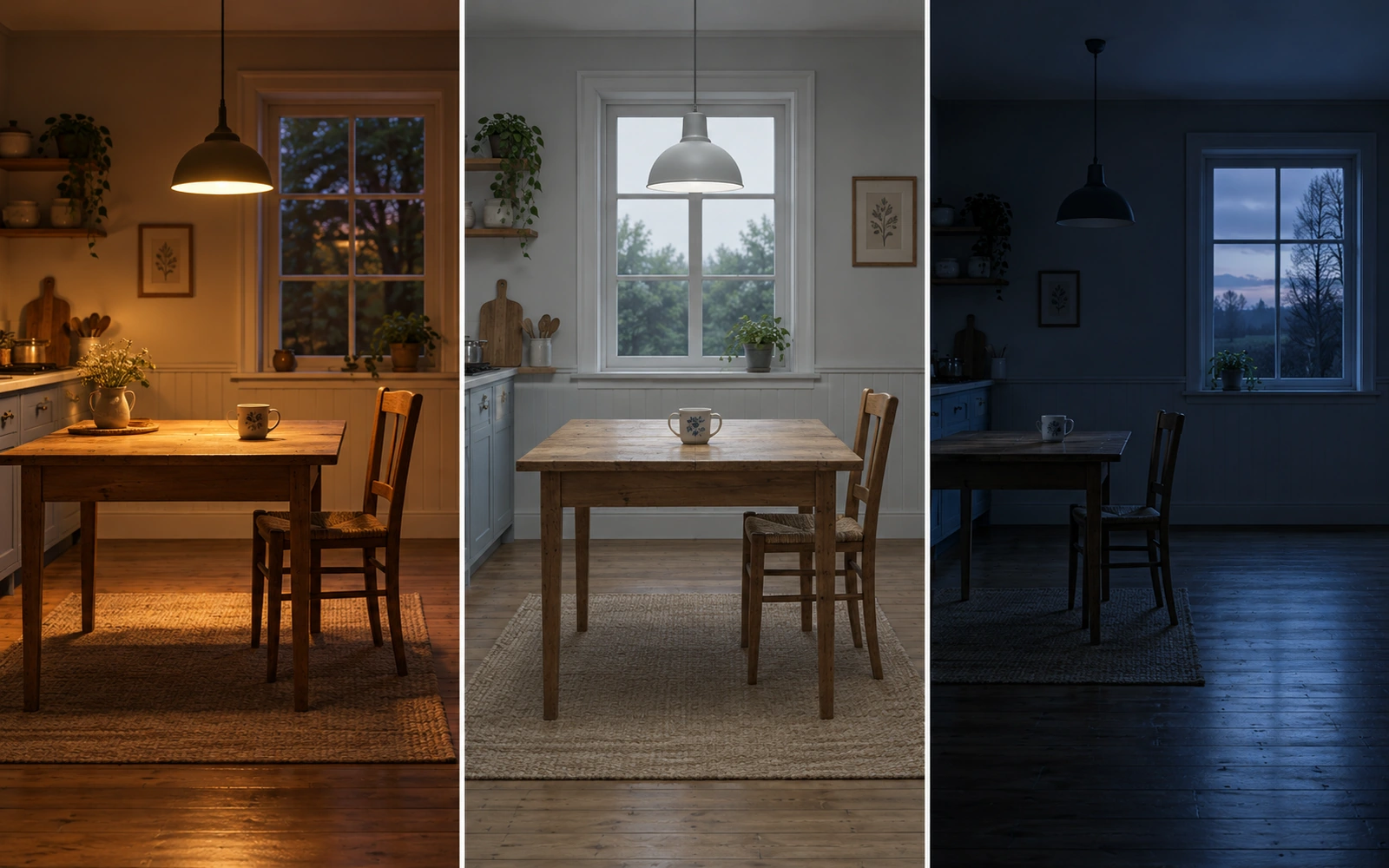
Warm pools of light against cool darkness, soft materials, things gathered close, a window with weather outside.
Haze, glow and bloom, pastel or washed colours, shallow focus, slightly slowed motion.
Faded warm colours, film grain, afternoon light, objects from an earlier time, a little softness at the edges.
Heavy and sad
Low, cool or greyish light, desaturated colours, a figure turned away, rain or late afternoon.
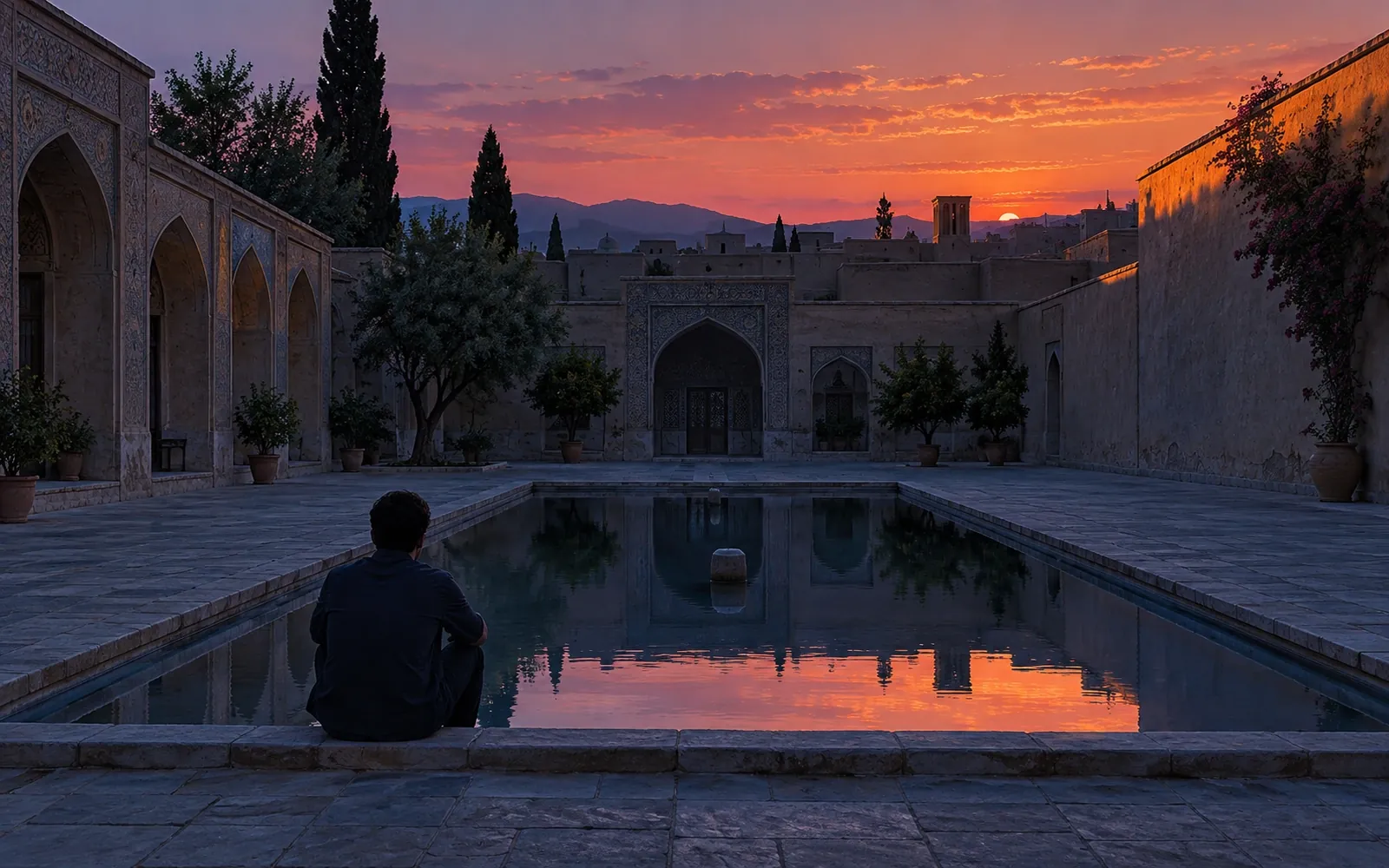
One small figure in a lot of empty space, a single light source, a high or distant camera.
Flat overcast light, closed space, low ceilings or skies, muted dull colours; the Persian delgir is a space that presses on the heart.
Symmetry, a low or frontal camera, deep shadows, rich dark colours, slow and still.
Wide empty landscape, harsh or flat light, traces of people but nobody there.
Uneasy
Everything almost normal, with one rule broken: wrong scale, a too-perfect symmetry, a face that is still too long.
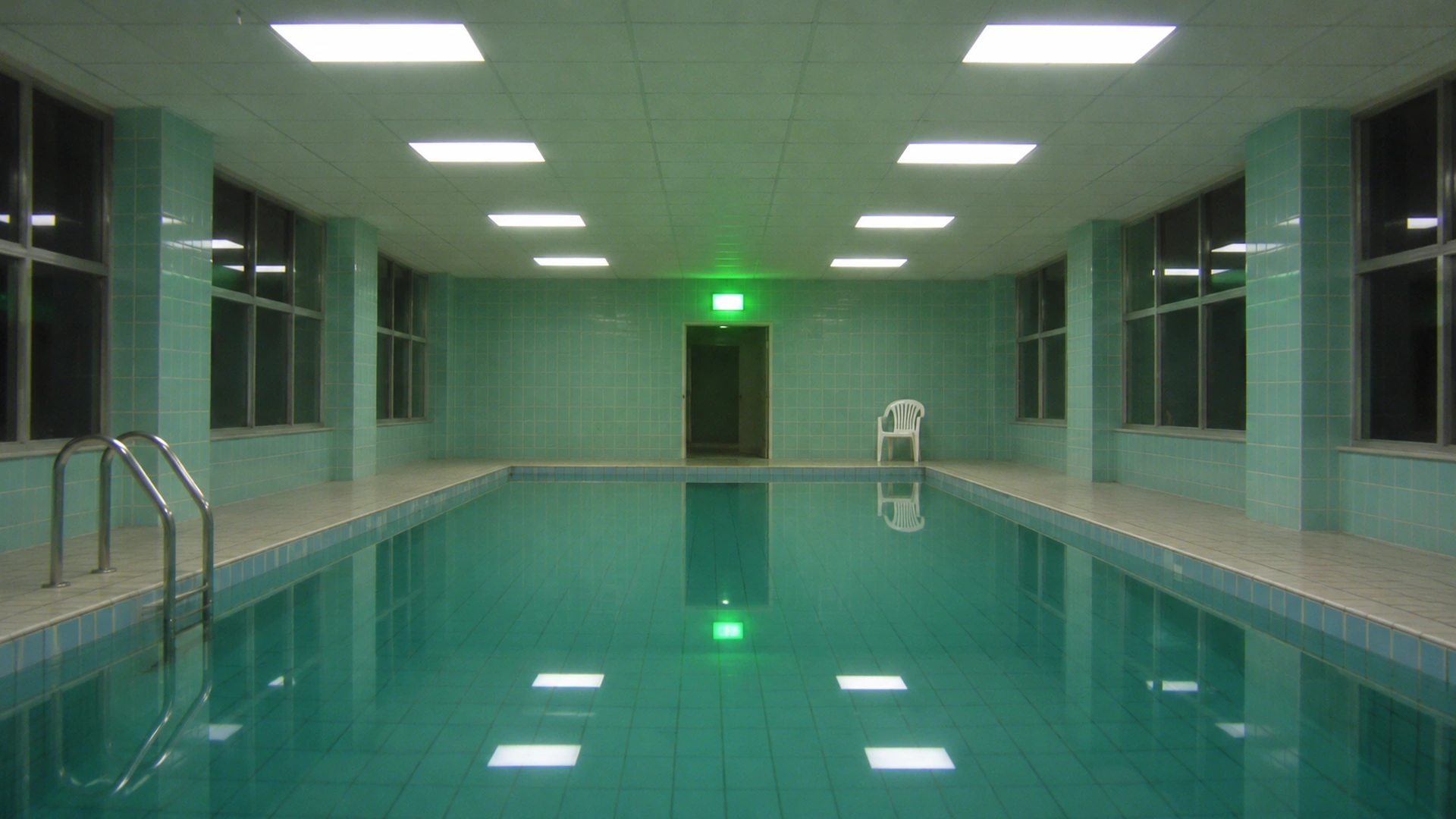
Silence, emptiness and an unexplained light source; the feeling that someone was just here.
Tight framing, strong diagonals, hard contrast, a held moment just before something happens.
Low camera, dark masses at the top of the frame, a storm-coloured palette, distant light.
A moment frozen in the air: floating objects, no ground shadow, a held breath; neither falling nor resting.
Walls close on all sides, a low ceiling, no visible exit, cropped figures pressed by the frame.
Bright and alive
Saturated warm colours, backlight and lens flare, motion, open arms, an upward camera.
Bright primaries, rounded shapes, tilted or bouncing compositions, unexpected scale.
Light entering a dark space, a horizon, a door or window opening, warm colour arriving at one edge.
Strong diagonals, motion blur, high contrast, cut-off forms that suggest speed.
Soft directional light, deep neutral colours, generous space, few precise objects.
Words to describe words for mood and atmosphere
Precise words for the qualities above. Combine a few of them instead of naming the style or artist alone.
- melancholic overcast light
- lonely figure in empty space
- tender close framing
- uncanny broken scale
- eerie unexplained light
- suspended floating moment
- nostalgic faded warmth
- dreamy haze and bloom
- ominous dark sky mass
- cosy warm pools of light
An uncanny suburban street at noon: perfectly symmetrical houses, every window identical, flat shadowless light, saturated green lawns, one child standing completely still in the middle of the road, a camera at eye level and dead centre.
How to describe words for mood and atmosphere in words
- Name the mood, then list three causes: light, colour, space.
- Choose the camera distance on purpose: close is intimate, far is lonely.
- Use one strong mood, not three that pull in different directions.
Where we usually get it wrong
Mood words used alone push every image towards the same cliché: 'moody' means blue-grey, 'dreamy' means pink haze. And dark is not the same as sad; a melancholic image can be full of soft light. Describe the choices, not only the feeling.
Questions about words for mood and atmosphere
What is words for mood and atmosphere?
A mood is not a filter. Each feeling an image gives off is built from light, colour, space and timing.
How do you describe words for mood and atmosphere in words or a prompt?
Name the mood, then list three causes: light, colour, space. Choose the camera distance on purpose: close is intimate, far is lonely. Use one strong mood, not three that pull in different directions.
Take one ordinary scene, such as a kitchen table in the evening, and describe it three times: tender, uncanny and lonely. Change only light, colour, space and camera. Notice which single change moves the mood the most.