A world arranged like a dollhouse
Wes Anderson was born in Houston, Texas, in 1969. Since Bottle Rocket (1996) and The Royal Tenenbaums (2001), his films, including The Life Aquatic, Moonrise Kingdom (2012), The Grand Budapest Hotel (2014) and Asteroid City (2023), have built a visual world so consistent that people recognise it from a single frame.
Its ingredients are precise: centred, symmetrical compositions, a camera that faces scenes straight on and moves in clean pans and tracking shots, carefully limited pastel palettes, handmade miniatures and stylised typography. The look is so popular that a whole online community collects real places that look 'accidentally Wes Anderson'.
Visual anatomy of Wes Anderson
Characters and buildings placed dead centre, with mirrored sides.
Flat, head-on views, like looking into a dollhouse or a stage.
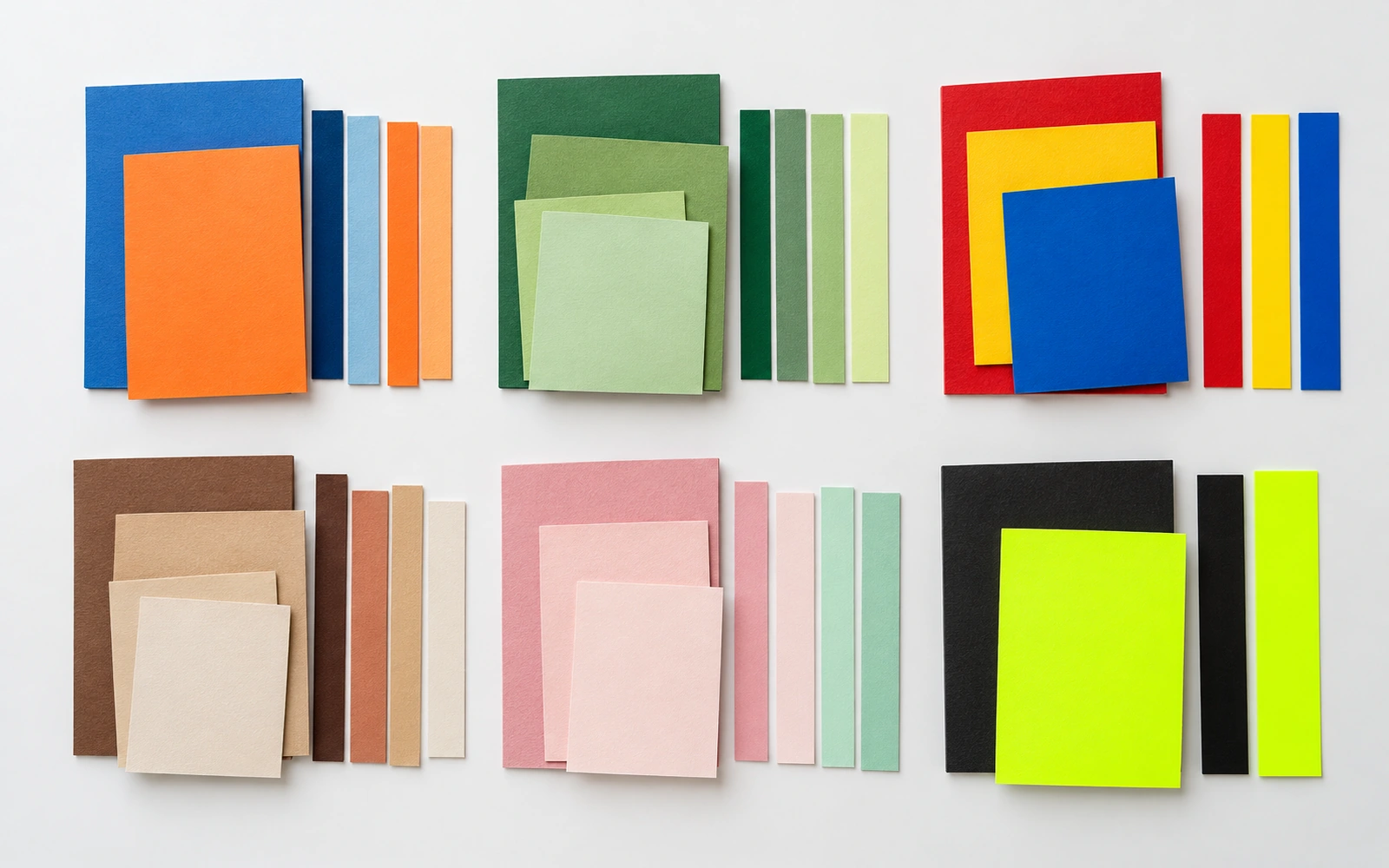
A limited palette per film: pink and purple, mustard and red, pastel blue and yellow.
Smooth lateral pans, whip pans and tracking shots; overhead shots of hands and objects.
Detailed miniature-like sets, models, cross-sections of buildings and vehicles.
Neat, often centred titles in fonts like Futura, chapter cards and labels.
How to recognize Wes Anderson's work
- Centred, symmetrical framing.
- A limited pastel colour scheme.
- Flat, frontal views and dollhouse-like detail.
Where people get it wrong
Symmetry and pastels alone don't make a Wes Anderson look; the precision of the arrangement, the deadpan stillness of the characters and the handmade detail matter as much. And copying his frames for a project is imitation; borrowing the logic of controlled symmetry and colour is a craft lesson.
Words to describe Wes Anderson
Words for what you see and feel in this work. They are for describing and understanding, not a recipe for copying an artist.
- perfectly symmetrical composition
- centred frontal framing
- pastel colour palette
- dollhouse-like set
- whip pan
- overhead flat lay of objects
- deadpan characters
- miniature model look
- neat centred typography
- accidentally Wes Anderson
A perfectly symmetrical photograph of a small pink hotel facade, shot straight on, the entrance door in the exact centre, matching windows and potted plants on both sides, a bellboy in a purple uniform standing still in front, a pale blue sky, soft even light.
What to learn from Wes Anderson
- Describe the framing: centred, frontal, symmetrical.
- Name the two or three colours of the palette.
- Describe the objects and details that make the world feel handmade.
Questions about Wes Anderson
Who is Wes Anderson?
American film director whose symmetrical frames, pastel palettes and dollhouse-like sets became one of the most recognised visual styles of our time.
How do you recognize Wes Anderson's work?
Centred, symmetrical framing. A limited pastel colour scheme. Flat, frontal views and dollhouse-like detail.
How do you describe Wes Anderson in words or a prompt?
Describe the framing: centred, frontal, symmetrical. Name the two or three colours of the palette. Describe the objects and details that make the world feel handmade.
Find a door, a shop front or a window in your city and describe it as a centred, symmetrical frame: what is in the exact middle, what mirrors on each side, and which two colours dominate.