What a moodboard does
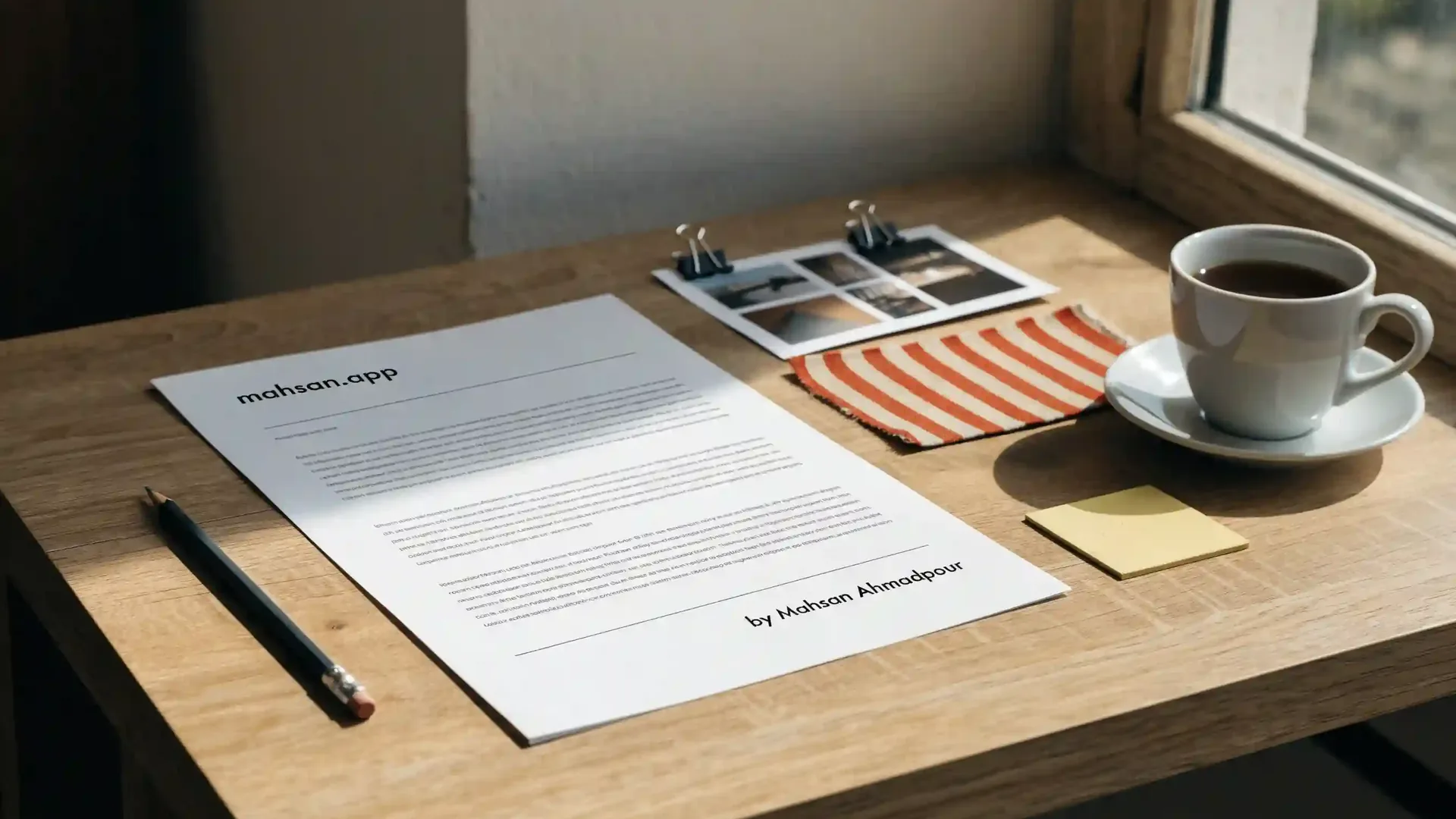
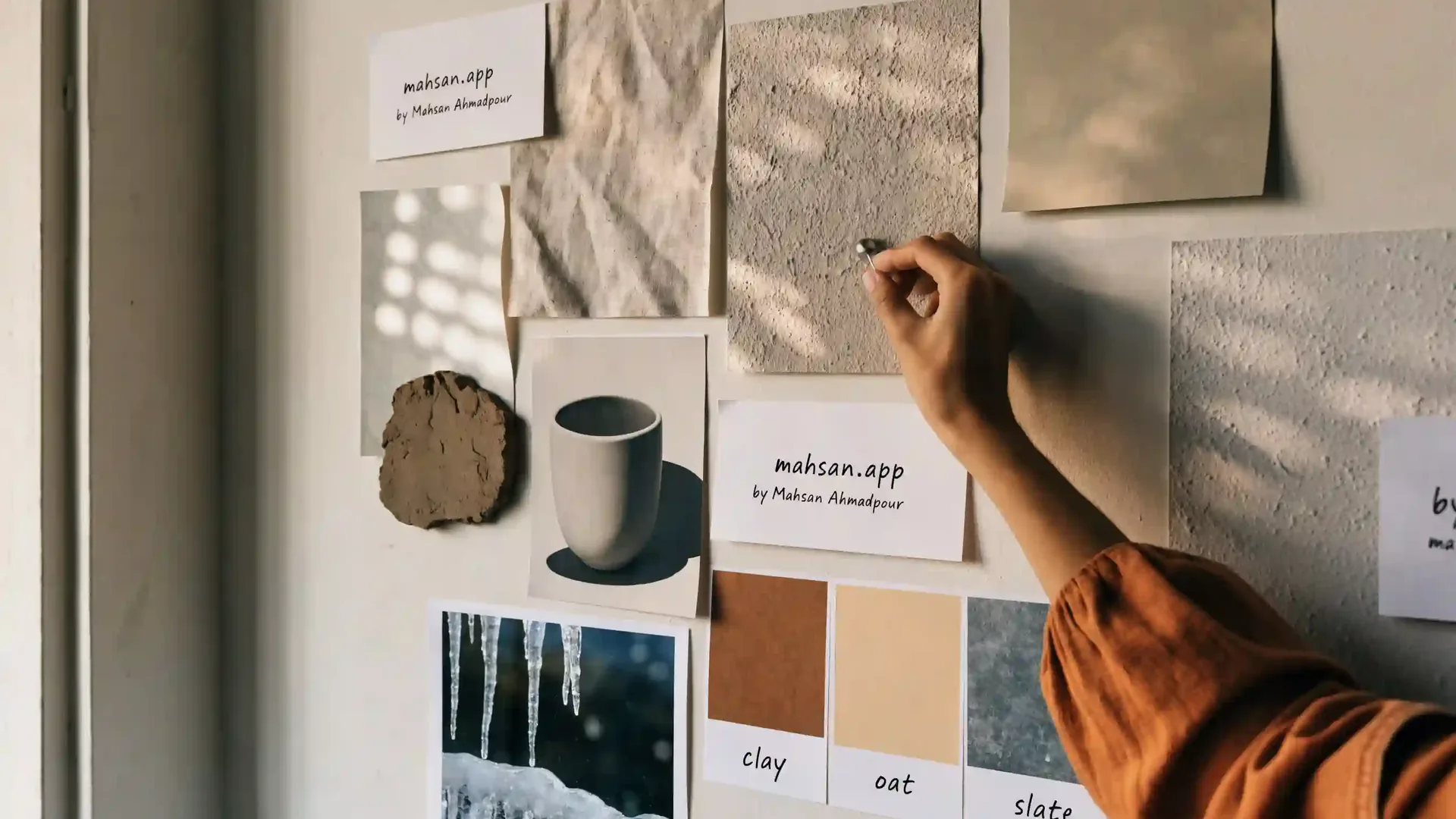
A moodboard collects images, colours, textures, type and objects to show the direction of a project before production. It helps clients, photographers, stylists, designers and Gen AI workflows agree on a look, and it catches misunderstandings early, when they are cheap.
Kinds of moodboard
Colour, type, materials, photography style and tone for an identity.
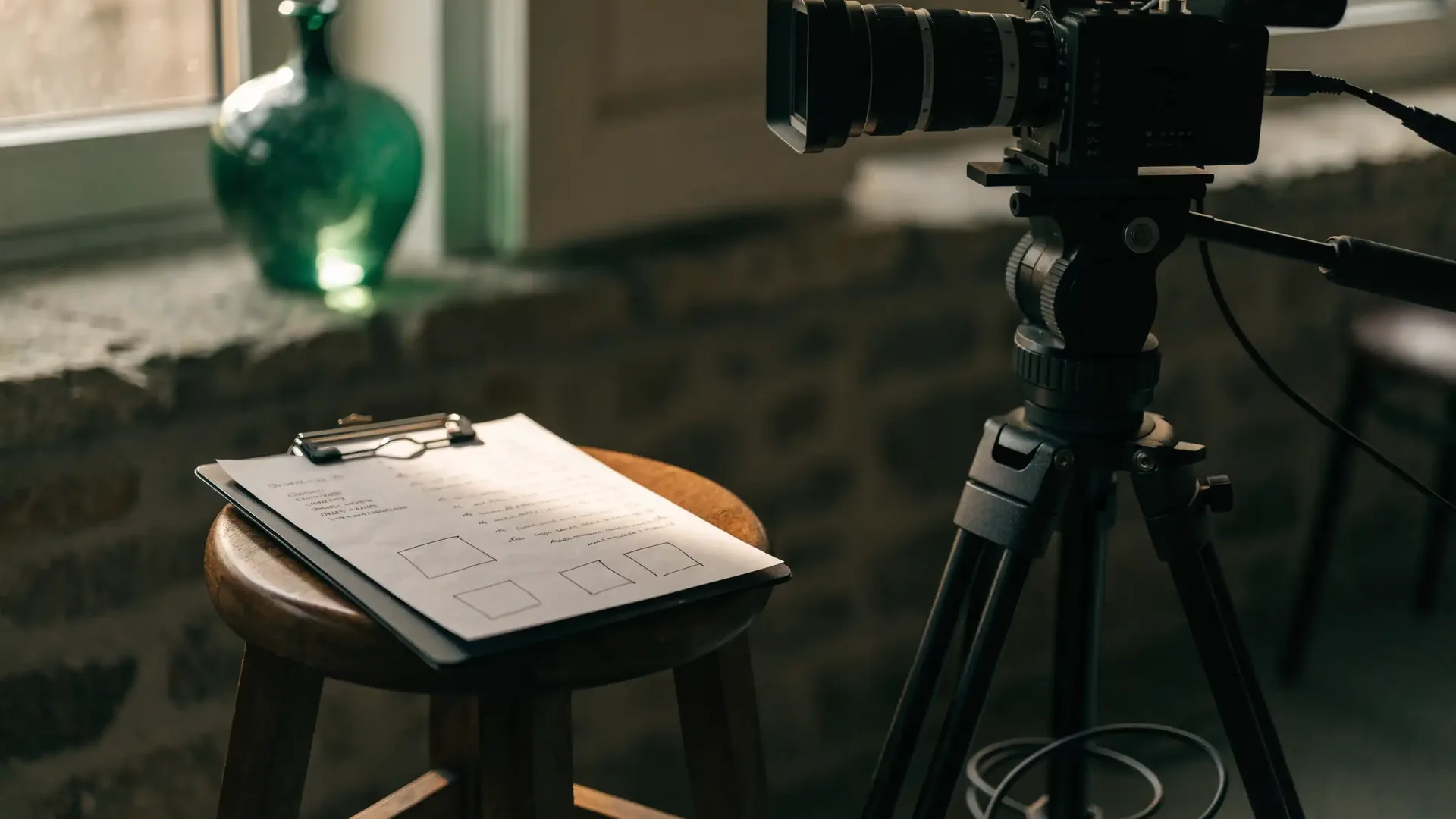
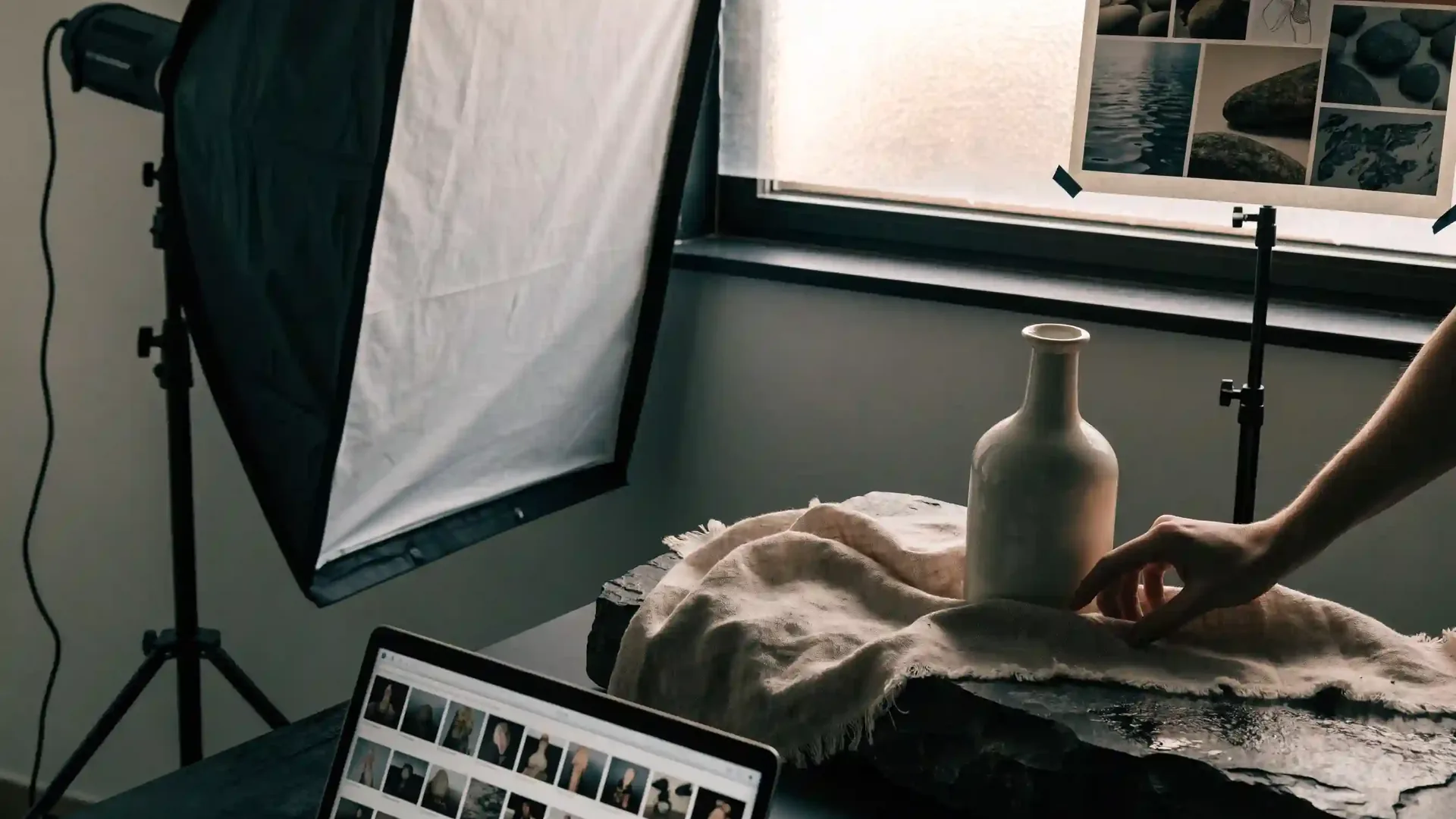
Light, location, casting, styling, poses, props and grading for a photo or video shoot.
Materials, furniture, colour, light and scale for a space.
Costume, silhouette, environment and palette for illustration, games or film.
A small set of reference images and words that keeps a generated series consistent.
How to make one
- Start from the brief: one sentence of what the project must make people feel.
- Collect widely, from photography, painting, film, objects, nature, not only from other brands.
- Edit hard: keep the images that agree with each other; remove the ones that are only beautiful.
- Group by job: light, colour, texture, composition, people, type.
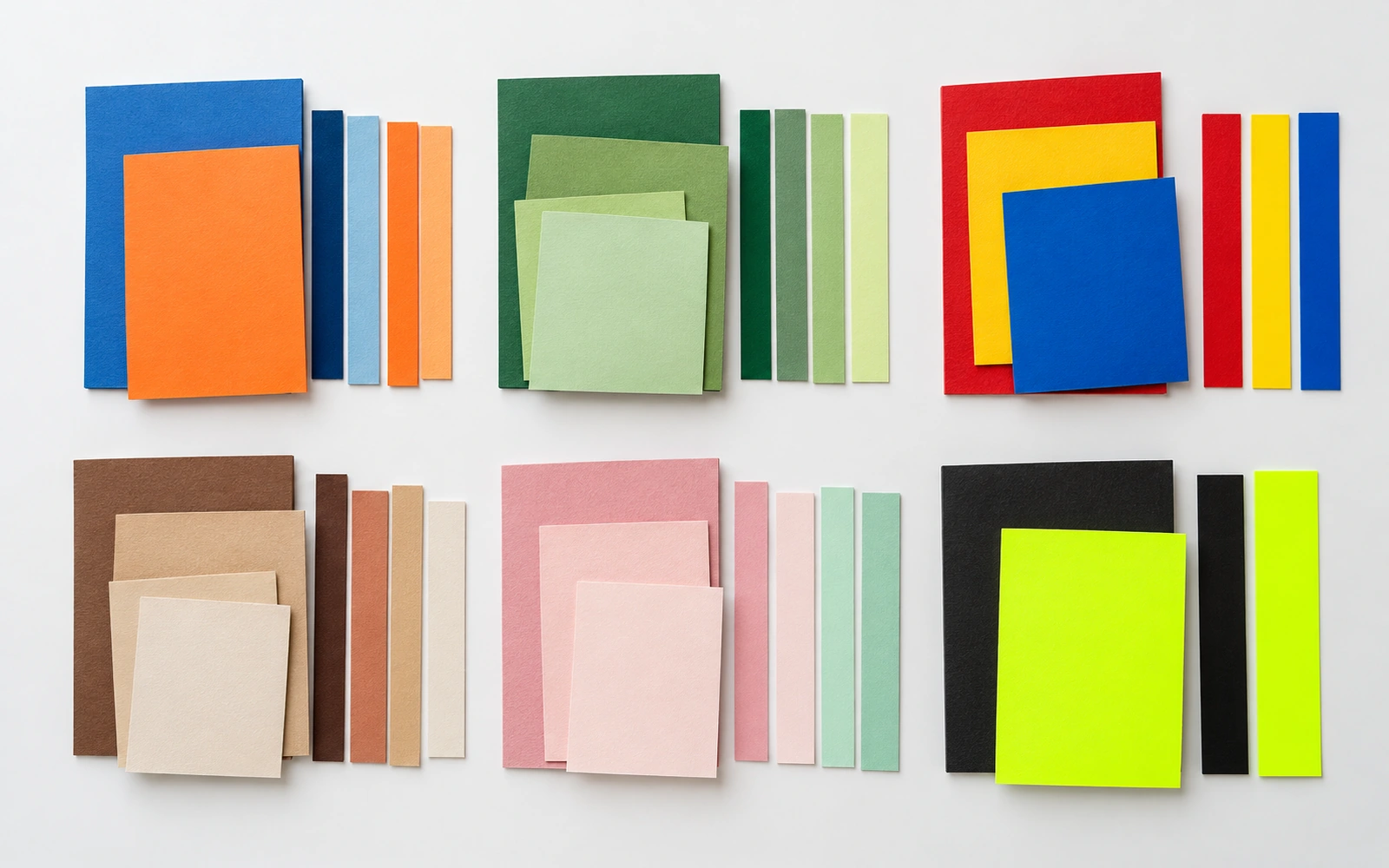
- Add a short palette and two or three textures sampled from the images.
- Write a caption for each group saying what to take from it.
- Show what it is not: one small 'avoid' section prevents many arguments.
Common mistakes
- Collecting forty beautiful images that point in forty directions.
- Using only other brands' campaigns, so the result looks like them.
- No words, so everyone reads a different mood into it.
- Ignoring practical limits: budget, season, location, rights.
- Using images you have no right to publish as if they were your own work.
Words beside the pictures
A moodboard without words is a thin description: it shows what, not why. Write one line under each group: 'Take the hour of the light, not the location.' 'Take the colour of the walls, not the furniture.' That line turns a mood into direction, and it is the same skill as writing a good prompt: saying what each reference is for.
Questions about moodboard
What should be on a moodboard?
Reference images for light, colour, composition, texture, people and styling, a small colour palette, sample typography if relevant, a few words on tone, and a short list of what to avoid.
How many images should a moodboard have?
Usually between ten and twenty-five after editing. Fewer, well chosen images give clearer direction than a large collage.
Can I use other people's images on a moodboard?
For internal reference and pitching, people commonly do, with credits. Do not publish them as your own work or use them in final materials without permission or a licence.
Make a moodboard of nine images for an imaginary café. Then write one sentence under each image saying exactly what to take from it. Remove any image whose sentence repeats another.
Sources and further reading
- Adobe, guides to creating moodboards.
- D&AD, resources on art direction and visual research.
- Steve Garner and Deana McDonagh-Philp, 'Problem interpretation and resolution via visual stimuli: the use of mood boards in design education', Journal of Art & Design Education 20(1), 2001.
- Pinterest and Milanote documentation on visual boards (tools).
Words to describe moodboard
Precise words for the qualities above. Combine a few of them instead of naming the style or artist alone.
- moodboard
- visual direction
- reference image
- palette
- texture sample
- lighting reference
- styling reference
- edit
- grouping
- avoid list
- art direction
- caption
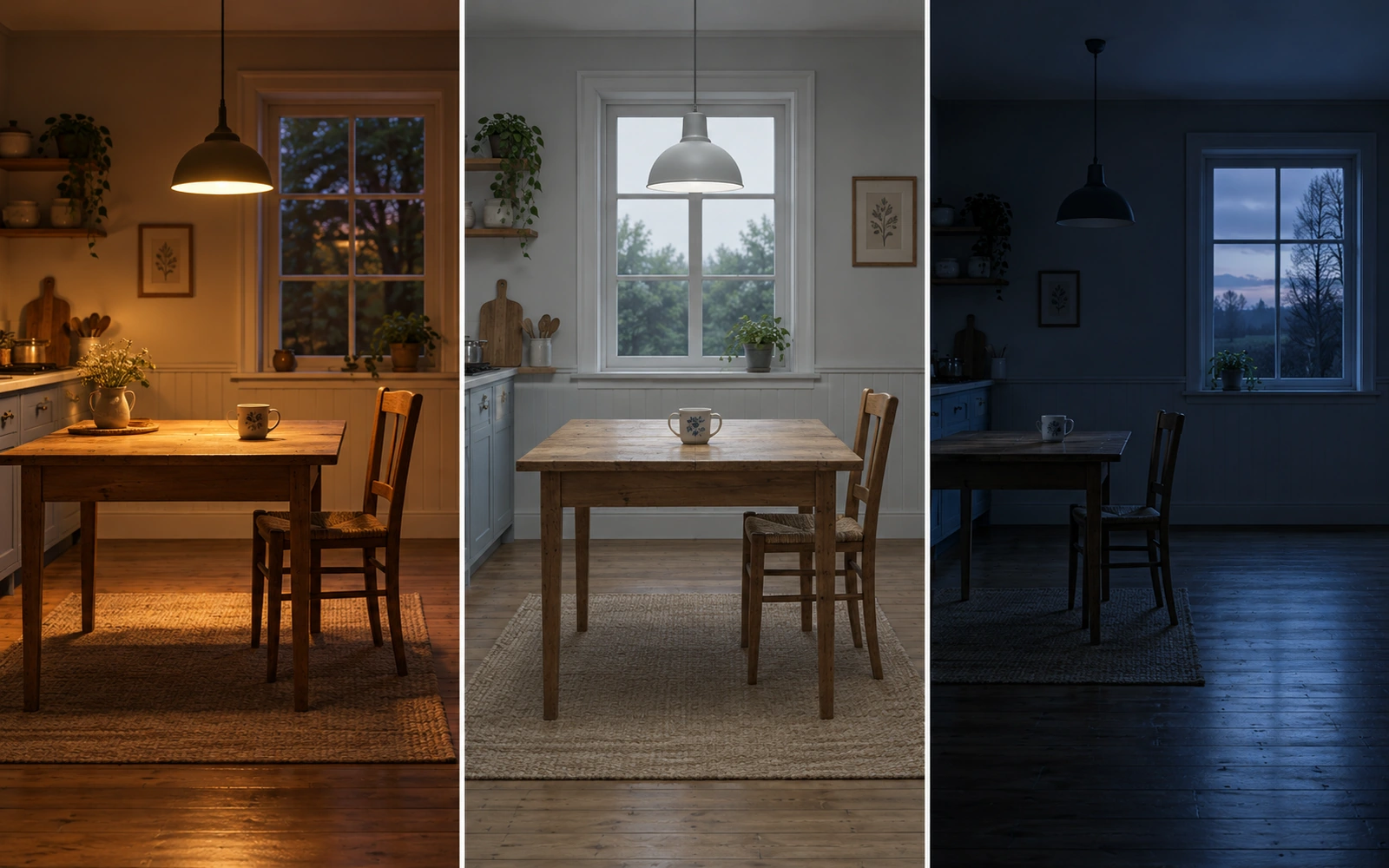
Caption under a lighting group: 'Low winter sun through a side window, long soft shadows, warm skin against cool walls; not golden hour, not studio flash.'