The poster as ornament
Alphonse Mucha was born in Moravia, now in the Czech Republic, in 1860, and moved to Paris in 1887. At the end of 1894 he designed, almost by chance, a poster for the actress Sarah Bernhardt in the play Gismonda. Its tall, elegant format and Byzantine richness made him famous overnight, and she signed him to a six-year contract.
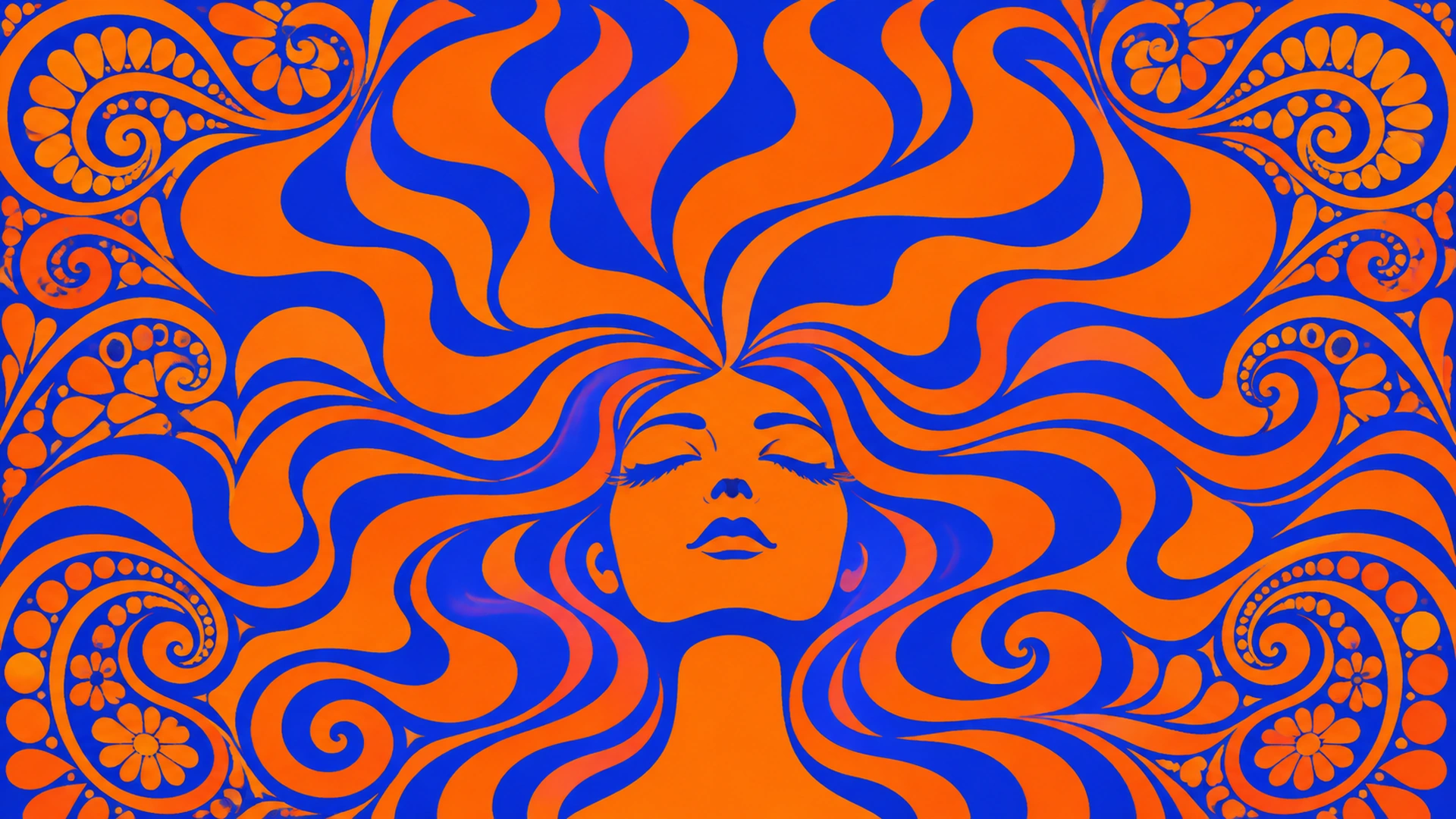
His posters, decorative panels and advertisements created so recognisable a look that it was called 'le style Mucha', and it became almost a synonym for Art Nouveau. Later he devoted years to The Slav Epic, twenty huge canvases about the history of the Slavic peoples. His halos, hair and borders returned in 1960s psychedelic posters and still appear in illustration, tattoo and fashion.
Visual anatomy of Alphonse Mucha
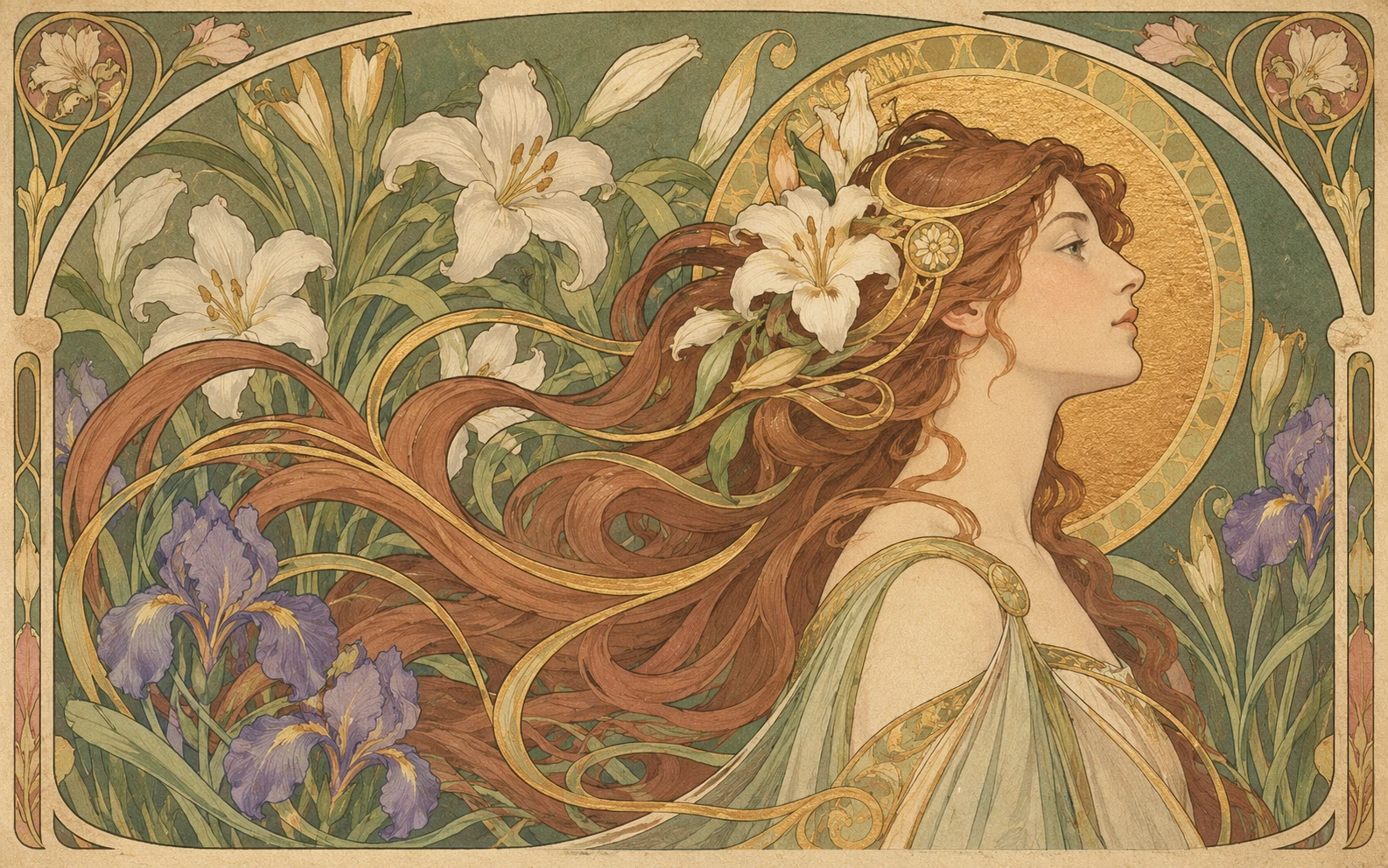
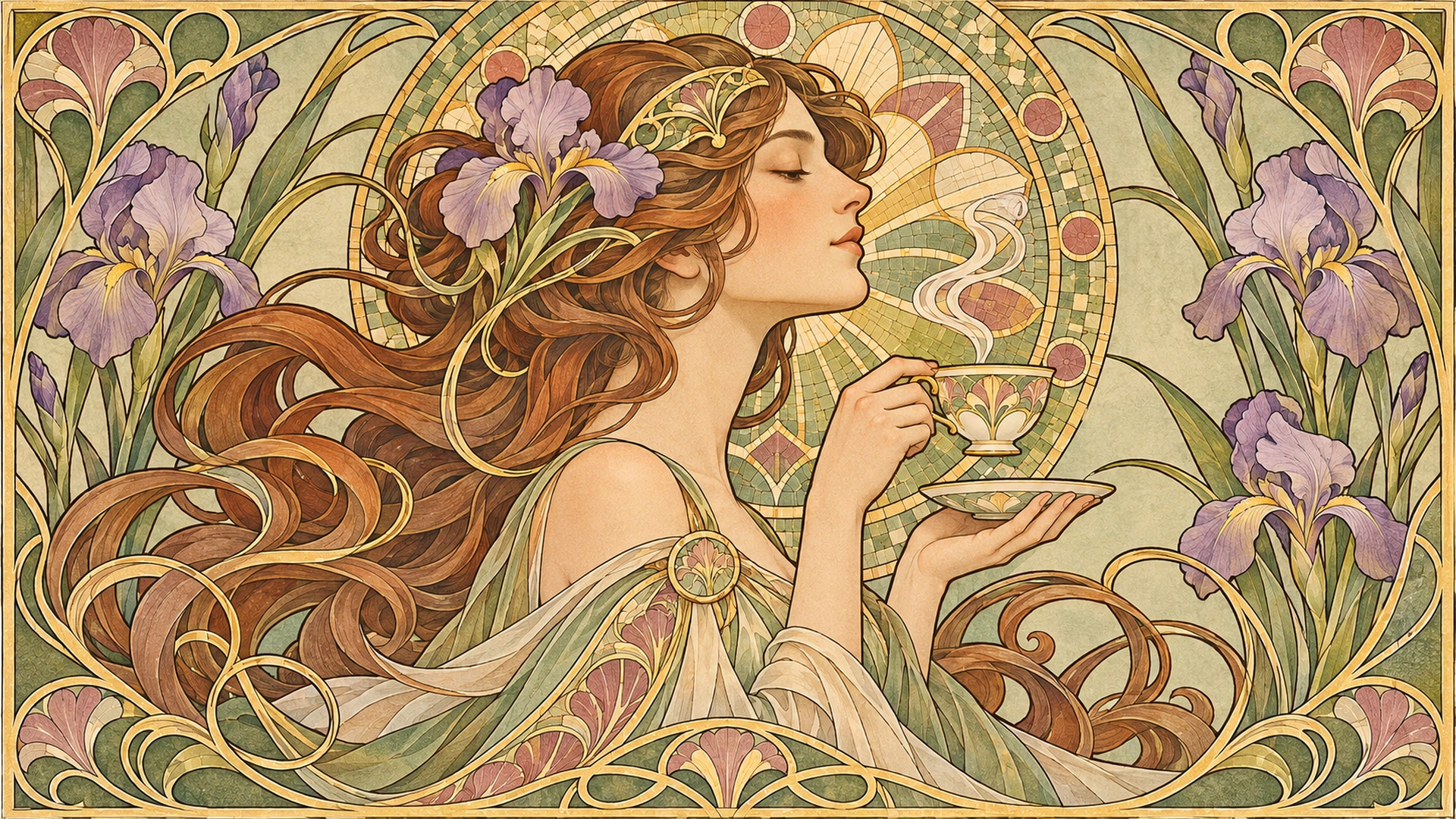
A young woman, calm and graceful, usually in profile or three-quarter view.
Long hair that flows and curls into ornamental, almost abstract shapes.
A large circle or arch behind the head, filled with pattern.
Ornamental borders, mosaics, flowers and lettering built into the design.
Soft pastels, muted golds, sage, rose and cream, with fine dark contours.
Tall, narrow posters and decorative panels.
How to recognize Alphonse Mucha's work
- A graceful woman framed by a circular halo.
- Hair turning into ornamental curves.
- Floral borders and pastel colour with fine outlines.
Where people get it wrong
'Mucha style' is often reduced to a pretty woman with flowers. His compositions are carefully built: the halo, the hair and the border form one ornamental system around the figure, and the lettering is part of the design, not added later.
Words to describe Alphonse Mucha
Words for what you see and feel in this work. They are for describing and understanding, not a recipe for copying an artist.
- art nouveau poster
- flowing ornamental hair
- circular halo behind the head
- decorative floral border
- soft pastel palette
- fine dark contour lines
- Byzantine mosaic details
- tall narrow format
- graceful profile
- integrated lettering
An original decorative poster study in the Art Nouveau manner: a calm young woman in profile holding a teacup, her long hair flowing into curling ornamental lines, a large circular halo of geometric mosaic behind her, a border of irises and leaves, soft sage, rose and gold colours with fine dark outlines, no readable text.
What to learn from Alphonse Mucha
- Describe the figure's pose and gaze.
- Describe how hair, halo and border connect.
- Name the palette and the type of ornament: floral, Byzantine, geometric.
Questions about Alphonse Mucha
Who was Alphonse Mucha?
Czech artist whose Paris posters defined Art Nouveau: women with flowing hair framed by halos, flowers and ornamental borders, in soft pastel colour.
How do you recognize Alphonse Mucha's work?
A graceful woman framed by a circular halo. Hair turning into ornamental curves. Floral borders and pastel colour with fine outlines.
How do you describe Alphonse Mucha in words or a prompt?
Describe the figure's pose and gaze. Describe how hair, halo and border connect. Name the palette and the type of ornament: floral, Byzantine, geometric.
Describe a poster for something ordinary, like a tea brand or a bookshop, in Mucha's manner: the figure, the halo behind her, the plants in the border and how the lettering fits in.