Seeing the print before you press the shutter
Ansel Adams was born in San Francisco in 1902 and trained as a concert pianist. A family trip to Yosemite at fourteen, with a Kodak Box Brownie, set the course of his life. In 1927 he made Monolith, the Face of Half Dome, using a deep red filter to turn the sky almost black: the first time, he said, he 'visualised' the final print before exposing it.
In 1932 he co-founded Group f/64 with Edward Weston and Imogen Cunningham, for sharp, unmanipulated photography. Around 1940, with Fred Archer, he developed the Zone System, which divides a scene into eleven tones from pure black to pure white so the photographer can plan exposure and development. Moonrise, Hernandez, New Mexico (1941) and his national park pictures made him the most famous landscape photographer in the world, and an influential voice for wilderness protection. He died in 1984.
Visual anatomy of Ansel Adams
A full scale from deep black to bright white, with rich detail in both.
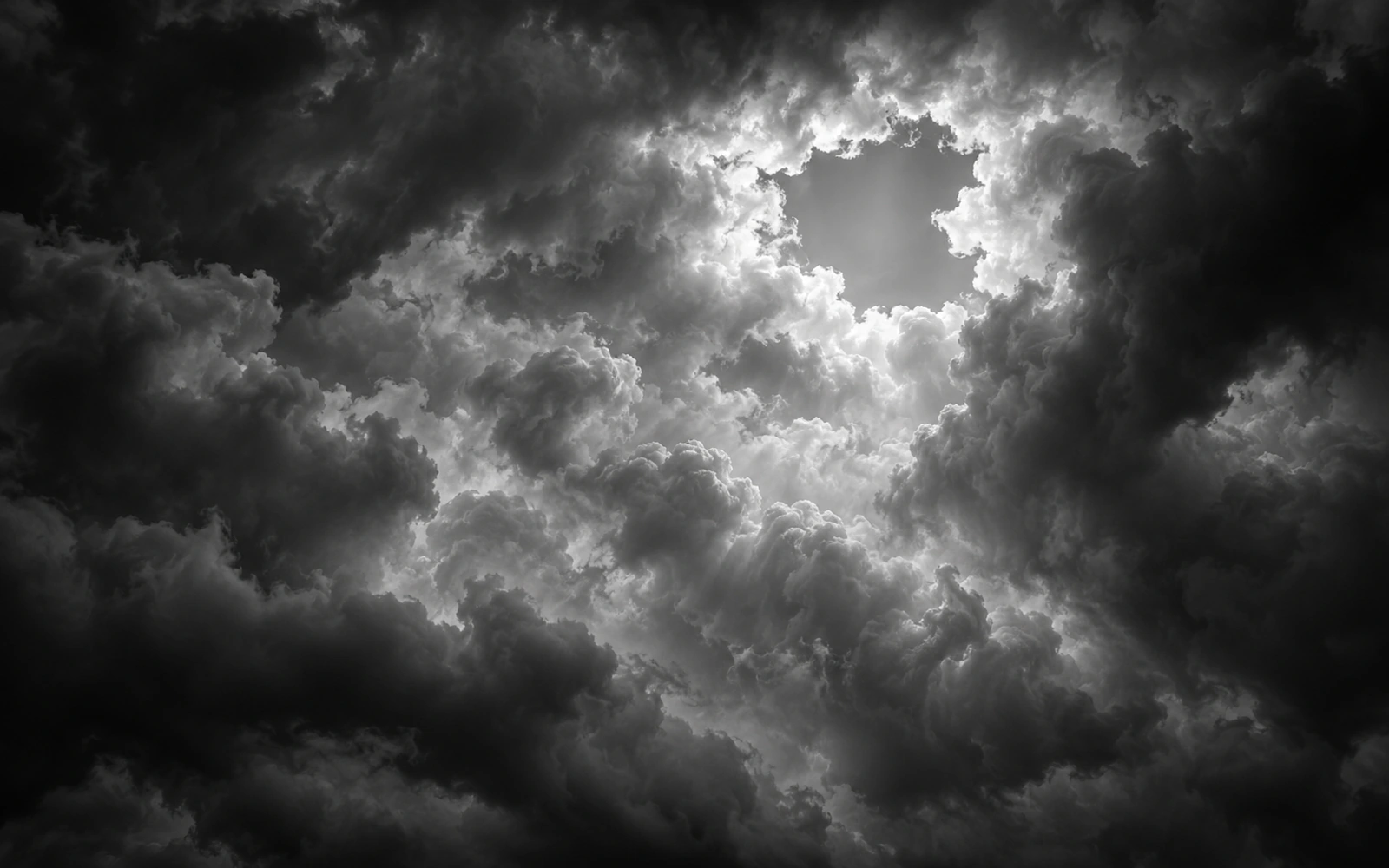
Skies darkened with red or yellow filters so clouds and peaks stand out.
Granite cliffs, mountains, trees, rivers, snow and storms in national parks.
Large-format cameras and small apertures: everything in focus.
Dramatic weather, clearing storms, low sun and moonlight.
Carefully made darkroom prints; the negative is 'the score', the print 'the performance'.
How to recognize Ansel Adams's work
- Black-and-white landscapes with enormous tonal range.
- Dark, dramatic skies and bright white peaks or clouds.
- Front-to-back sharpness on a grand scale.
Where people get it wrong
Adams's look is often imitated by simply converting a landscape to black and white and adding contrast. His real method is planning: choosing which part of the scene will be pure black, which pure white and which middle grey, before taking the picture.
Words to describe Ansel Adams
Words for what you see and feel in this work. They are for describing and understanding, not a recipe for copying an artist.
- black and white landscape
- full tonal range
- zone system exposure
- red filter dark sky
- clearing winter storm
- granite cliff
- large format sharpness
- deep focus f/64
- moonrise over a village
- silver gelatin print
An original description inspired by the approach, not a copy: a black-and-white photograph of a granite peak after a winter storm, the sky filtered almost black, bright white clouds tearing away from the summit, snow-covered pines in sharp focus in the foreground, every tone from deep black to brilliant white.
What to learn from Ansel Adams
- Name the darkest and the brightest tones and what holds detail in between.
- Describe the sky: filtered dark, stormy, clearing.
- Say how much is in focus, from foreground rock to distant peak.
Questions about Ansel Adams
Who was Ansel Adams?
American photographer of monumental black-and-white landscapes of Yosemite and the American West, who invented a method, the Zone System, for controlling every tone from black to white.
How do you recognize Ansel Adams's work?
Black-and-white landscapes with enormous tonal range. Dark, dramatic skies and bright white peaks or clouds. Front-to-back sharpness on a grand scale.
How do you describe Ansel Adams in words or a prompt?
Name the darkest and the brightest tones and what holds detail in between. Describe the sky: filtered dark, stormy, clearing. Say how much is in focus, from foreground rock to distant peak.
Pick a view near you and plan a black-and-white photograph of it in words: which part will be pure black, which pure white, which middle grey, and what the sky will do.