The lens is a point of view
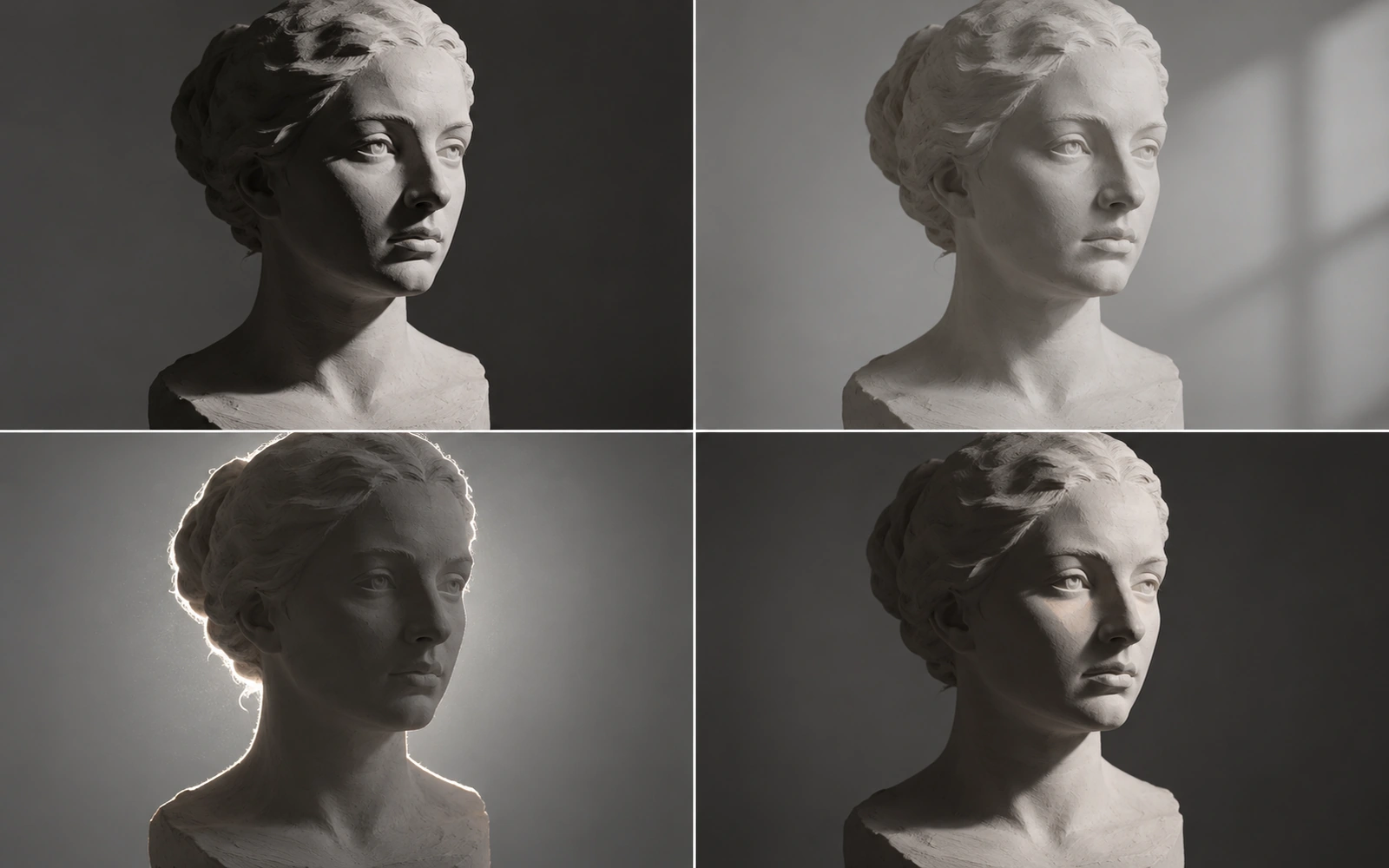
Two photographs of the same face taken with different lenses look like different people: a wide lens up close exaggerates the nose and pulls the background away, a long lens flattens features and compresses the background. Camera settings decide what is sharp, what blurs and how motion is recorded.
These words come from photography and film, and they are among the most useful terms in image prompts because models have learned them from millions of captioned photographs.
Focal length
Shows a lot of the scene, exaggerates distance and perspective; dramatic up close.
Close to how the eye sees; natural, honest.
Narrow view, flattens and compresses space; flattering for portraits.
Background seems closer and larger with long lenses.
Extreme wide angle with strong curved distortion.
Aperture, shutter and sensitivity
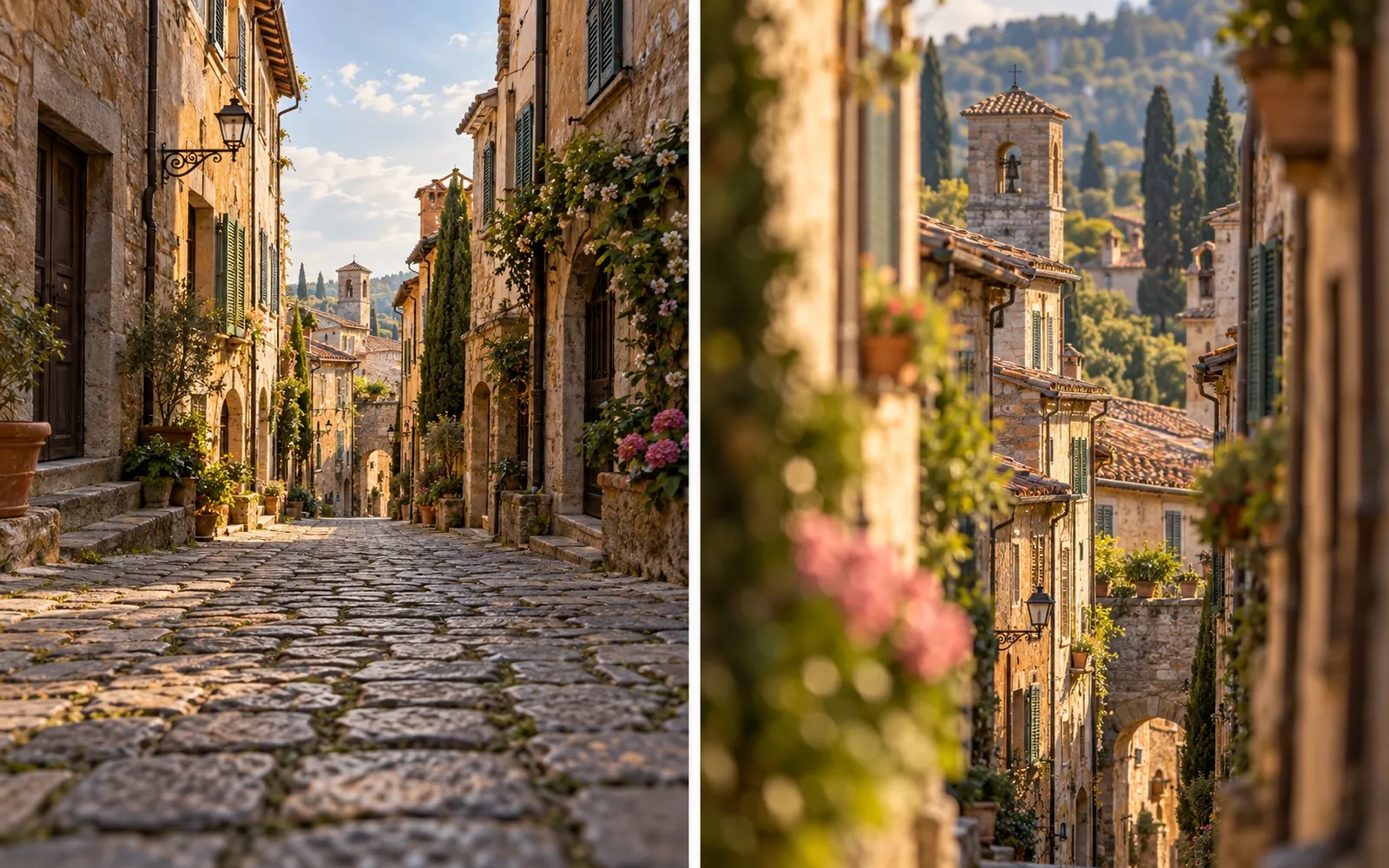
How wide the lens opens; low f-numbers (f/1.4) give shallow focus, high (f/16) keep everything sharp.
How much of the scene is sharp from near to far.
The quality of the blur in out-of-focus areas, often soft discs of light.
Fast speeds freeze motion; slow speeds blur it.
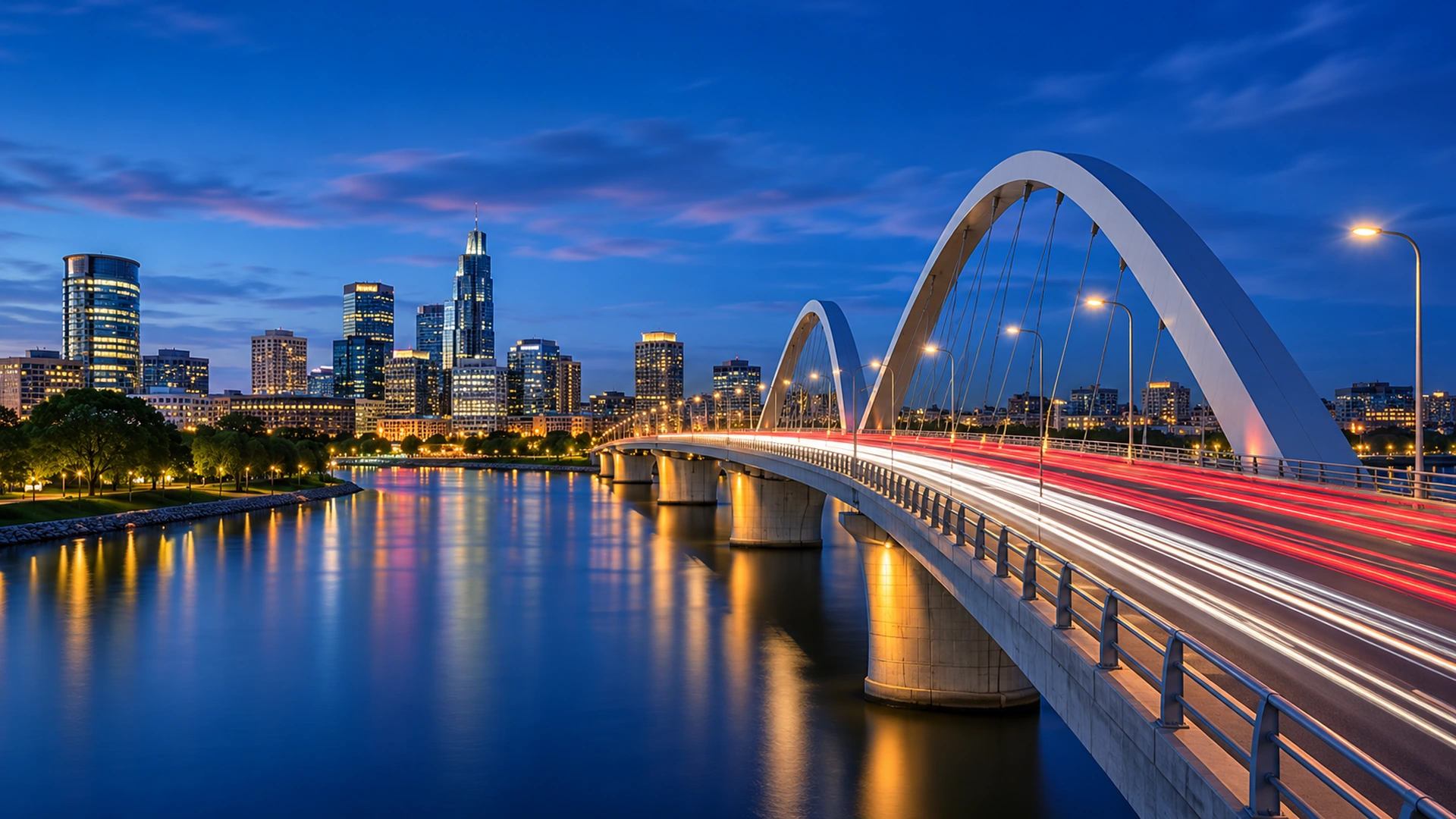
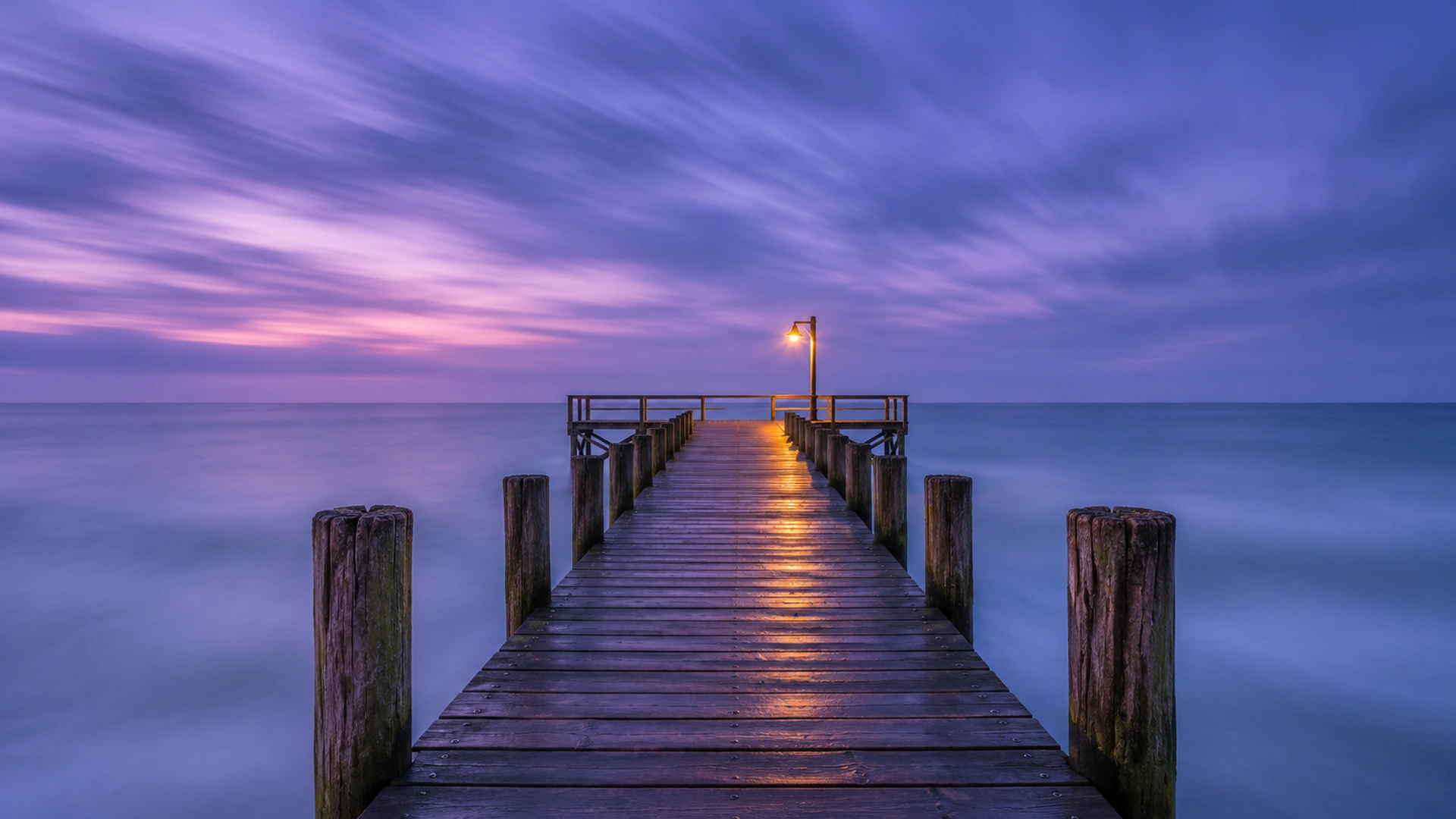
Seconds-long exposures that smooth water and draw light trails.
Higher sensitivity in low light adds visible noise or grain.
Special lenses and looks
Extreme close-up of small things at life size or larger.
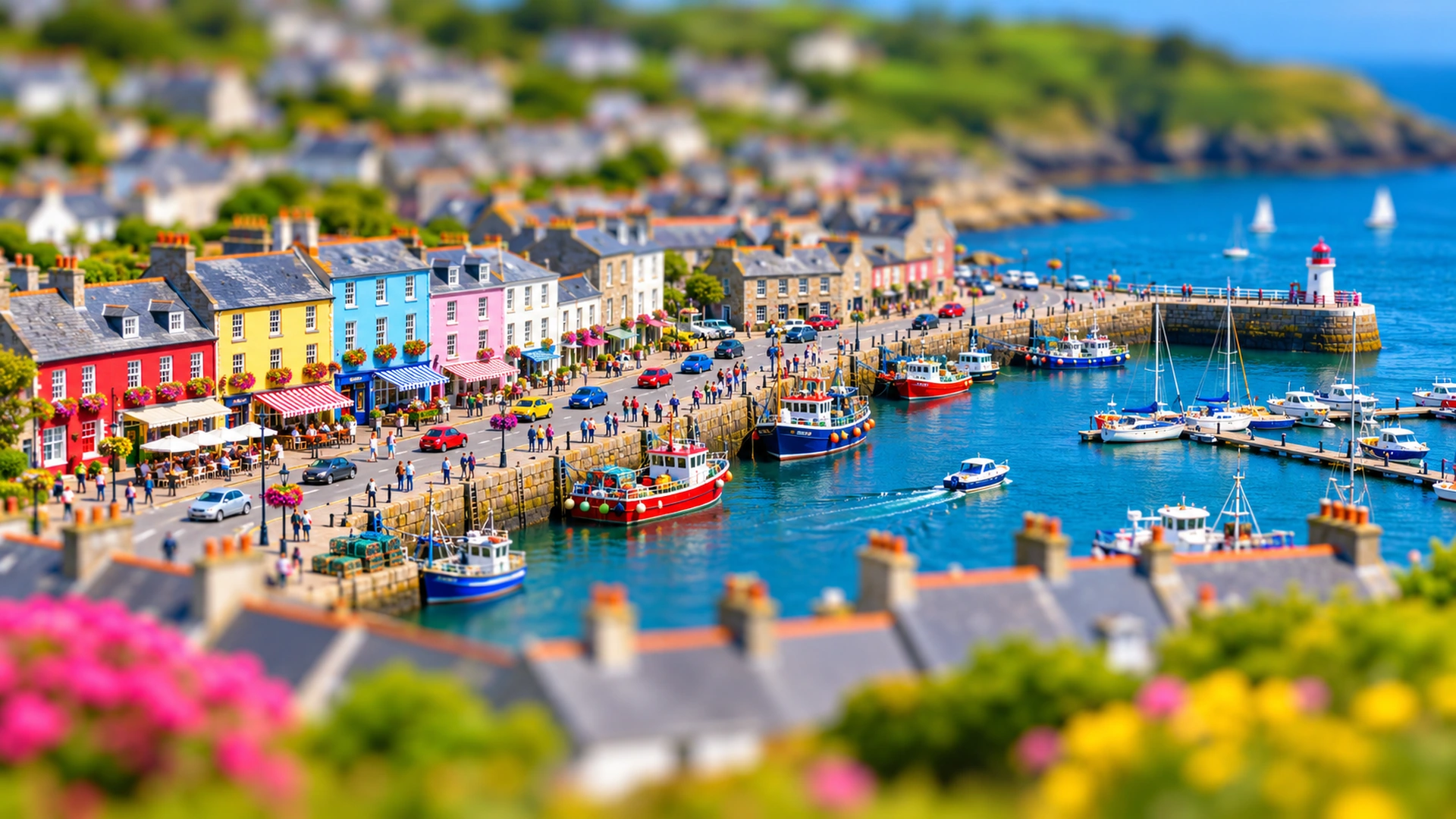
Selective focus that makes real scenes look like miniatures.
Widescreen cinema lenses: oval bokeh and horizontal lens flares.
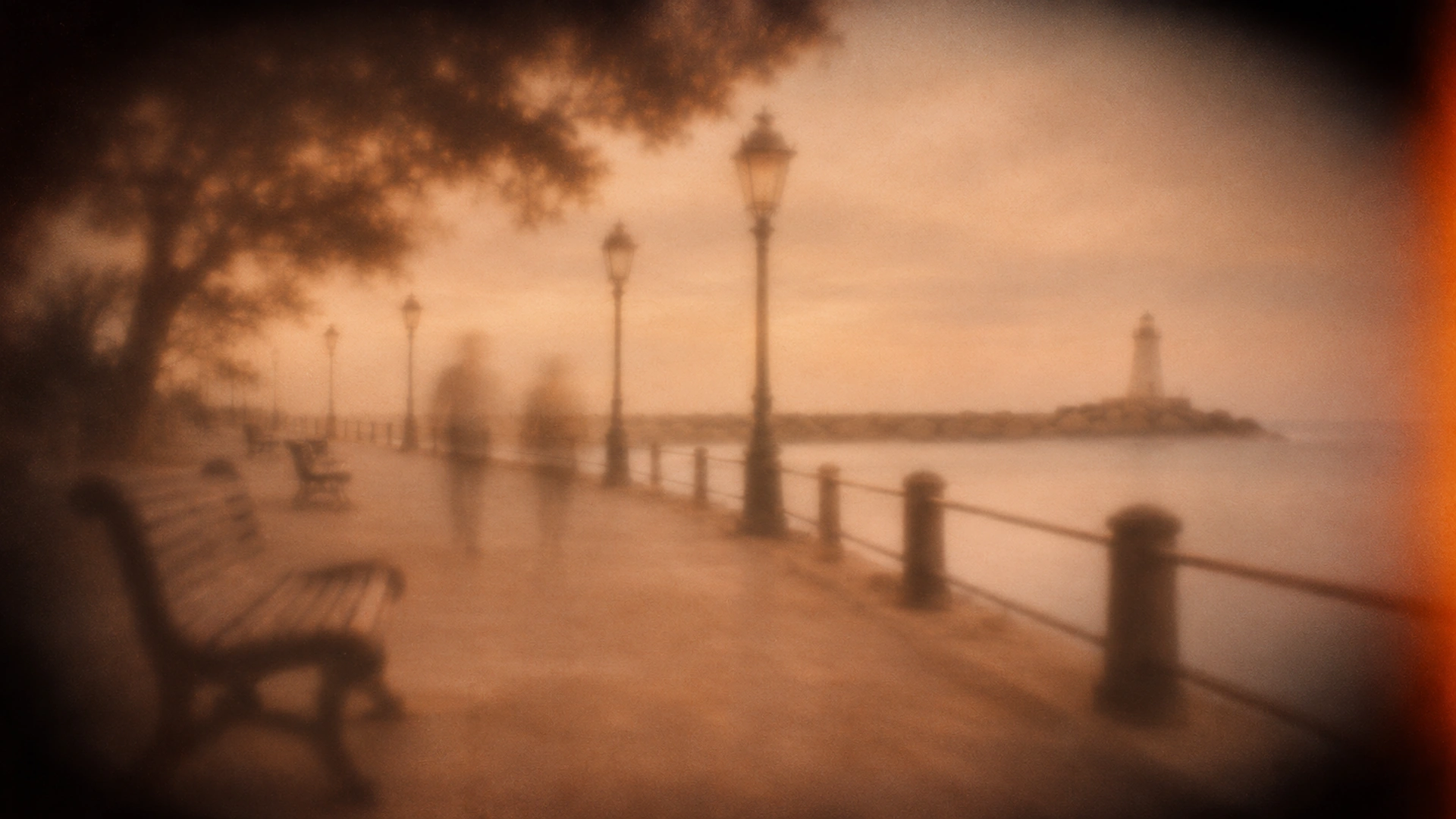
A gentle glow and softened detail, often for dreamy portraits.
Grain, color and slight imperfections of analog film stock.
Words to describe lens and camera
Precise words for the qualities above. Combine a few of them instead of naming the style or artist alone.
- 85mm portrait lens
- wide-angle 24mm
- telephoto compression
- shallow depth of field f/1.8
- creamy bokeh
- fast shutter freezing motion
- long exposure light trails
- macro close-up
- tilt-shift miniature effect
- anamorphic lens flare
A street portrait shot on an 85mm lens at f/1.8: the face sharp, the busy city behind compressed into soft creamy bokeh, warm evening light, slight 35mm film grain.
How to describe lens and camera in words
- Give the focal length or lens type: '85mm portrait', 'wide 24mm'.
- Describe focus: what is sharp, how blurred the rest is.
- Mention shutter effects: frozen splash, motion blur, light trails.
Where people get it wrong
Shallow depth of field is not automatically 'professional'. Blurring every background hides context; a deep, sharp image can tell more of the story. And a wide lens is not just for landscapes: used close, it creates intimacy and distortion.
Questions about lens and camera
What is lens and camera?
How the lens and camera settings shape an image: focal length, aperture, shutter, depth of field and special lenses, with what each one looks like.
How do you describe lens and camera in words or a prompt?
Give the focal length or lens type: '85mm portrait', 'wide 24mm'. Describe focus: what is sharp, how blurred the rest is. Mention shutter effects: frozen splash, motion blur, light trails.
Describe the same portrait three ways: with a wide 24mm lens up close, a 50mm at normal distance and an 85mm from further away. Say how the face and background change in each.