Painting at speed, seeing slowly
John Singer Sargent was born in Florence to American parents and grew up moving around Europe. He trained in Paris under the portraitist Carolus-Duran, who taught painting directly onto the canvas with a loaded brush, no careful drawing underneath, as Velázquez had done.
In 1884 his portrait of Madame Pierre Gautreau, now known as Madame X, caused a scandal at the Paris Salon: the pale skin, black dress and a slipped strap were too much. Sargent moved to London and became the most sought-after portrait painter of the Edwardian era, painting aristocrats, actors and the new rich of Britain and America.
Around 1907 he grew tired of commissions and spent his summers painting watercolours in the Alps, Venice and the Middle East: boats, fountains, friends asleep in the shade. He also made the murals of the Boston Public Library and, as a war artist, the huge painting Gassed (1919). His sketches are now studied by painters, illustrators and photographers for how they handle light.
Visual anatomy of John Singer Sargent
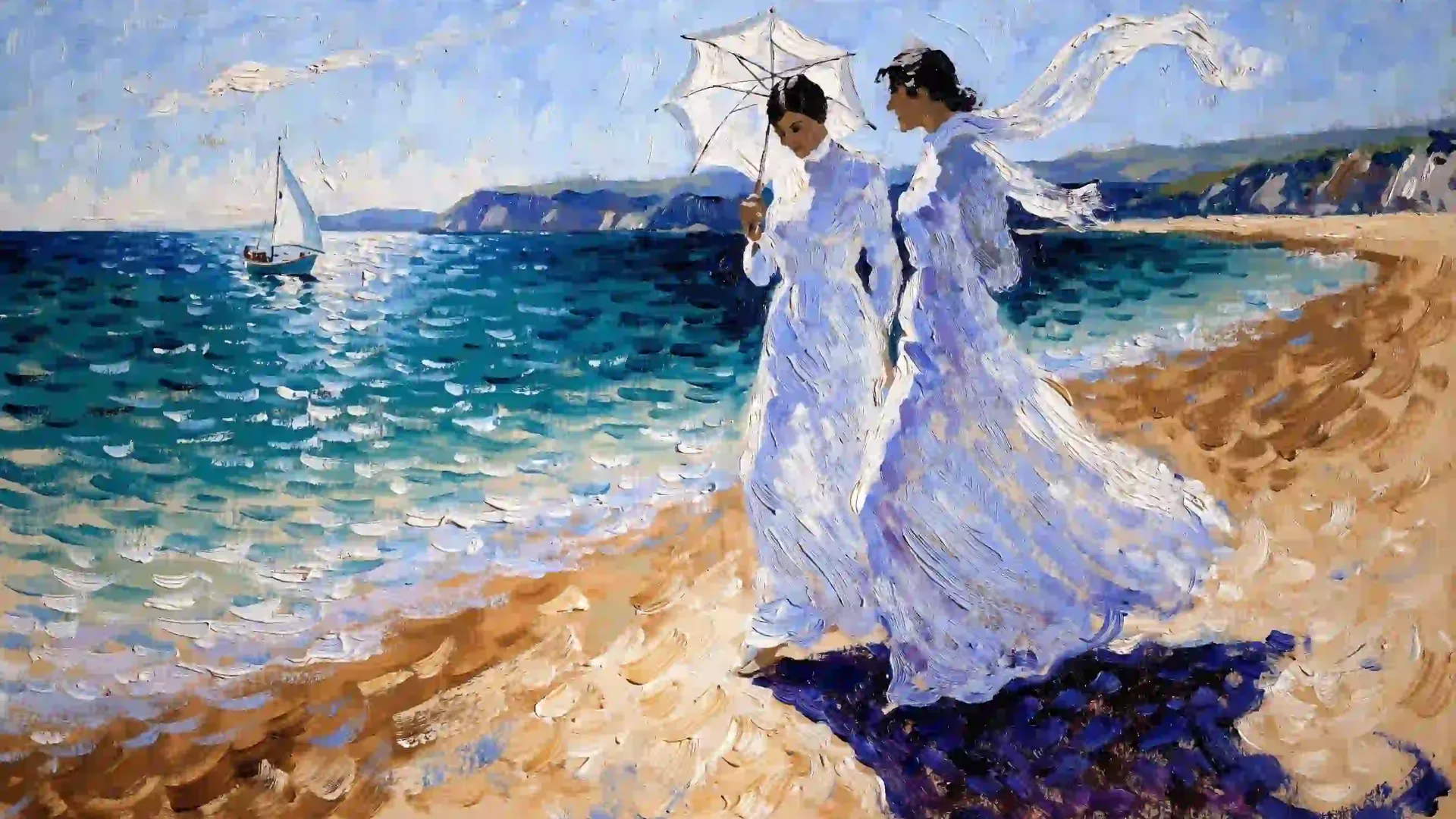
One confident stroke for each form, laid wet into wet and left alone; a few marks suggest a whole hand.
Strong directional light, often outdoors or from a window; highlights are thick, shadows thin.
White fabric painted with blues, violets, yellows and greys reflected from the surroundings.
Warm lit planes against cool shadow edges; little blending.
Sharp where he wants attention, lost and soft elsewhere, so the eye travels.
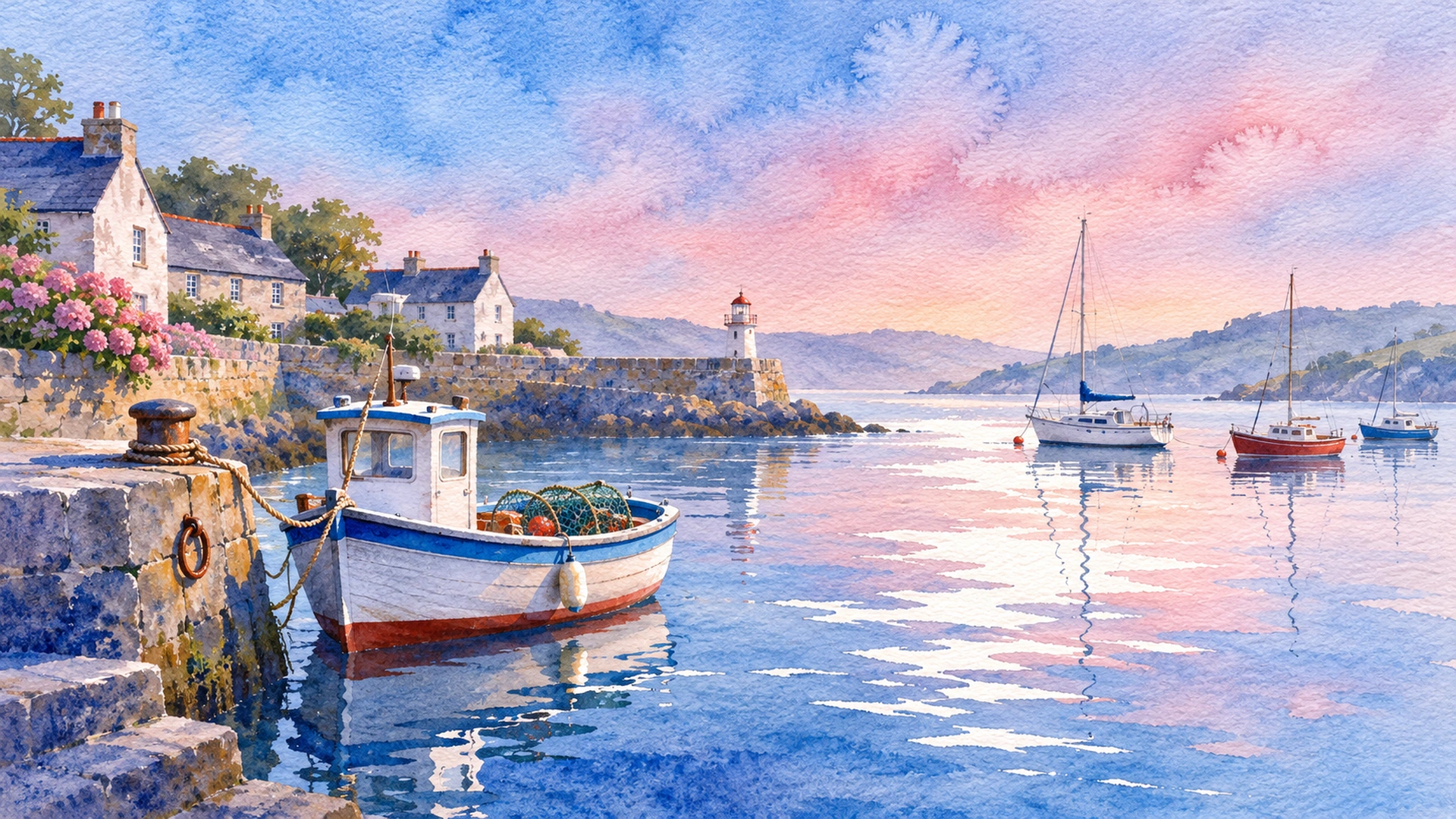
Transparent washes, wax resist and scratched highlights; the paper itself is the light.
Words around Sargent
Painting wet into wet in one session, without layered underpainting.
Visible, confident, showy strokes that display the painter's skill.
Mixing sharp and dissolved edges to guide the eye.
Painting outdoors, in front of the subject, in real light.
How to recognize John Singer Sargent's work
- Elegant sitters in a confident pose, painted with loose visible strokes.
- White dresses and sheets full of reflected colour.
- A few precise marks where you expect detail: hands, jewellery, lace.
- Strong sunlight and dappled shade in outdoor scenes.
- Fresh, transparent watercolours of boats, walls and water.
Where people get it wrong
Sargent is often seen as a society flatterer, or his looseness as speed. His strokes look effortless because he scraped down and repainted until one stroke worked. His real subject is light, which is why his informal watercolours and sketches are often more admired today than his formal portraits.
Words to describe John Singer Sargent
Words for what you see and feel in this work. They are for describing and understanding, not a recipe for copying an artist.
- bravura brushwork
- alla prima
- loose confident strokes
- reflected colour in white fabric
- lost and found edges
- dappled sunlight
- warm light, cool shadow
- Edwardian portrait
- transparent watercolour
- plein air
- elegant sitter
- economy of marks
A woman in a white linen dress resting in dappled shade under a tree, painted alla prima with loose confident strokes: the dress full of reflected lavender, blue and warm yellow, sharp edges only on her face and one hand, everything else dissolving into sunlit green, thick highlights and thin cool shadows.
What to learn from John Singer Sargent
- Describe white things by the colours they reflect.
- Ask for fewer, bigger strokes rather than detail everywhere.
- Decide where the sharp edge is; let the rest dissolve.
- Name the light: noon sun, window light, dappled shade.
Questions about John Singer Sargent
Why was Madame X controversial?
At the 1884 Paris Salon the portrait showed Virginie Gautreau's pale, powdered skin against a black gown with one jewelled strap slipping off her shoulder. Critics found it indecent. Sargent repainted the strap upright, but the scandal pushed him to leave Paris for London.
What is special about Sargent's watercolours?
They are painted fast and transparent, mostly outdoors, with the white of the paper left as light. He used wax resist and scraping for sparkle, and painted shadows full of colour. Painters and illustrators study them as models of economy.
Was Sargent an Impressionist?
Not really, though he knew Monet and painted outdoors with him. He kept the solid drawing and dark tonal structure of academic portraiture, and used Impressionist colour mainly in his landscapes and watercolours.
Find one Sargent portrait with a white dress. List every colour you can see inside the white. Then describe the dress in one sentence without using the word 'white'.
Sources and further reading
- The Metropolitan Museum of Art: Madame X (Madame Pierre Gautreau), 1883–84.
- Richard Ormond and Elaine Kilmurray, John Singer Sargent: Complete Paintings, Yale University Press, 1998–2016.
- Museum of Fine Arts, Boston: Sargent watercolours and murals.
- Brooklyn Museum: John Singer Sargent watercolour collection.