From the daguerreotype to the phone
Portraits were among the first uses of photography. After the daguerreotype was announced in 1839, studios opened in every city, and sitters held still for long exposures with the help of hidden head braces. For the first time people who could never afford a painted portrait could have their likeness made.
The genre soon split into many ways of seeing. Julia Margaret Cameron, in the 1860s, made soft-focus, intensely close portraits that aimed at character rather than precision. August Sander, from the 1920s, photographed Germans by profession and class with sober directness. Yousuf Karsh's 1941 portrait of Winston Churchill showed how a single moment of expression can define a public image; Richard Avedon's stark white backgrounds and Annie Leibovitz's staged environments pulled the genre in opposite directions. Today every phone has a 'portrait mode', and the questions remain the same: how close, from which angle, in what light, and when to press the shutter.
Visual anatomy of portrait photography
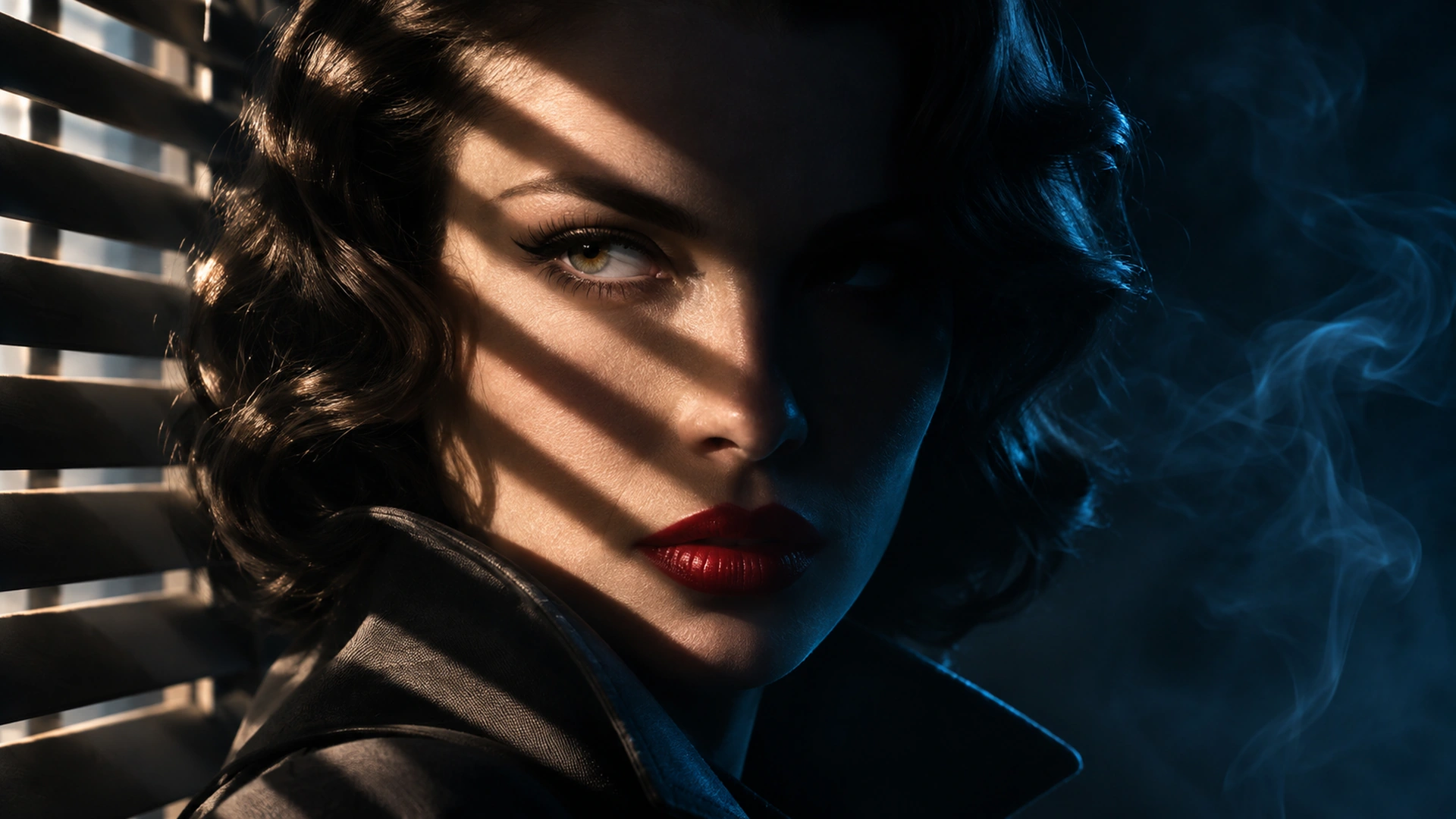
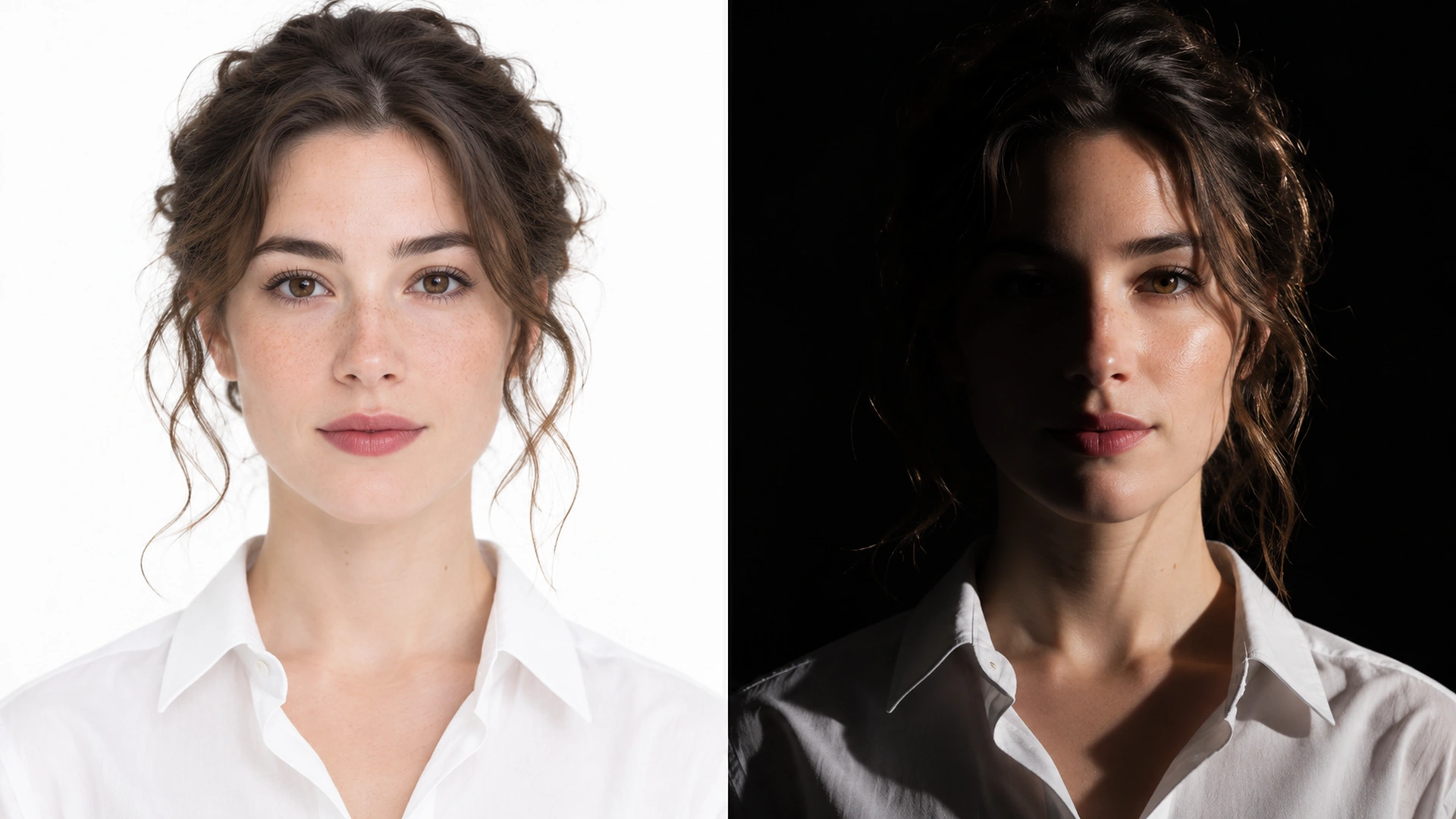
The pattern on the face: Rembrandt, loop, butterfly, split or soft window light.
Short telephoto (around 85mm) flatters; wide lenses close up distort and feel intimate.
Headshot, head and shoulders, half-length, full-length, environmental.
Into the lens, away, down, toward something in the frame.
Posture, tilt of the head and what the hands are doing.
Plain backdrop, studio, or the person's own place and tools.
Styles
Controlled light and plain backdrop; attention entirely on the face.
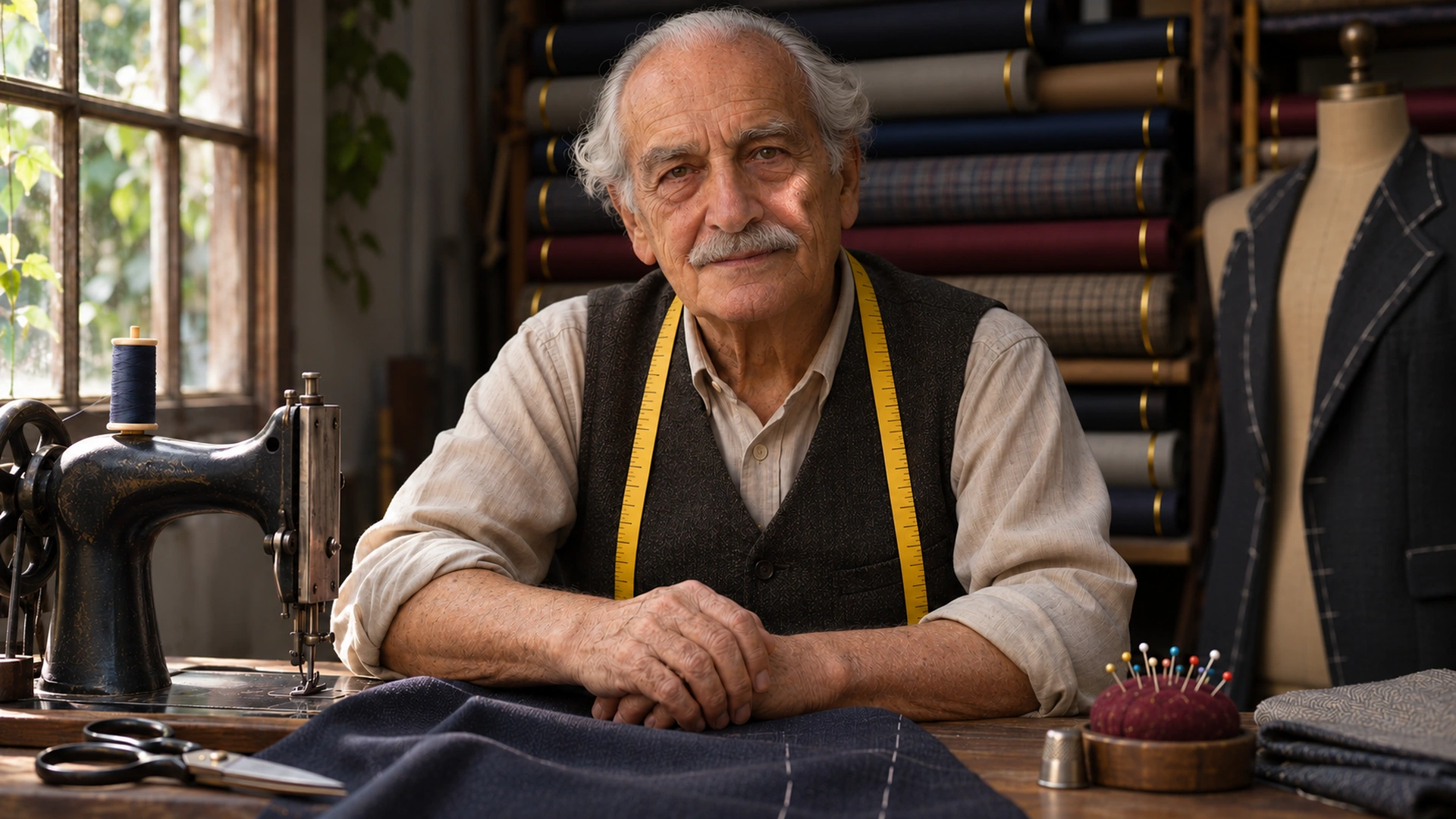
The person in their own place, with objects that tell their story.
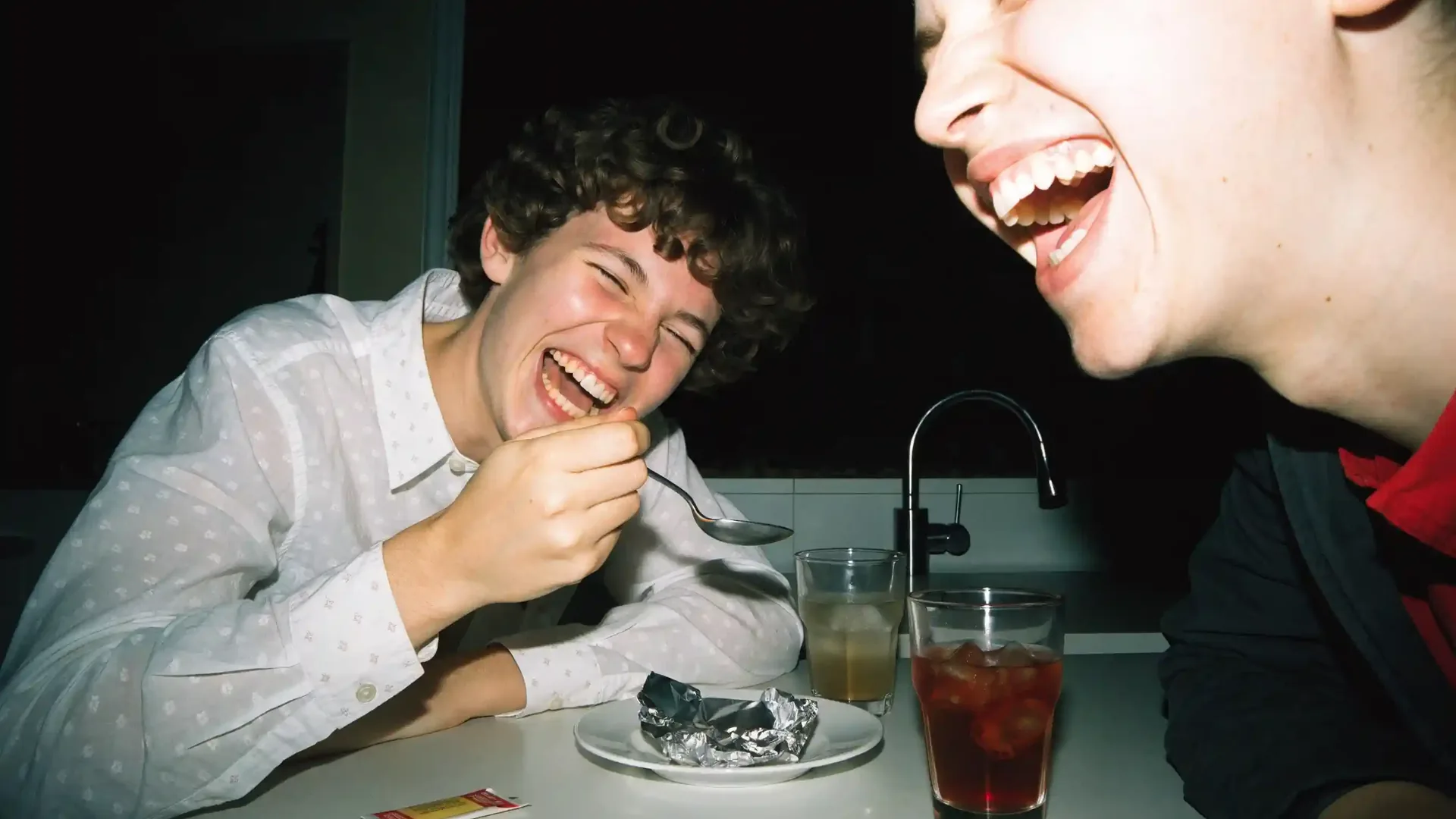
Unposed, caught in the middle of life.
A tight, clear head-and-shoulders image for identification or casting.
A portrait that is also an idea, a mood or a series.
How to recognize portrait photography
- One person is the subject and the face matters most.
- Light is shaped around the face.
- The background supports, not competes.
- A clear decision about gaze and expression.
Where people get it wrong
Describing only the person's looks. A portrait prompt that lists hair, eyes and clothes gives a catalogue photo. Describe the photograph too: the light pattern, the lens and distance, the framing, the gaze and the moment. 'A woman in her sixties, soft window light from the left, 85mm, head and shoulders, looking slightly past the camera, the moment just after a laugh' is a portrait.
Words to describe portrait photography
Precise words for the qualities above. Combine a few of them instead of naming the style or artist alone.
- portrait photography
- Rembrandt lighting
- soft window light
- catchlights
- 85mm lens
- shallow depth of field
- head and shoulders
- environmental portrait
- direct gaze
- candid moment
- plain backdrop
- character study
An original environmental portrait study: an elderly tailor in his workshop, seated at a sewing table with tape measure around his neck, soft window light from the left creating a gentle Rembrandt triangle on his cheek, 50mm lens at eye level, waist-up framing, fabric rolls and paper patterns behind him slightly out of focus, looking calmly into the lens.
What to take from portrait photography today
- Name the light pattern and its source.
- Give the lens and distance: 85mm head and shoulders, 35mm environmental.
- Choose the gaze and a precise expression or moment.
- Say what the setting reveals about the person.
Questions about portrait photography
What lens is best for portrait photography?
Short telephotos around 85mm are classic for head-and-shoulders portraits because they flatter facial proportions; 35–50mm suits environmental portraits.
What are the main portrait lighting patterns?
Rembrandt (a triangle of light on the shadow cheek), loop, butterfly (light from above, centred), split (half the face lit) and broad or short lighting.
Look at a portrait you admire and write its 'technical sentence' in one line: light pattern and source, lens and distance, framing, gaze, expression. Then write a second line about what the setting says about the person.
Sources and further reading
- Julia Margaret Cameron, Annals of My Glass House (1874).
- Graham Clarke (ed.), The Portrait in Photography (1992).