Colour as an experience
Mark Rothko was born in 1903 in Dvinsk, in the Russian Empire (now Daugavpils, Latvia), and emigrated to the United States as a child. After figurative and surrealist periods, around 1949–50 he arrived at the format he is known for: two or three soft-edged rectangles of colour floating on a coloured ground, on very large canvases.
He wanted viewers to stand close and feel 'basic human emotions: tragedy, ecstasy, doom'. His colours moved from glowing reds, oranges and yellows to darker maroons, browns and blacks in later works such as the paintings for the Rothko Chapel in Houston, which opened in 1971, a year after his death.
Visual anatomy of Mark Rothko
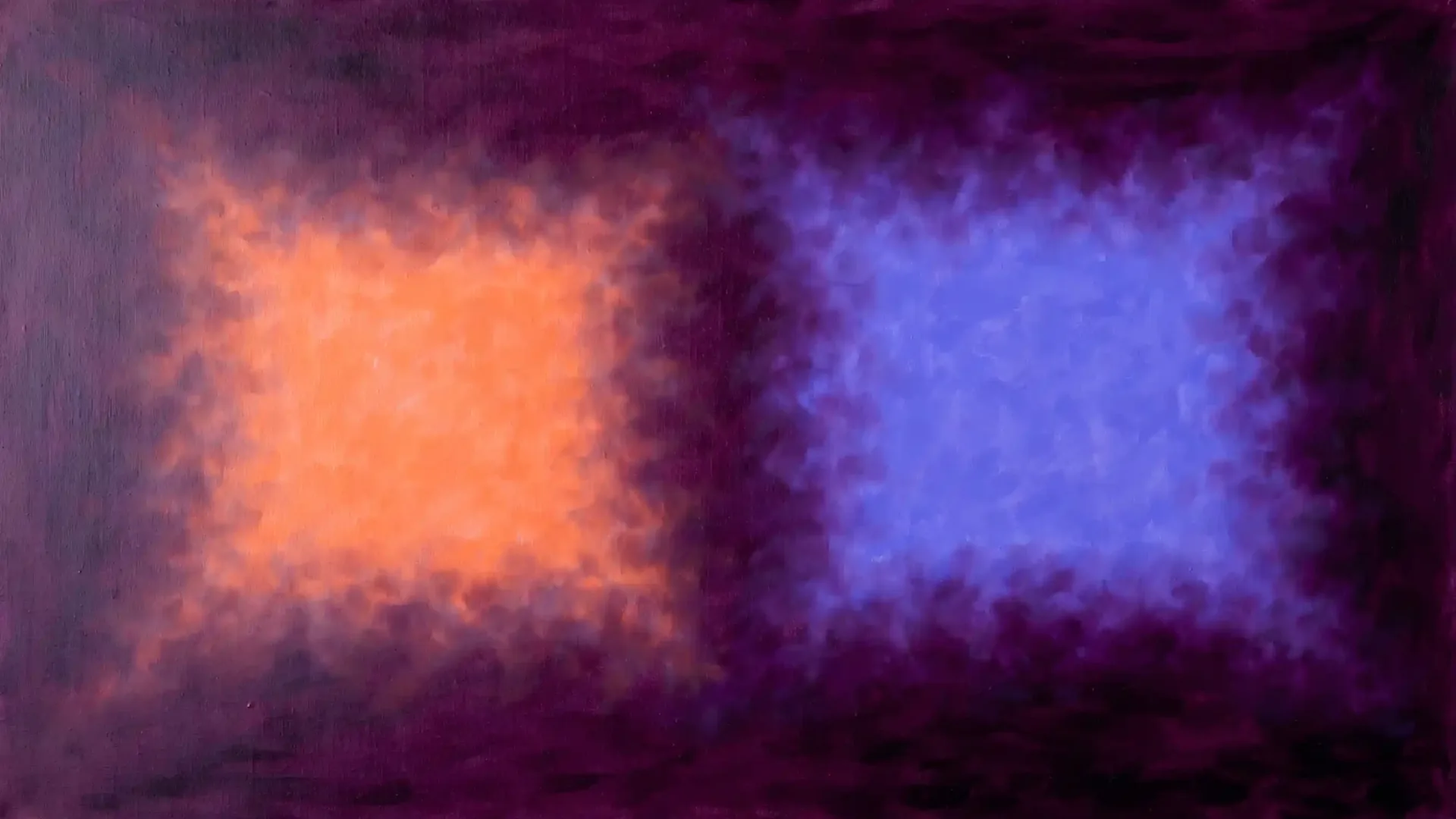
Two or three stacked rectangles floating on a coloured field.
Soft, feathered, breathing edges rather than hard lines.
Layered thin washes that glow from within; warm reds and oranges, later deep maroons and blacks.
Large canvases meant to be seen from close, filling your vision.
Thin, translucent layers with subtle variations.
Contemplative, emotional, almost spiritual.
How to recognize Mark Rothko's work
- Soft-edged rectangles stacked on a field of colour.
- Glowing, layered colour.
- Large scale and a quiet, intense mood.
Where people get it wrong
Rothko paintings are often called 'just rectangles' or used as calm decor. He insisted they were about emotion, and the effect depends on scale, light and slow looking. A small flat reproduction loses almost everything.
Words to describe Mark Rothko
Words for what you see and feel in this work. They are for describing and understanding, not a recipe for copying an artist.
- colour field painting
- soft-edged floating rectangles
- glowing layered colour
- deep maroon and black
- warm red and orange bands
- feathered edges
- monumental canvas
- contemplative mood
- translucent thin washes
- spiritual abstraction
An abstract composition in the spirit of colour field painting: two soft-edged rectangles, deep red over burnt orange, floating on a dark maroon ground, feathered breathing edges, thin translucent layers that glow, a quiet, contemplative feeling.
What to learn from Mark Rothko
- Describe the colours and how they glow against each other.
- Describe the edges: feathered, soft, breathing.
- Say the scale and the feeling of standing in front of it.
Questions about Mark Rothko
Who was Mark Rothko?
American painter of glowing, soft-edged rectangles of colour that seem to breathe and surround the viewer: the master of colour field painting.
How do you recognize Mark Rothko's work?
Soft-edged rectangles stacked on a field of colour. Glowing, layered colour. Large scale and a quiet, intense mood.
How do you describe Mark Rothko in words or a prompt?
Describe the colours and how they glow against each other. Describe the edges: feathered, soft, breathing. Say the scale and the feeling of standing in front of it.
Look at a sunset or a coloured wall in fading light for five minutes. Describe it as a Rothko painting: the bands of colour, their soft edges, and how the feeling changes as you keep looking.