The canvas as an arena
Abstract Expressionism developed in New York in the 1940s and 1950s, the first American movement to shape art worldwide. Its painters, influenced by Surrealism's interest in the unconscious and by European artists who had fled the war, made large abstract works meant to carry intense personal and universal emotion.
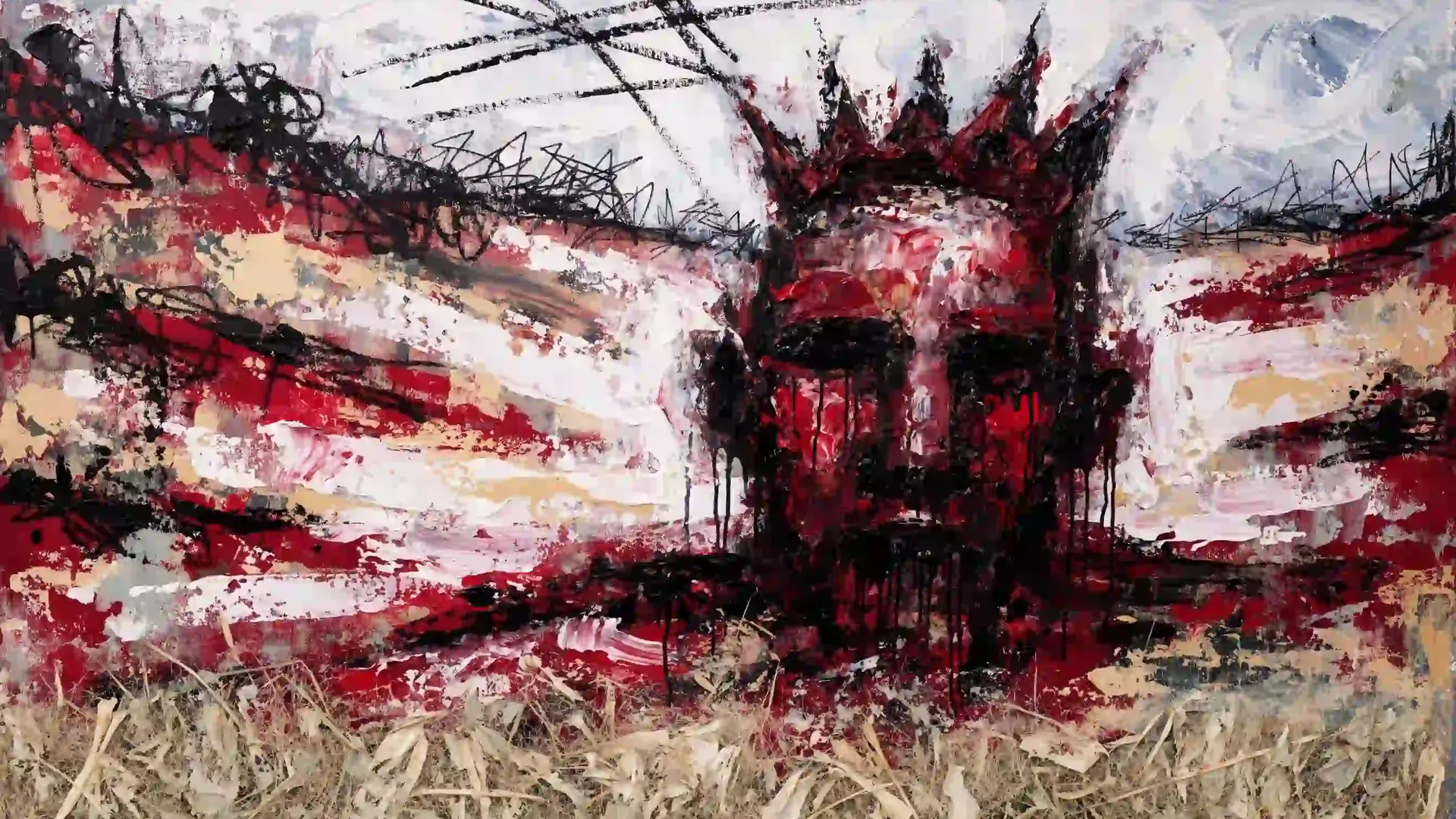
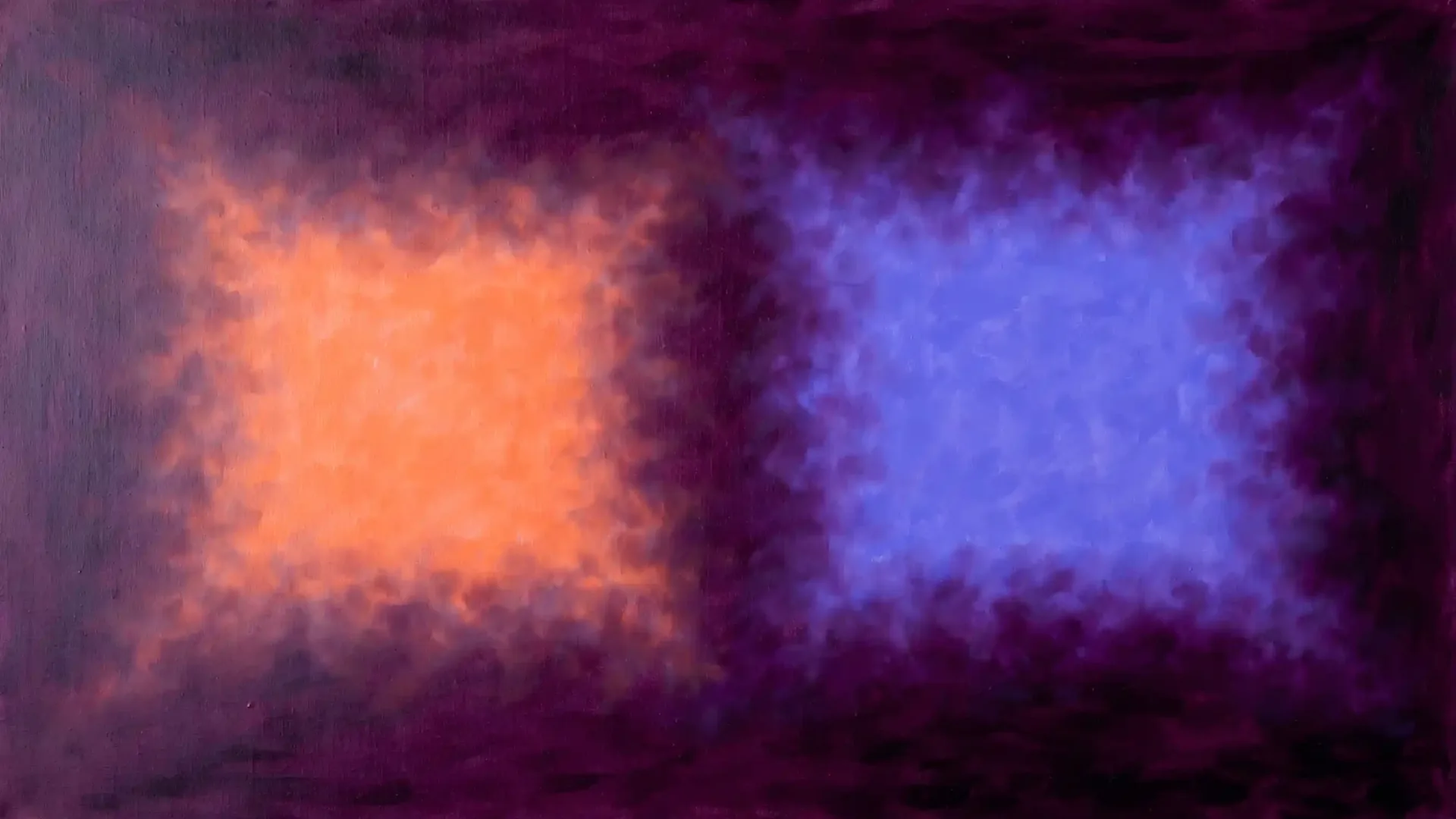
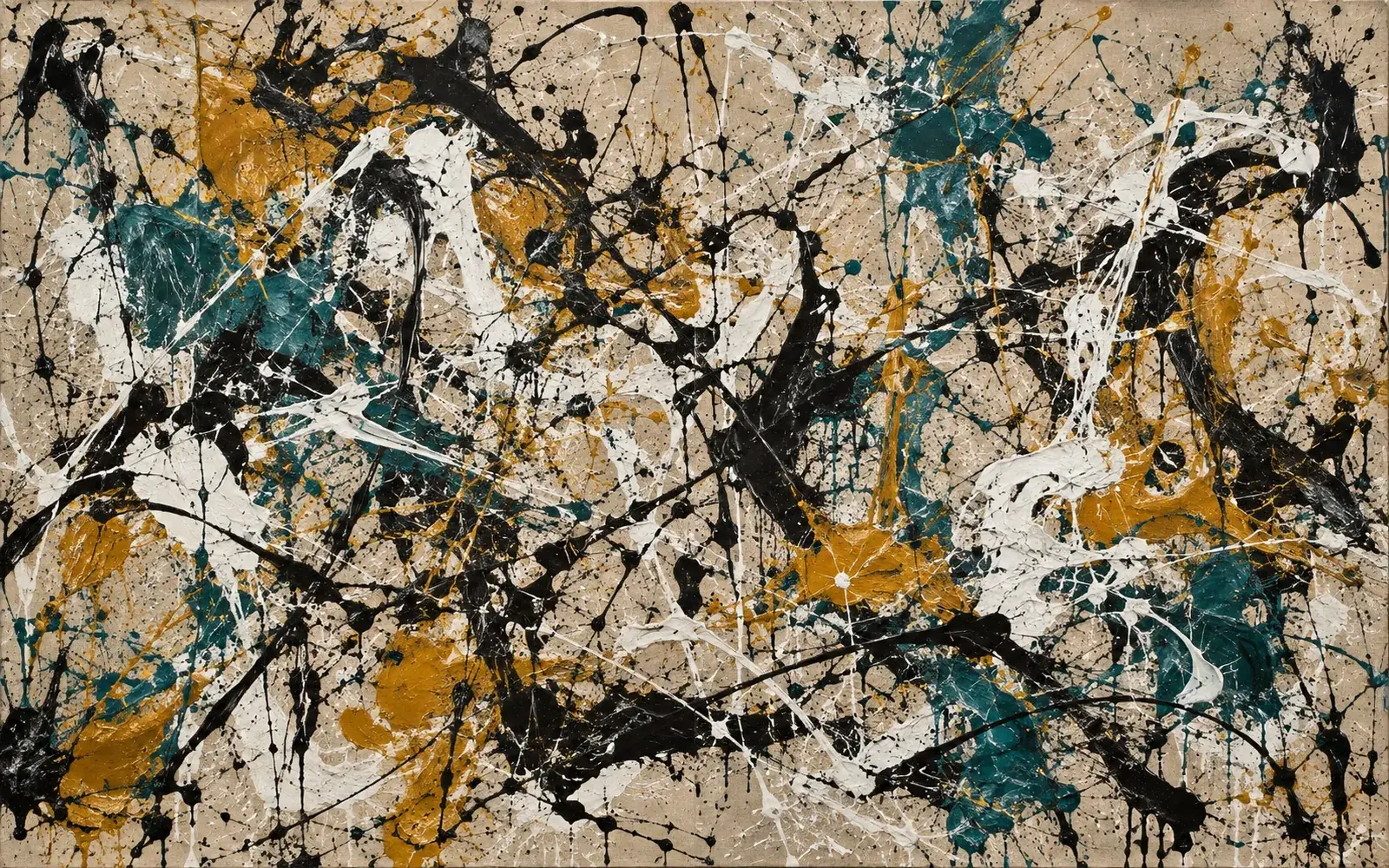
It had two main directions. Action painting, a term the critic Harold Rosenberg used in 1952, treated the canvas as an arena: Jackson Pollock dripped and poured paint on canvas laid on the floor, Willem de Kooning and Franz Kline used violent brushstrokes. Colour field painting went the other way, with Mark Rothko, Barnett Newman and Clyfford Still building huge, quiet areas of colour, and Helen Frankenthaler soaking thinned paint into raw canvas. Lee Krasner and Joan Mitchell were central to both its energy and its later life.
Visual anatomy of Abstract Expressionism
Very large canvases that fill the viewer's field of vision.
Visible movement of the body: drips, pours, sweeping strokes, scraped paint.
Large areas of one colour with soft edges, glowing or vibrating against each other.
All-over: no centre, no single focus, the whole surface equally active.
Thick layered paint, splatter, or thin washes stained into raw canvas.
No recognisable objects; the subject is emotion, process and presence.
How to recognize Abstract Expressionism
- Very large abstract canvases.
- Either energetic gestures or vast calm fields of colour.
- No single centre of focus.
Where people get it wrong
It is often dismissed as 'paint thrown at a canvas'. The drips and fields were controlled over many years of practice, and the scale is essential: in a small reproduction most of the effect disappears.
Words to describe Abstract Expressionism
Precise words for the qualities above. Combine a few of them instead of naming the style or artist alone.
- abstract expressionism
- action painting
- all-over composition
- drips and pours
- sweeping gestural brushstrokes
- colour field
- soak-stain on raw canvas
- monumental scale
- layered thick paint
- emotional abstraction
A huge abstract canvas with no centre: energetic black and white drips and pours tangled over a raw beige ground, splashes of ochre and teal, thick layered paint in some places and bare canvas in others, visible movement of the arm across the whole surface.
What to take from Abstract Expressionism today
- Say which direction: gestural action or calm colour field.
- Describe the physical marks: drip, pour, sweep, stain.
- Mention scale and how the painting would surround a viewer.
Questions about Abstract Expressionism
What is Abstract Expressionism?
Large abstract paintings made in New York after the war, either by gesture and action or by vast fields of colour that surround the viewer.
How do you recognize Abstract Expressionism?
Very large abstract canvases. Either energetic gestures or vast calm fields of colour. No single centre of focus.
How do you describe Abstract Expressionism in words or a prompt?
Say which direction: gestural action or calm colour field. Describe the physical marks: drip, pour, sweep, stain. Mention scale and how the painting would surround a viewer.
Describe one wall in your home as if it were a colour field painting: its colour, how the edges soften, how the light changes it during the day, and how it would feel at three metres wide.