Light, dark and a whole life
Rembrandt Harmenszoon van Rijn was born in Leiden in 1606, the son of a miller. By his mid-twenties he had moved to Amsterdam, the richest city in Europe, and become its most sought-after portrait painter. He married Saskia van Uylenburgh, bought a grand house, and collected art, armour, shells and costumes.
In 1642 he finished the militia painting now called The Night Watch: instead of a neat row of officers he painted a company in motion, lit unevenly, with a glowing girl in the crowd. That same year Saskia died. His later life was marked by debt, bankruptcy in 1656 and the deaths of his partner Hendrickje Stoffels and his son Titus.
He never stopped working. He was also one of the greatest etchers who ever lived, and his late paintings, The Jewish Bride, The Return of the Prodigal Son and the last self-portraits, are built from heavy, sculpted paint and a quiet, unflattering tenderness. He died in Amsterdam in 1669.
Visual anatomy of Rembrandt
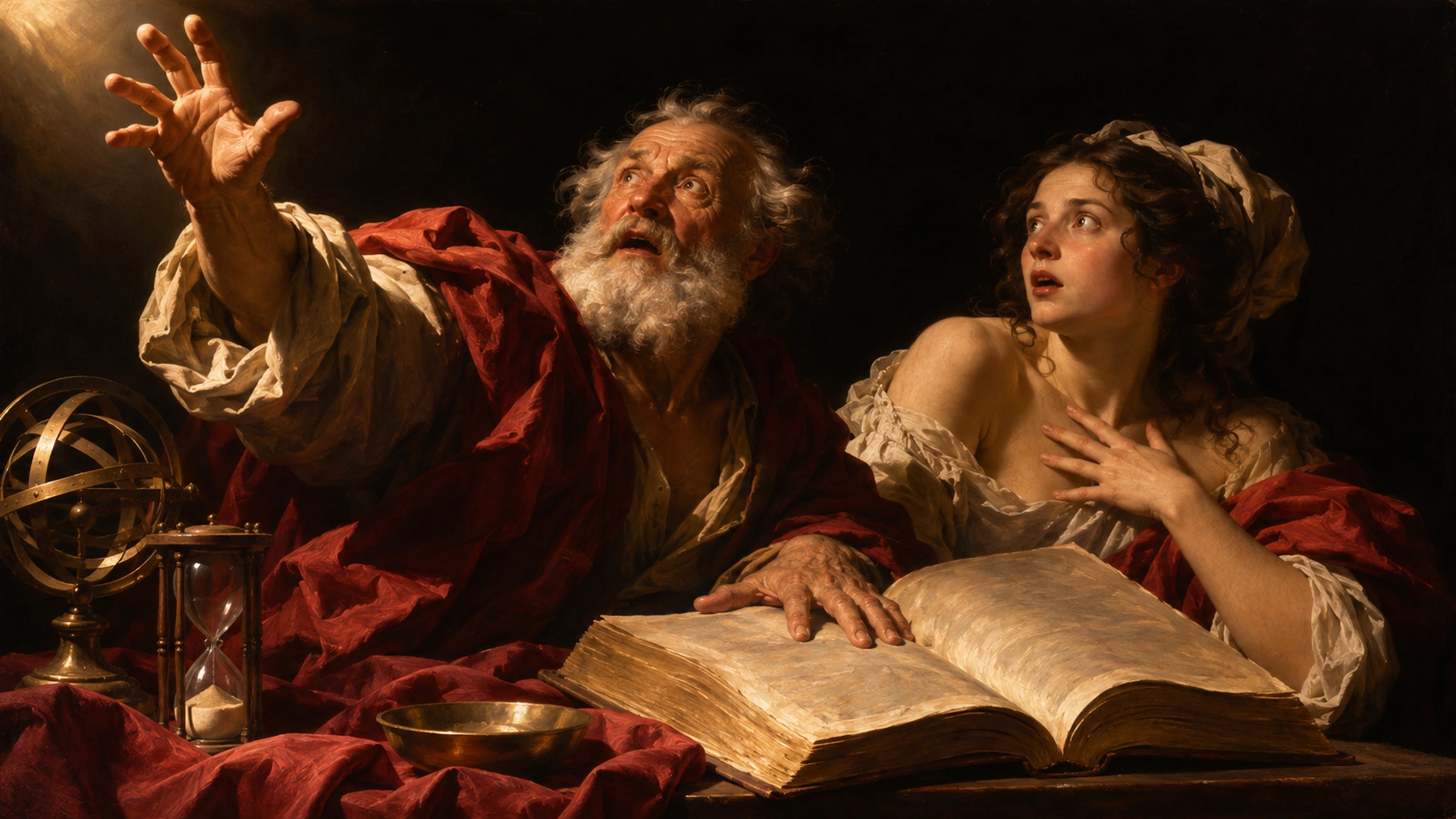
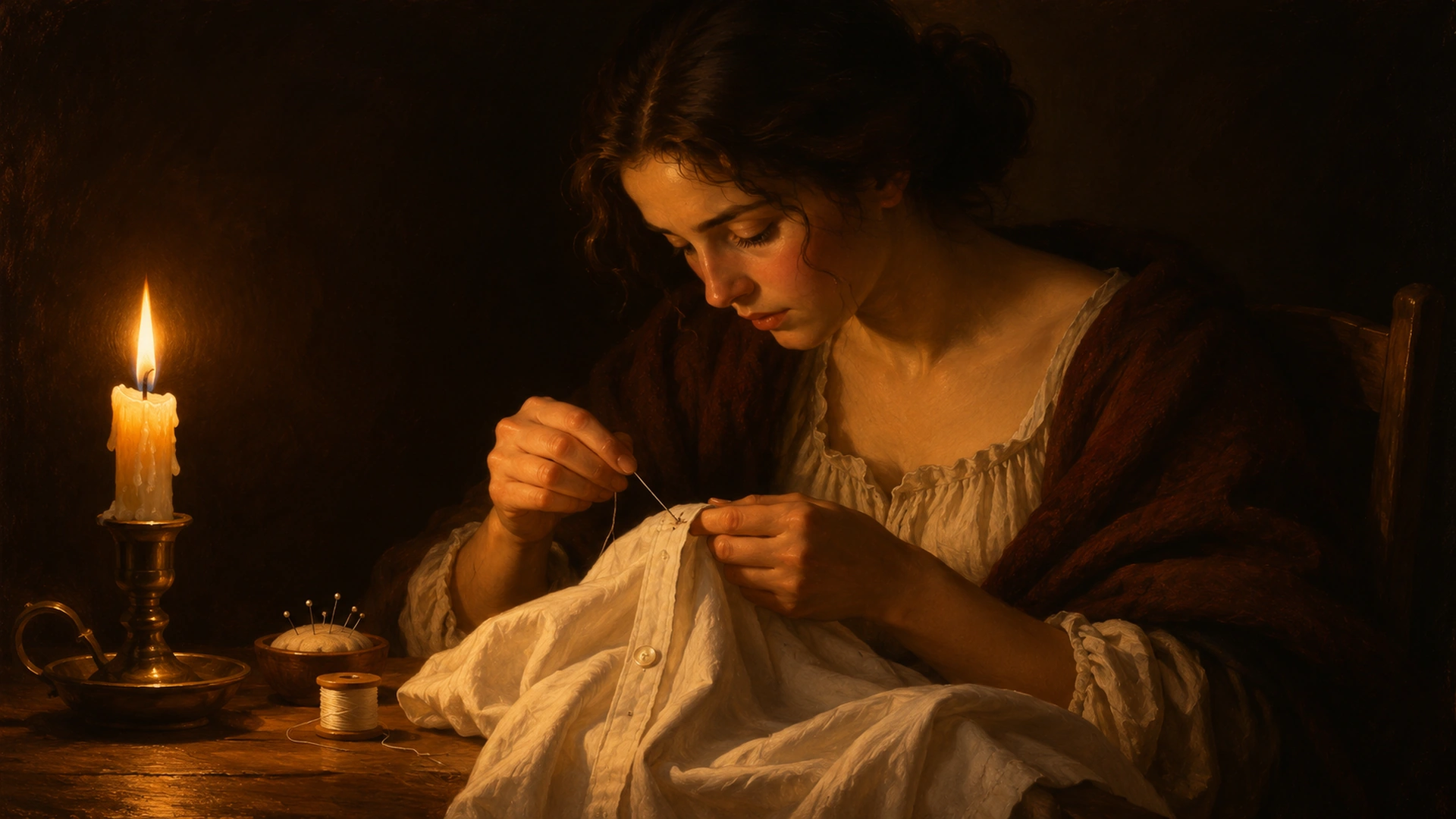
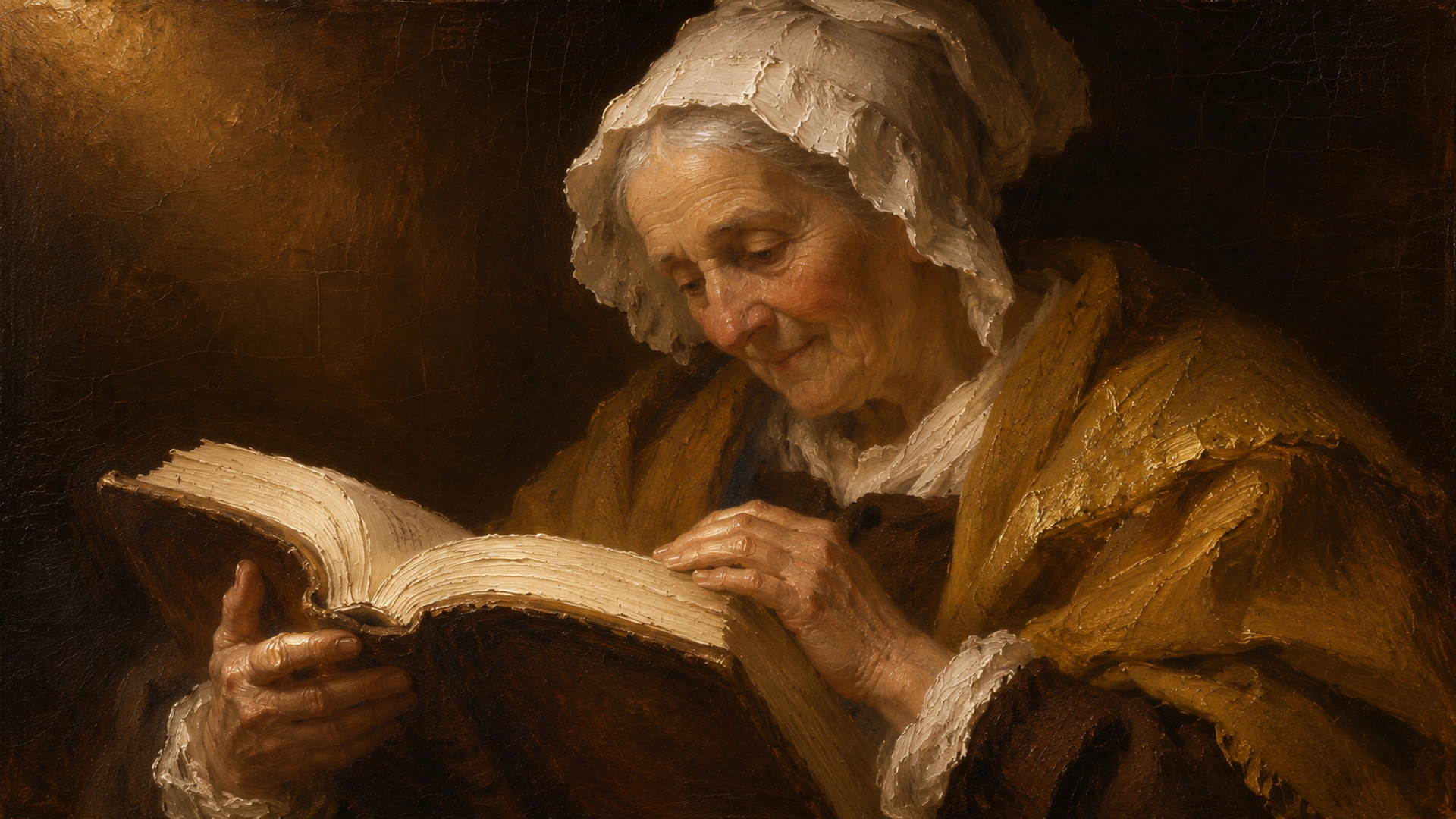
A single warm light from one side and above, falling on a face or hands while the rest sinks into brown darkness.
Shadows are not black but warm and full of half-seen detail, umber, brown and deep red.
Thin glazes in the dark, thick impasto in the lights, sometimes scraped with the brush handle or modelled like relief.
Unidealised: wrinkles, swollen noses, tired eyes, observed with sympathy rather than flattery.
Earth colours: ochre, umber, sienna, lead white, bone black, touches of vermilion and gold.
Biblical and everyday scenes caught at a quiet psychological moment, not the loud climax.
Words around Rembrandt
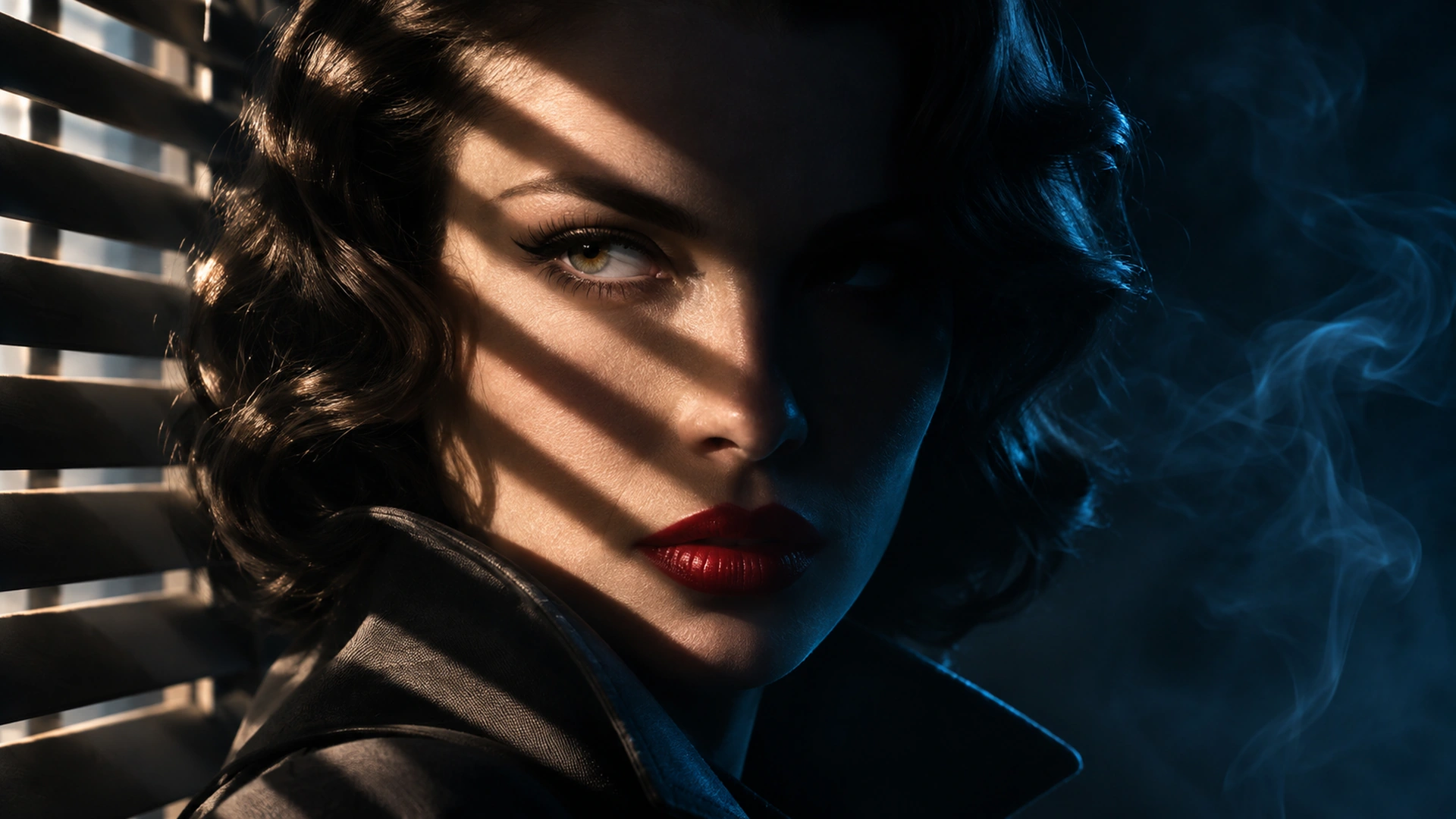
A portrait lighting pattern named after him: a key light at about 45° leaves a small triangle of light on the shadow cheek.
Strong contrast of light and dark to model form and focus the eye.
A Dutch study of a face or character type, not a commissioned portrait; Rembrandt painted many.
Paint laid on thickly so it stands up from the surface and catches real light.
How to recognize Rembrandt's work
- A face or hands glowing out of deep, warm brown darkness.
- Thick, crusty paint in the highlights and thin paint in the shadows.
- Earthy gold, ochre and umber with little blue or green.
- Plain, aged, unflattering faces painted with sympathy.
- A quiet moment, often with eyes looking inward or at us.
Where people get it wrong
Rembrandt's darkness is often copied as plain black with a spotlight. His shadows are warm, transparent and full of half-visible things; the light is soft and wraps around form. Also, 'Rembrandt lighting' in photography is only a small part of his lighting, and The Night Watch is not a night scene: it darkened over centuries of varnish.
Words to describe Rembrandt
Words for what you see and feel in this work. They are for describing and understanding, not a recipe for copying an artist.
- warm chiaroscuro
- single side light
- Rembrandt triangle
- umber shadows
- glowing face from darkness
- thick impasto highlights
- thin glazes
- earth palette
- gold and ochre
- unidealised aged face
- Dutch Golden Age
- quiet psychological moment
An old man's head and hands emerging from deep, warm brown darkness, lit by a single soft light from the upper left; thick crusty impasto on the forehead and knuckles, thin translucent umber in the shadows, ochre and dull gold in the coat, the eyes tired and steady, painted with tenderness rather than flattery.
What to learn from Rembrandt
- Choose one light source and let it pick what matters.
- Keep shadows warm and readable, not dead black.
- Put texture where the light is and smoothness where it is not.
- Paint the moment after the event: the look, not the action.
Questions about Rembrandt
What is Rembrandt lighting?
A portrait lighting setup named after the way he often lit faces: one main light about 45° to the side and above, so the far cheek is in shadow except for a small triangle of light under the eye. It gives a face depth and a quiet mood.
Why is it called The Night Watch?
The name came later. The painting shows a daytime militia company, but layers of darkened varnish made it look like night. Its official title names the captain, Frans Banninck Cocq, and his company.
How many self-portraits did Rembrandt make?
Around eighty, counting paintings, etchings and drawings. Together they form one of the most complete visual autobiographies in art, from a confident young man to an old one looking back steadily.
Find one late Rembrandt self-portrait. Describe only where the light lands and in what order your eye visits those places. Then describe one shadow in three colour words, none of them 'black'.
Sources and further reading
- Rijksmuseum, Amsterdam: The Night Watch and Operation Night Watch research project.
- Rembrandt House Museum, Amsterdam.
- Ernst van de Wetering, Rembrandt: The Painter at Work, University of California Press, 2000.
- Simon Schama, Rembrandt's Eyes, Knopf, 1999.