Drama in the dark
Baroque art grew in Rome around 1600 and spread across Europe. Where the Renaissance aimed for calm balance, the Baroque wanted to move and overwhelm the viewer. The Catholic Church, after the Reformation, used it to make faith feel immediate and emotional, and kings used it to display power, as at Versailles.
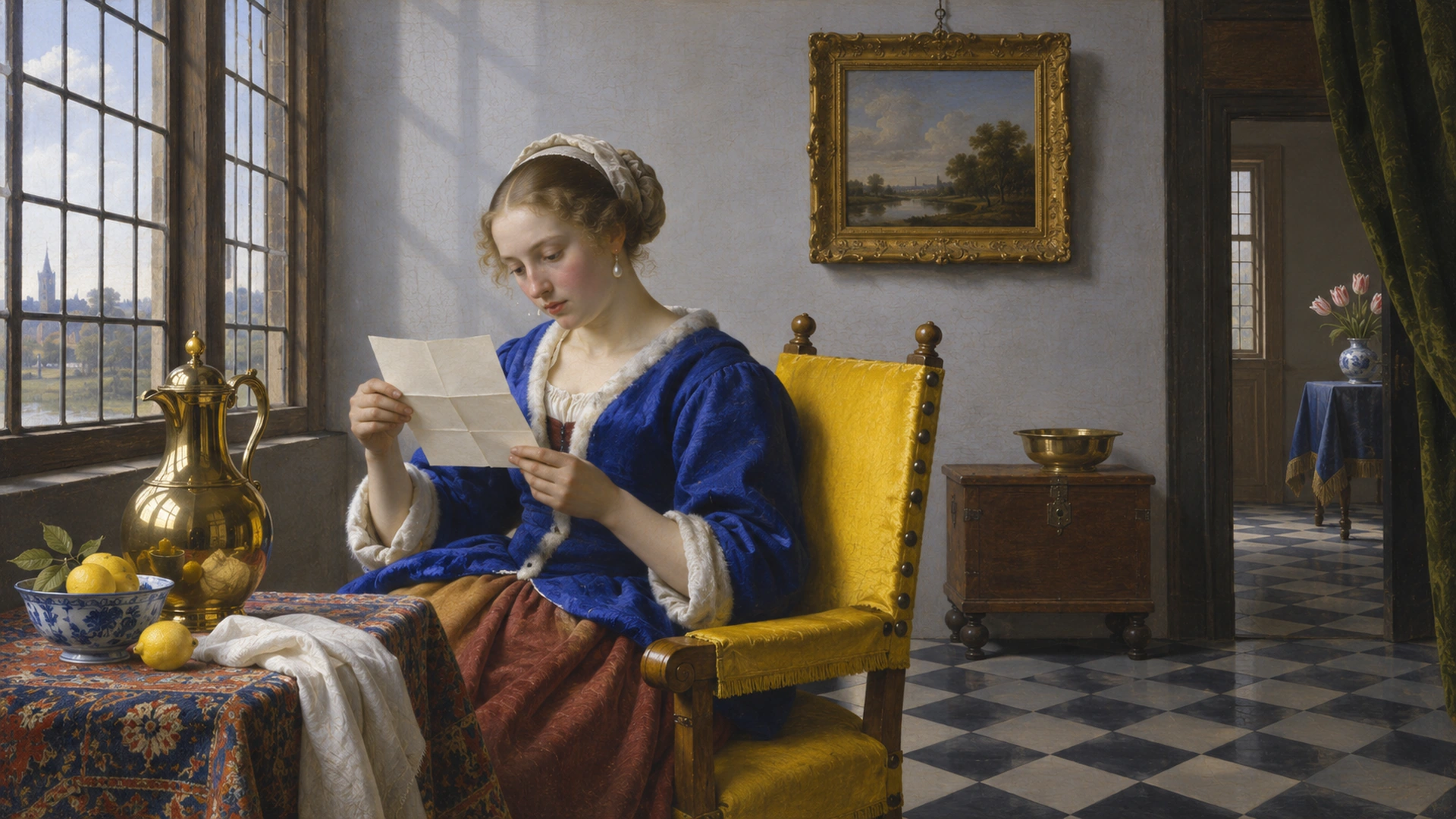
Caravaggio painted real-looking people lit by a single strong light against deep darkness, a style called tenebrism. Bernini's sculptures seem to move and breathe. Rubens filled huge canvases with swirling bodies and colour, while in the Dutch Republic, Rembrandt and Vermeer turned the same mastery of light toward portraits and quiet interiors.
Visual anatomy of Baroque
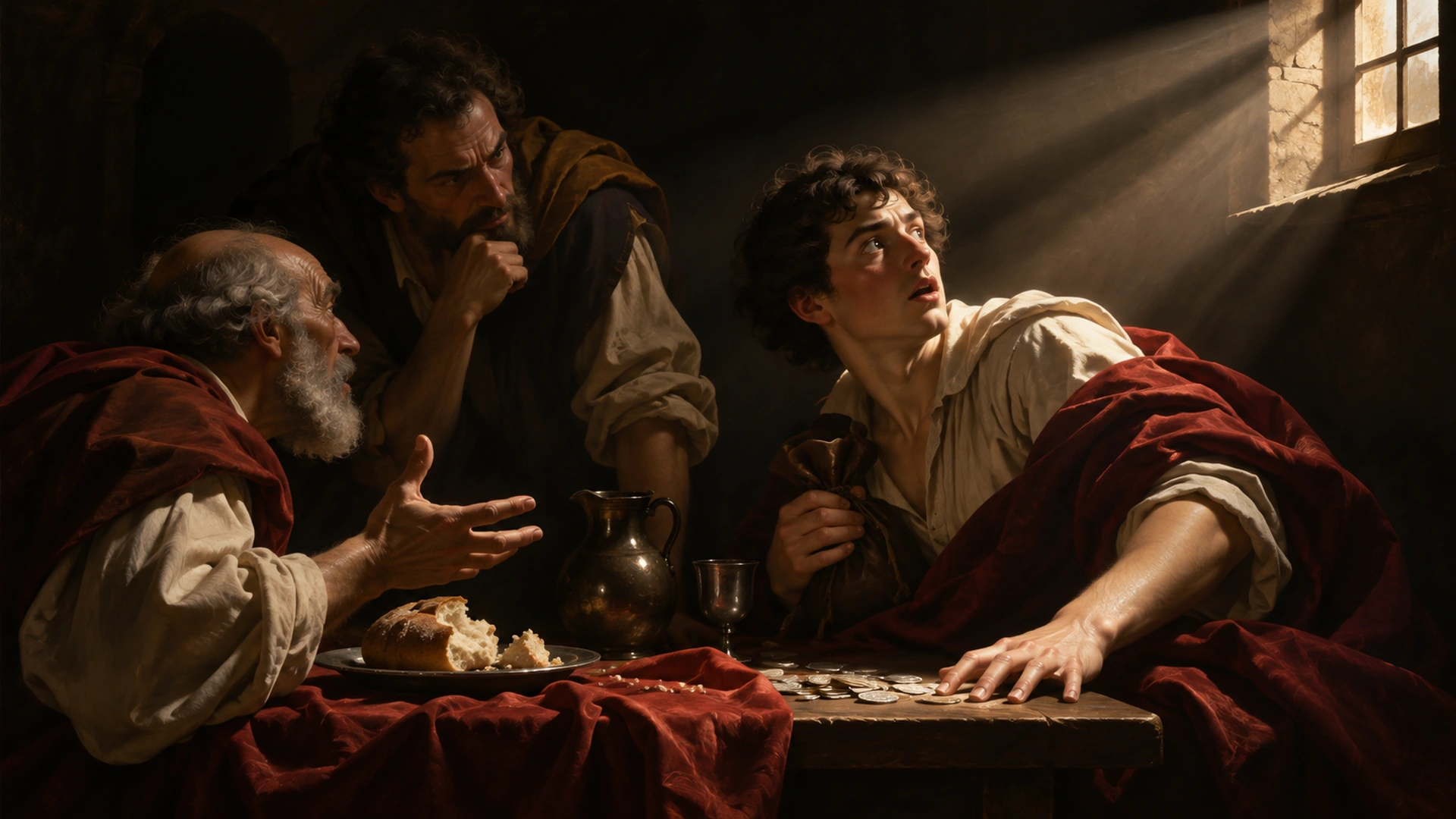
Strong directional light out of deep shadow (tenebrism), like a spotlight on a stage.
Compositions built on diagonals and spirals instead of stable triangles.
Action caught at its most dramatic instant: a turn, a blow, a revelation.
Rich, warm colour: deep reds, golds, browns and glowing flesh.
Ordinary faces, dirty feet and real textures, even in sacred scenes.
Huge ceilings, altarpieces and illusionistic spaces that open to the sky.
Key artists of Baroque
Tenebrist light and street-level realism in religious scenes.
Powerful, dramatic scenes, often of strong women, in Caravaggio's light.
Sculpture and architecture full of movement and emotion.
Swirling compositions, rich colour and abundant figures.
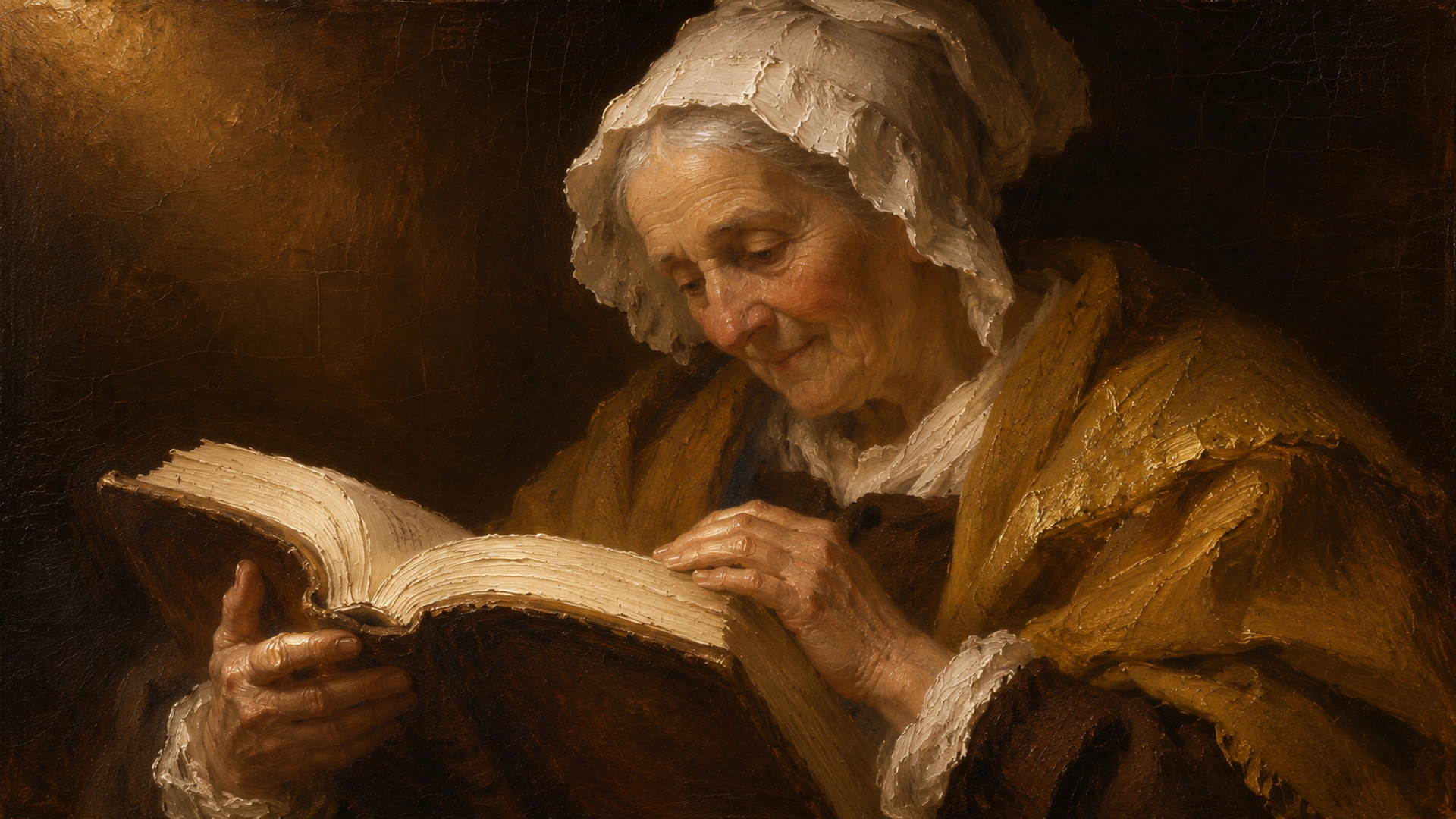
Warm light, deep shadows and deeply human portraits.
Court painting and the mysterious space of Las Meninas.
How to recognize Baroque
- Strong light falling from darkness.
- Dynamic diagonal compositions.
- Emotion and action at their peak.
Where people get it wrong
Baroque is often used to mean simply 'over-decorated'. In painting, its core is drama of light and movement; the calm Dutch interiors of Vermeer share its mastery of light without any of its excess.
Words to describe Baroque
Precise words for the qualities above. Combine a few of them instead of naming the style or artist alone.
- Baroque chiaroscuro
- tenebrism
- single strong light source
- deep black background
- dynamic diagonal composition
- dramatic peak moment
- rich warm reds and golds
- theatrical staging
- realistic textures and faces
- swirling movement
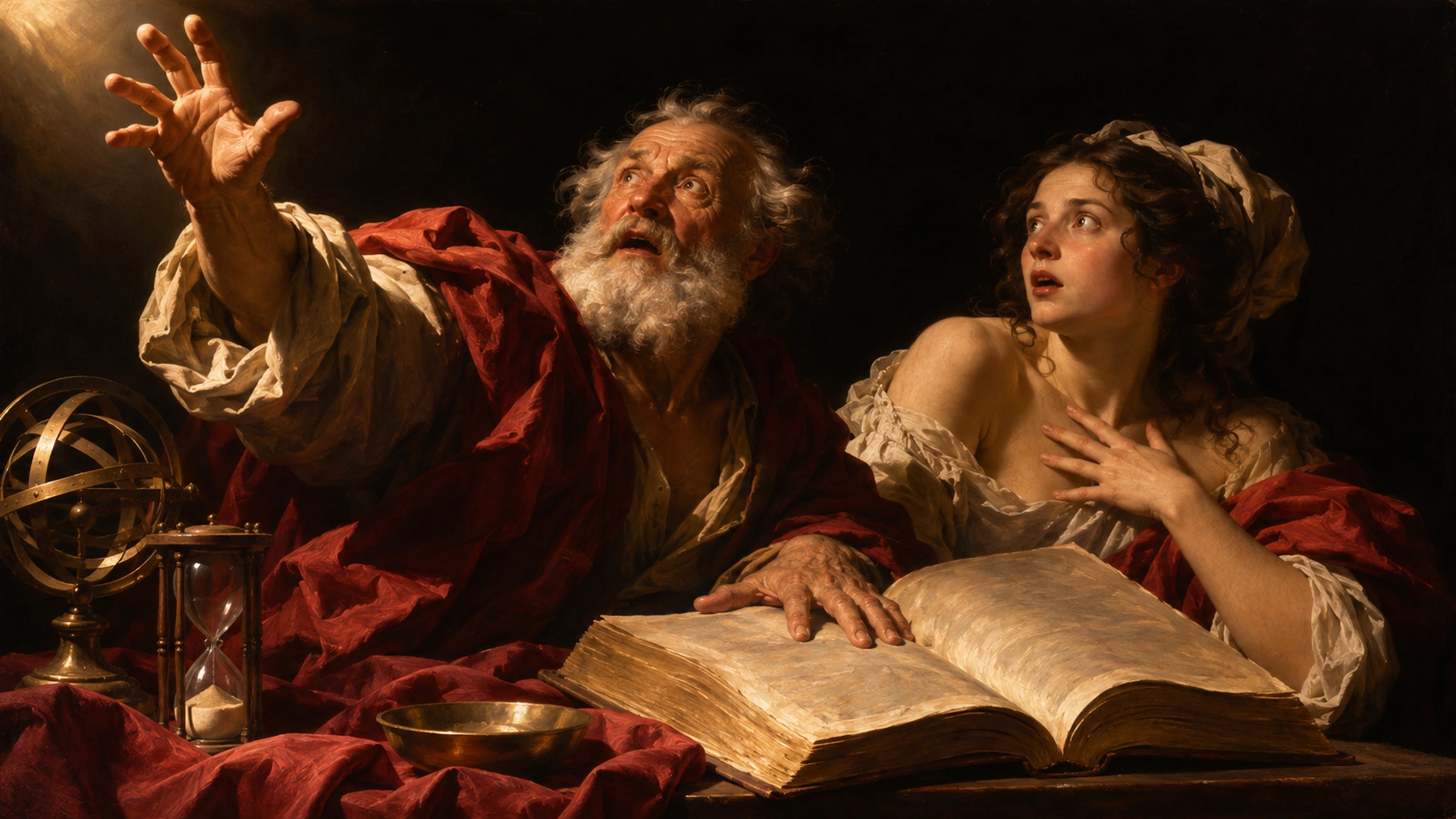
An original study in the manner of Baroque painting: an old man and a young woman at a table caught at a moment of surprise, lit by a single strong light from the upper left, everything else falling into deep black, warm golden skin tones, a crumpled red cloth, a strong diagonal from the raised hand to the open book.
What to take from Baroque today
- Describe the light: one source, how much darkness around it.
- Name the main diagonal and the moment of action.
- Say the colour temperature and textures.
Questions about Baroque
What is Baroque?
The dramatic art of 17th-century Europe: theatrical light from darkness, swirling diagonals, rich colour and emotion caught at its peak.
How do you recognize Baroque?
Strong light falling from darkness. Dynamic diagonal compositions. Emotion and action at their peak.
How do you describe Baroque in words or a prompt?
Describe the light: one source, how much darkness around it. Name the main diagonal and the moment of action. Say the colour temperature and textures.
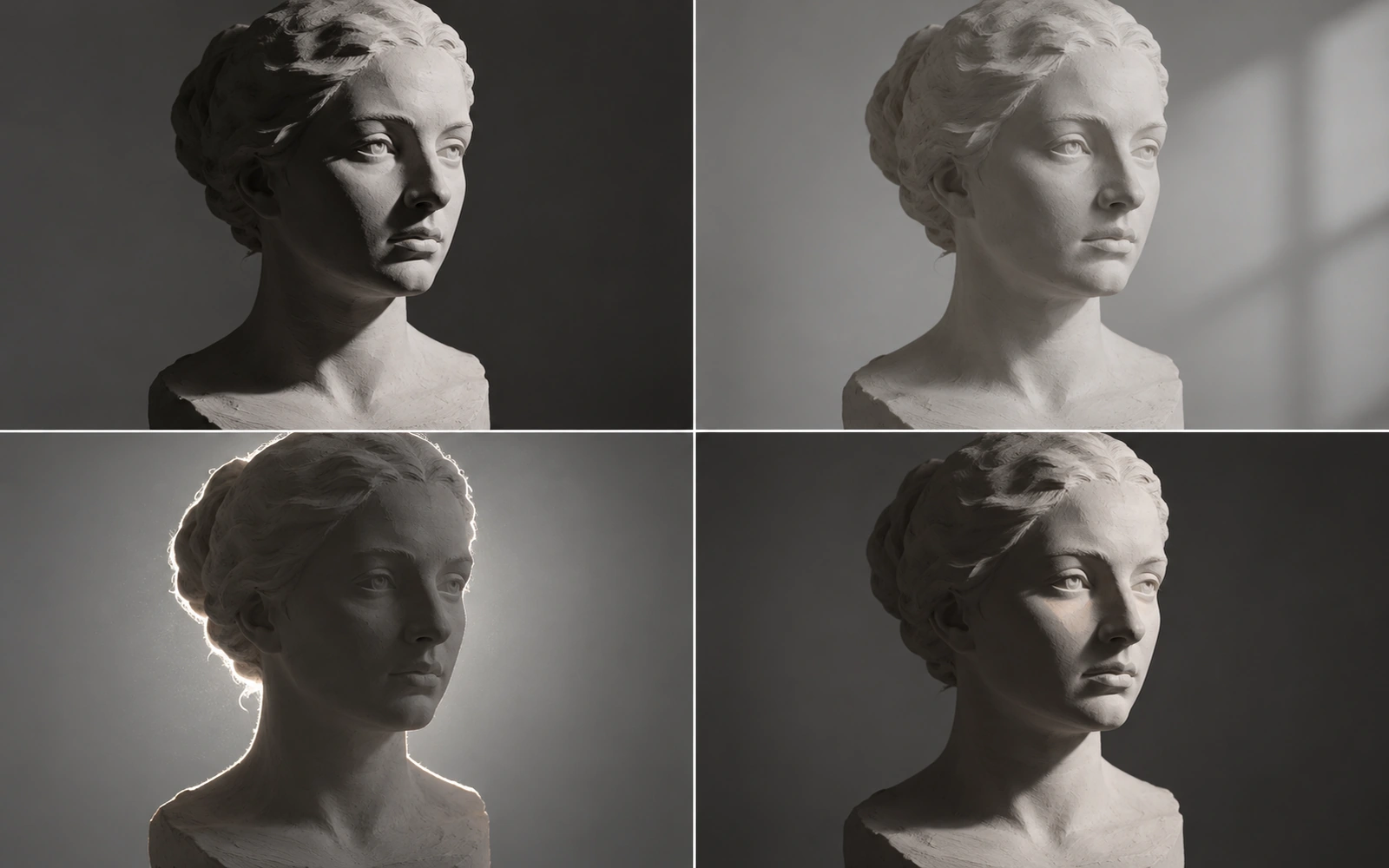
In a dark room, light a face or an object with a single lamp from the side. Describe it as a Baroque painting: where the light falls, how much disappears into shadow, and what dramatic moment it could be.