Distance is emotion
The size of a shot decides how close we feel to a subject: a wide shot places a person in their world, a close-up puts us inside their face. The angle decides power: looking up makes someone stronger, looking down makes them smaller.
These terms come from film and photography, and they are the most reliable words for directing an image, whether you brief a photographer, plan a storyboard or describe a shot to an AI image or video tool.
Shot sizes
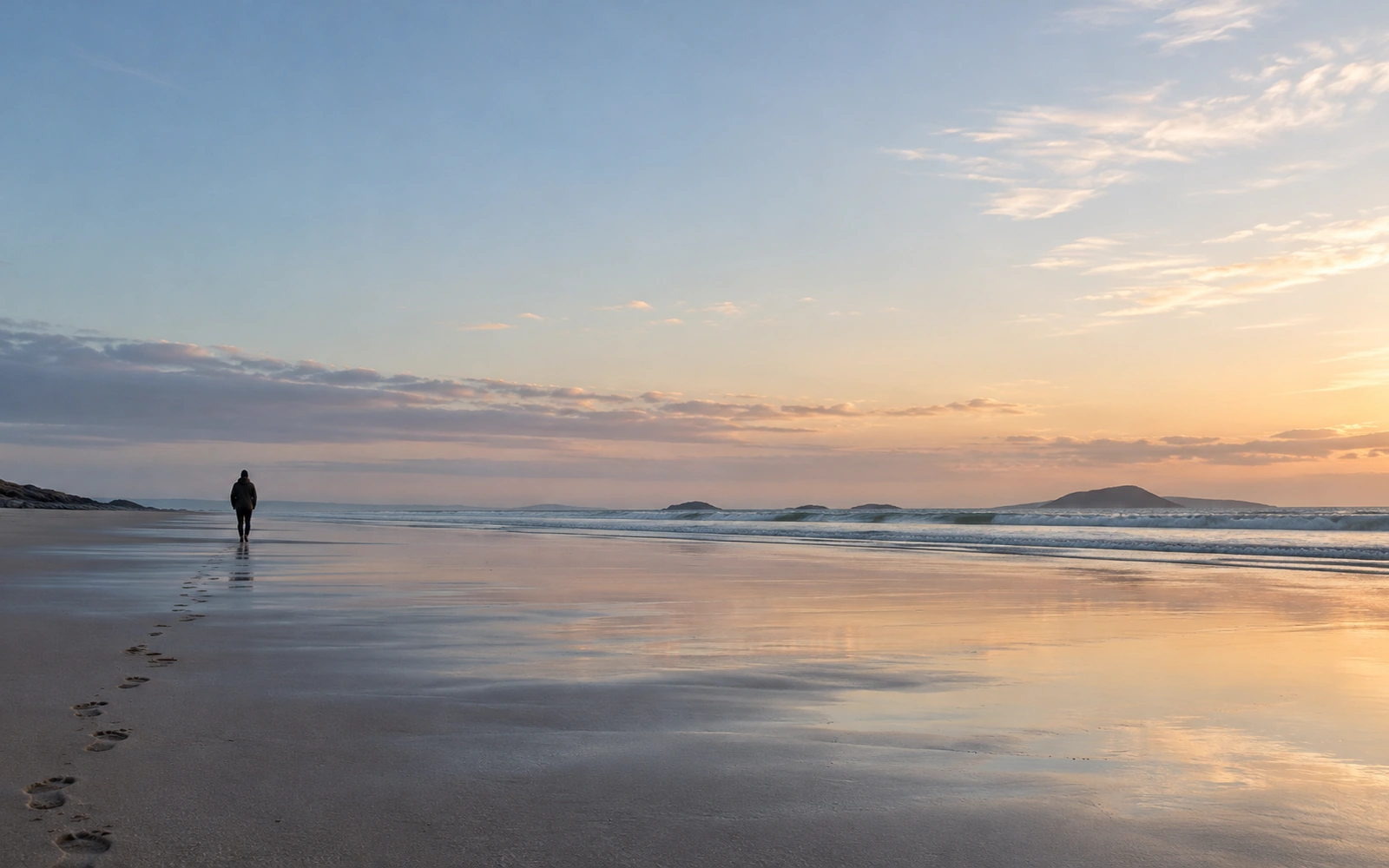
A vast landscape or city with tiny figures; scale, isolation, setting.
The whole body and a lot of the surroundings; context and situation.
The whole person from head to feet, filling most of the frame.
From the knees up or a little more: the body and some setting together.
From mid-thigh up: shows a figure's stance and hands, classic in westerns and confident character introductions.
From the waist up; conversation and body language.
From the chest up; closer, more personal.
A face filling most of the frame but with hair and shoulders, softer than a tight close-up.
The face fills the frame; emotion and detail.
Only a detail: an eye, lips, a hand, a texture; intensity.
A close view of an object that matters to the story.
Camera angles
Neutral and natural, at the subject's eye height.
Looking up at the subject; power, threat, monumentality.
Looking down at the subject; vulnerability, overview.
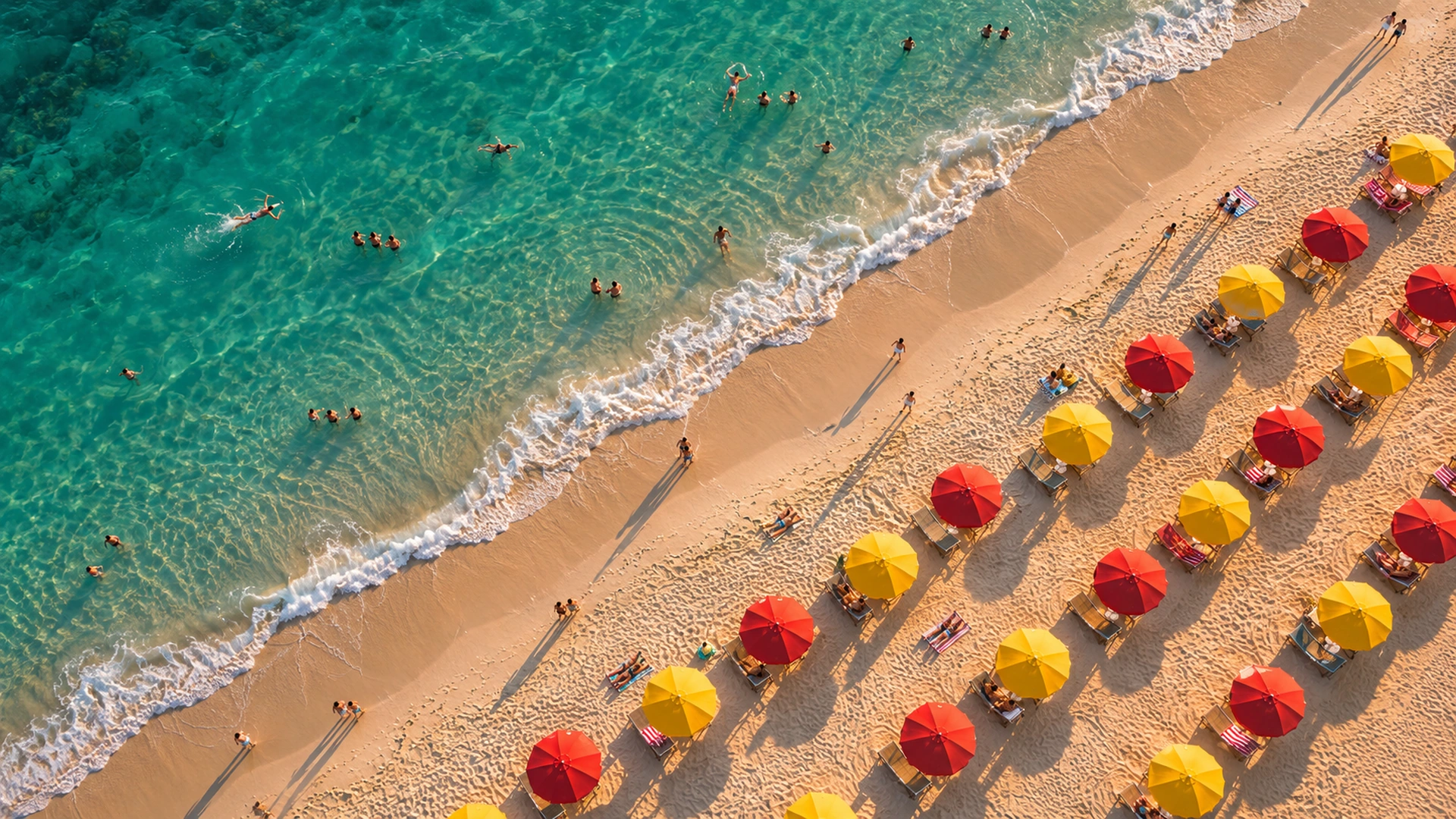
Directly from above; pattern, map-like, detached.
From the ground looking straight up; drama and scale.
The camera tilted so the horizon slants; unease, disorientation.
Camera directly above the action, looking straight down: hands, tables, food, patterns.
Framings
Seen past someone's shoulder toward another person; dialogue.
What a character sees, as if through their eyes.
Two people together in one frame; relationship.
A single shows one person; a reverse shot answers it from the other side; an insert cuts to a detail.
Words to describe shot types and camera angles
Precise words for the qualities above. Combine a few of them instead of naming the style or artist alone.
- extreme wide shot
- medium close-up
- tight close-up
- extreme close-up on the eyes
- low-angle hero shot
- high-angle overhead
- bird's-eye top-down view
- Dutch angle tilt
- over-the-shoulder shot
- first-person POV
A low-angle medium shot of a woman standing on a rooftop at dusk, the city blurred behind her, then a cut to an extreme close-up of her eyes as the wind moves her hair across the frame.
How to describe shot types and camera angles in words
- Combine size and angle: 'low-angle medium shot', 'high-angle wide shot'.
- Say what is in the foreground and background.
- Add the lens feeling: wide and distorted, or long and compressed.
Where people get it wrong
'Close-up' does not always mean a face, and 'cinematic' is not a shot type. Precise words like 'extreme close-up of hands, shallow depth of field' are far more useful than general adjectives.
Shots by purpose
Opens a scene by showing where we are, often an extreme wide or aerial view of a building, street or landscape.
One continuous wide take of the whole scene, filmed first so closer shots can be cut into it.
Someone responding to what was said or done; often where the emotion of a scene really lands.
A shot of something outside the main action, a clock, a window, a crowd, used to show context or to hide a cut.
Alternating shots of two people facing each other, the grammar of most conversations on screen.
The camera travels with the subject; see camera moves for dolly, pan, tilt and crane.
Rules that go with shots
- The 180-degree rule: in a scene between two people, keep the camera on one side of an imaginary line between them, so they stay on the same sides of the screen.
- The 30-degree rule: when cutting between two shots of the same subject, move the camera at least about 30 degrees, or change the shot size, to avoid a jarring jump cut.
- Shot size follows emotion: start wide to place the audience, move closer as the feeling sharpens, and save the extreme close-up for the moment that matters most.
Distance is a sentence
Every shot size is a grammatical choice about intimacy, like choosing between 'a woman', 'she' and 'you'. A wide shot is the third person, a close-up is almost the second. When you plan or prompt a sequence, write the distances first, wide, medium, close, extreme close, and read them like the rhythm of a paragraph.
Questions about shot types and camera angles
What are the basic types of shots?
The three basic sizes are the wide shot (the whole person and setting), the medium shot (from the waist up) and the close-up (the face). Most other shots are variations: extreme wide, medium close-up, extreme close-up.
How many types of camera shots are there?
There is no fixed number. Film schools usually teach around ten shot sizes, six or seven camera angles and several framings such as over-the-shoulder, POV and two-shot.
What is the difference between a shot and an angle?
Shot size is how much of the subject the frame shows; camera angle is where the camera is looking from, such as low, high or eye level. Every shot has both.
What is an establishing shot?
The shot that opens a scene and shows where it takes place, usually a wide or aerial view, before the film moves closer to the characters.
Take one scene, such as someone reading a letter. Describe it in five shots: an extreme wide, a medium shot, a close-up, an insert of the letter and a POV, and say what each adds.
Sources and further reading
- David Bordwell and Kristin Thompson, Film Art: An Introduction, McGraw-Hill (many editions).
- Daniel Arijon, Grammar of the Film Language, Silman-James Press, 1991.
- Gustavo Mercado, The Filmmaker's Eye, Focal Press, 2010.
- Bruce Block, The Visual Story, Focal Press, 2nd edition, 2008.