Nonsense as a protest
Dada began in 1916 at the Cabaret Voltaire in Zurich, where artists and writers who had fled the First World War, among them Hugo Ball, Emmy Hennings, Tristan Tzara, Hans Arp and Marcel Janco, staged sound poems, masks and absurd performances. If reason and progress had led to mass slaughter, they argued, then art should refuse reason too.
It spread quickly. In Berlin it turned political through photomontage, with Hannah Höch, Raoul Hausmann and George Grosz; in New York and Paris, Marcel Duchamp and Man Ray questioned what an artwork is at all, as with Duchamp's 'readymade' urinal, 'Fountain' (1917). By the early 1920s many Dadaists moved on to Surrealism.
Visual anatomy of Dada
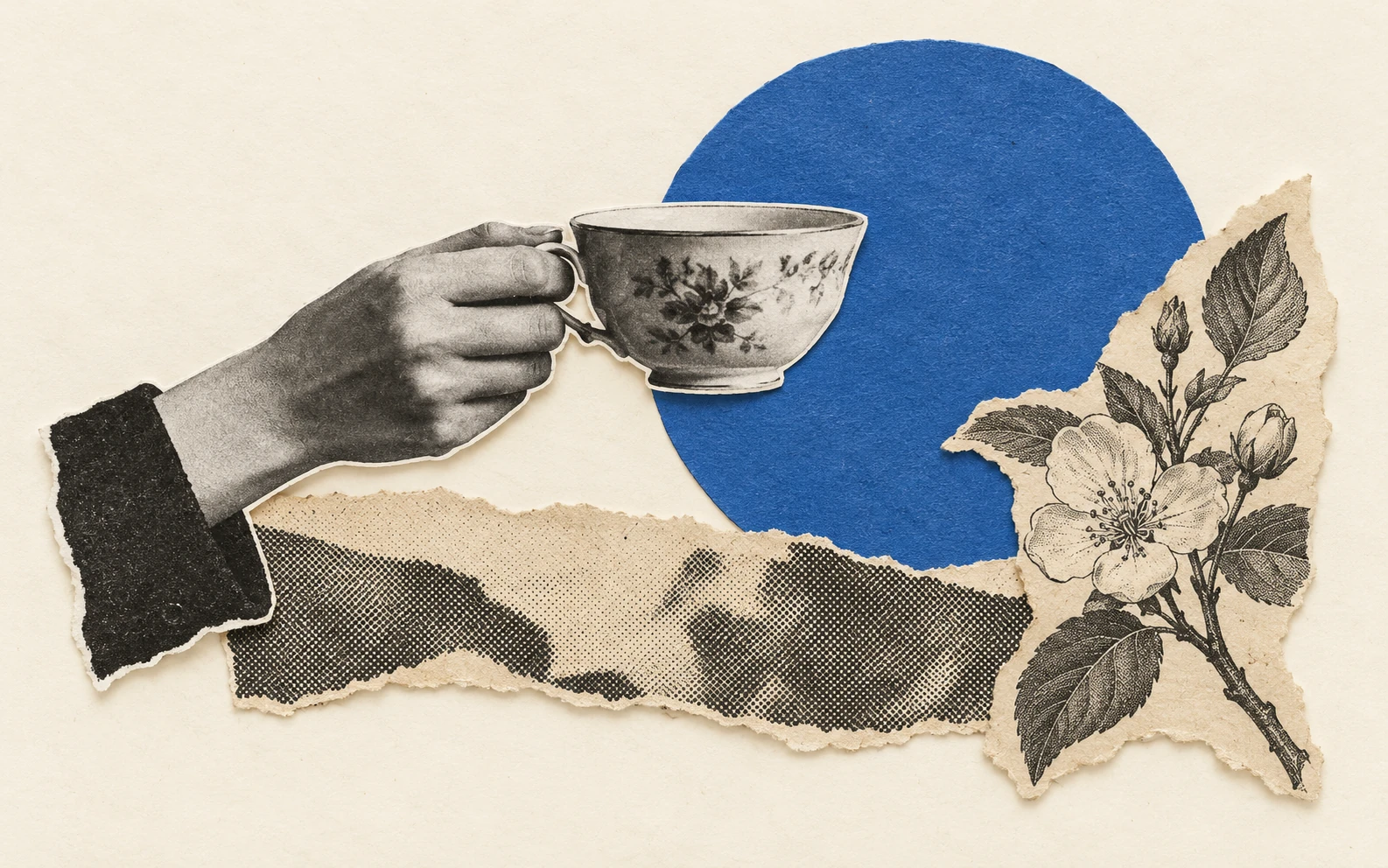
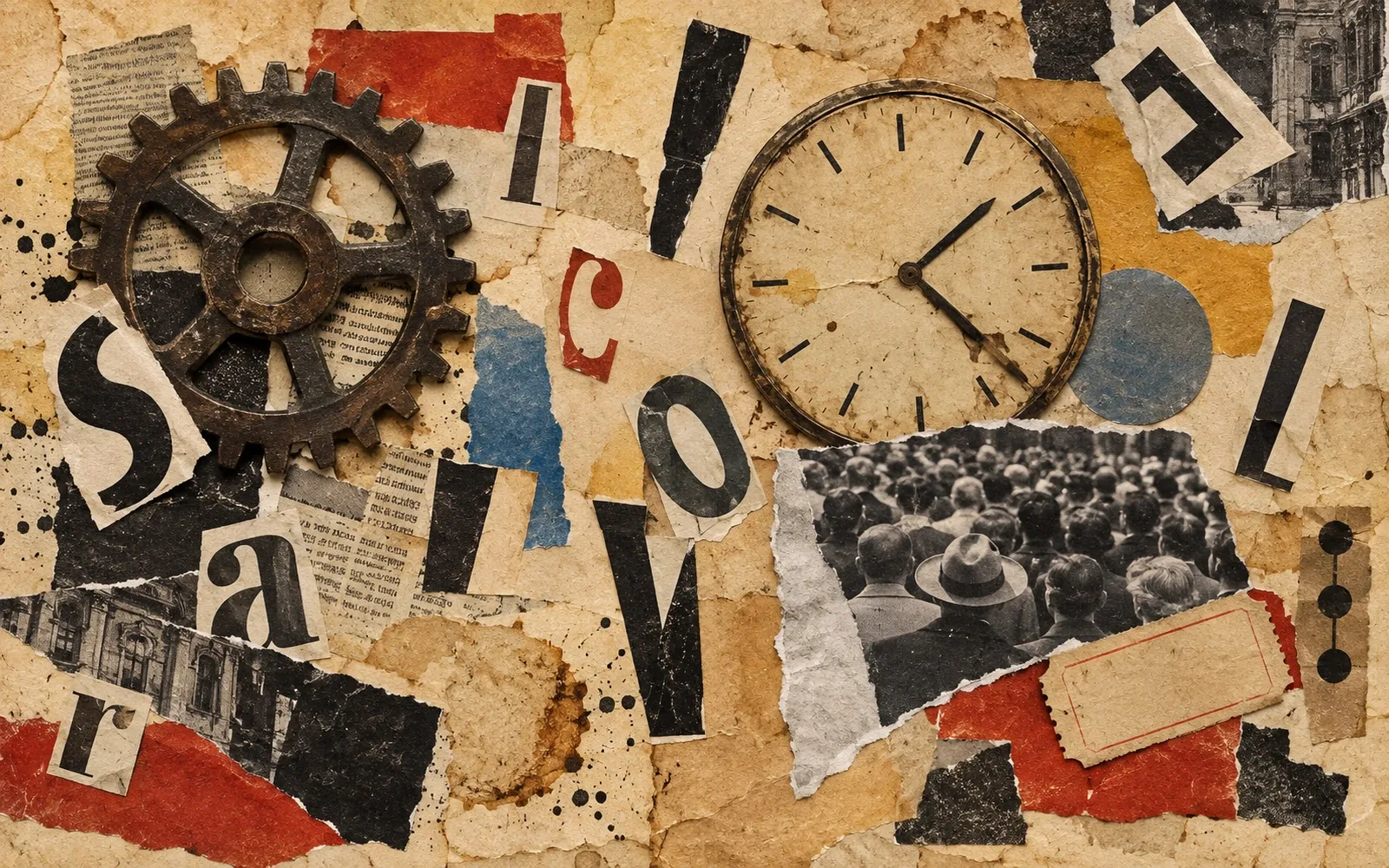
Pieces dropped, cut or arranged by chance instead of by plan.
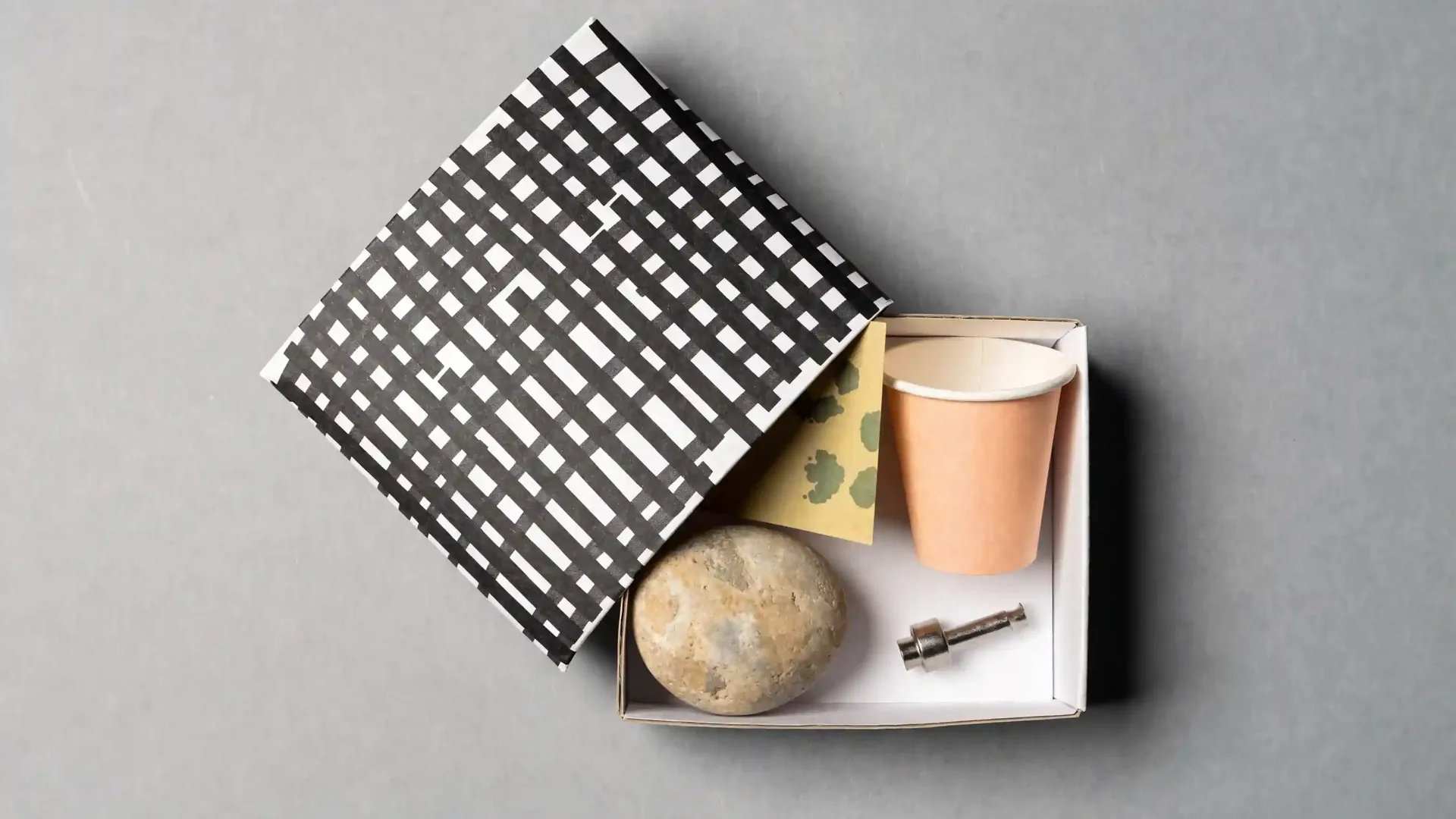
Tickets, newspaper, photographs and scraps from everyday life.
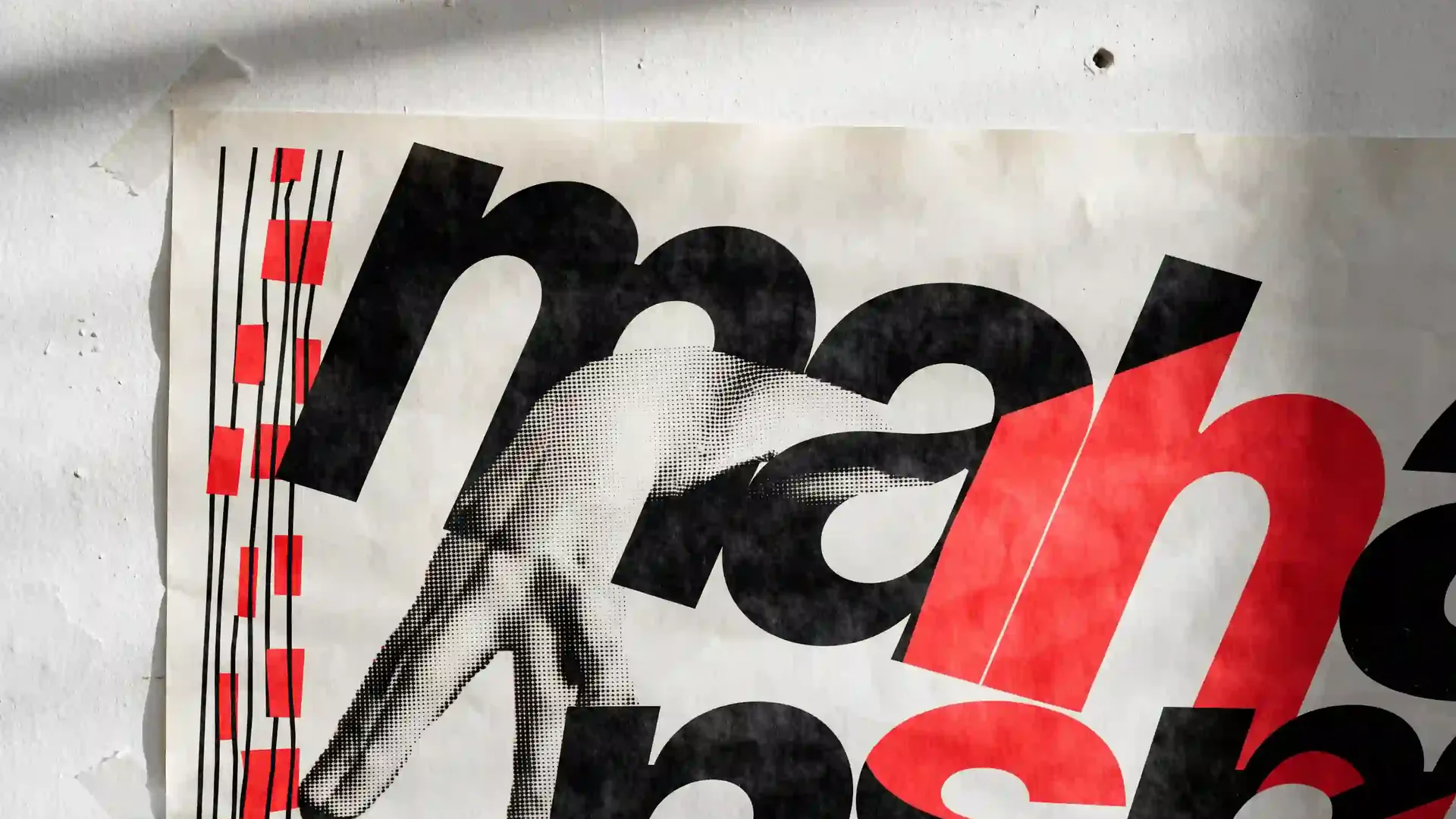
Letters and words used as sound and shape, often nonsensical.
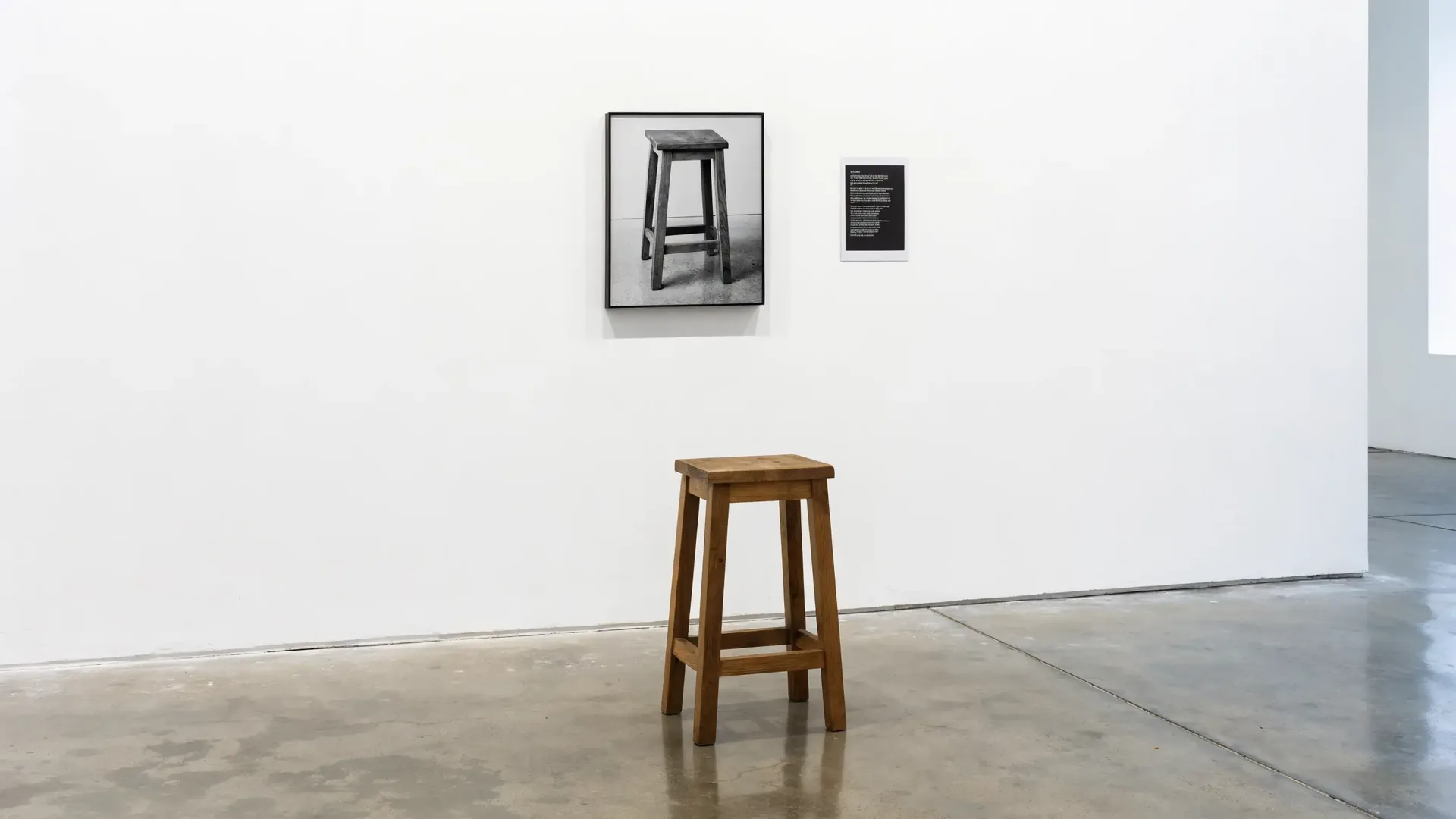
Ordinary manufactured objects presented as art: the readymade.
Absurd, ironic, aggressive or playful; humor as a weapon.
Performance, sound poetry, photomontage, assemblage, printed manifestos.
Key artists and works
The Zurich nightclub where Hugo Ball, Emmy Hennings, Tristan Tzara, Hans Arp and Marcel Janco started Dada with sound poems and performances.
A urinal signed 'R. Mutt', the most famous readymade, asking what makes something art.
A large photomontage slicing up Weimar Germany's politics and media.
Collages and assemblages built from tickets, labels and street rubbish.
How to recognize Dada
- Found materials and fragments of print.
- Text that makes more noise than sense.
- A deliberate refusal of beauty and skill.
Where people get it wrong
Dada is not random for its own sake; its absurdity is a response to war and to the culture that produced it. It is also different from Surrealism: Dada mocks and disrupts, Surrealism explores dreams and the unconscious with more structure.
Words to describe Dada
Precise words for the qualities above. Combine a few of them instead of naming the style or artist alone.
- anti-art
- chance composition
- cut-up newspaper text
- photomontage
- readymade object
- nonsense typography
- absurd humor
- found ephemera
- sound poetry
- provocative irony
A chaotic collage on yellowed paper: cut-up newspaper letters in mismatched sizes, a gear and a clock face, a torn photograph of a crowd, a ticket stub, a few words that make no sense, everything placed as if dropped by chance.
What to take from Dada today
- Use chance as a method and then decide what to keep.
- Treat letters as shapes and sounds.
- Ask what makes something 'art' in the first place.
Questions about Dada
What is Dada in simple terms?
An anti-art movement born in Zurich in 1916, during the First World War. Its artists used nonsense, chance, collage and provocation to attack the logic and values that they believed had led to the war.
What is the difference between Dada and Surrealism?
Dada came first and was mostly destructive and absurd. Surrealism grew out of it in Paris in 1924, with André Breton's manifesto, and turned toward dreams and the unconscious, often in carefully painted images.
Why is it called Dada?
Accounts differ. The most repeated story says the word was picked at random from a dictionary; in French 'dada' means a hobby horse. The point was that the name meant nothing.
Cut a newspaper article into single words, put them in a bag, and pull them out one by one to make a 'poem', as Tzara suggested. Then describe in plain words what the result feels like.