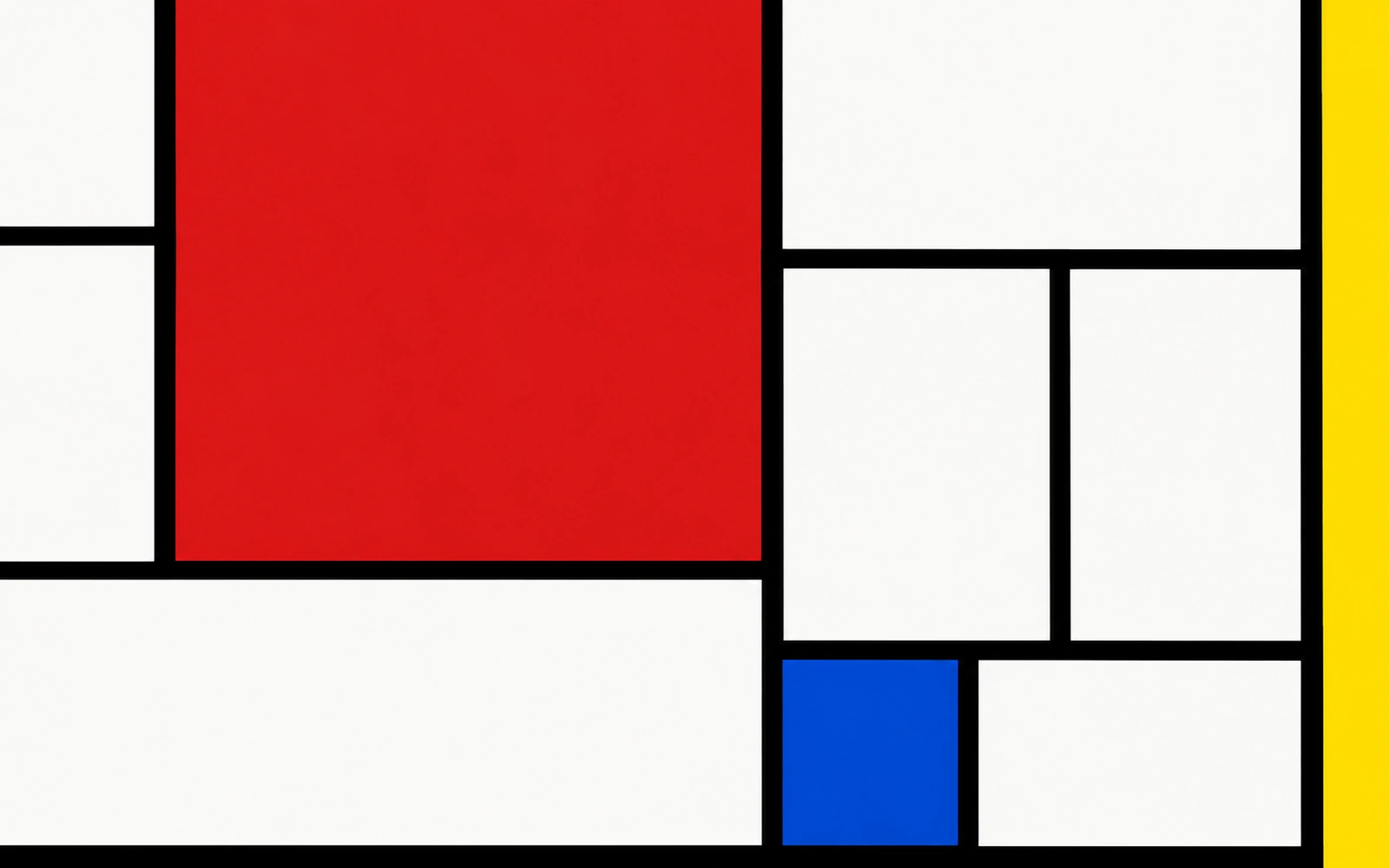
A universal grammar
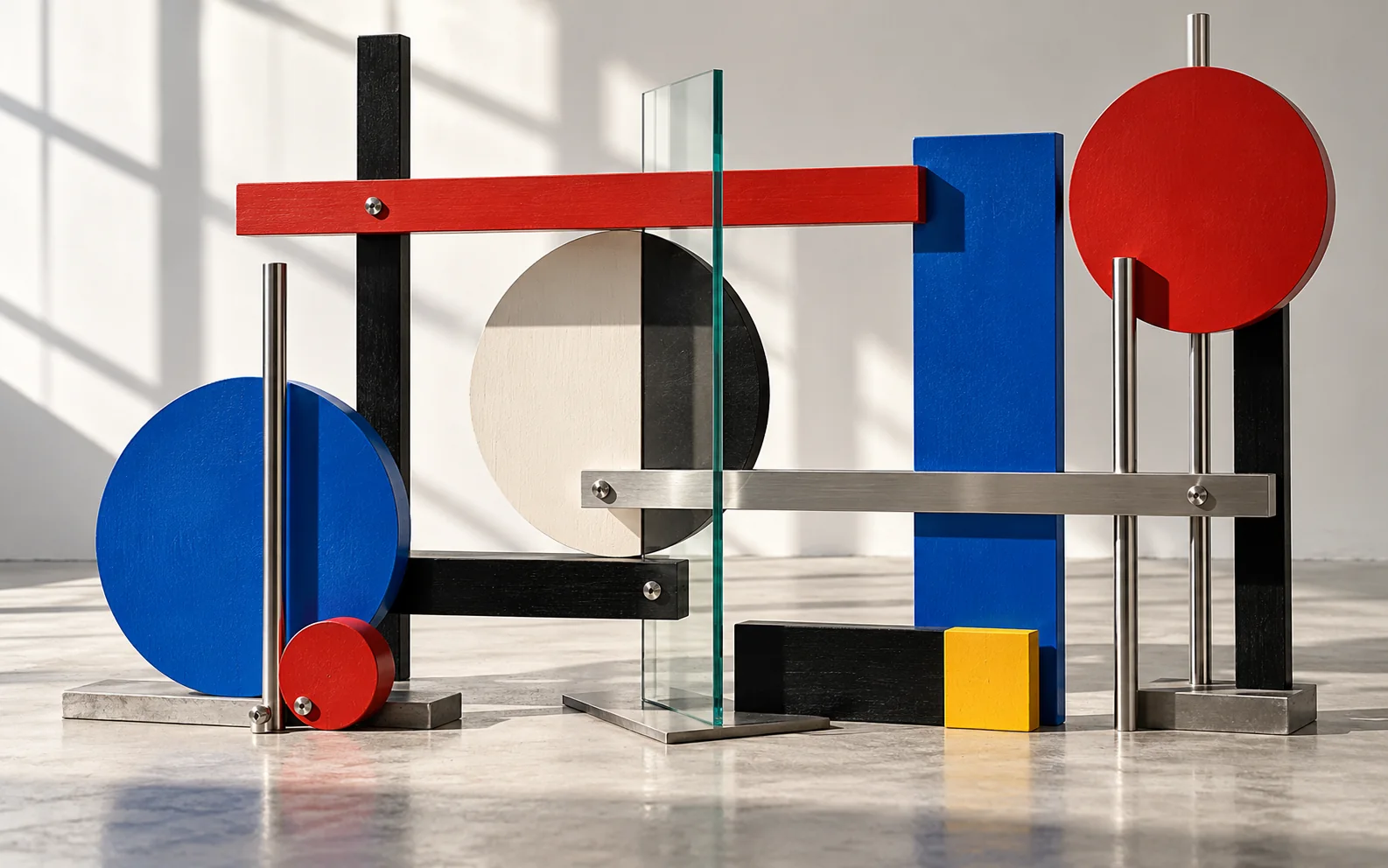
De Stijl ('The Style') was founded in the Netherlands in 1917 around the magazine of the same name, edited by Theo van Doesburg. Piet Mondrian, its best-known painter, called his approach Neoplasticism; the designer and architect Gerrit Rietveld translated it into furniture and buildings, such as his Red and Blue Chair and the Rietveld Schröder House in Utrecht (1924).
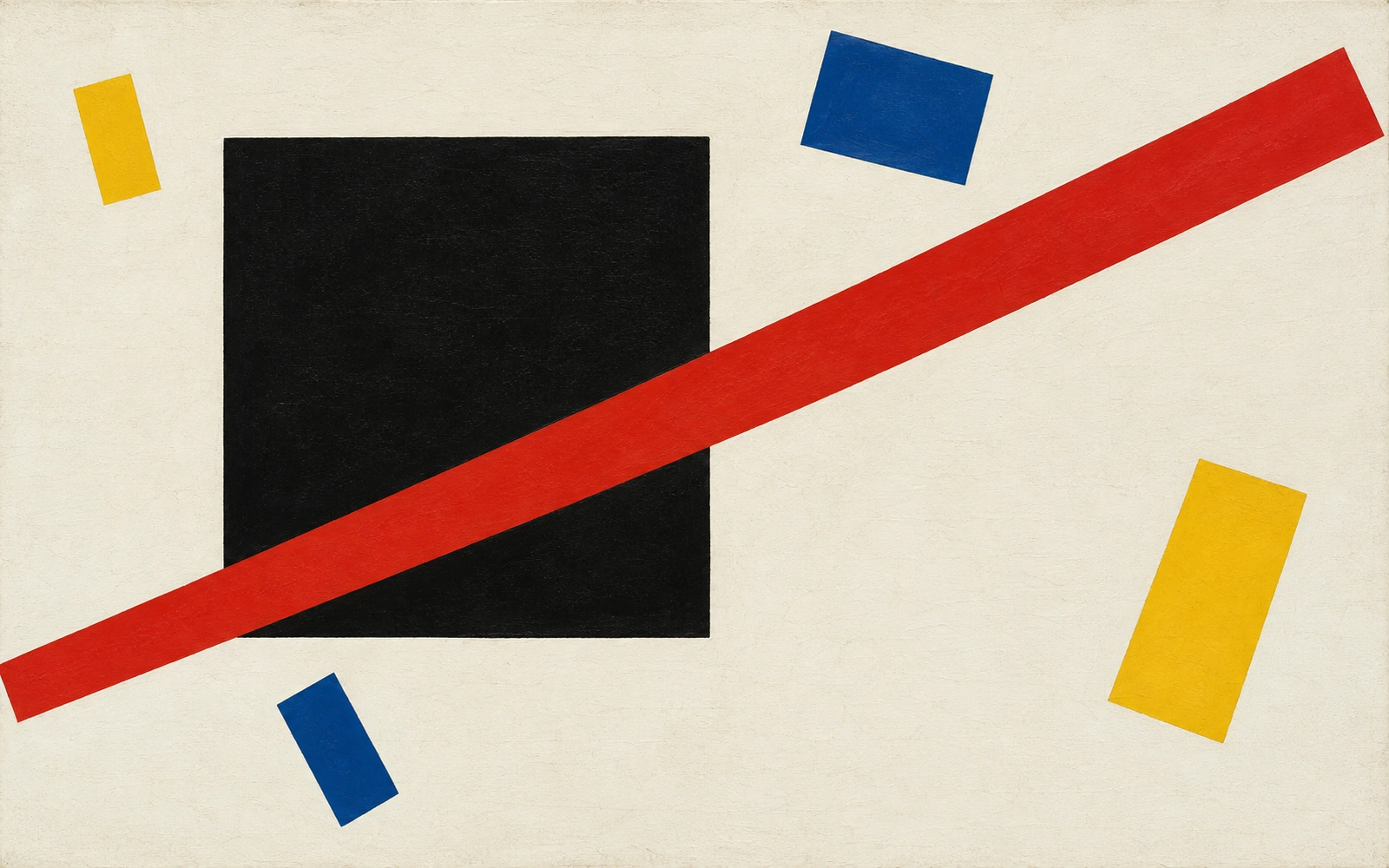
They believed that by reducing form to straight horizontal and vertical lines, rectangles and the three primary colors plus black, white and grey, art could express a universal order beyond individual taste. A famous quarrel followed when van Doesburg introduced diagonals, which Mondrian rejected.
Visual anatomy of De Stijl
Thick black horizontal and vertical lines only; in Mondrian's work, no diagonals.
Red, yellow and blue, with black, white and grey.
Asymmetric balance: unequal rectangles held in tension.
Flat planes; in architecture, planes slide past each other in space.
Clean, flat paint with no visible gesture.
Painting, furniture, architecture, typography and interiors share one system.
How to recognize De Stijl
- A grid of black lines with blocks of primary color.
- Balance without symmetry.
- Only right angles.
Where people get it wrong
Not every grid with primary colors is De Stijl; the balance of unequal areas is the hard part. It is also not the same as the Bauhaus, which it influenced: De Stijl was stricter and more theoretical about line and color.
Words to describe De Stijl
Precise words for the qualities above. Combine a few of them instead of naming the style or artist alone.
- primary colors with black and white
- orthogonal grid
- thick black lines
- asymmetric balance
- flat color planes
- right angles only
- neoplasticism
- sliding planes in architecture
- clean flat paint
- universal harmony
An asymmetric grid of thick black horizontal and vertical lines dividing a white surface into rectangles of different sizes; one large red block in the upper left, a small blue square near the bottom, a thin yellow strip on the right edge, flat matte paint.
What to take from De Stijl today
- Balance large empty areas with a small accent of strong color.
- Reduce a design to a few rules and keep them strictly.
- Try one system across very different objects.
Questions about De Stijl
What is De Stijl?
A Dutch movement that reduced art and design to horizontal and vertical lines and the primary colors, in search of universal harmony.
How do you recognize De Stijl?
A grid of black lines with blocks of primary color. Balance without symmetry. Only right angles.
How do you describe De Stijl in words or a prompt?
Balance large empty areas with a small accent of strong color. Reduce a design to a few rules and keep them strictly. Try one system across very different objects.
Draw a grid of black lines on paper. Color only three rectangles: one red, one yellow, one blue. Move them until the page feels balanced but not symmetrical, and describe why that version works.