Sweet, strange and outside the gallery
Lowbrow began in Los Angeles in the late 1970s among artists who came from underground comix, hot-rod Kustom Kulture, surf graphics, tattoo flash and punk flyers, worlds the art establishment ignored. Robert Williams gave it a name and, in 1994, a magazine, Juxtapoz, which spread the style worldwide.
In the 1990s and 2000s a more refined branch, often called Pop Surrealism, took over: Mark Ryden's porcelain-skinned girls with huge eyes among meat, bees and Abraham Lincoln; Marion Peck's sad, sweet creatures; Camille Rose Garcia's dripping gothic fairy tales; Audrey Kawasaki's delicate figures on wood. Its mix of cute and uncanny, old-master technique and toy-shop imagery shaped designer vinyl toys, tattoo design, album art and the 'creepy cute' look of countless illustrators.
Visual anatomy of Pop Surrealism
Big-eyed girls, dolls, animals and hybrid creatures, cute and unsettling.
Candy pastels and saturated pop colour, often against dark grounds.
Smooth, polished painting, sometimes with old-master glazes.
Cartoons, vintage toys, hot rods, tattoos, kitsch, religious imagery.
Dreamlike, nostalgic, ironic, with a hint of horror.
Hidden symbols, ornate frames, tiny strange objects to discover.
Key names
Hot-rod and comix painter; founded Juxtapoz (1994).
Porcelain girls, meat and pastel symbolism, painted like old masters.
Soft, sad, big-eyed creatures in dreamy landscapes.
Gothic fairy tales with drips and black-and-pink palettes.
Delicate, melancholy figures painted on wood grain.
How to recognize Pop Surrealism
- Cute characters with something wrong: too-big eyes, strange objects.
- Polished, smooth painting with candy colours.
- Pop culture, toys and kitsch mixed with dream logic.
Where people get it wrong
Pop Surrealism is not Pop Art. Pop Art copies mass culture with a cool, flat, ironic distance; Pop Surrealism uses the same sources to build emotional, dreamlike and often disturbing private worlds, painted with great care.
Words to describe Pop Surrealism
Precise words for the qualities above. Combine a few of them instead of naming the style or artist alone.
- pop surrealism
- lowbrow art
- big-eyed porcelain girl
- candy pastel palette
- creepy cute
- polished old-master glaze
- kitsch toys and symbols
- dreamlike uncanny scene
- ornate vintage frame
- hot rod and tattoo culture
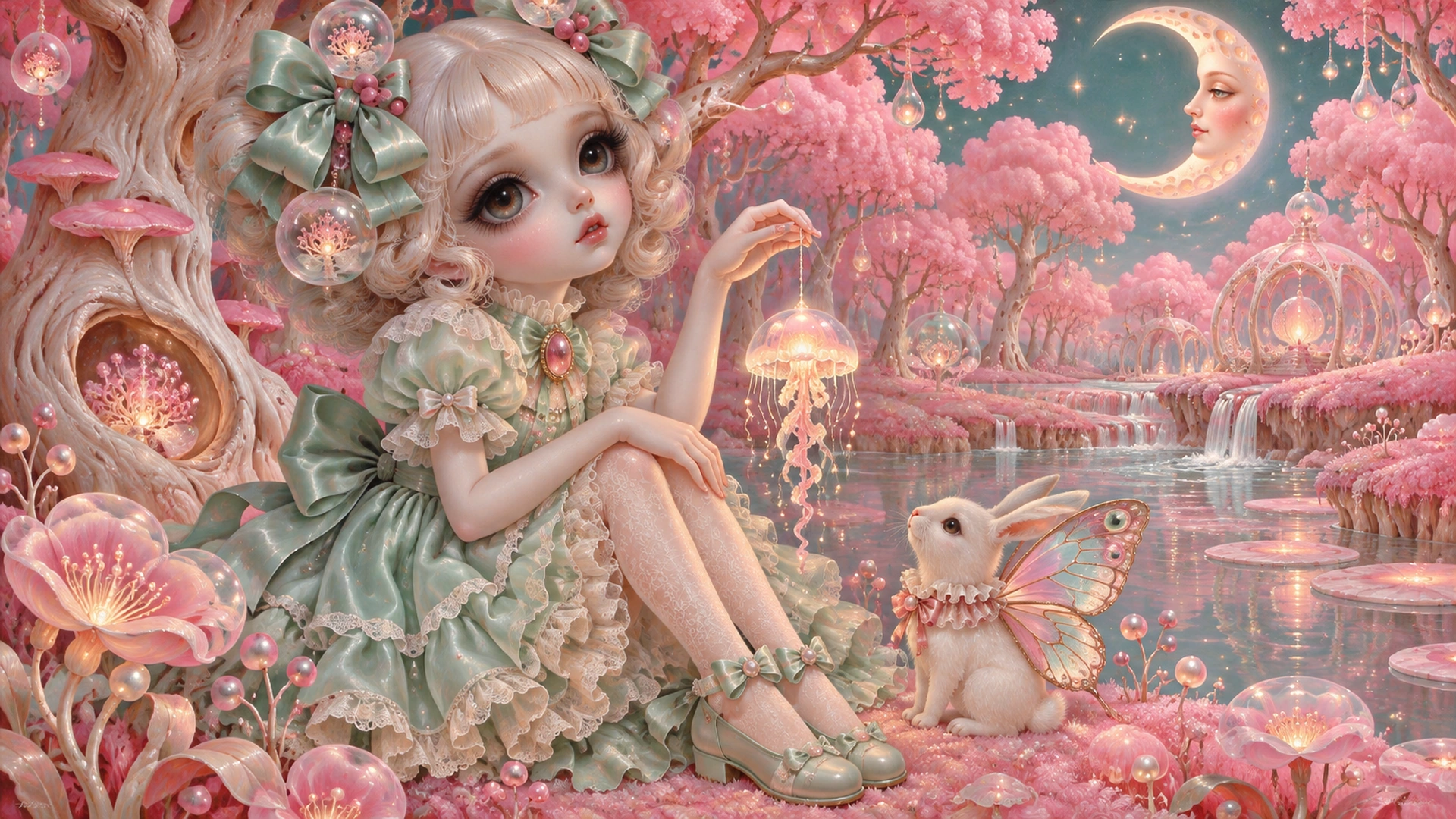
An original Pop Surrealist painting study: a pale porcelain-skinned girl with enormous dark eyes in a frilly mint dress, sitting in a candy-pink forest, holding a tiny glowing jellyfish on a string, a small rabbit with butterfly wings at her feet, a crescent moon with a face, smooth polished painting, sweet and slightly eerie. Not in the style of any specific living artist.
What to take from Pop Surrealism today
- Describe the character and what is uncanny about it.
- Name the colours and how polished the surface is.
- List the strange objects and symbols hidden in the scene.
Questions about Pop Surrealism
What is Pop Surrealism?
A California movement that mixes cartoons, hot rods, tattoos, kitsch toys and surreal dreams in glossy, carefully painted pictures: big eyes, sweet and creepy at once.
How do you recognize Pop Surrealism?
Cute characters with something wrong: too-big eyes, strange objects. Polished, smooth painting with candy colours. Pop culture, toys and kitsch mixed with dream logic.
How do you describe Pop Surrealism in words or a prompt?
Describe the character and what is uncanny about it. Name the colours and how polished the surface is. List the strange objects and symbols hidden in the scene.
Take a childhood toy or a cartoon character you remember and describe a Pop Surrealist painting of it: what is too big, what is slightly wrong, which colours, and which dream-like setting.