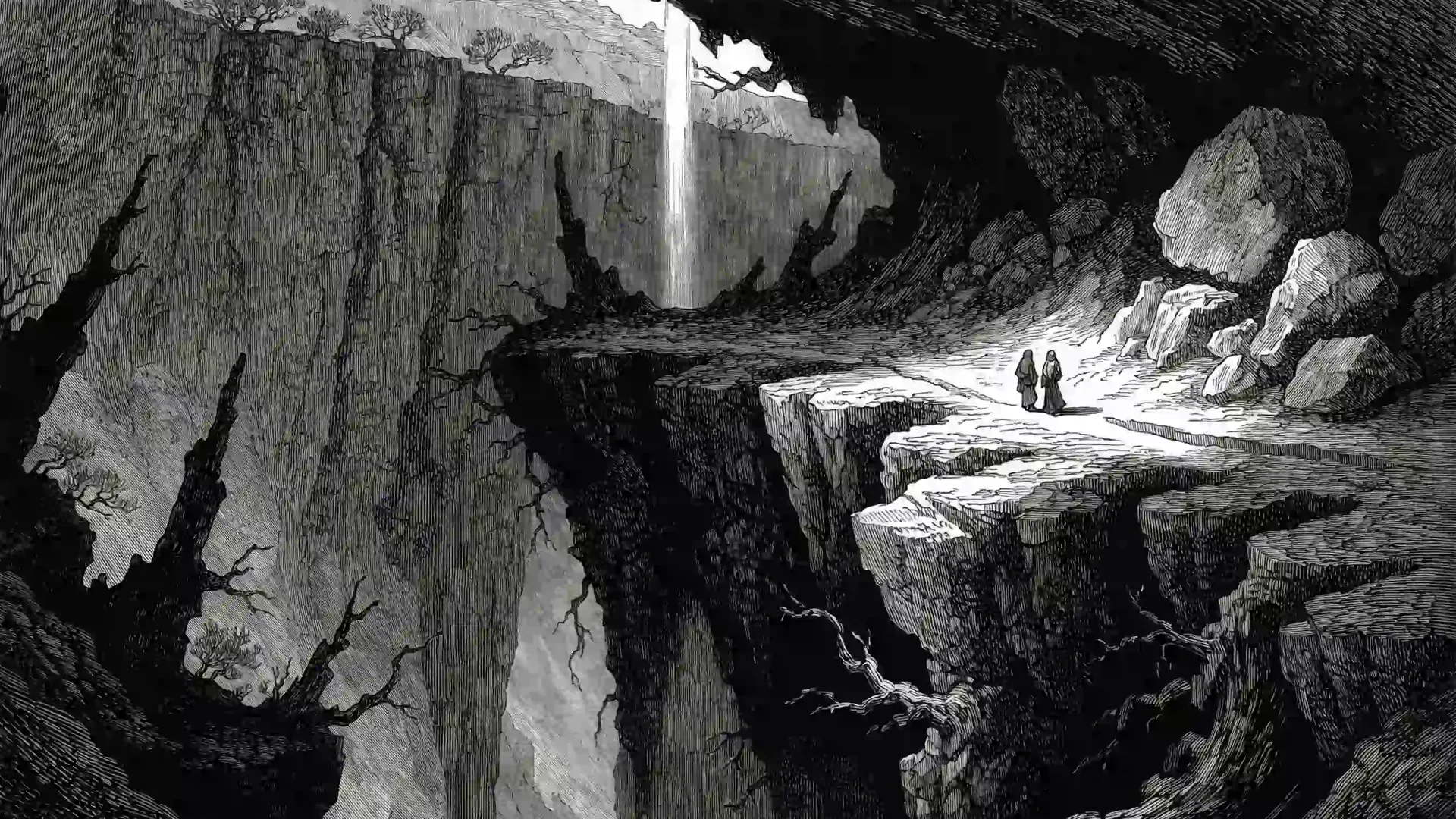
The illustrator of the sublime
Gustave Doré was born in Strasbourg in 1832 and was a prodigy: at fifteen he was drawing caricatures for a Paris weekly. He soon turned to book illustration and, working with a team of wood engravers who cut his drawings into blocks, produced images on an almost industrial scale.
His illustrated Dante's Inferno (1861) made him famous across Europe, followed by Don Quixote, the Bible (1866), Milton's Paradise Lost, Coleridge's Rime of the Ancient Mariner and Poe's The Raven. In 1872 he published London: A Pilgrimage, with stark views of the city's poor that influenced social reformers.
Doré also painted and sculpted, but his engravings are his lasting work. Their scale, drama and theatrical light shaped later fantasy illustration, the look of Hollywood epics and the art direction of films and games; his images of hell and of fallen angels are still the template most people imagine.
Visual anatomy of Gustave Doré
Small human figures against enormous cliffs, forests, crowds or skies: the sublime.
Theatrical beams breaking through cloud or cavern darkness, falling on one figure or group.
Wood engraving: dense parallel lines and cross-hatching that build deep blacks and silvery greys.
Masses of bodies spiralling into darkness, especially in the Inferno and Paradise Lost.
Gnarled trees, jagged rocks, vast caverns and stormy seas full of mood.
A frozen climactic moment, staged like a scene in an opera.
Words around Doré
A relief print cut into the end grain of hard wood, allowing very fine lines.
Awe mixed with fear before something vast, central to Romantic art.
Crossing sets of parallel lines to build darker tones.
Engravers cutting an artist's drawing into a block, line for line.
How to recognize Gustave Doré's work
- Black and white engraving with dense, fine parallel lines.
- Tiny figures dwarfed by cliffs, caverns or crowds.
- A dramatic beam of light breaking through darkness.
- Gnarled trees and jagged rocks.
- Biblical, Dantean or epic literary subjects.
Where people get it wrong
Doré is often credited with cutting the blocks himself. He drew; teams of professional engravers, such as Héliodore Pisan, translated his drawings into wood. His work is also sometimes dismissed as melodrama, but his London series shows a sharp, documentary eye for poverty.
Words to describe Gustave Doré
Words for what you see and feel in this work. They are for describing and understanding, not a recipe for copying an artist.
- wood engraving
- dense parallel hatching
- cross-hatching
- the sublime
- tiny figures, vast landscape
- beam of light through darkness
- gnarled trees
- jagged cliffs
- Dante's Inferno
- biblical epic
- monochrome engraving
- theatrical drama
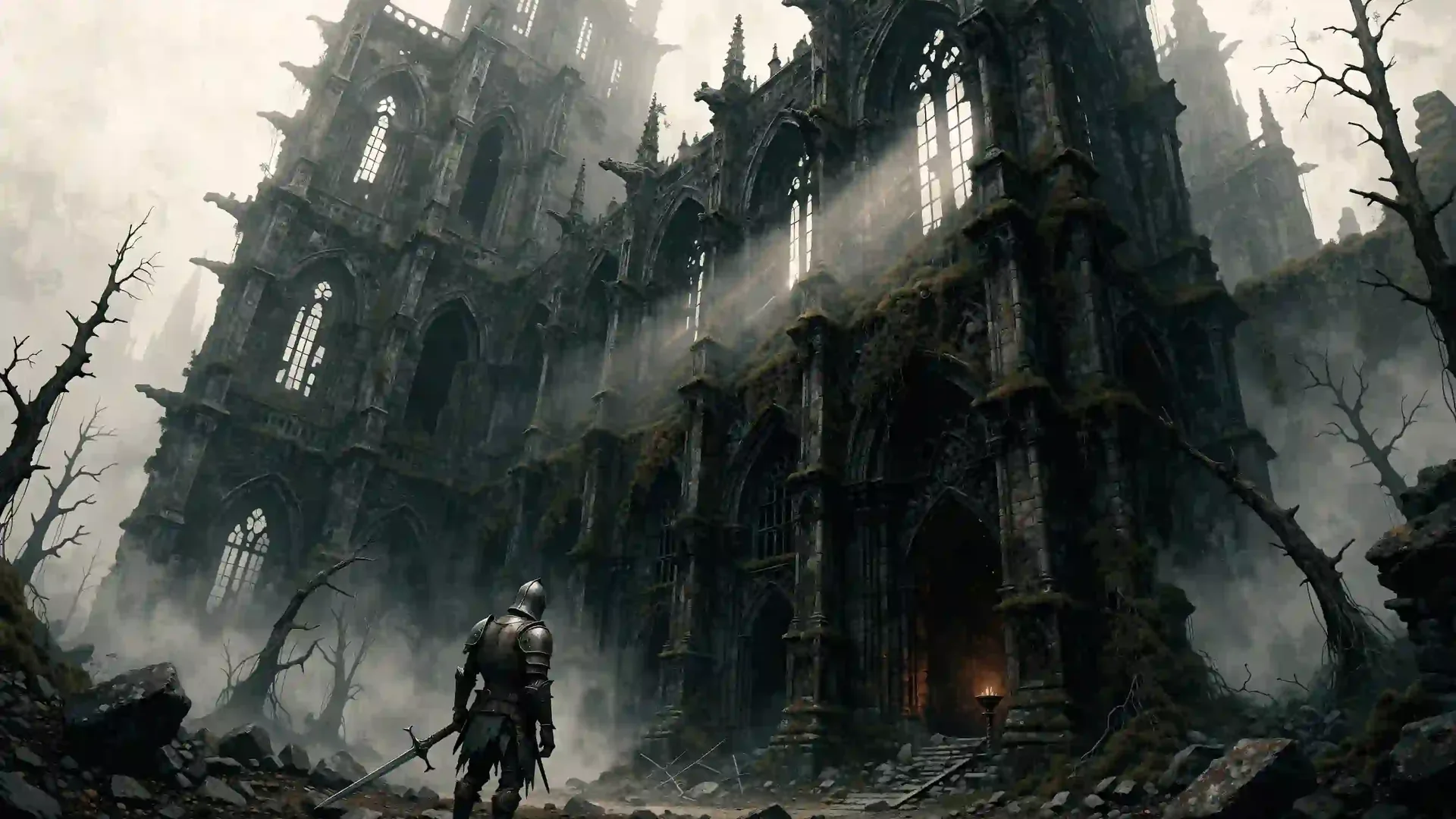
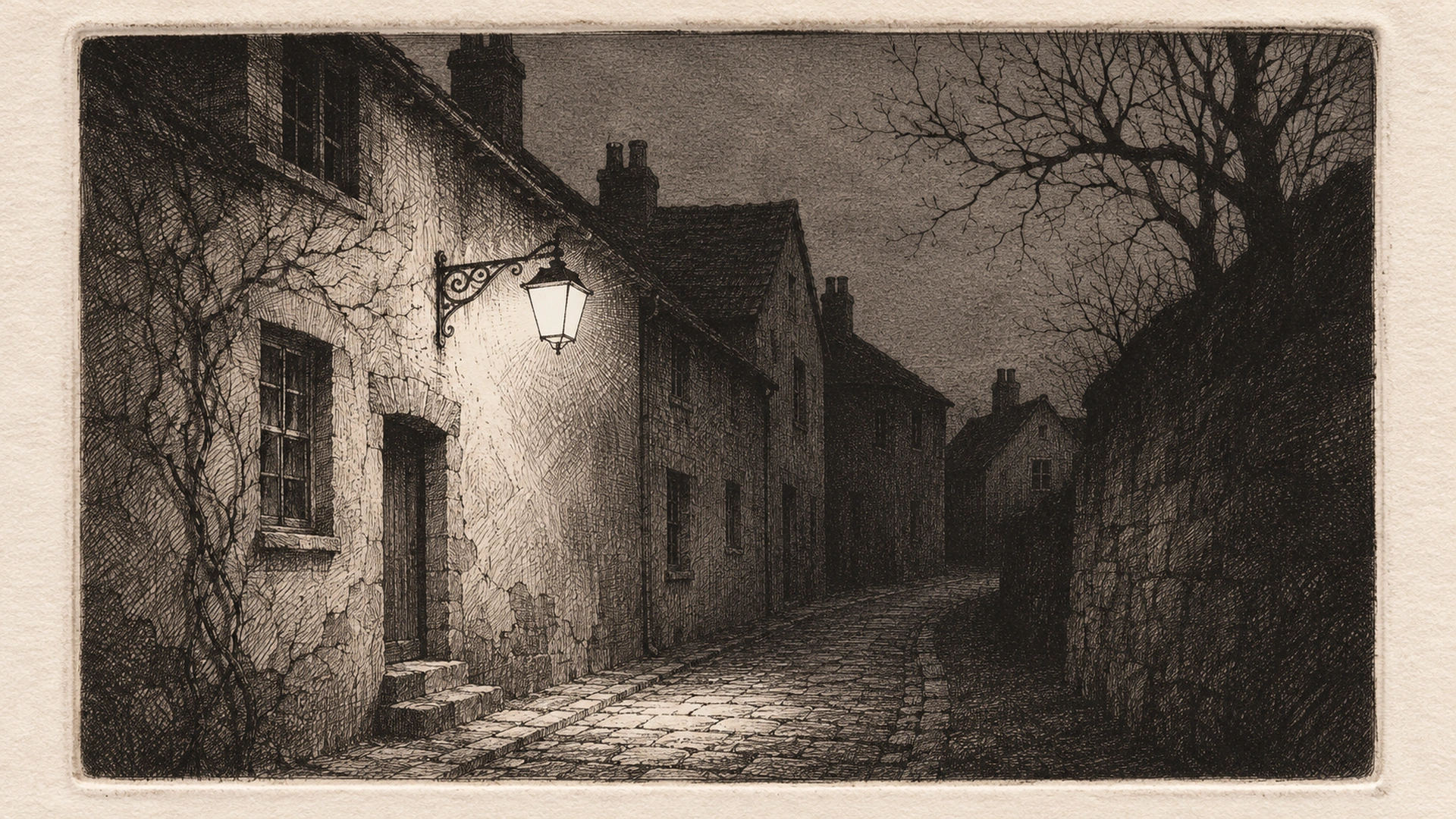
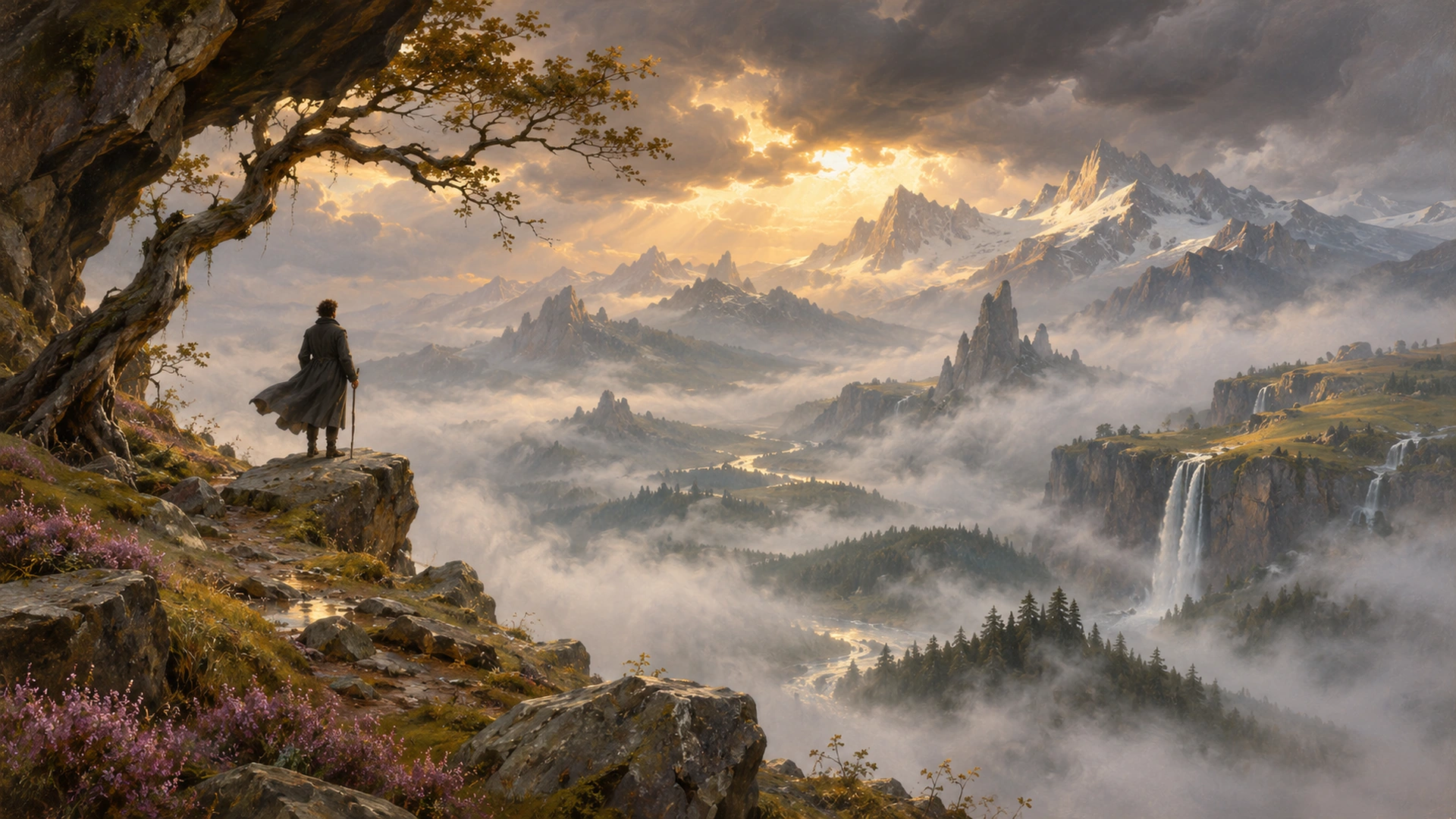
A black and white wood engraving: two tiny robed travellers on a narrow ledge at the edge of a vast dark cavern, a single beam of pale light falling through a crack far above, jagged cliffs and gnarled roots in dense parallel hatching, a crowd of shadowy figures spiralling into the depths below.
What to learn from Gustave Doré
- Make the human tiny and the setting vast.
- Use one beam of light to choose the focus.
- Describe tone as engraved lines: dense parallel hatching, silvery greys.
- Stage the moment like a theatre climax.
Questions about Gustave Doré
What did Gustave Doré illustrate?
Dante's Divine Comedy, the Bible, Don Quixote, Milton's Paradise Lost, Coleridge's Rime of the Ancient Mariner, Poe's The Raven, Perrault's fairy tales and La Fontaine's fables, among many others, plus a book of London street scenes.
Did Doré engrave his own illustrations?
Mostly not. He drew directly on the wood block or on paper, and skilled wood engravers cut the lines. This let him produce thousands of images; his signature often appears next to the engraver's.
Why is Doré important for fantasy art?
His vast landscapes, tiny figures, sublime light and monstrous creatures became a visual template for epic fantasy, horror and religious films. Illustrators and concept artists still study his compositions.
Find one Doré Inferno plate. Describe only the light: where it enters, what it falls on and what it leaves in darkness. Then rewrite the same scene with the light coming from the opposite side, and note how the story changes.
Sources and further reading
- Musée d'Orsay: Gustave Doré, l'imaginaire au pouvoir, exhibition 2014.
- Dover Publications: The Doré Illustrations for Dante's Divine Comedy.
- Blanchard Jerrold and Gustave Doré, London: A Pilgrimage, 1872.
- Musée d'Art Moderne et Contemporain, Strasbourg: Doré collection.