Gold and ornament
Gustav Klimt was born near Vienna in 1862 and trained as a decorative painter. In 1897 he co-founded the Vienna Secession, a group of artists who broke with the academy to bring together painting, architecture and design. His Beethoven Frieze (1902) and his portraits of Viennese women made him the city's most famous and most controversial painter.
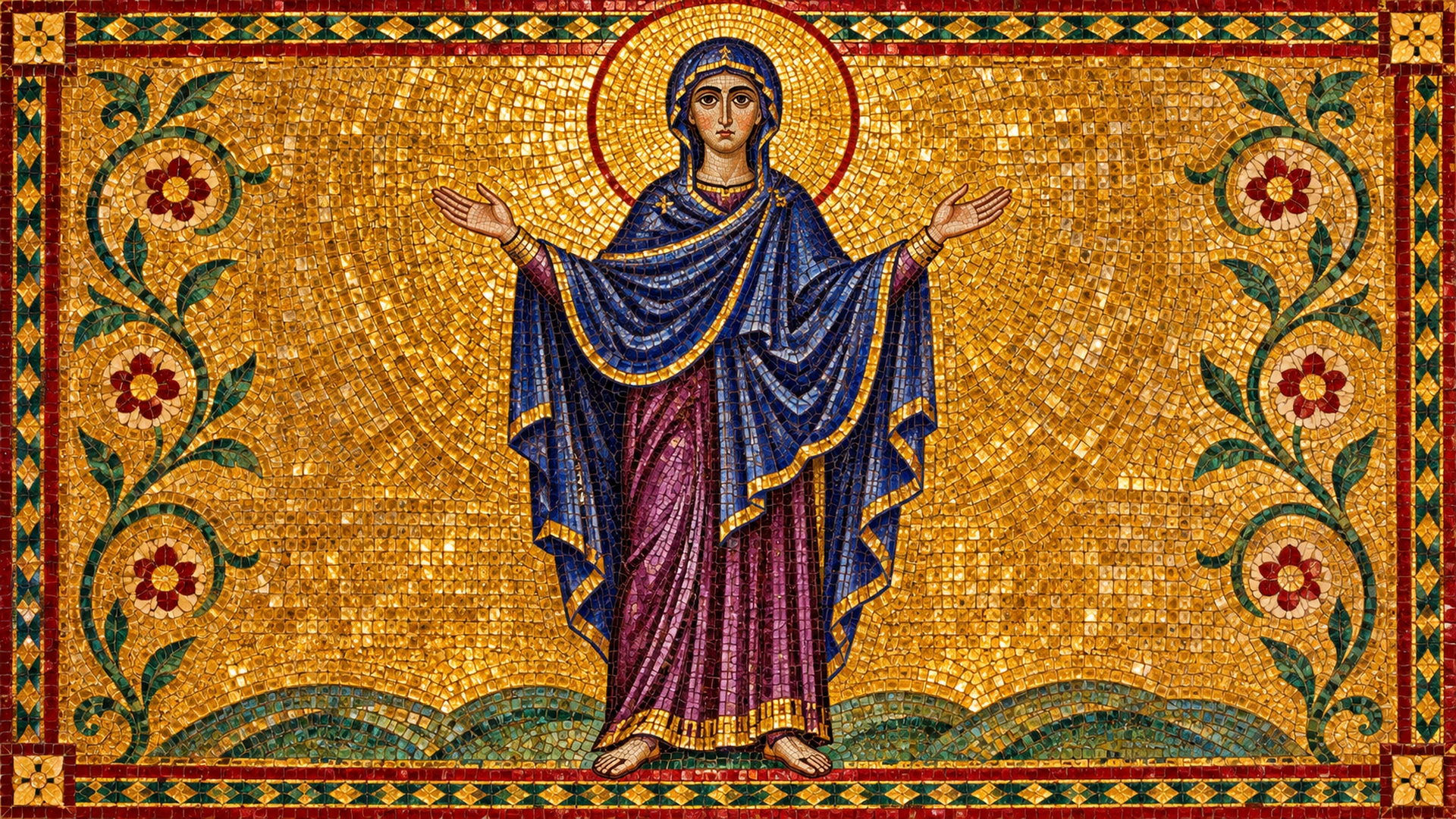
His 'golden phase', inspired partly by the Byzantine mosaics he saw in Ravenna, produced works such as Portrait of Adele Bloch-Bauer I (1907) and The Kiss (1907–08), where realistic faces and hands emerge from flat fields of gold leaf, spirals, eyes, squares and flowers. He died in 1918, the same year as his younger friend Egon Schiele.
Visual anatomy of Gustav Klimt
Real gold and silver leaf applied to the painting, making flat glowing areas.
Mosaic-like ornament: spirals, circles, squares, eyes and flowers.
Naturalistic faces and hands against completely flat decorative surfaces.
Elongated women, embracing couples, often with closed eyes.
Tall square or vertical canvases; also flat, carpet-like landscapes.
Sensual, dreamlike, a little melancholic.
Key works of Gustav Klimt
A mural cycle for the Vienna Secession building, with gold, ornament and allegorical figures.
A gold-framed portrait of a heroine as a seductive, unsettling modern woman.
A face and hands emerging from a dress of gold patterns and eyes.
Two lovers wrapped in gold robes, his patterned in rectangles, hers in circles and flowers.
How to recognize Gustav Klimt's work
- Gold leaf and flat ornamental patterns.
- Realistic faces emerging from decoration.
- Mosaic-like squares, spirals and circles.
Where people get it wrong
Klimt is often reduced to 'gold'. The power of his work is the tension between soft, realistic skin and hard, flat ornament, and his landscapes, with no gold at all, are just as distinctive.
Words to describe Gustav Klimt
Words for what you see and feel in this work. They are for describing and understanding, not a recipe for copying an artist.
- gold leaf ornament
- Byzantine mosaic patterns
- spirals and squares
- realistic face in flat decoration
- Vienna Secession
- sensual dreamlike portrait
- embracing figures
- flower-filled meadow
- tall vertical composition
- shimmering gold and ochre
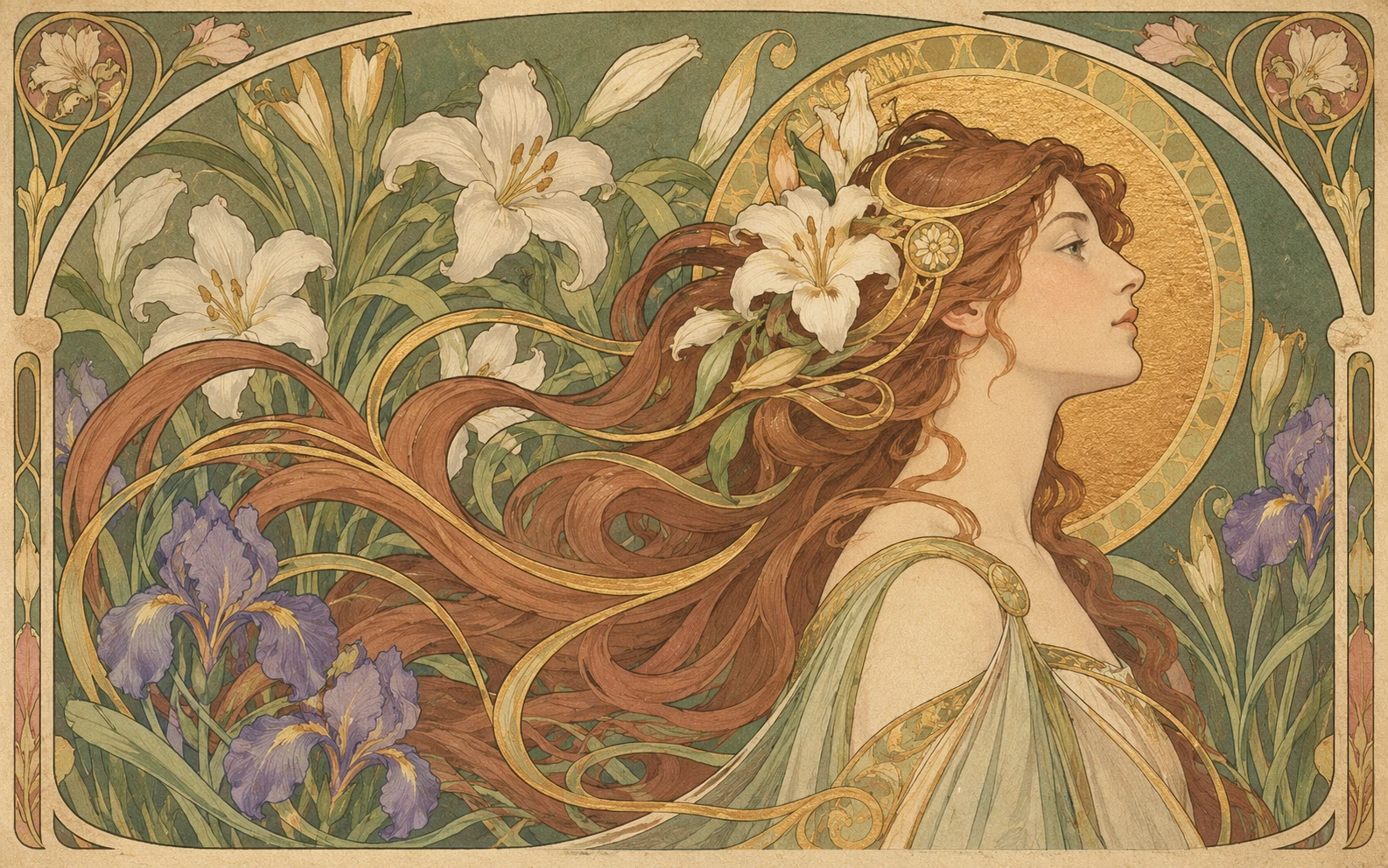
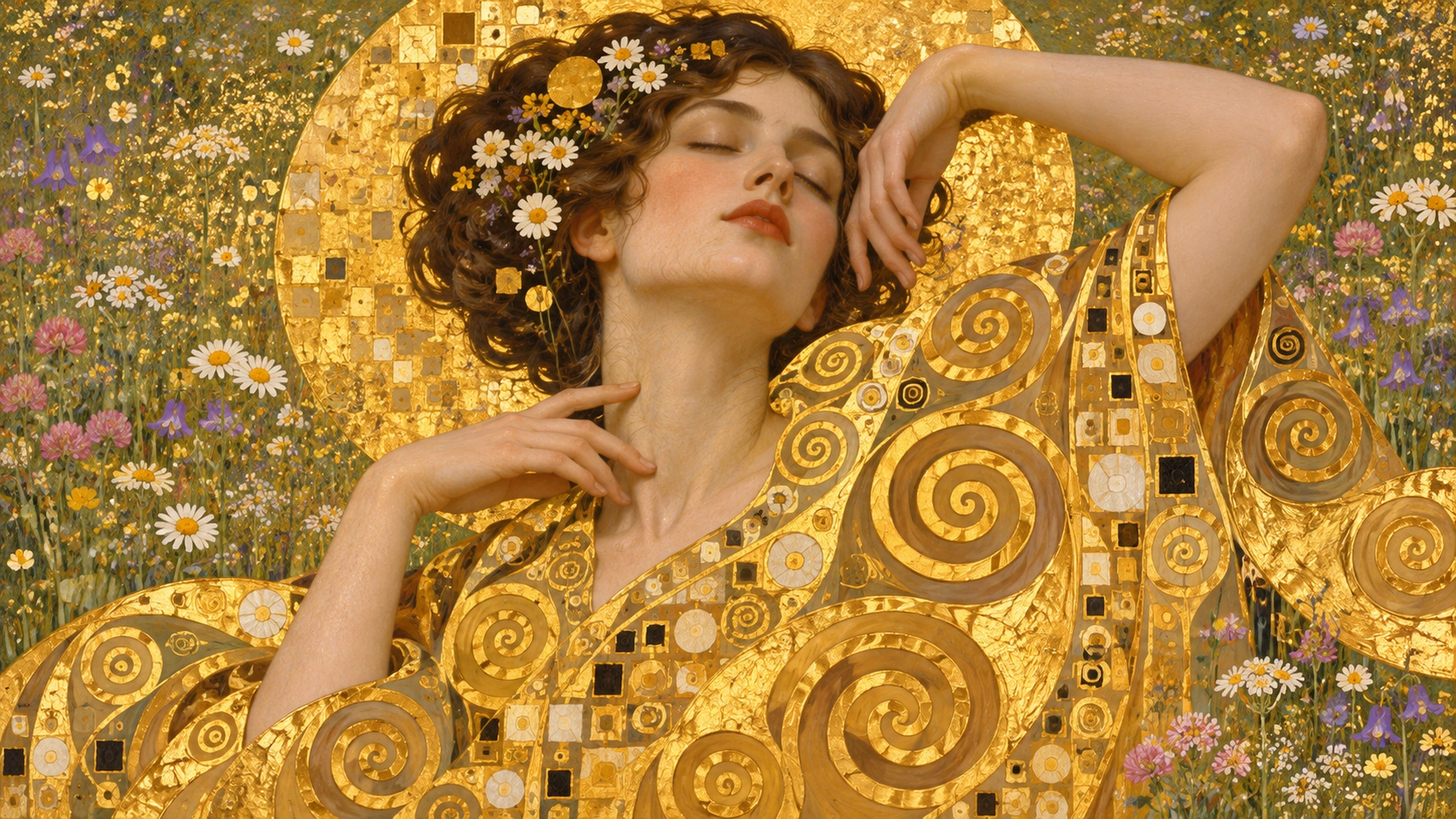
An original decorative portrait study in the spirit of the Vienna Secession: a woman with closed eyes, her realistic face and hands emerging from a robe made of flat gold leaf patterns of spirals, small squares and circles, a background of shimmering gold dust and tiny flowers.
What to learn from Gustav Klimt
- Describe where realism stops and ornament begins.
- Name the patterns: spirals, squares, eyes, flowers.
- Say how gold is used: background, clothing, halo.
Questions about Gustav Klimt
What style is Gustav Klimt?
Klimt belongs to Symbolism and the Vienna Secession, the Austrian branch of Art Nouveau (Jugendstil). He co-founded the Secession in 1897 and was its first president.
Was Klimt an Expressionist?
Not usually. His flat gold ornament and decorative line are closer to Art Nouveau, but he mentored Egon Schiele, whose raw, nervous line is a key part of Austrian Expressionism.
Why did Klimt use so much gold?
His father was a gold engraver, and a visit to the Byzantine mosaics of Ravenna in 1903 deepened his use of gold leaf, which defines his 'golden period'.
Describe a portrait of someone you know in Klimt's manner: which part stays realistic, which part becomes flat pattern, which shapes fill their clothing and where the gold goes.