Feeling over reason
Romanticism grew across Europe at the end of the 18th century as a reaction against the Enlightenment's cool reason and the order of Neoclassicism. Painters, poets and composers wanted intensity: awe in front of mountains and the sea, nostalgia for ruins and the Middle Ages, horror, longing and the drama of revolution.
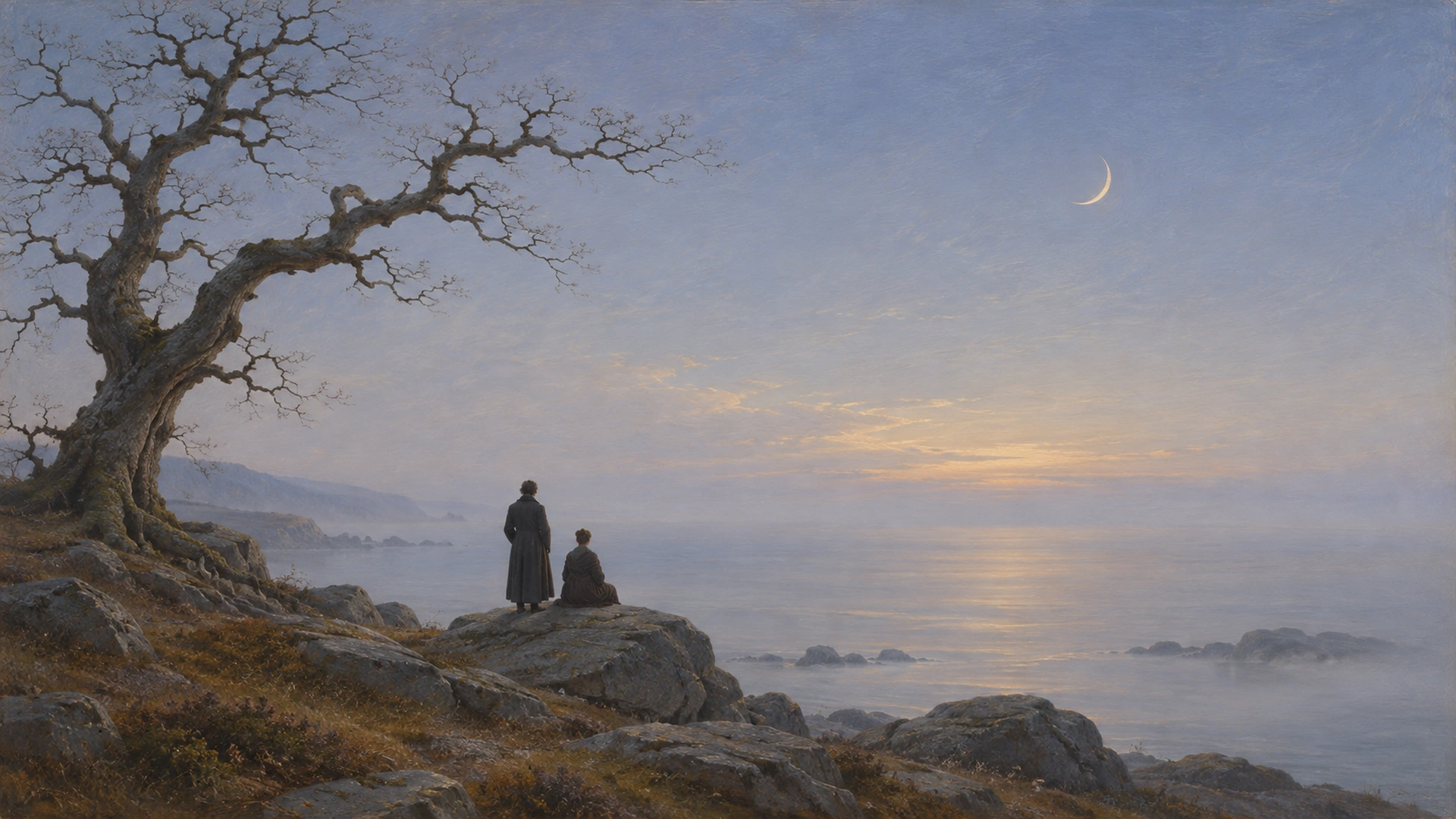
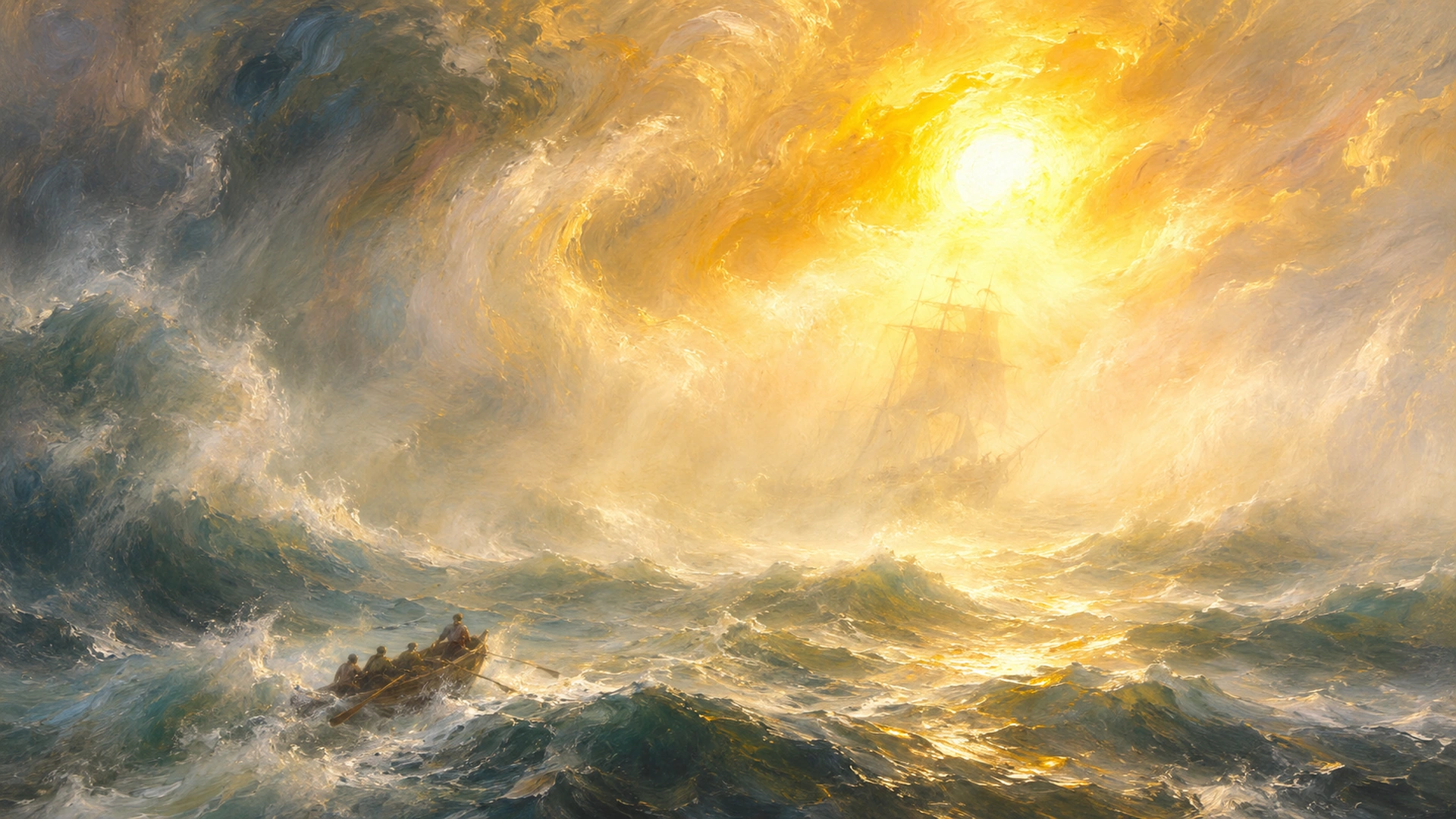
In Germany Caspar David Friedrich painted small figures facing endless fog and sea. In England J. M. W. Turner dissolved ships and trains in light and storm, while John Constable painted the changing sky. In France Théodore Géricault's The Raft of the Medusa (1818–19) and Eugène Delacroix's Liberty Leading the People (1830) turned current events into epic emotion, and in Spain Goya painted the nightmares of war. The Romantic sublime still shapes landscape photography, fantasy film posters and every 'epic' wallpaper of a hiker on a cliff.
Visual anatomy of Romanticism
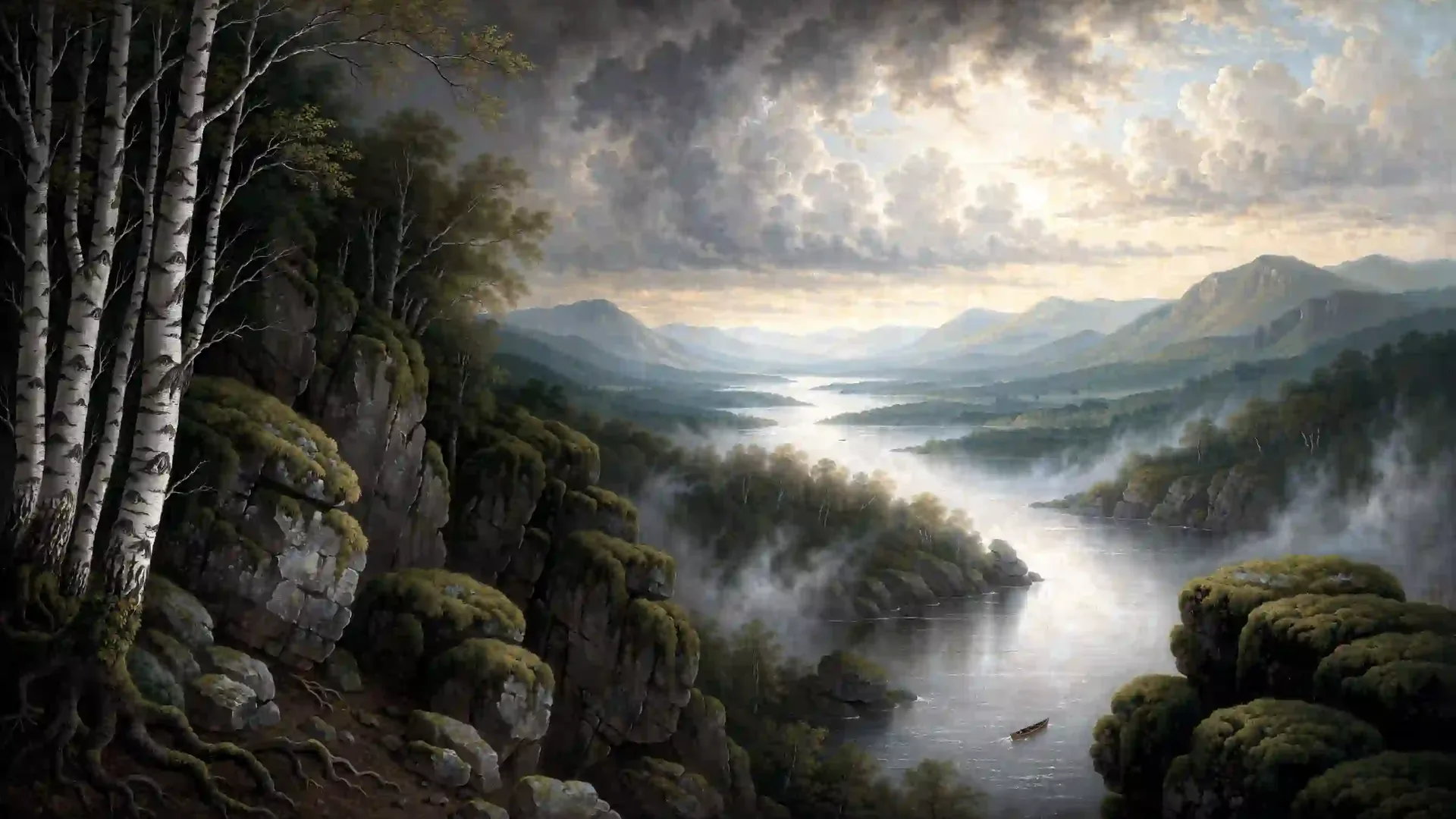
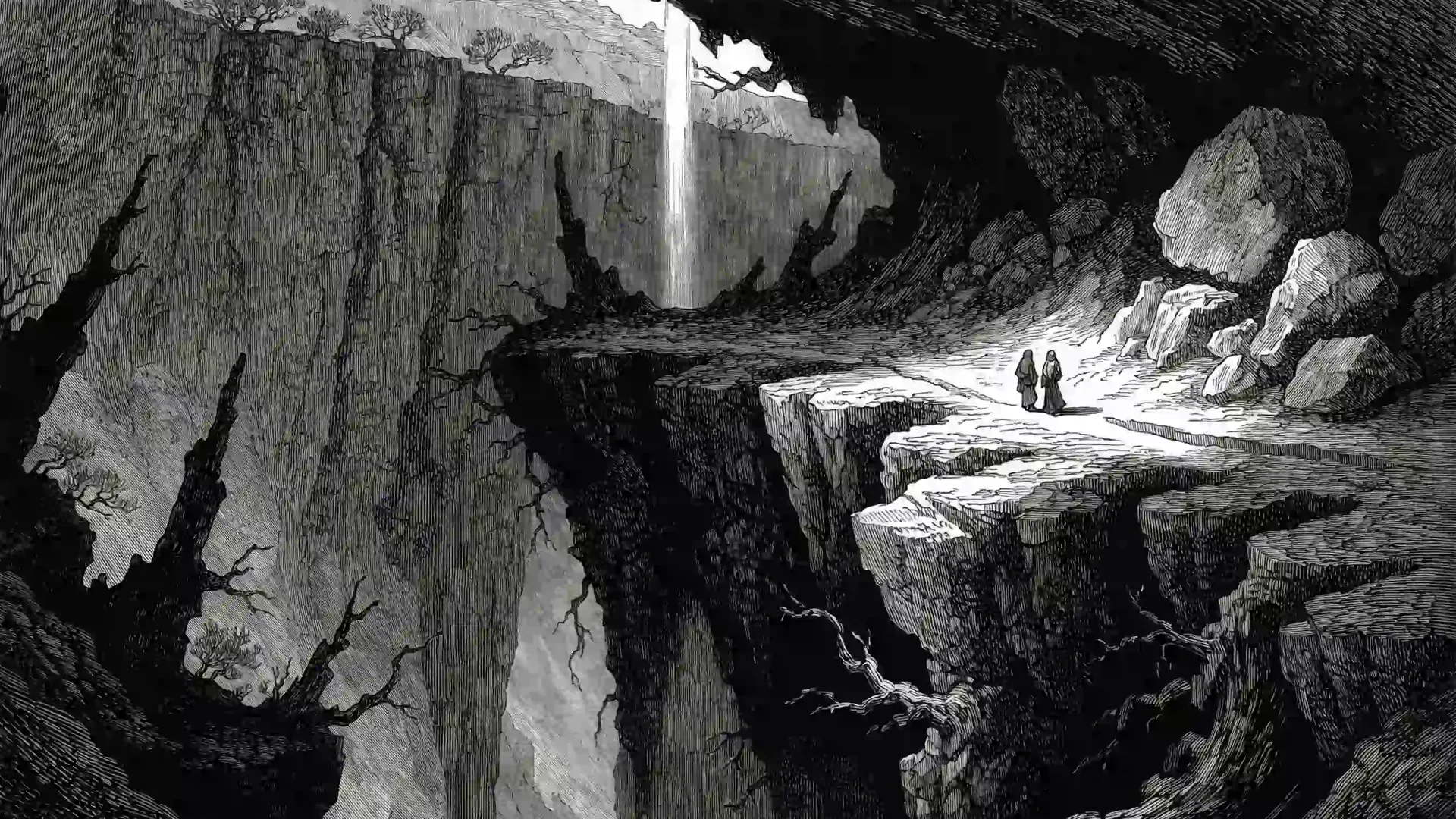
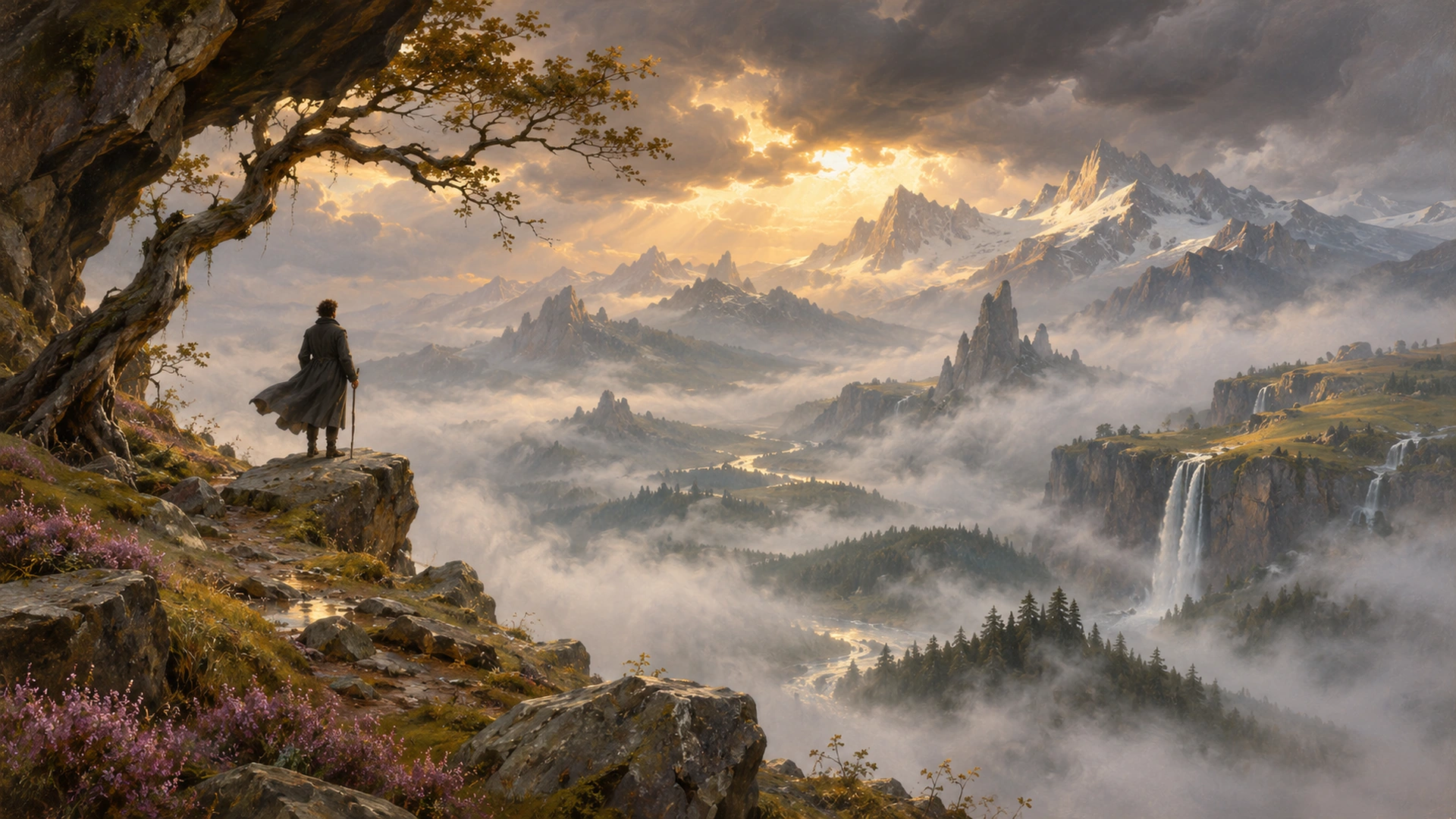
Mountains, seas, storms and fog, larger than any human.
Small lone figures, often seen from behind, or bodies caught in struggle.
Dramatic skies: sunsets, moonlight, lightning and light breaking through cloud.
Awe, longing, melancholy, terror: the sublime.
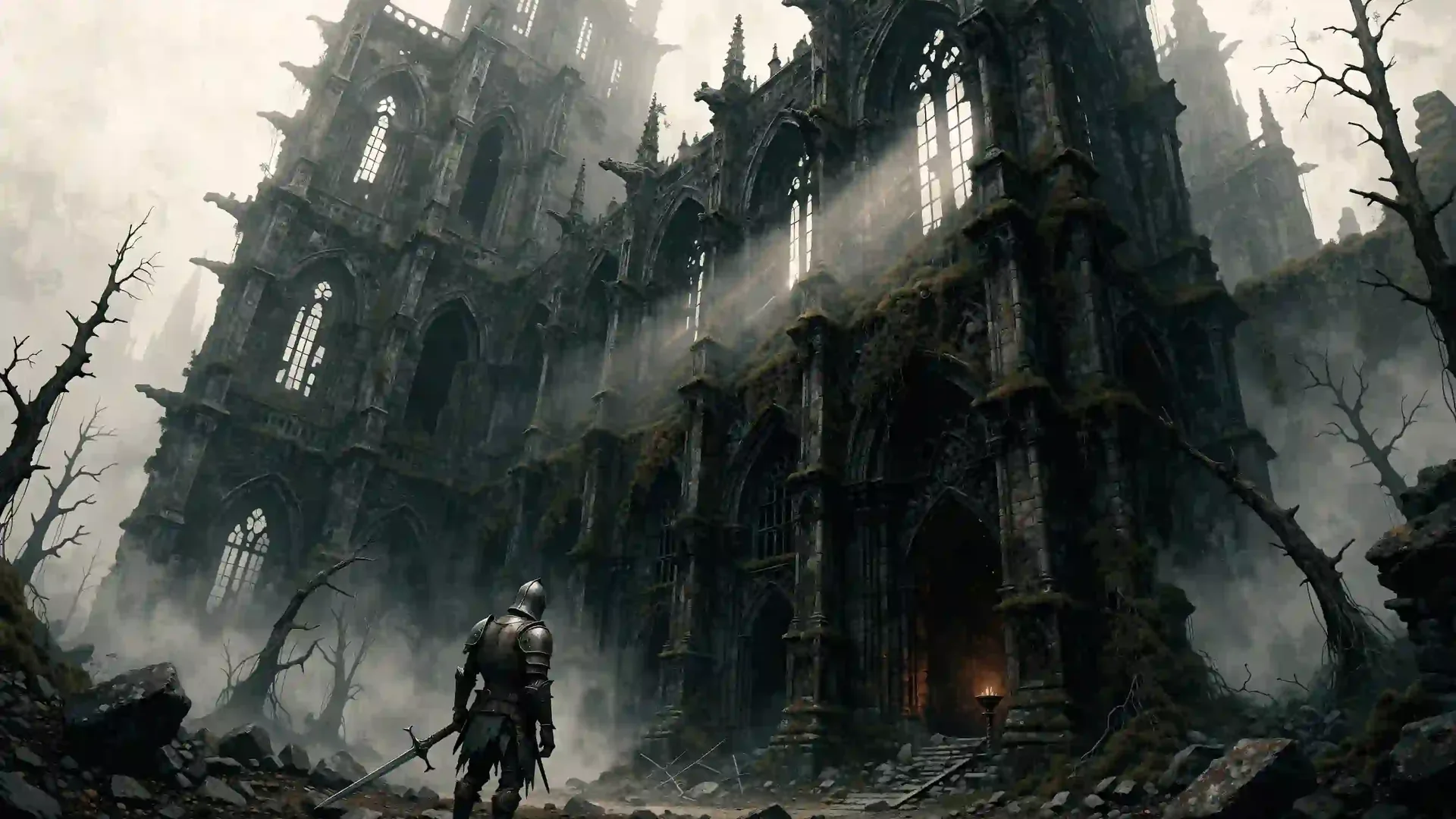
Ruins, shipwrecks, Gothic churches, revolutions, exotic and medieval legends.
From Friedrich's smooth stillness to Turner's and Delacroix's loose, energetic paint.
Key names
Silent figures before fog and sea; Wanderer above the Sea of Fog (c. 1818).
Storm, steam and light dissolving form.
Colour, movement and revolution; Liberty Leading the People (1830).
The Raft of the Medusa (1818–19), a shipwreck as epic tragedy.
Clouds and the English countryside studied from life.
How to recognize Romanticism
- Overwhelming nature with tiny human figures.
- Dramatic skies and light breaking through.
- Strong emotion: awe, longing, terror.
Where people get it wrong
Romantic does not mean 'about love' here. Romanticism is about intensity of feeling of every kind, and many of its greatest pictures are about fear, death and the power of nature, not romance.
Words to describe Romanticism
Precise words for the qualities above. Combine a few of them instead of naming the style or artist alone.
- romantic sublime landscape
- lone figure seen from behind
- sea of fog
- dramatic stormy sky
- light breaking through clouds
- gothic ruin at dusk
- shipwreck on a wild sea
- moonlit melancholy
- awe and longing
- epic scale of nature
An original Romantic landscape study: a lone traveller in a dark coat seen from behind on a rocky outcrop, looking over a valley filled with fog, jagged mountain peaks beyond, a pale golden light breaking through heavy clouds, a mood of awe and solitude. Not a copy of any existing painting.
What to take from Romanticism today
- Name the scale: how small the figure is against nature.
- Describe the sky and where the light breaks through.
- Say which feeling dominates: awe, melancholy, terror.
Questions about Romanticism
What is Romanticism?
The movement that put feeling, wild nature and the sublime above reason: lone figures, storms, ruins, shipwrecks and burning skies.
How do you recognize Romanticism?
Overwhelming nature with tiny human figures. Dramatic skies and light breaking through. Strong emotion: awe, longing, terror.
How do you describe Romanticism in words or a prompt?
Name the scale: how small the figure is against nature. Describe the sky and where the light breaks through. Say which feeling dominates: awe, melancholy, terror.
Describe a landscape photograph you could take near you in a Romantic way: where the lone figure stands, what the weather does, and what the light breaks through.