A word for a feeling
Merriam-Webster chose 'slop' as its 2025 Word of the Year and defined it as digital content of low quality, produced in quantity by AI. The interesting thing is the tone. It is not a frightened word. It is the word you use for something poured into a trough: plentiful, warm, and made for no one in particular.
That last part matters. Slop is not bad because a machine was involved. It is bad because nobody was addressed.
The prefabricated hen-house
In 1946, long before image generators, George Orwell complained in 'Politics and the English Language' that prose 'consists less and less of words chosen for the sake of their meaning, and more and more of phrases tacked together like the sections of a prefabricated hen-house'.
Read that sentence again with a prompt in mind: 'a beautiful woman in a cosy café, cinematic lighting, highly detailed'. Every phrase is a prefabricated section. None was chosen for its meaning. The image that comes back is the hen-house, assembled perfectly and inhabited by nobody.
The twitch and the wink
The anthropologist Clifford Geertz borrowed an example from the philosopher Gilbert Ryle: two boys contract the eyelids of their right eyes. In one it is a twitch; in the other, a wink to a friend. A camera, or a thin description, records the same movement. Only a thick description, which knows the context, the friend and the conspiracy, can tell them apart.
Slop is a world of twitches. Faces move, light falls, steam rises, but nothing is meant. It has the surface of meaning without the conspiracy behind it.
The detail that pricks
Roland Barthes, in Camera Lucida, called the detail in a photograph that wounds you the punctum: 'that accident which pricks me'. It is usually small and unplanned: a bad tooth, a pair of shoes, a hand. Slop has no punctum, because everything in it is equally finished, and so nothing in it is particular.
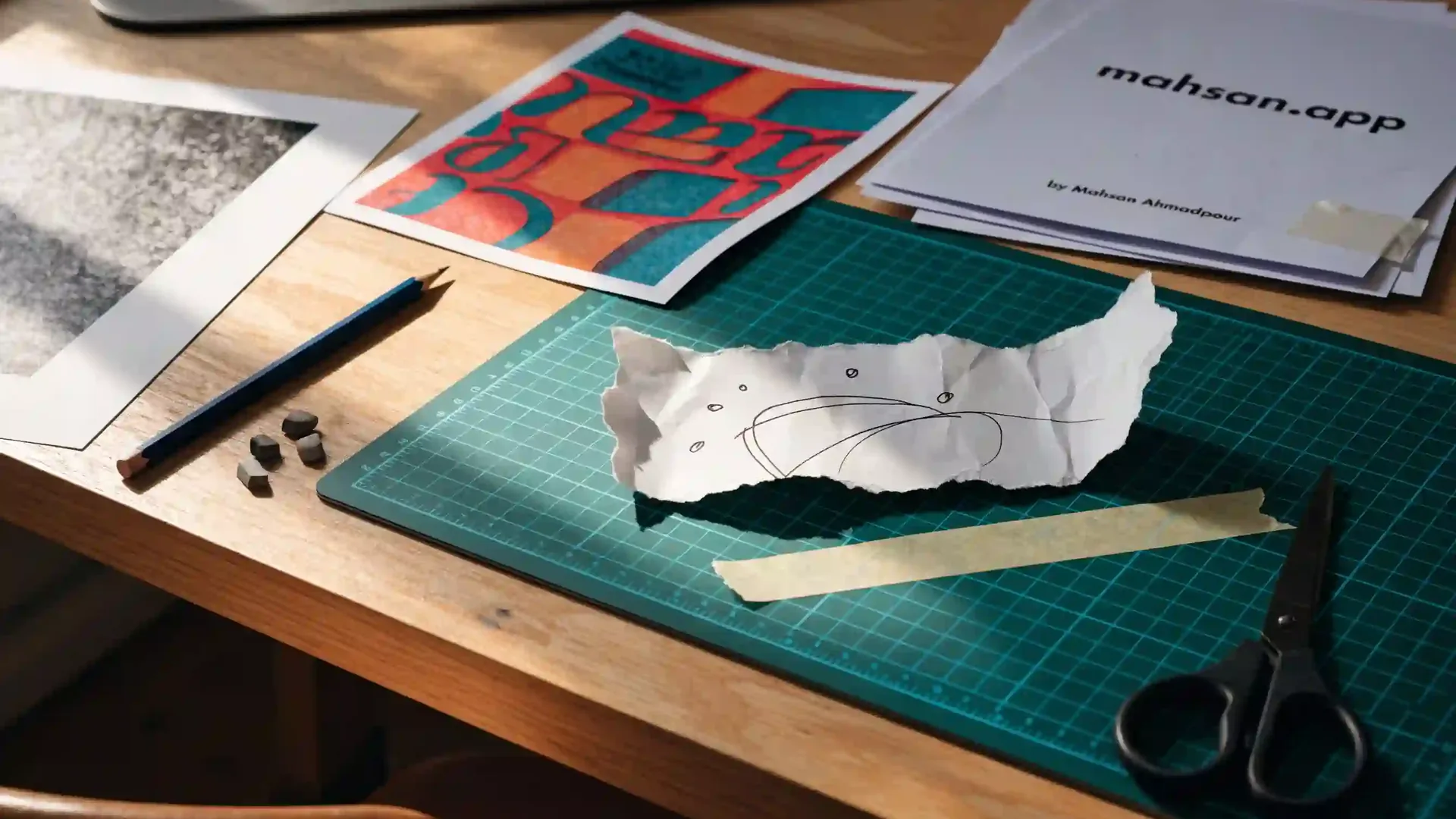
This is why the counter-trends of 2025 and 2026 look the way they do: the photocopy streak, the digicam flash, the torn edge of a zine. Each is a small accident that proves a moment, a hand, a choice. But an accident added by a filter is not an accident. Faked imperfection is only a more fashionable hen-house.
The answer is writing
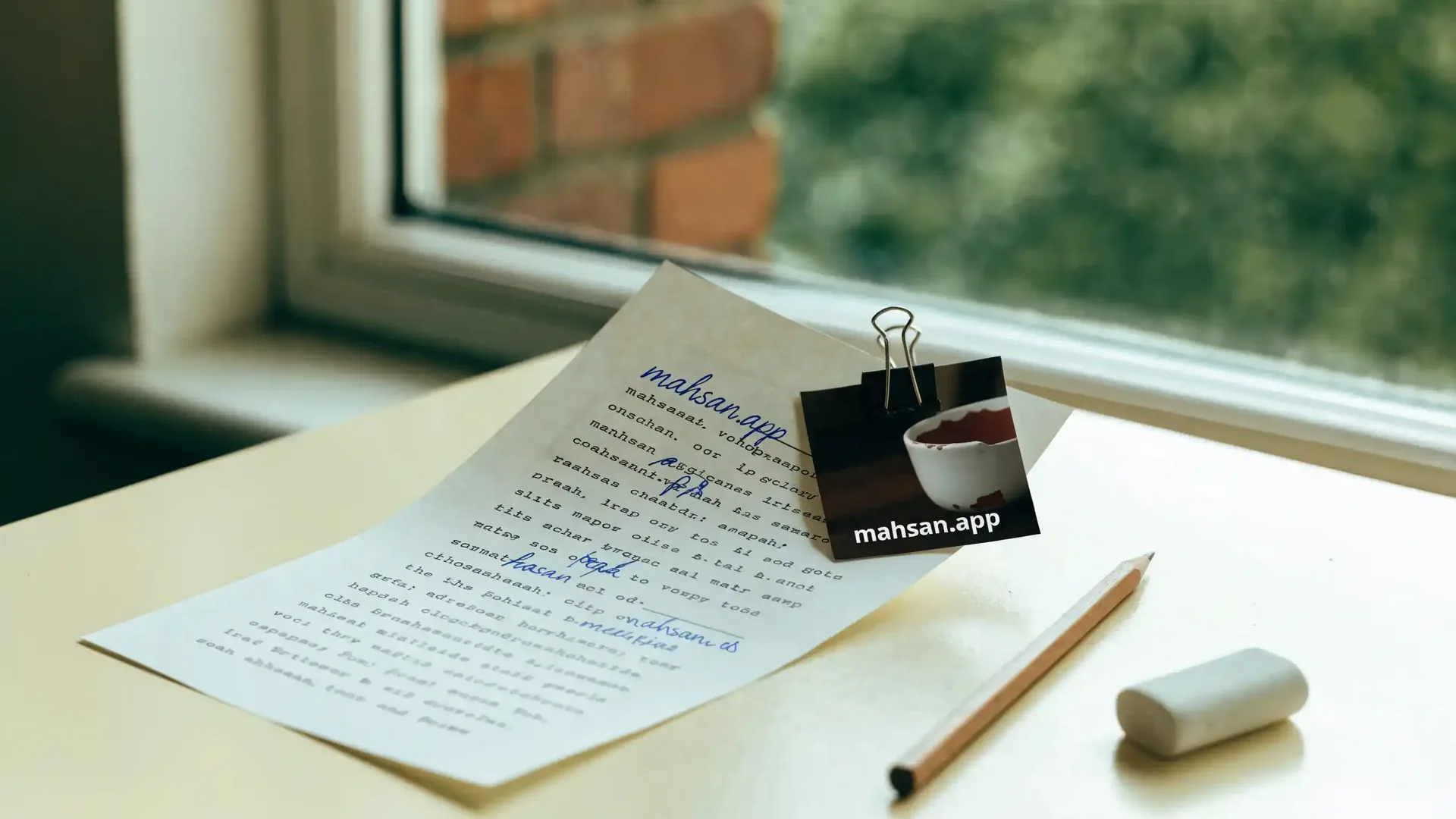
If slop is a thin description, the answer is not to stop using tools. It is to describe thickly before you make anything. Who is this for? Which café, at what hour, with which crack in which cup? What is the one detail that would make a stranger stop? These are writing questions. They have always been the work of artists, editors and art directors, and they have become the scarce part of image-making.
Ideas are cheap, and machines have made them cheaper. Attention is not. It cannot be generated; it can only be written down, one chosen word at a time.
Questions about Slop Is a Thin Description
Why do AI images all look the same?
Usually because they are prompted with generic labels such as 'beautiful', 'cinematic' and 'highly detailed', which pull the model towards its most average results. Specific, thick descriptions with one exact detail produce more particular images.
What is a thin description?
A description that records only the surface, such as a label or a movement, without the context that gives it meaning. The term comes from Gilbert Ryle and was made famous by Clifford Geertz.
How do you avoid making AI slop?
Decide who the work is for and what it must say, write one exact detail, use your own references, generate less and choose more carefully, and finish by hand. Above all, write before you generate.
Find one prompt you have used. Underline every word that could belong to anyone's prompt. Replace each one with a word that could only belong to this image. Read both versions aloud.
Sources and further reading
- Merriam-Webster, Word of the Year 2025: 'slop'.
- George Orwell, 'Politics and the English Language', Horizon, 1946.
- Clifford Geertz, 'Thick Description: Toward an Interpretive Theory of Culture', in The Interpretation of Cultures, Basic Books, 1973.
- Roland Barthes, Camera Lucida, trans. Richard Howard, Hill and Wang, 1981.
Words to describe Slop Is a Thin Description
Precise words for the qualities above. Combine a few of them instead of naming the style or artist alone.
- slop
- thin description
- thick description
- punctum
- prefabricated phrase
- attention
- address
- particularity
- twitch and wink
- intention
Thin: 'a sad old man by a window, cinematic, moody, detailed'. Thick: 'a grandfather's hands on the windowsill in February, the radio off for the first time, one glove still on'.