The first color
In Brent Berlin and Paul Kay's study of color words, red is usually the first chromatic color a language names, right after dark and light. It is the color of blood, fire and ripe fruit, and the red ochre pigments found in caves were used by people tens of thousands of years ago.
Unlike blue, red was easy to find and easy to make. But the most brilliant reds, the ones prized by kings and weavers, came from unexpected places: from tiny insects and from the roots of a plant.
Words made from insects
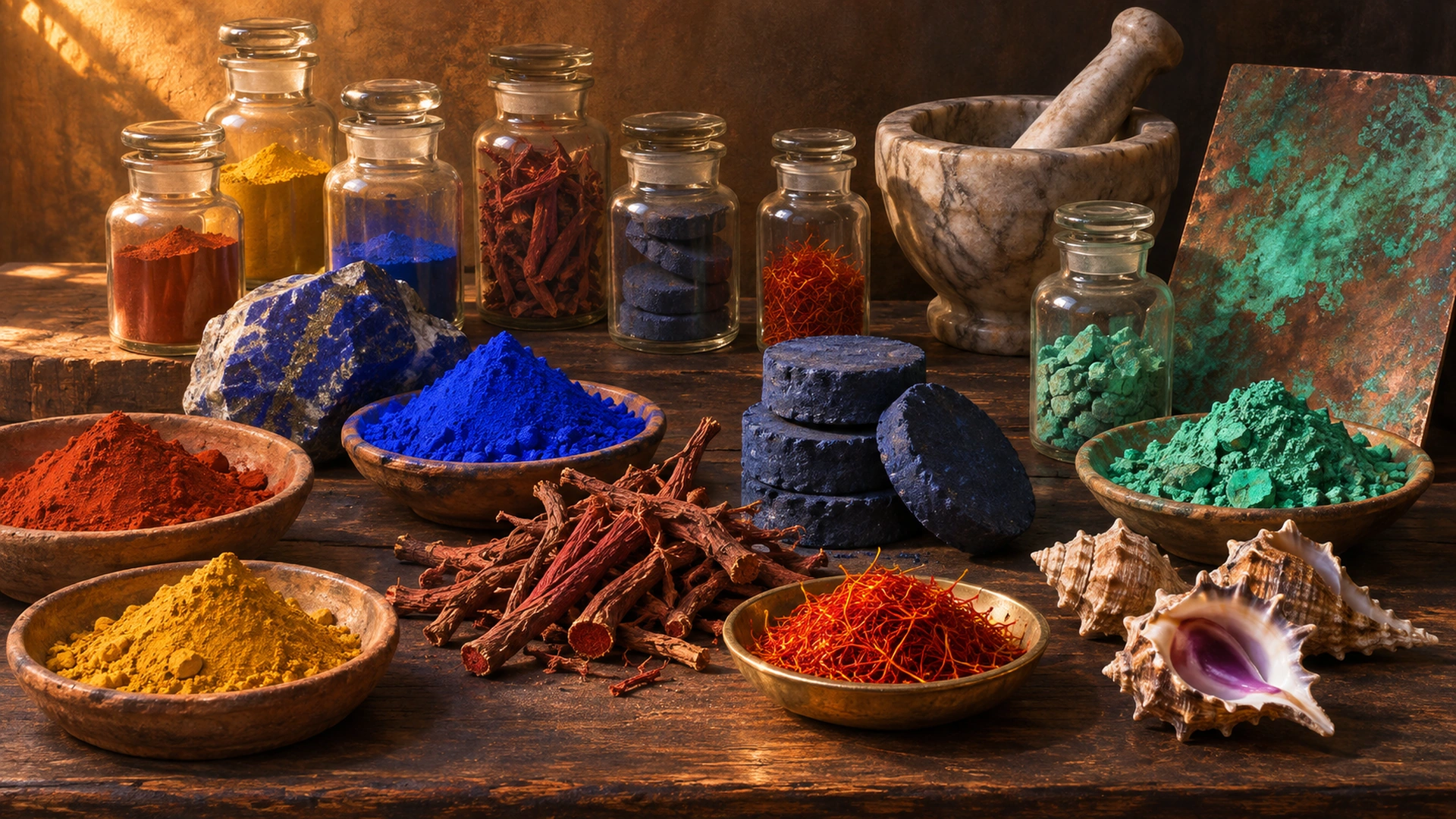
The Persian word قرمز (qermez) comes, through Arabic qirmiz, from a Sanskrit word meaning 'produced by a worm'. It names the kermes insect, whose dried bodies gave a deep red dye. The same root travelled into European languages as 'crimson' and 'carmine'.
لاکی (laki), a lacquer red, comes from لاک (lac), the resin produced by the lac insect in South Asia, also used for sealing wax and lacquer. After the Spanish brought cochineal from the Americas in the sixteenth century, a related insect became the world's great source of red dye. Behind many reds is a small, living body.
The Persian reds
The old Persian word for red, used in poetry and in phrases like «سرخ شدن», to blush.
The everyday word for red, from the kermes insect.
Lacquer red, from lac resin; also the color of sealing wax.
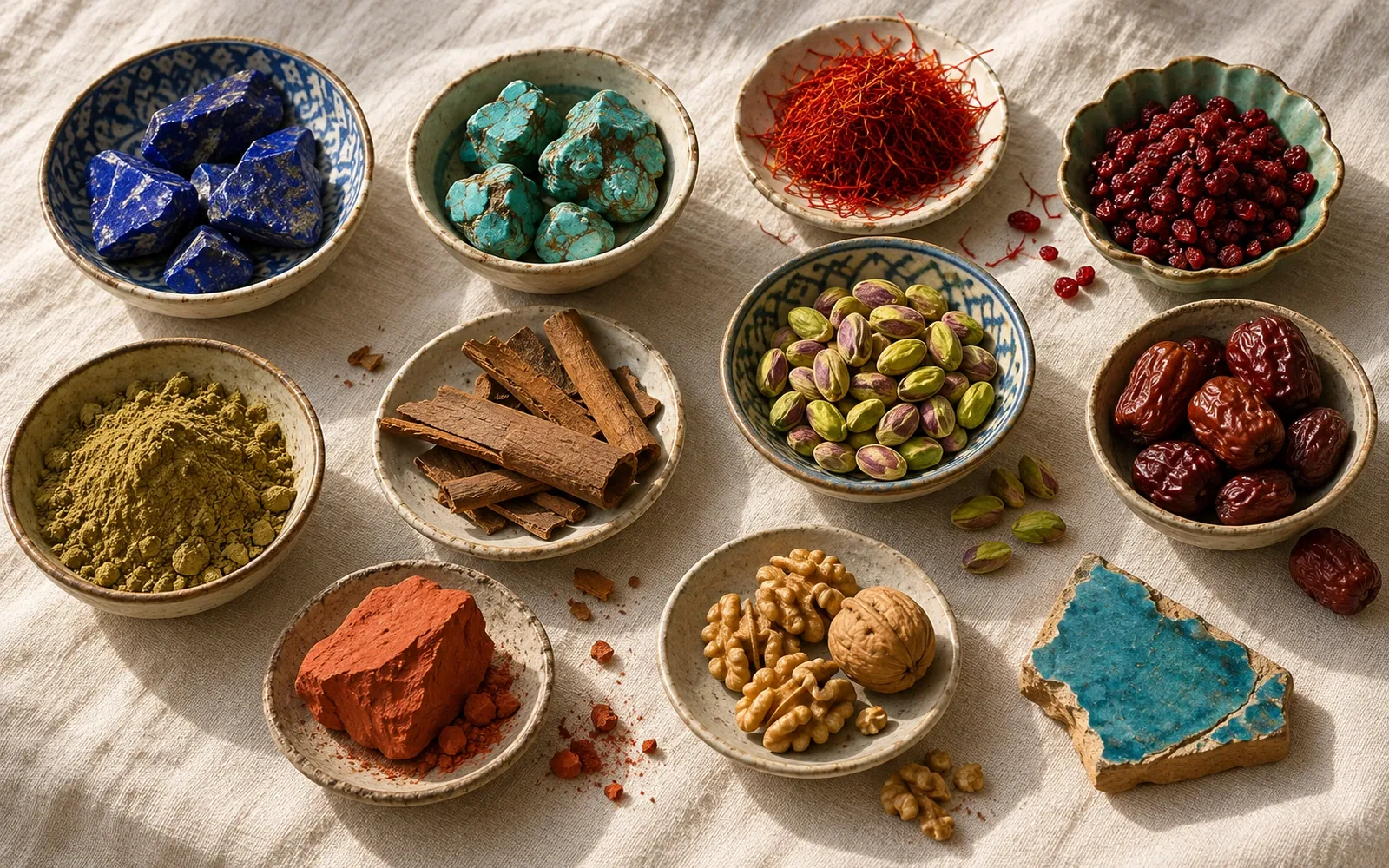
Vermilion, from cinnabar (شنگرف), a mineral used in manuscripts and paintings.
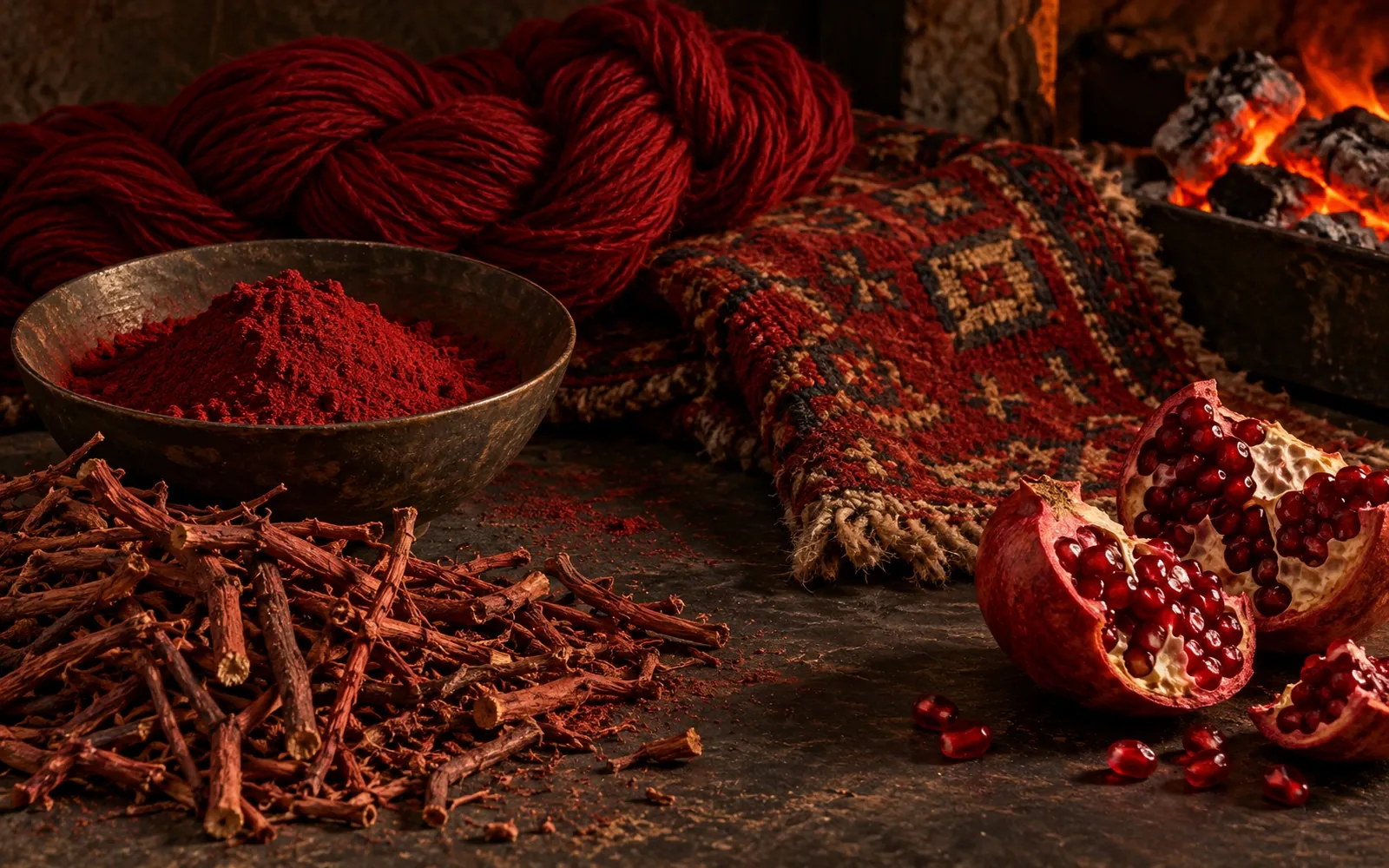
Madder red, from the roots of the madder plant (روناس), the classic dye of Persian carpets.
Dark red, the color of the jujube fruit.
Deep crimson, the color of barberries.
A red gemstone, and in poetry a common image for lips.
Red in Persian life
On the eve of the last Wednesday of the year, people jump over fires and say «زردی من از تو، سرخی تو از من»: 'my yellowness to you, your redness to me', giving away paleness and sickness and taking the fire's health and warmth. On Yalda night, the longest night of the year, pomegranates and watermelons bring red to the table. In poetry, red belongs to wine, blood, the tulip and the lips of the beloved.
In Persian carpets, madder reds range from soft pink to deep brick, often set against indigo blues. The same two dyes, a root and a leaf, built one of the great color worlds of craft.
Words to describe Red: From an Insect to Fire
Precise words for the qualities above. Combine a few of them instead of naming the style or artist alone.
- deep madder red
- lacquer red
- cinnabar vermilion
- crimson from kermes
- barberry crimson
- jujube dark red
- brick red wool
- glossy red lacquer
- red ochre earth
- fire red glow
Describing reds
- Name the red by its source when you can: madder, lacquer, cinnabar, barberry.
- Say whether it leans toward orange or toward purple, and how dark it is.
- Describe its surface: the matte red of earth, the glossy red of lacquer, the soft red of wool.
Where people get it wrong
'Red means passion' is only one reading. Red can mean health and warmth, mourning, celebration, danger or luck, depending on the culture and the context. A precise description says which red, on what, next to what.
Find five red things at home or in the street. For each, write a name that comes from a material or a fruit, and one sentence about what that red makes you feel. Compare which reds feel warm, which feel dangerous and which feel old.
Sources and further reading
- Brent Berlin and Paul Kay, Basic Color Terms (1969).
- Amy Butler Greenfield, A Perfect Red: Empire, Espionage, and the Quest for the Color of Desire (2005).
- Kassia St Clair, The Secret Lives of Colour (2016).
- Victoria Finlay, Colour: Travels Through the Paintbox (2002).