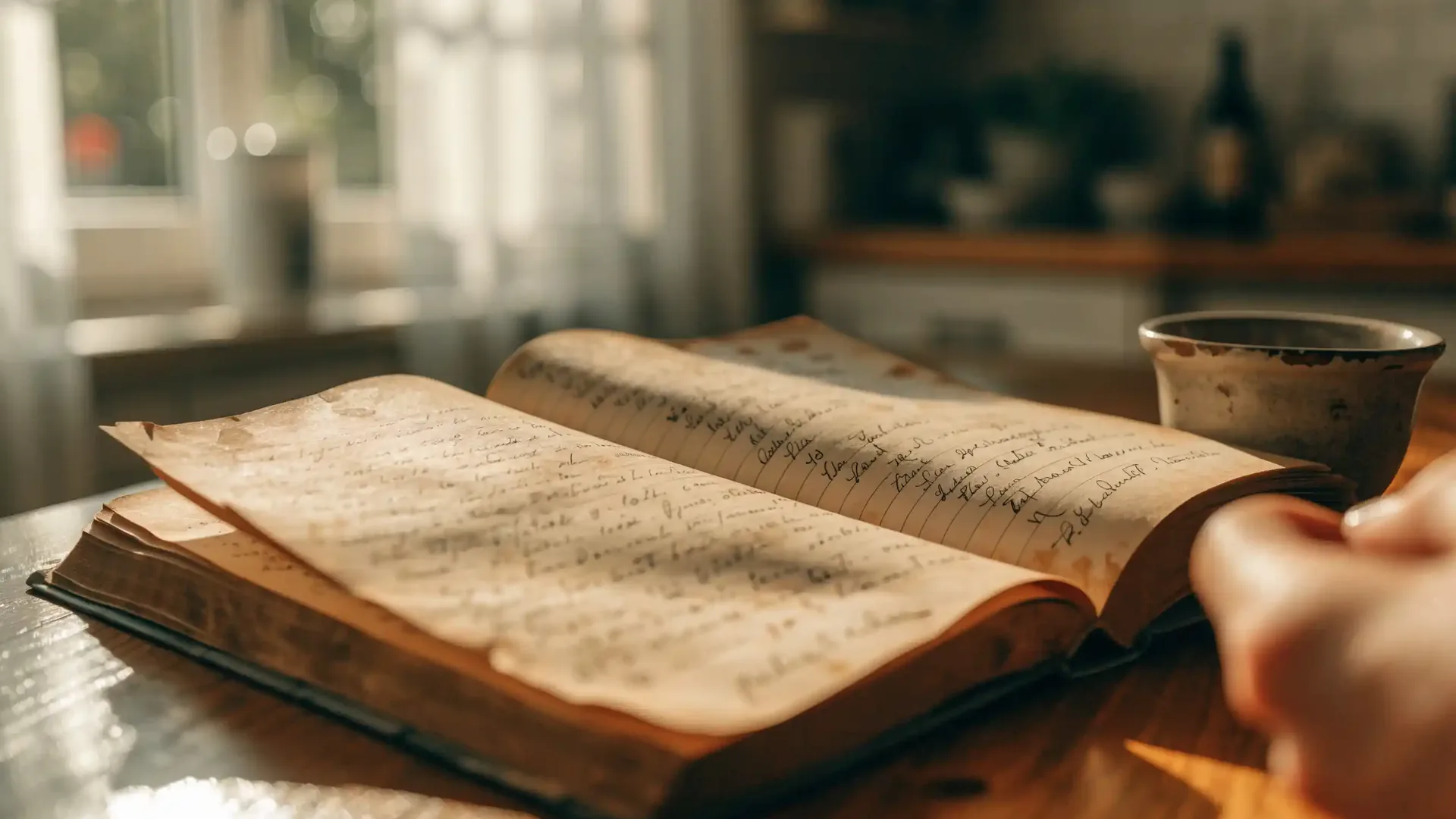
The idea used to be the hard part
For most of history, the expensive part of an image was making it. You needed years of training, materials, time, a camera, a studio, a printer. An idea could sit in a notebook for a decade because there was no cheap way to see it. Gen AI has turned that around. A rough idea becomes a finished-looking picture in seconds, and the same idea becomes a hundred pictures in a minute.
When something becomes cheap, value moves to whatever is still scarce. What is scarce now is not the idea and not the rendering. It is the ability to know what you actually want, and to communicate it so precisely that a collaborator, human or machine, can't mistake it for something else. That is a writer's skill. It always was.
Every word is a decision
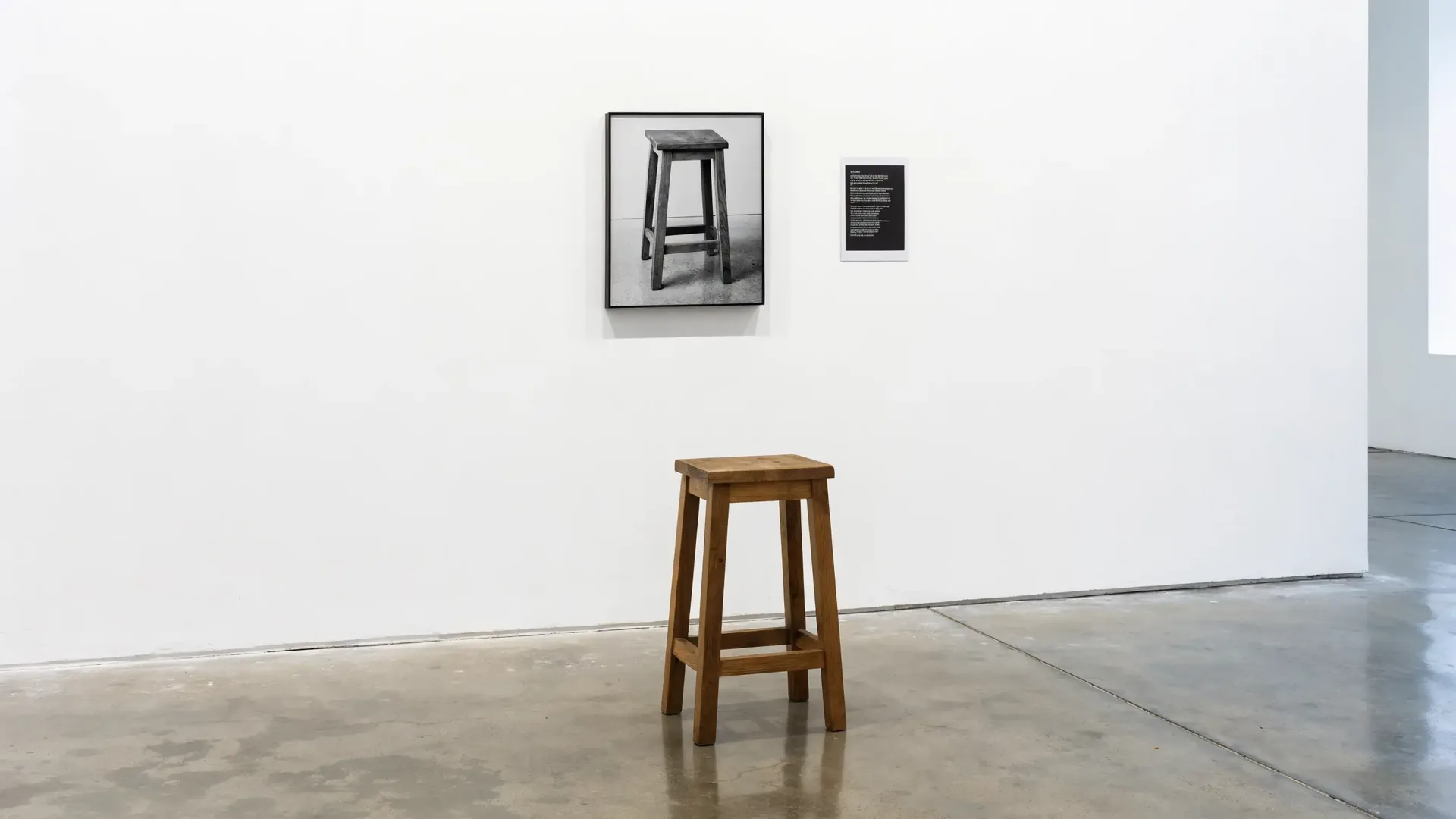
A word does not point at a thing the way a finger does. It arrives with a history: the sentences it has lived in, the people who used it, the feelings it has collected. Linguists call the plain pointing 'denotation' and the rest 'connotation'. 'Old', 'vintage', 'antique', 'worn' and 'retro' can all describe the same chair. They do not describe the same picture.
Image models make this visible. They learned words from the captions written next to millions of images, so each word brings its company along. Say 'vintage' and you may get the look of a filtered photograph from a social feed; say 'antique' and you may get a museum catalogue; say 'worn' and you get hands. Nobody chose those associations on purpose. They are the sediment of how people have used the word. To write well for a model, you have to know that sediment, the way a poet knows it.
Meaning does not travel in boxes
In 1979 the linguist Michael Reddy pointed out that English talks about communication as if words were containers: we 'put ideas into words', 'get our meaning across', find a text 'full of' or 'empty of' meaning. He called this the conduit metaphor, and argued that it is wrong. Words don't carry meaning to the other side. They are instructions the listener uses to build a meaning of their own, from their own experience.
A model is the most literal listener there is. It builds from the statistics of everyone's experience, not from yours. What you leave out, it fills with the average. What you say vaguely, it resolves toward the most common reading. The gap between what you meant and what you wrote is exactly where the generic image comes from.
What literature trains
Literary study is, more than anything, a training in noticing what words do. In the 1920s I. A. Richards gave students poems with the names removed and asked them to respond; the misreadings he collected in Practical Criticism showed how rarely we read what is actually on the page. Close reading grew out of that: slow attention to word choice, order, tone, ambiguity, what is said and what is implied.
Writing a prompt well is close reading in reverse. Before you send it, read it as a stranger would. Which words are doing work? Which are decoration? Which could be read two ways? Where does your private meaning differ from the public one? This is the same discipline that makes a good poem, a good brief and a good conversation.
Words carry stories
Narrative therapy, developed by Michael White and David Epston, starts from a simple observation: the words we use about a life shape the life we can live. A person described only as 'difficult' or 'broken' is held inside a thin story. Richer words open other possible stories. The same is true of images. Call an image 'sad' and that label will organise everything else; describe what is in it, and it can hold more than one meaning.
This is why description is not a technical step before the creative part. It is the creative part. The choice between 'a lonely man' and 'a man reading on a bench at the edge of a closed fairground' is the choice between a stock image and a story.
Five questions to ask of a word
The plain, checkable thing: an object, a colour, an action.
The connotations, the era, the class, the mood that come with it.
A curator, a teenager, a scientist and a grandmother name the same thing differently, and the image follows.
A precise word excludes. 'Dusk' excludes noon; 'twilight' excludes a bright sky.
Read the word with no context. That is how the model reads it.
Words to describe Ideas Are Cheap, Words Are Not
Precise words for the qualities above. Combine a few of them instead of naming the style or artist alone.
- denotation
- connotation
- close reading
- the conduit metaphor
- intent
- precision
- near-synonyms
- ambiguity
- thin story
- rich description
How to write what you mean
- Say the idea to yourself in one sentence before writing any prompt.
- Replace every abstract adjective with something visible.
- Check the connotation of each key noun: try two synonyms and see which picture each makes.
- Read the prompt as a stranger. Mark anything that could be read two ways.
- Keep the drafts. The differences between them teach you what your words do.
Where people get it wrong
Thinking that better models will make words matter less. The opposite is happening: the more capable a model is, the more faithfully it renders what you actually wrote, including the parts you did not mean.
Pick one noun from your last prompt and list five near-synonyms for it. Generate the same prompt five times, changing only that word, with the same seed. Lay the results side by side and write one line for each: what did this word bring with it that you did not ask for?
Sources and further reading
- Michael J. Reddy, 'The Conduit Metaphor', in Metaphor and Thought, ed. Andrew Ortony (1979).
- I. A. Richards, Practical Criticism (1929).
- Roland Barthes, Elements of Semiology (1964).
- Michael White and David Epston, Narrative Means to Therapeutic Ends (1990).
- J. R. Firth, 'A Synopsis of Linguistic Theory 1930–1955' (1957).