When the subject disappears
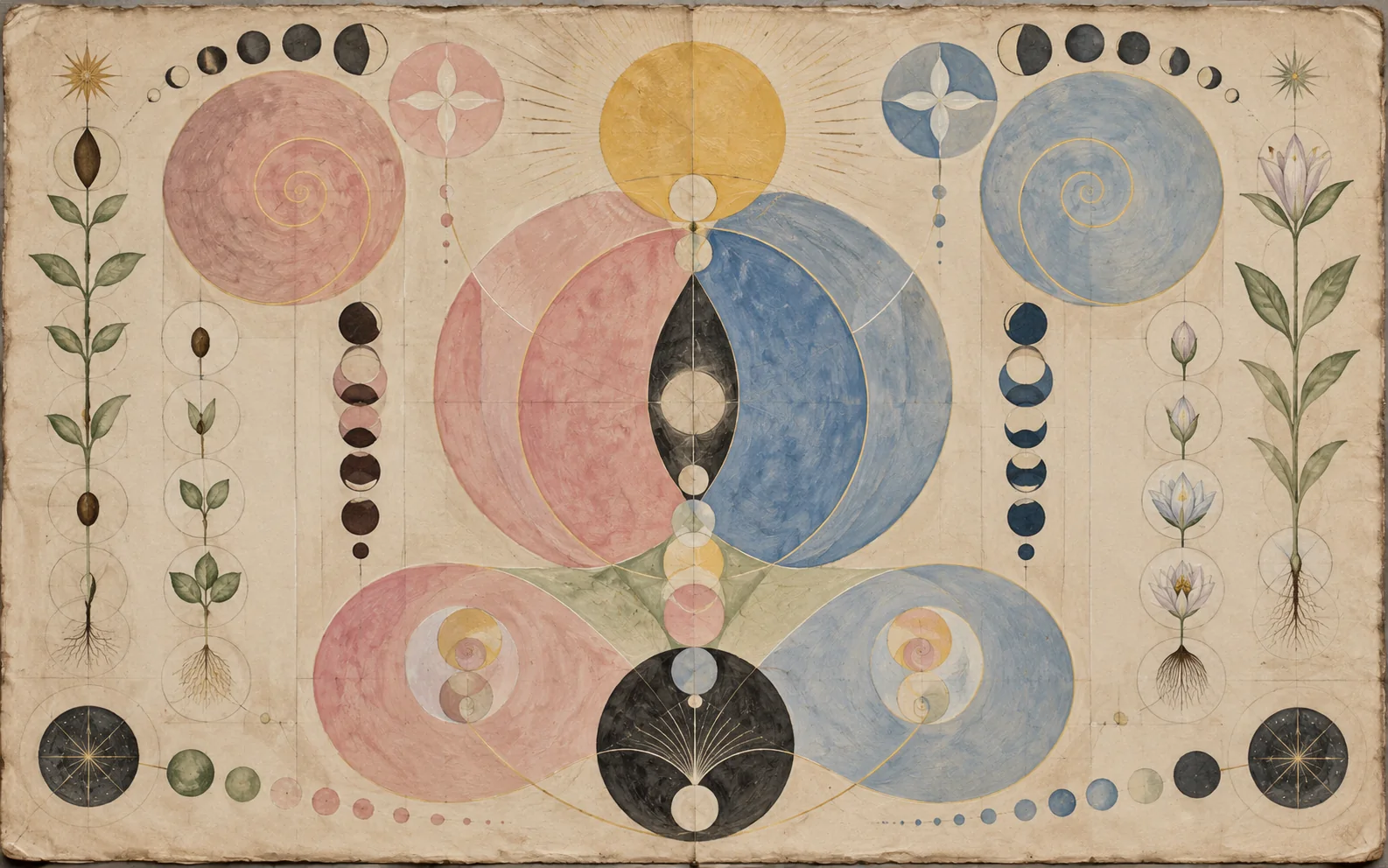
Abstract art uses shape, colour, line and texture without depicting recognisable objects. Around 1910–1915 several artists reached abstraction independently: Wassily Kandinsky, František Kupka, Kazimir Malevich and Piet Mondrian, while Hilma af Klint had painted large abstract works privately even earlier. Each had different reasons: music, spirituality, pure geometry or a new social order.
Since then abstraction has split into many directions, from hard-edged geometric painting to gestural Abstract Expressionism, Op Art, Minimalism and today's generative and digital abstraction. In design, abstract shapes and colour fields are everywhere, from brand patterns to album covers.
Visual anatomy of Abstract Art
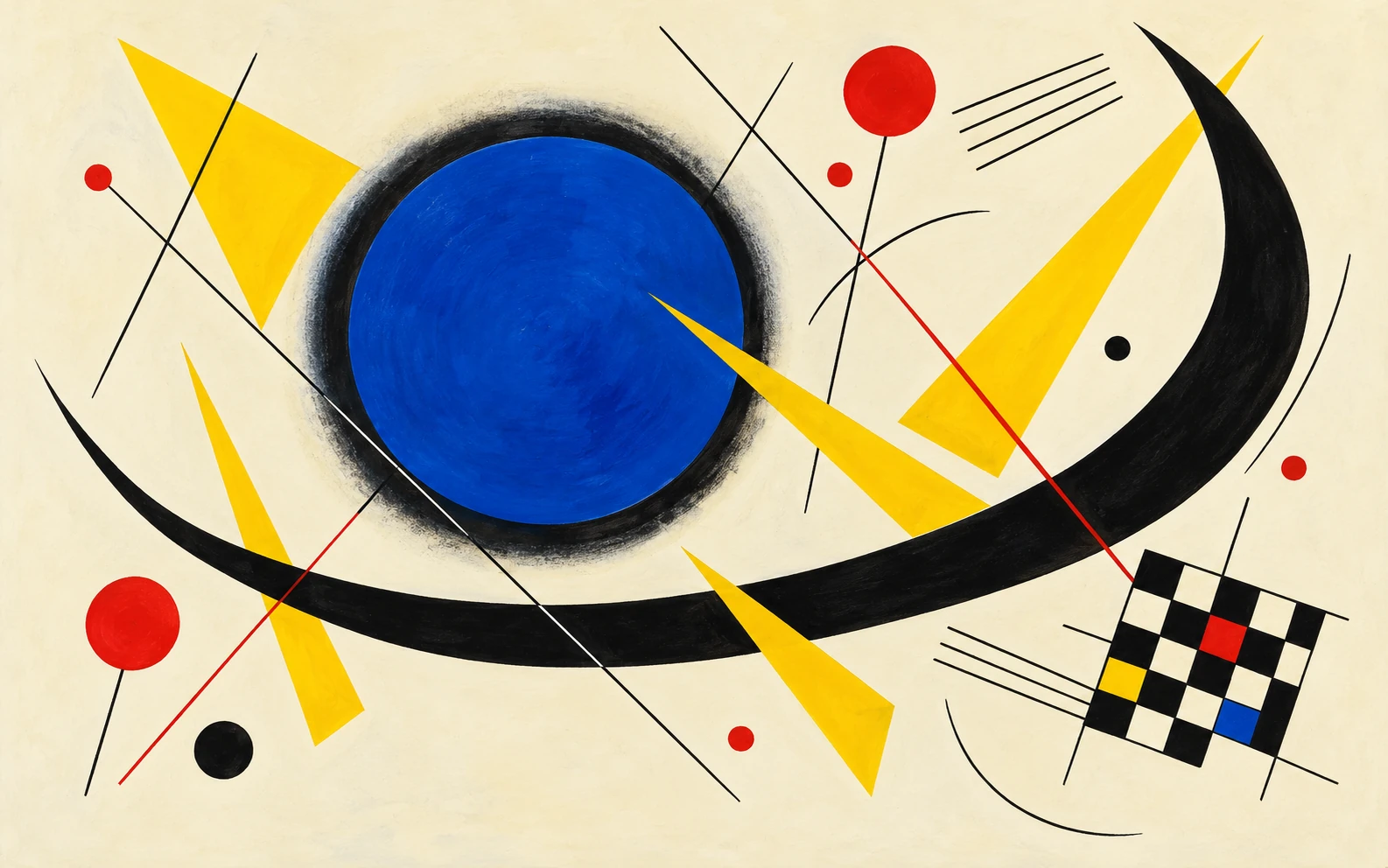
Precise shapes, grids, straight edges and flat colour.
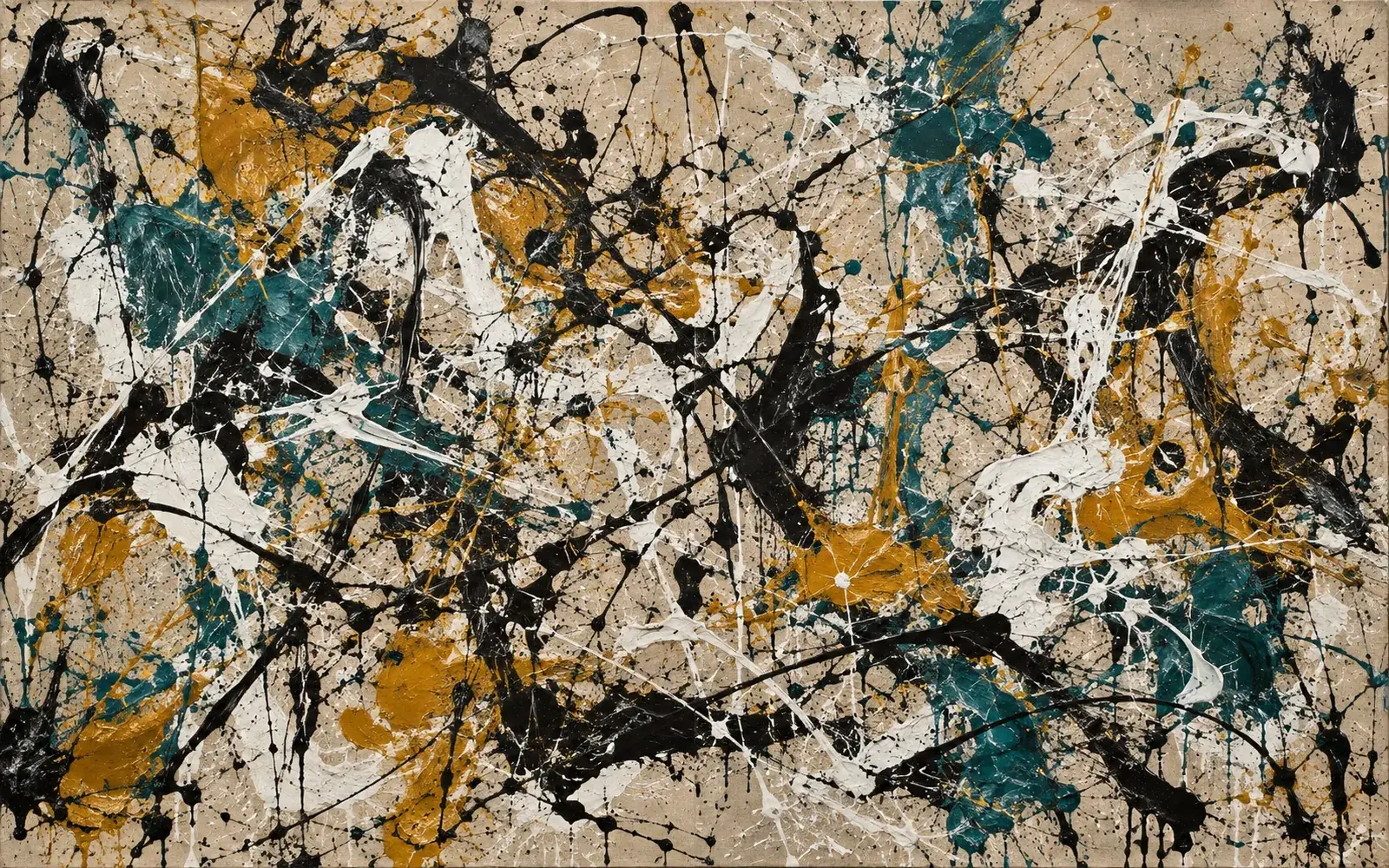
Free, expressive marks, drips and brushstrokes.
Large areas of colour as the main experience.
Balance, rhythm and tension between forms, without a subject.
Surface, layering and process become central.
From small intimate studies to room-filling canvases.
Key artists of Abstract Art
Abstraction linked to music and inner feeling.
Large spiritual abstract paintings from 1906.
Suprematism: pure geometric forms, Black Square (1915).
Grids of black lines and primary colours.
How to recognize Abstract Art
- No recognisable objects.
- Shape, colour, line and texture as the subject.
- Either geometric precision or gestural freedom.
Where people get it wrong
'Abstract' is often used to mean 'unclear' or 'random'. Good abstract work is highly structured; its decisions about balance, contrast and rhythm are just as deliberate as in figurative painting.
Words to describe Abstract Art
Precise words for the qualities above. Combine a few of them instead of naming the style or artist alone.
- geometric abstraction
- gestural abstraction
- hard-edged shapes
- soft colour fields
- rhythmic composition
- primary colour grid
- expressive brushstrokes
- layered textured surface
- non-representational image
- music-inspired abstraction
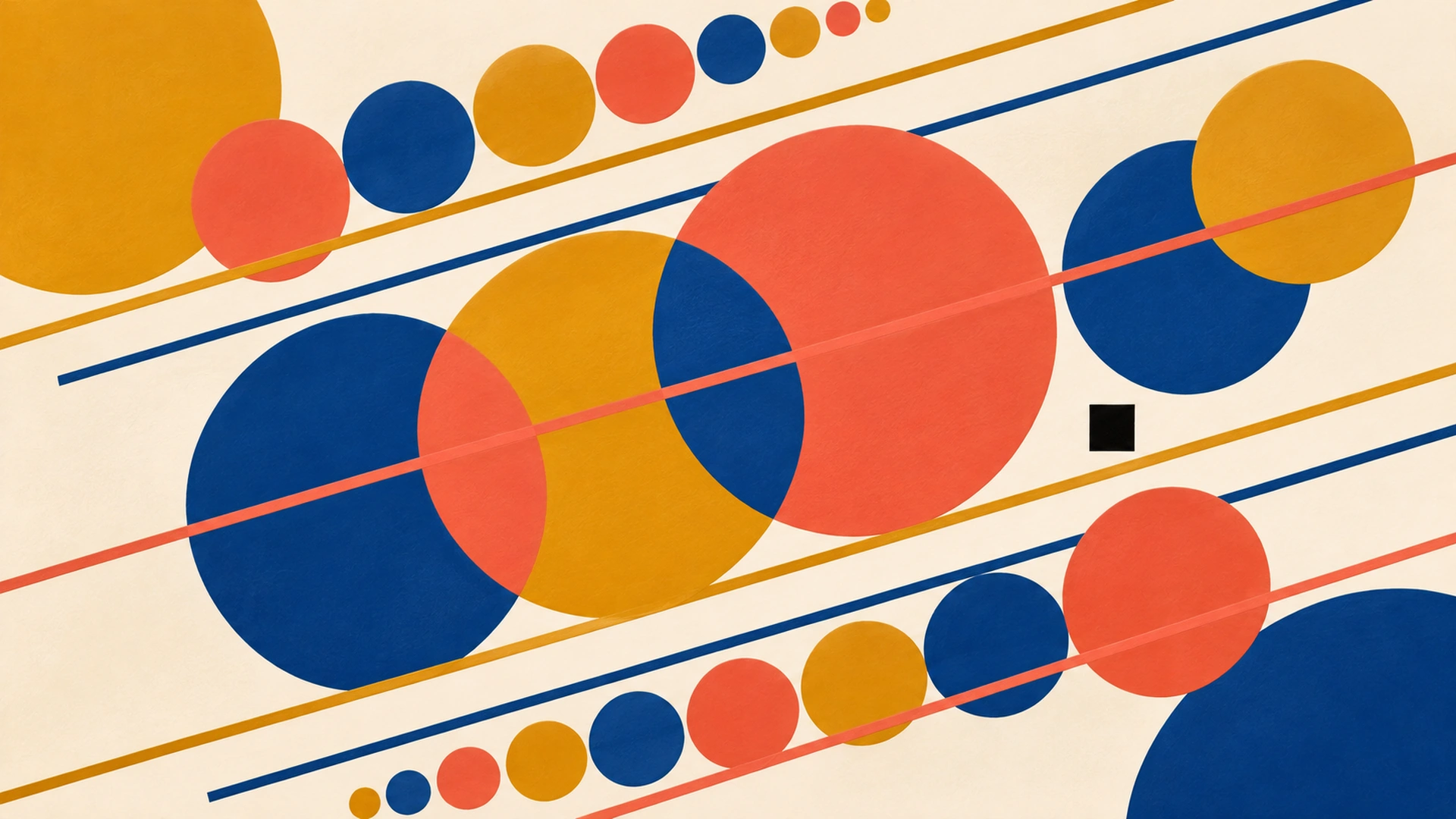
An original geometric abstract composition: overlapping circles and thin diagonal bars in ochre, deep blue and coral on an off-white ground, a strong rhythm of repeated shapes, one small black square as an accent, flat matte paint.
What to take from Abstract Art today
- Say whether it is geometric, gestural or colour field.
- Describe the shapes, their edges and how they relate.
- Name the colour relationships and the feeling they create.
Questions about Abstract Art
What is Abstract Art?
Art that does not depict recognisable things: shapes, colours, lines and textures as the subject. Its two main branches, geometric and gestural, and how to describe an image with no objects.
How do you recognize Abstract Art?
No recognisable objects. Shape, colour, line and texture as the subject. Either geometric precision or gestural freedom.
How do you describe Abstract Art in words or a prompt?
Say whether it is geometric, gestural or colour field. Describe the shapes, their edges and how they relate. Name the colour relationships and the feeling they create.
Choose a piece of music and describe an abstract image for it: which shapes for the rhythm, which colours for the mood, sharp or soft edges, crowded or empty.