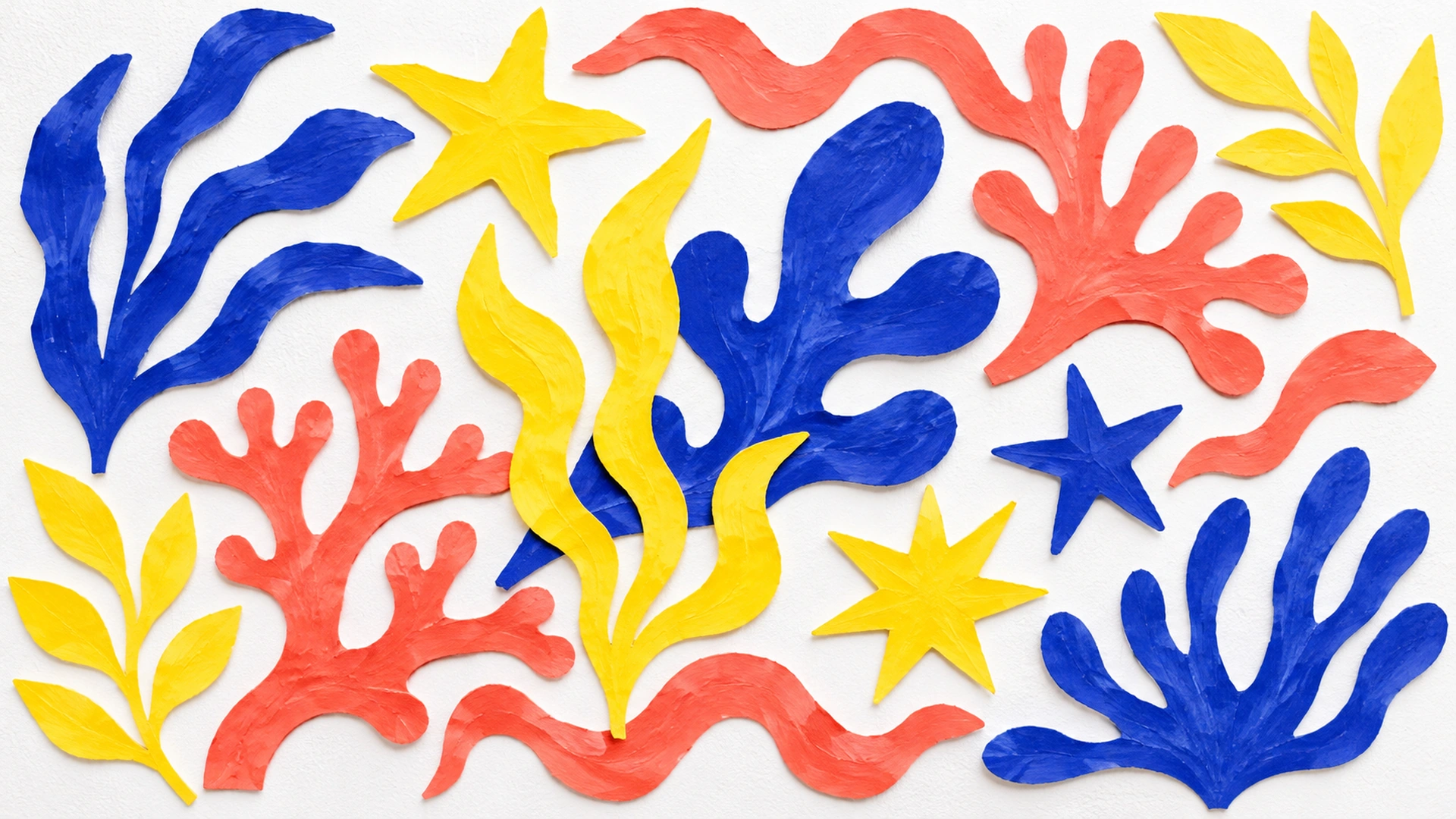
Colour set free
Fauvism burst onto the scene at the 1905 Salon d'Automne in Paris, where the critic Louis Vauxcelles called a room of brightly coloured paintings the work of 'fauves', wild beasts. Henri Matisse, André Derain and Maurice de Vlaminck painted landscapes and portraits in pure, intense colour that no longer described what things looked like.
The movement lasted only a few years, but it changed modern art by proving that colour could be independent: a sky could be orange, a face green, a shadow violet, as long as the picture worked as a whole. Its influence runs through Expressionism, poster design and today's bold, flat colour illustration.
Visual anatomy of Fauvism
Pure, saturated, often unmixed colour, chosen for emotion rather than realism.
Broad, loose, visible strokes and patches of colour.
Shadows painted in strong colours such as blue, violet or green instead of grey.
Flattened space; colour areas matter more than depth.
Landscapes, harbours, portraits and interiors, often joyful.
Sometimes bold coloured contours around shapes.
Key artists of Fauvism
Leader of the group; The Woman with a Hat (1905).
Vivid harbour and city views, including London in blazing colour.
Thick, violent strokes of pure colour in landscapes.
How to recognize Fauvism
- Unnatural, intense colours used freely.
- Loose, visible brushstrokes.
- Coloured shadows and flattened space.
Where people get it wrong
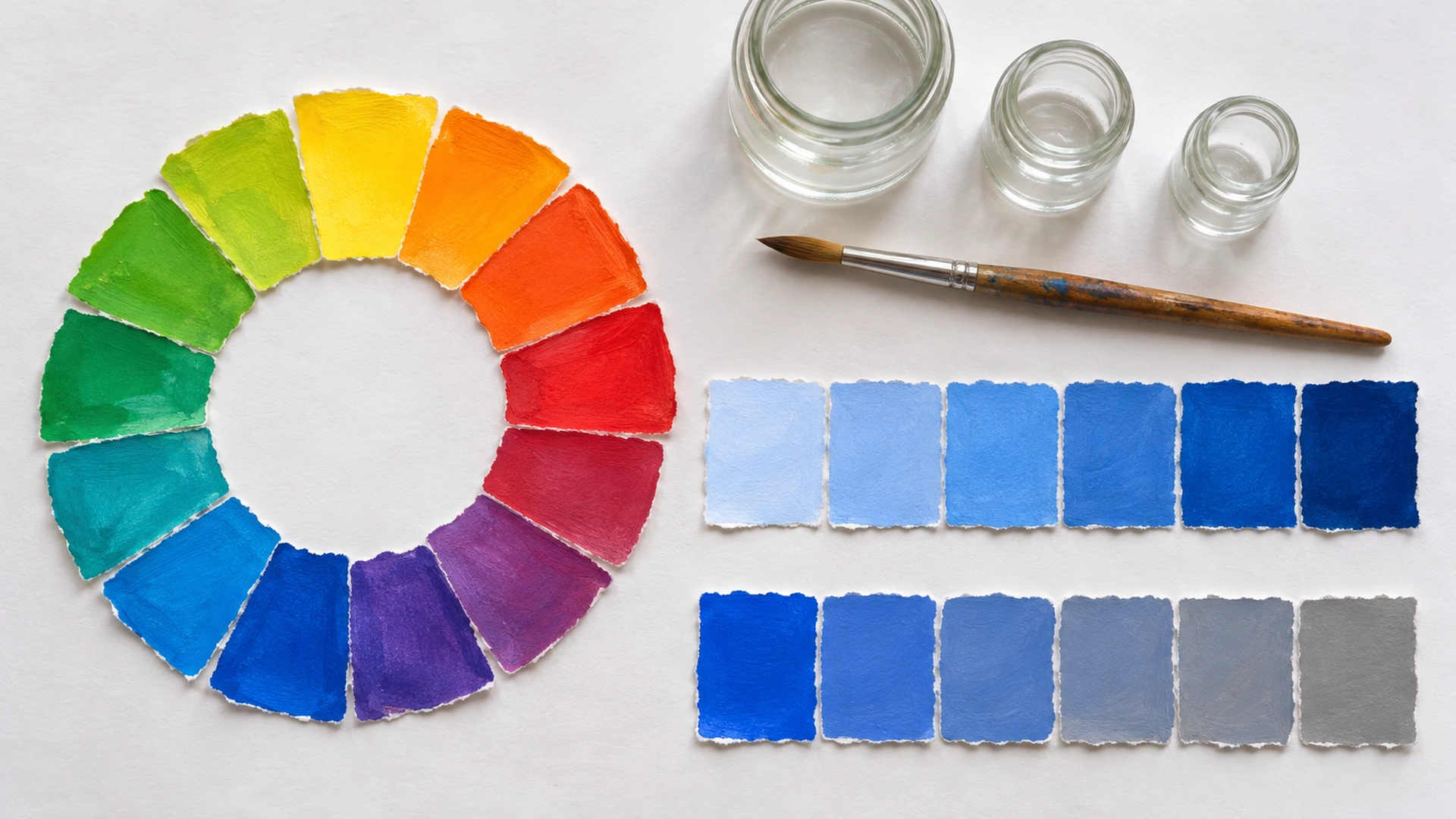
Fauvism is not random colour. The painters balanced complementary colours carefully so the whole image held together; simply making everything saturated gives noise, not Fauvism.
Words to describe Fauvism
Precise words for the qualities above. Combine a few of them instead of naming the style or artist alone.
- fauvist pure colour
- unnatural vivid palette
- coloured violet shadows
- loose broad brushstrokes
- orange sky and blue trees
- flattened space
- complementary colour balance
- joyful expressive landscape
- bold coloured outlines
- 1905 wild beasts
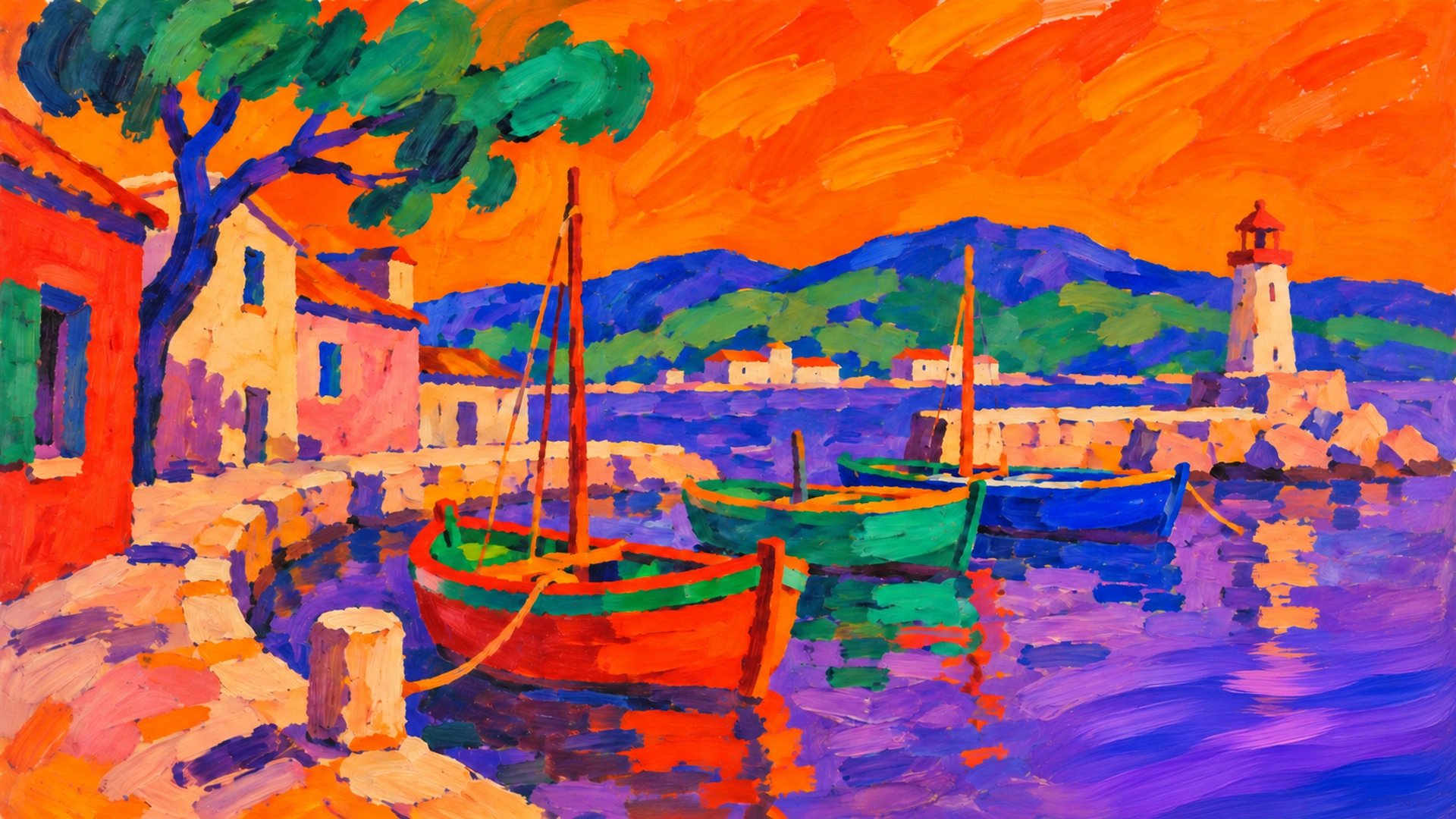
An original fauvist landscape study: a small harbour with boats painted in pure vermilion, emerald and cobalt, an orange sky, violet shadows on the water, broad loose brushstrokes and flattened space. Not a copy of any existing painting.
What to take from Fauvism today
- Name the unexpected colour choices: orange sky, green face.
- Describe how complementary colours balance each other.
- Say how loose the brushwork is.
Questions about Fauvism
What is Fauvism?
The 'wild beasts' of 1905: painters who used pure, unnatural colour straight from the tube, red trees and green faces, to express feeling instead of describing reality.
How do you recognize Fauvism?
Unnatural, intense colours used freely. Loose, visible brushstrokes. Coloured shadows and flattened space.
How do you describe Fauvism in words or a prompt?
Name the unexpected colour choices: orange sky, green face. Describe how complementary colours balance each other. Say how loose the brushwork is.
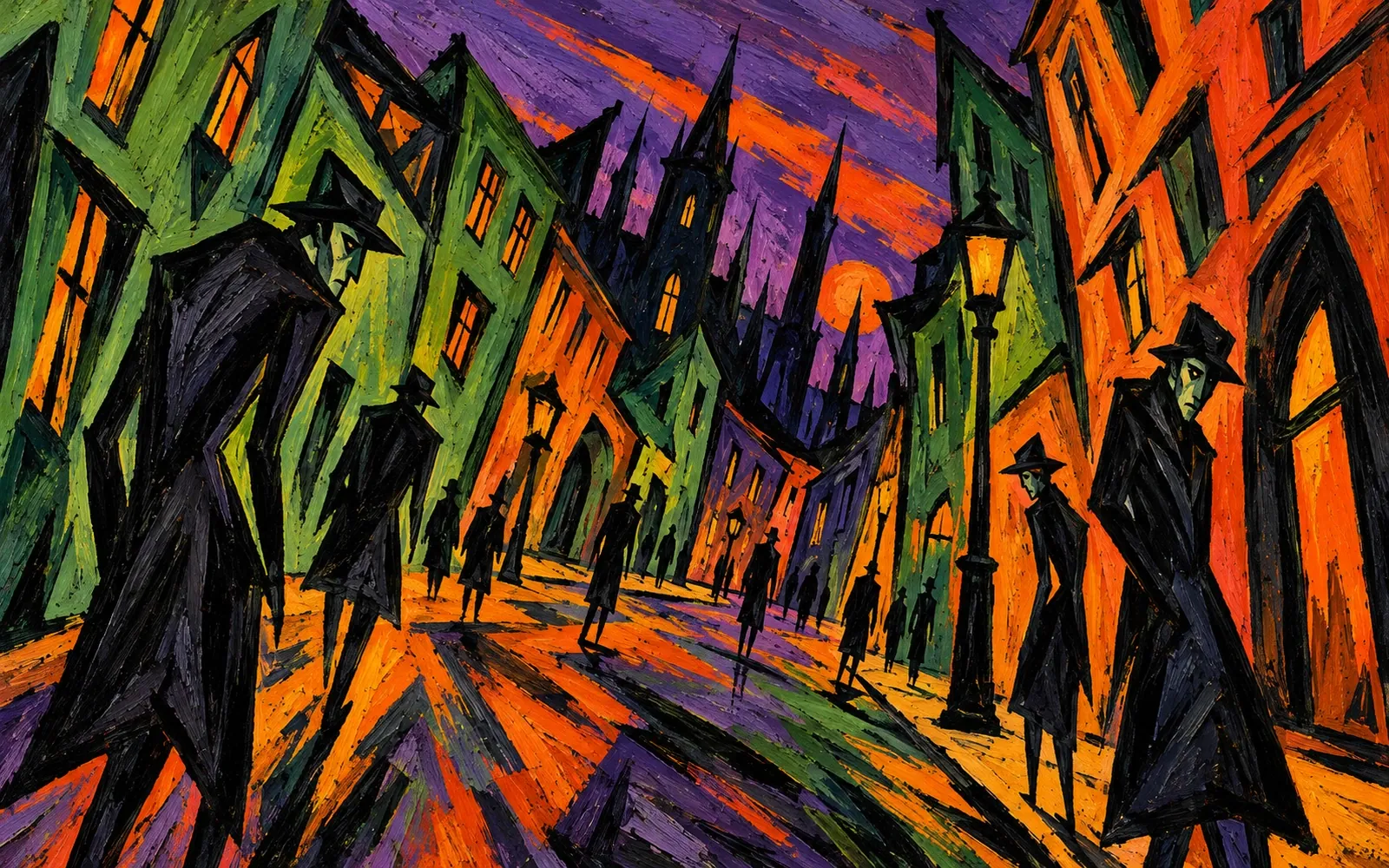
Take a photograph of a street and repaint it in words with Fauvist colour: choose a new colour for the sky, the shadows and the faces, keeping each pair complementary.