Black film
'Film noir', black film, was the name French critics gave in 1946 to a group of American crime films they saw after the war, when Hollywood films finally reached France again. Nino Frank is usually credited with the term. The classic period runs roughly from The Maltese Falcon (1941) to Touch of Evil (1958).
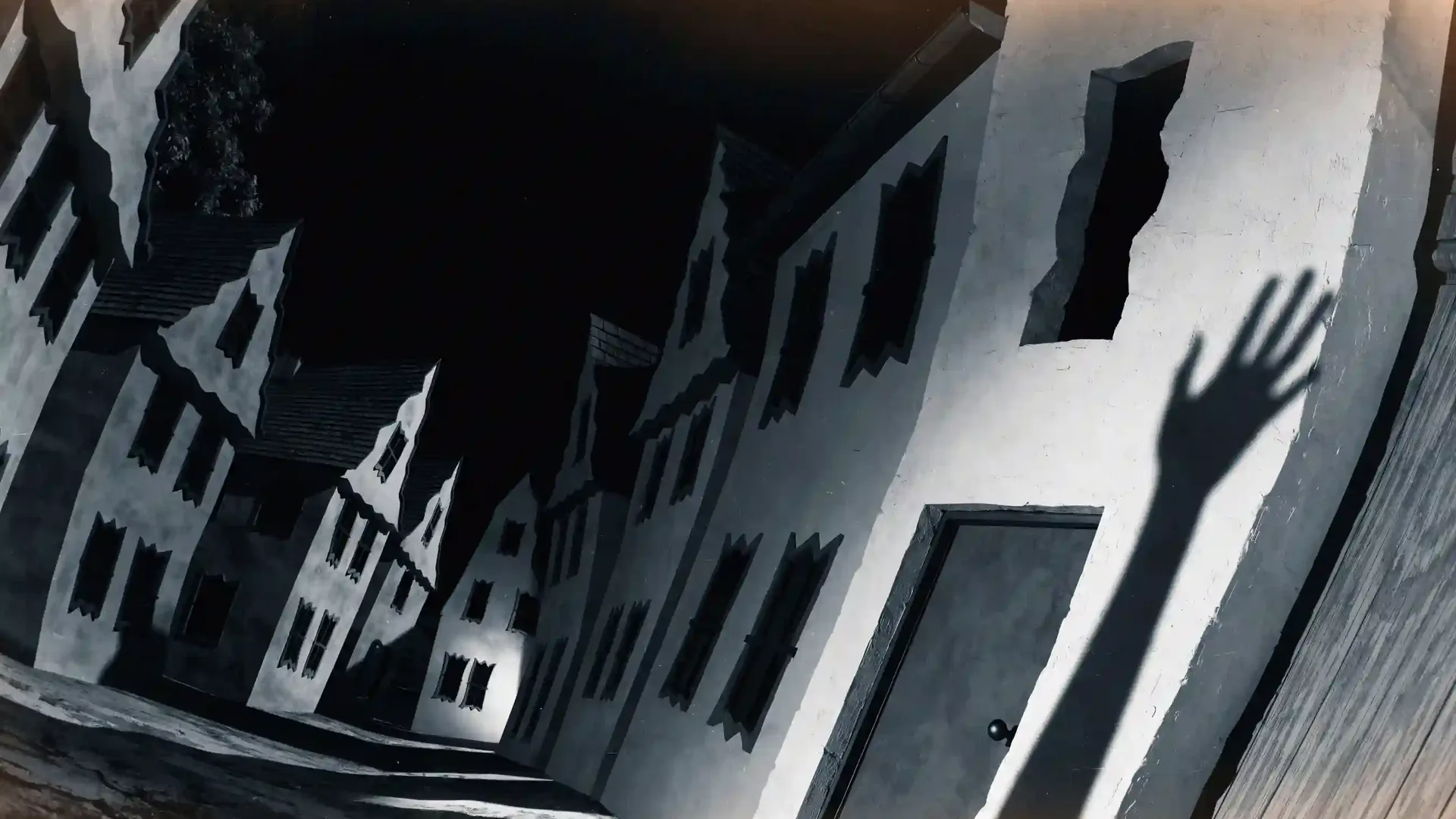
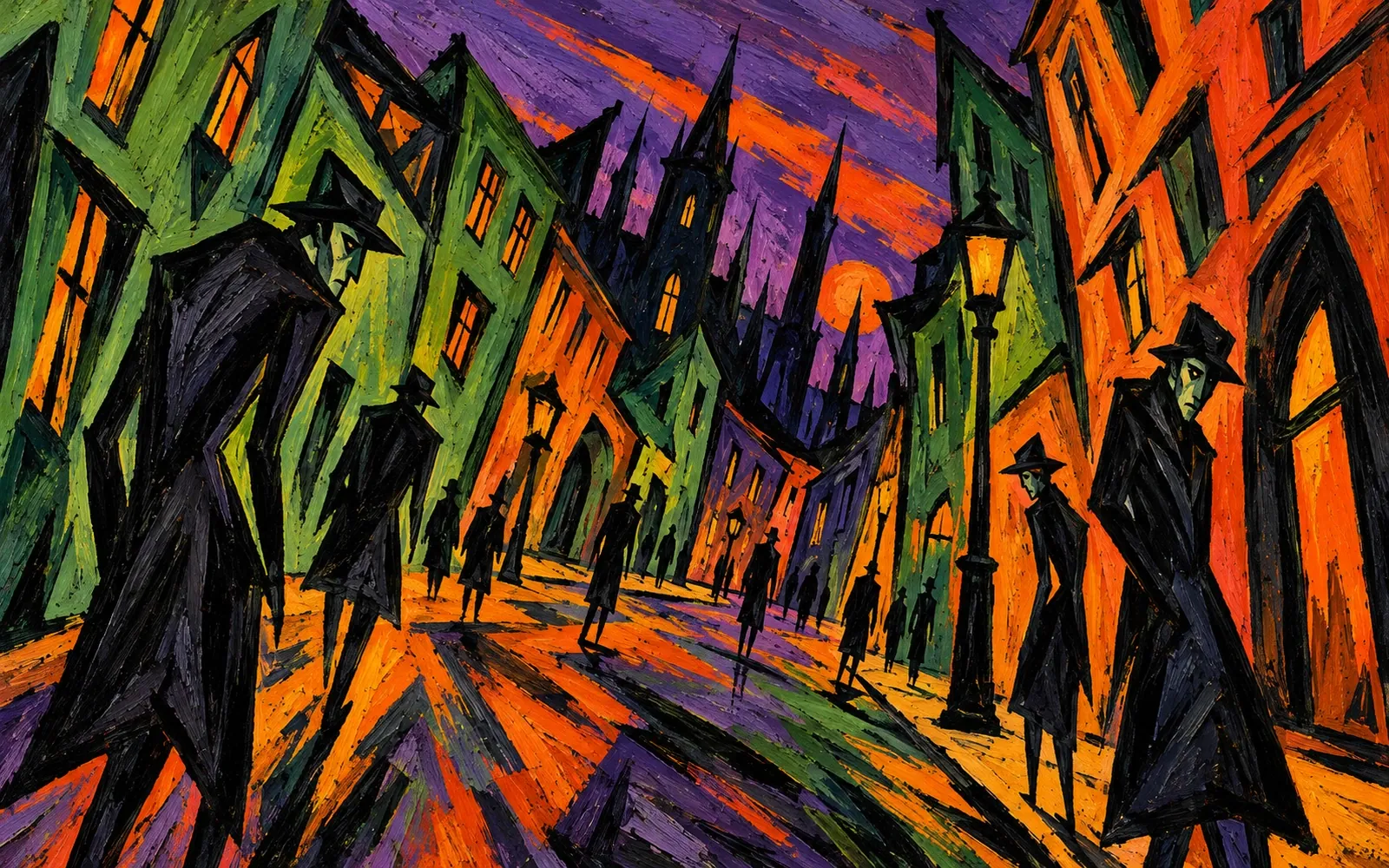
Its look came from many places at once: German Expressionist cinema, carried to Hollywood by émigré directors and cinematographers such as Fritz Lang, Billy Wilder and John Alton; hard-boiled detective fiction; tight budgets that encouraged night scenes and few lights; and a post-war mood of suspicion. The result was low-key lighting, strong diagonals and characters trapped by the city and their own choices. Later 'neo-noir' films, from Chinatown (1974) to Blade Runner (1982), carried the language into colour.
Visual anatomy of Film Noir
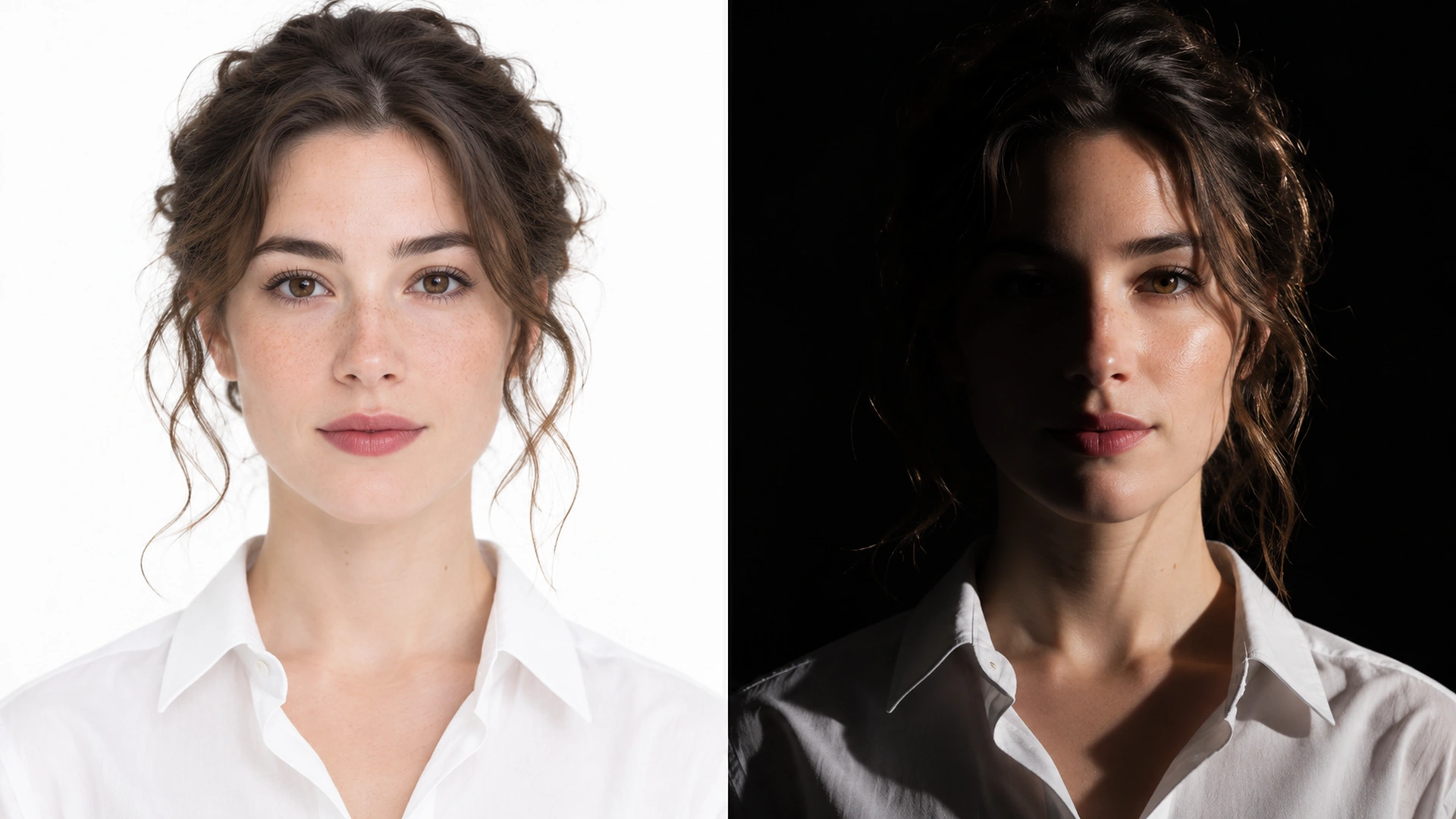
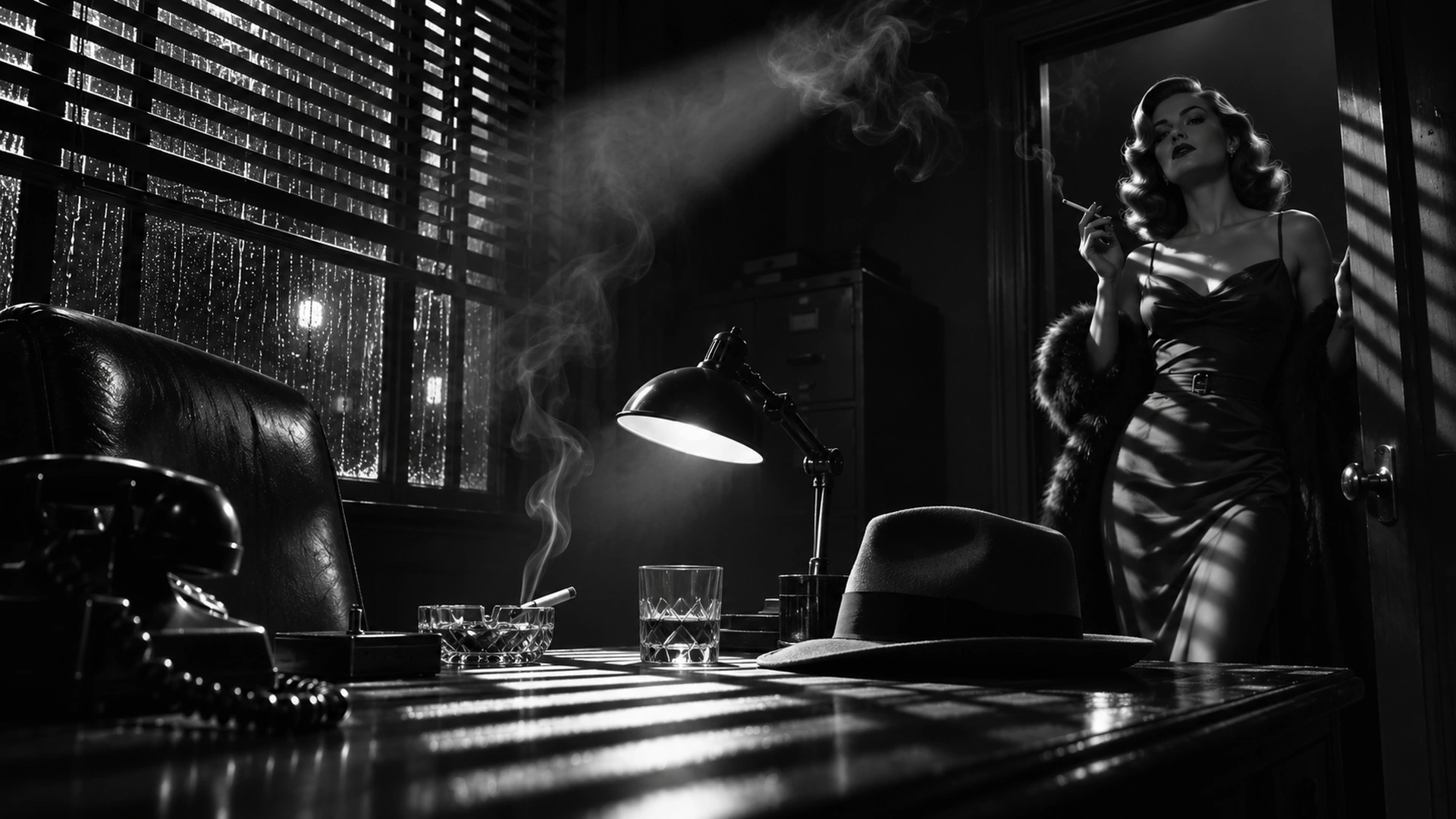
Low-key, hard, single sources; deep blacks and bright highlights.
Venetian blind stripes, silhouettes, shadows thrown large on walls.
Low and high angles, tilted frames, deep focus.
Night streets slick with rain, cheap offices, staircases, neon signs.
The detective, the femme fatale, the man who made one mistake.
Smoke, fog, steam from grates, a sense of being watched.
Key films
John Huston: the detective film that opened the classic period.
Billy Wilder, shot by John F. Seitz: blinds, sunlight through dust and a voice-over confession.
Carol Reed, shot by Robert Krasker: tilted angles and wet cobbles in post-war Vienna.
Orson Welles: a long opening crane shot and deep night, usually seen as the end of the cycle.
How to recognize Film Noir
- Most of the frame is in shadow.
- Patterns of light: blinds, railings, window frames.
- Night, rain and reflections.
- A lone figure, often from a low or tilted angle.
Where people get it wrong
Thinking noir means black and white with a hat. The look depends on how light is shaped: hard sources, deliberate shadow patterns and dark areas that hide information. A flat black-and-white photo of a man in a trench coat is costume, not noir. Neo-noir proves the point: the same shadows work in colour.
Words to describe Film Noir
Precise words for the qualities above. Combine a few of them instead of naming the style or artist alone.
- film noir
- low-key lighting
- hard light
- venetian blind shadows
- silhouette
- rain-slick streets
- Dutch angle
- deep focus
- femme fatale
- cigarette smoke
- neon reflections
- neo-noir
An original film noir study: a detective's office at night, striped light from venetian blinds falling across a desk and a woman standing in the doorway, cigarette smoke drifting through a single hard beam, rain on the window, deep black shadows, black and white, low angle.
What to take from Film Noir today
- Name one hard light source and where it comes from.
- Add a shadow pattern: blinds, a staircase, a window frame.
- Set it at night with wet surfaces.
- Choose a low or tilted angle and let most of the frame go dark.
Questions about Film Noir
What makes lighting look film noir?
Low-key lighting: one or two hard light sources, deep shadows covering most of the frame, and patterned shadows from blinds or railings.
What is neo-noir?
Films made after the classic period that use noir's themes and lighting, often in colour: Chinatown (1974), Blade Runner (1982), Drive (2011).
Light a scene at home with one lamp only. Move it until a shadow pattern falls across a face or a wall. Describe the result in four lines using light-source words, not mood words.
Sources and further reading
- Paul Schrader, 'Notes on Film Noir', Film Comment (1972).
- John Alton, Painting with Light (1949).