Colour as structure
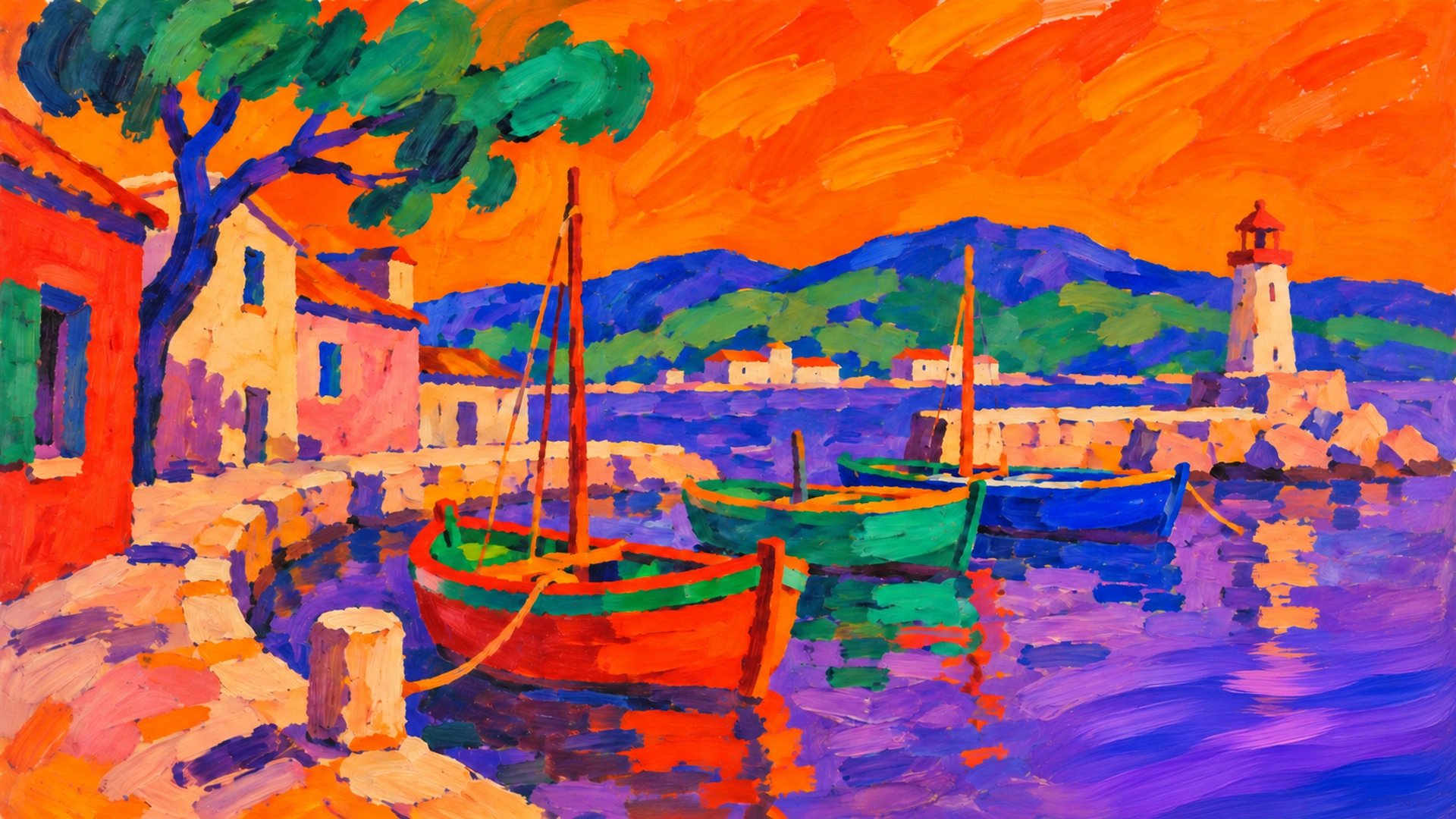
Henri Matisse was born in northern France in 1869 and became one of the central artists of modern art. In 1905 he and his friends shocked Paris with paintings of pure, unnatural colour; a critic called them 'fauves', wild beasts, and Fauvism was born. Works like Dance (1909–10) reduce figures to rhythmic shapes on fields of red, blue and green.
In his last years, ill and often confined to bed, he 'drew with scissors': cutting shapes from paper painted with gouache and arranging them on walls. These cut-outs, from the book Jazz (1947) to The Snail (1953), and his design of the Chapel of the Rosary in Vence, are among the most influential images for illustration and graphic design today.
Visual anatomy of Henri Matisse
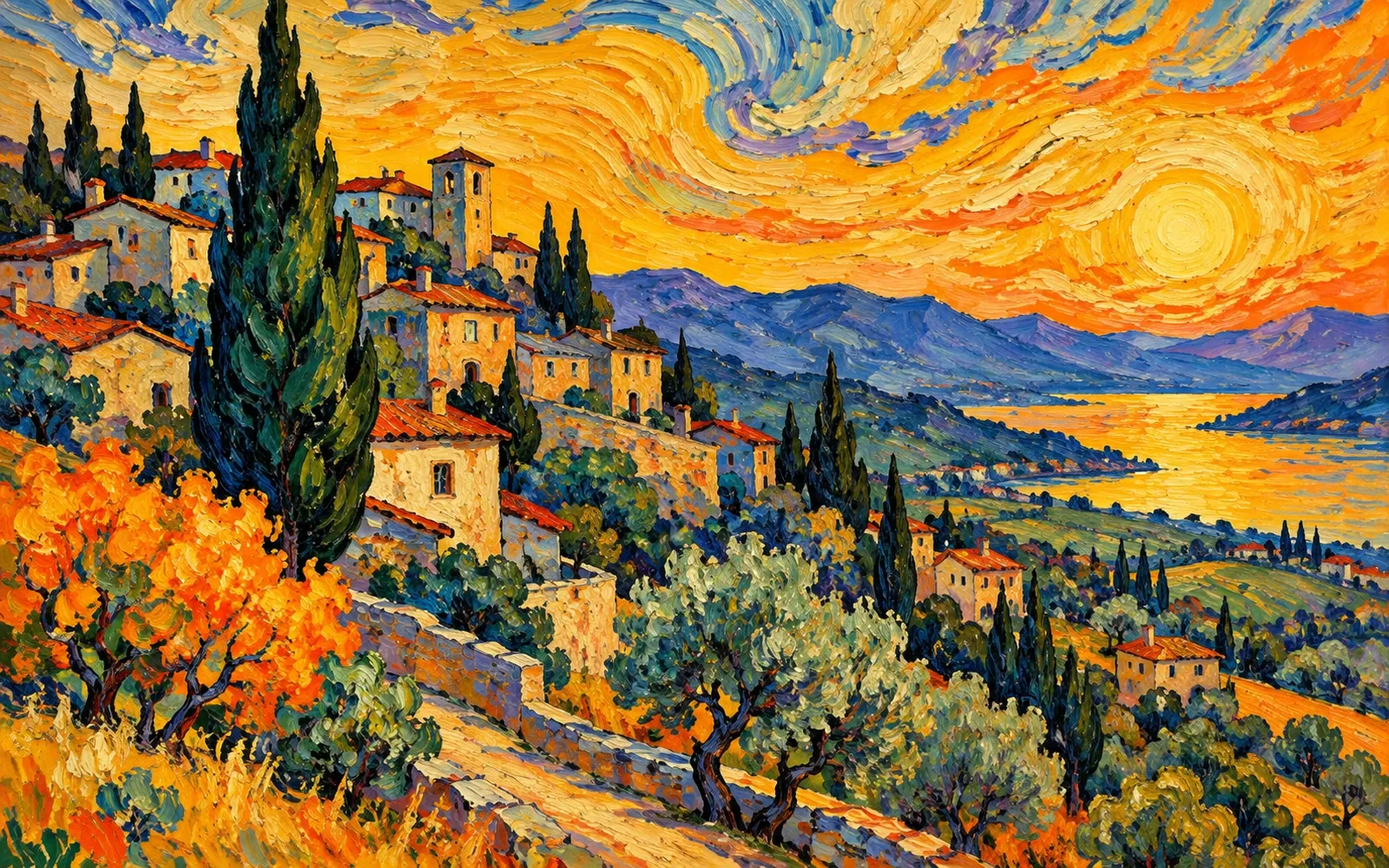
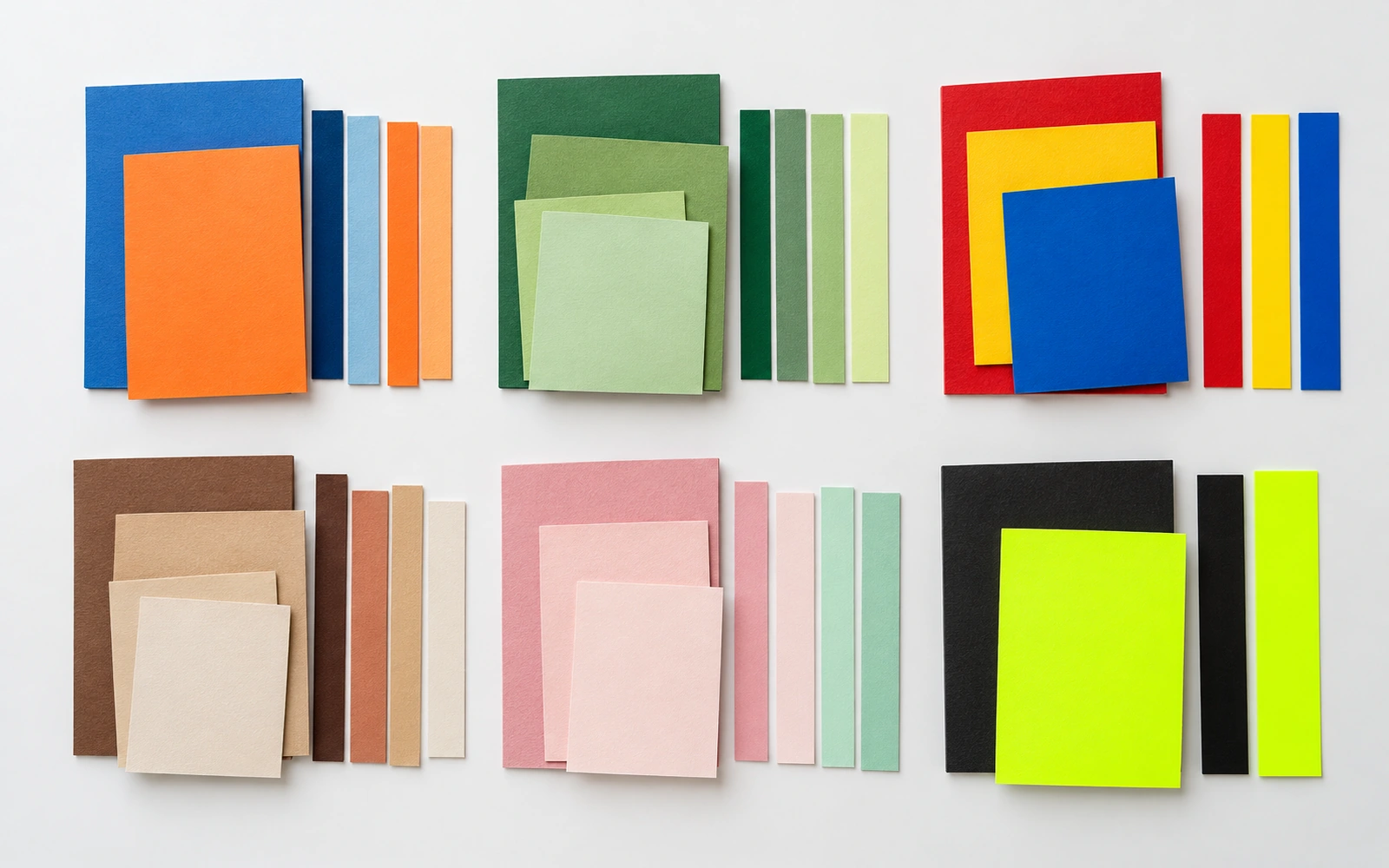
Pure, saturated colour used for structure and emotion, not for realism.
Simplified, flowing forms: leaves, figures, waves, stars.
Few, confident lines; in drawings a single fluid contour.
Decorative patterns of wallpaper, textiles and screens, often filling interiors.
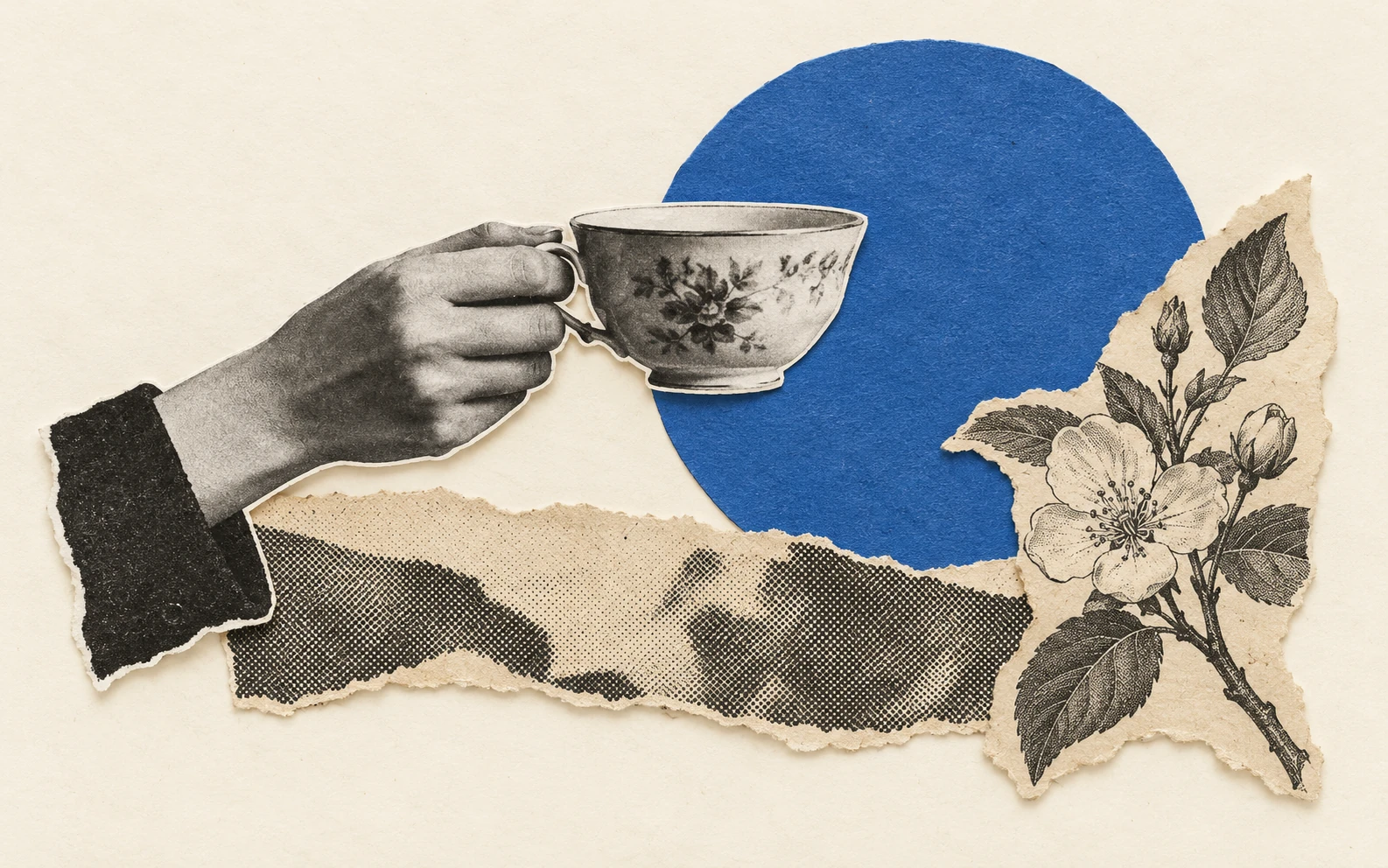
Hand-cut gouache paper shapes with soft, irregular edges.
Flat, decorative space where figure and background have equal weight.
How to recognize Henri Matisse's work
- Bold areas of pure colour.
- Simplified flowing shapes, often leaves or figures.
- Flat decorative space and pattern.
Where people get it wrong
Matisse's work looks easy, which is why imitations often feel empty. Behind every simple shape there were many trials, and the balance of colour areas is precise. Copying his famous leaf shapes is imitation; learning his colour logic is useful.
Words to describe Henri Matisse
Words for what you see and feel in this work. They are for describing and understanding, not a recipe for copying an artist.
- bold pure colour
- paper cut-out shapes
- organic leaf forms
- flat decorative space
- fauvist colour
- fluid single-line drawing
- gouache-painted paper
- rhythmic dancing figures
- patterned interior
- joyful simplified forms
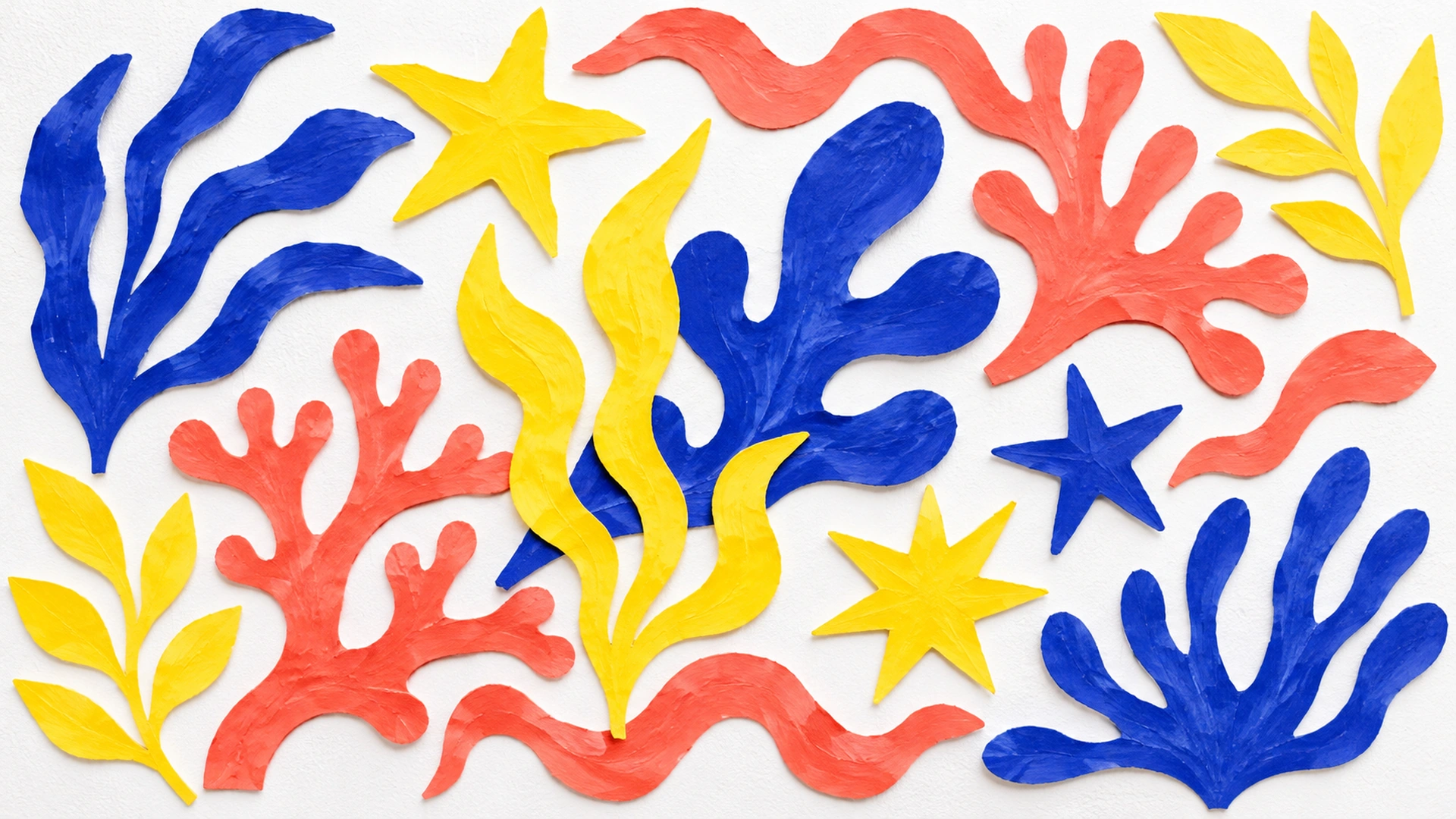
An original paper cut-out composition: irregular hand-cut shapes of seaweed and stars in ultramarine, coral and lemon yellow arranged on a white wall, a few overlapping, soft uneven edges and visible gouache brushmarks, a sense of floating rhythm.
What to learn from Henri Matisse
- Describe the colour areas and how they balance.
- Name the shapes and how simplified they are.
- Say whether edges are cut, painted or drawn.
Questions about Henri Matisse
Who was Henri Matisse?
French painter, leader of Fauvism and master of colour, whose late paper cut-outs turned scissors into a drawing tool and still shape graphic design.
How do you recognize Henri Matisse's work?
Bold areas of pure colour. Simplified flowing shapes, often leaves or figures. Flat decorative space and pattern.
How do you describe Henri Matisse in words or a prompt?
Describe the colour areas and how they balance. Name the shapes and how simplified they are. Say whether edges are cut, painted or drawn.
Cut five shapes from coloured paper without drawing first, and arrange them on a white sheet. Describe how moving one shape changes the balance of the whole.