A manifesto on the front page
Futurism was launched in 1909 when the poet Filippo Tommaso Marinetti published a manifesto on the front page of the Paris newspaper Le Figaro. It praised speed, machines, cars, airplanes and the energy of the city, and attacked museums and the weight of the past. Painters such as Umberto Boccioni, Giacomo Balla, Gino Severini and Carlo Carrà soon followed.
Borrowing the broken planes of Cubism, they tried to show movement unfolding in time: repeated limbs, 'lines of force', light splitting into rays. Futurism also embraced noise music, typography and architecture. Its glorification of war and its later links with Italian Fascism are part of its history and should not be left out.
Visual anatomy of Futurism
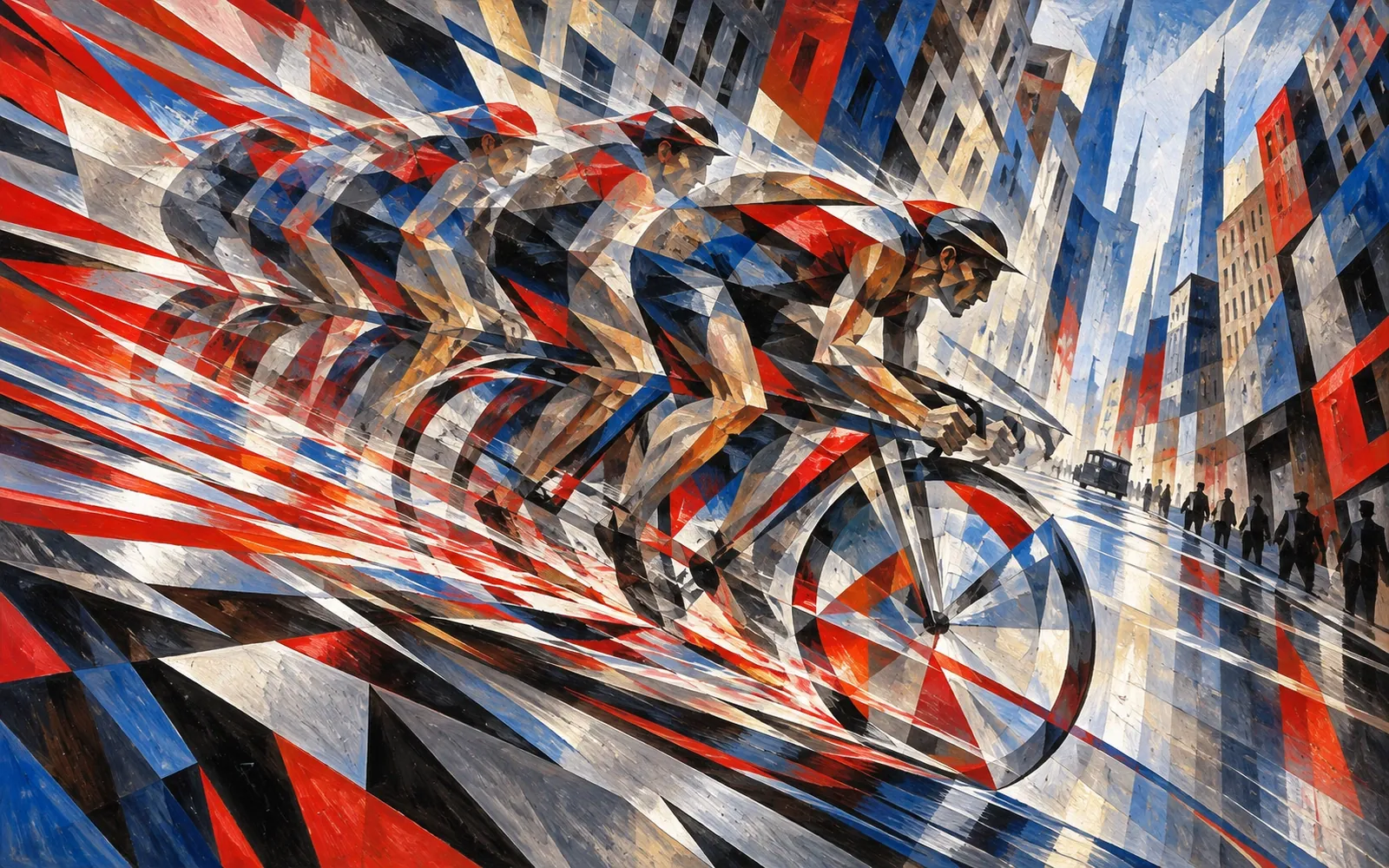
A subject is repeated in several positions at once, like a sequence of photographs.
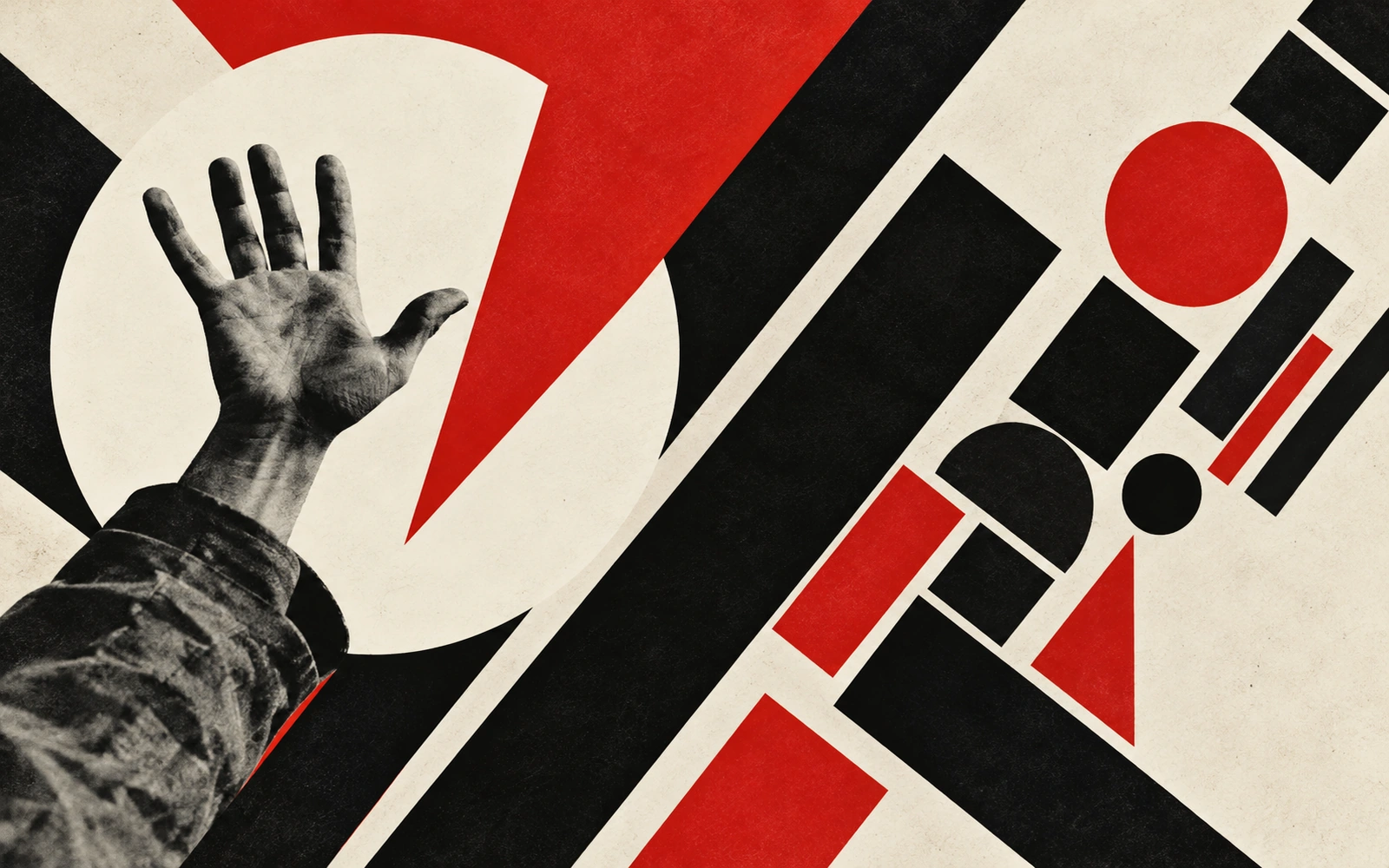
'Lines of force': sharp diagonals and rays that show direction and energy.
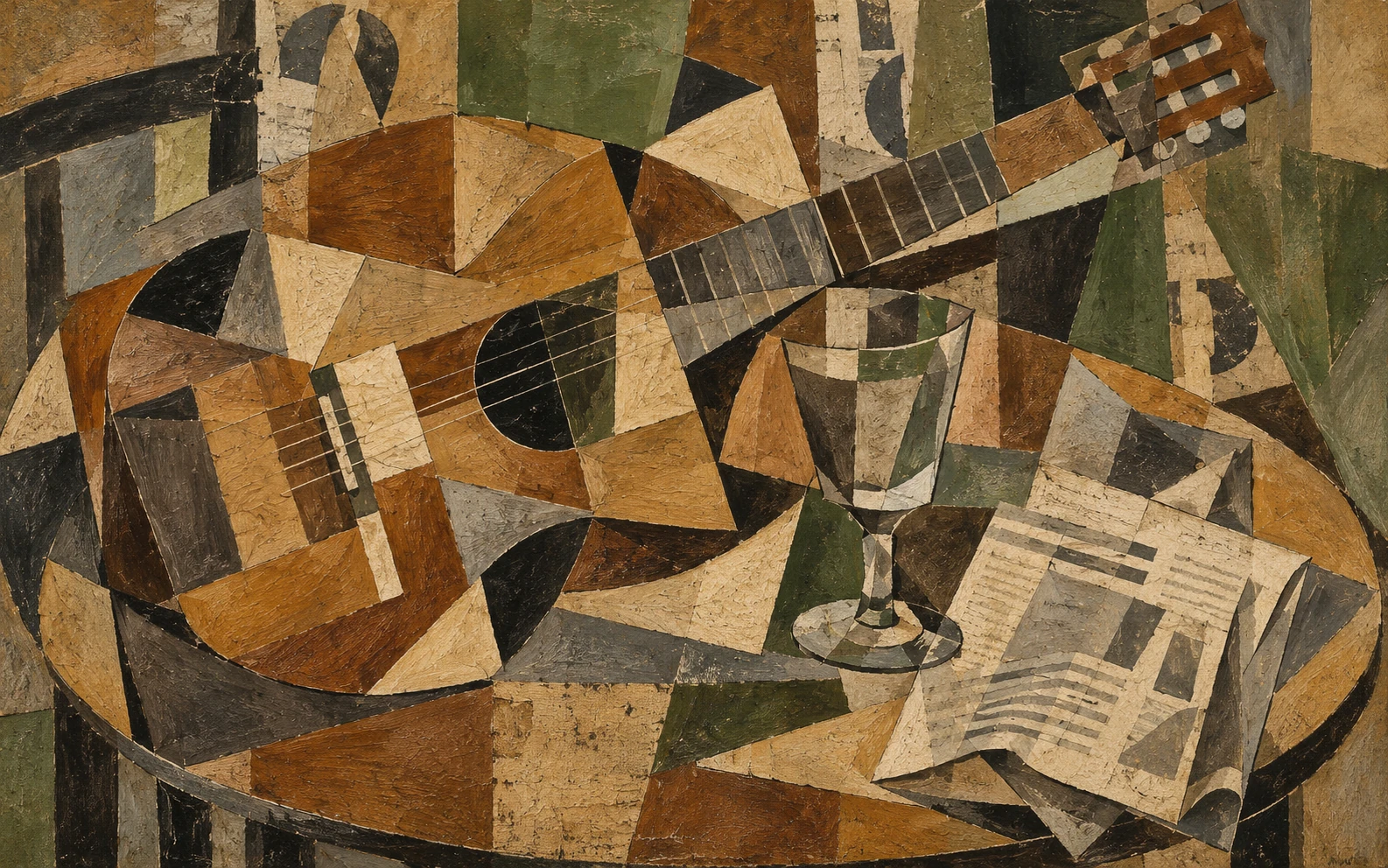
Objects fragment into planes that interpenetrate with their surroundings.
Bright, clashing color and splintered light.
Trains, cars, cyclists, crowds, factories, dancers, the city at night.
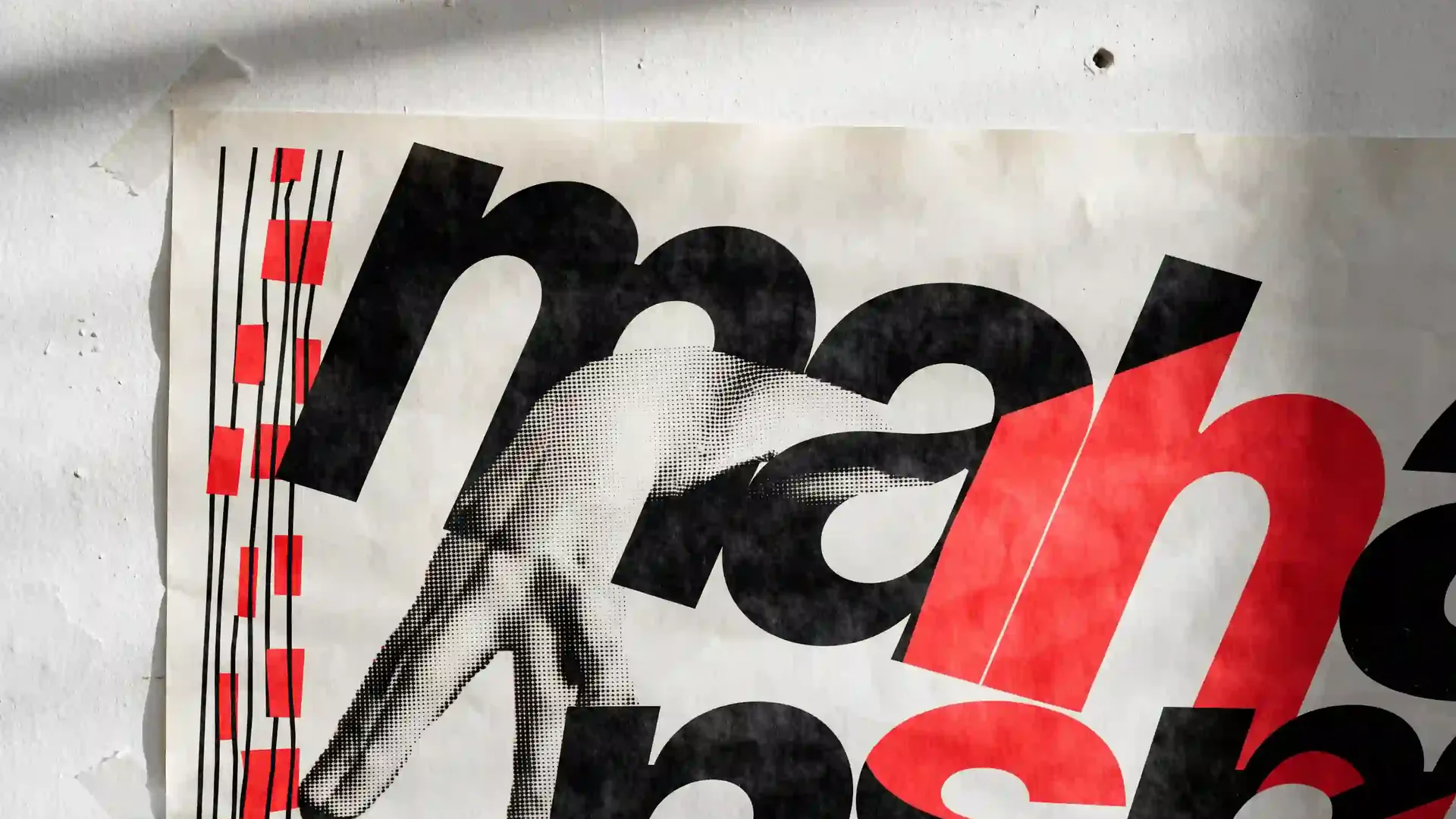
Words explode across the page in different sizes and directions ('words in freedom').
How to recognize Futurism
- Movement is shown by repetition and blur of form.
- Diagonals and rays dominate.
- Machines, speed and urban energy are the subject.
Where people get it wrong
Futurism looks like Cubism, but the aim differs: Cubism slows down to analyze a still object, Futurism speeds up to show motion and energy. Its celebration of violence also means it should be studied critically, not only admired for its look.
Words to describe Futurism
Precise words for the qualities above. Combine a few of them instead of naming the style or artist alone.
- dynamism
- repeated overlapping forms
- lines of force
- splintered light
- sharp diagonals
- speeding machine
- fragmented planes
- clashing bright color
- urban energy
- explosive typography
A cyclist rushing through a city street, the body repeated in several overlapping positions, sharp diagonal lines of force behind the wheels, light splintering into red, silver and blue shards, buildings tilting into the motion.
What to take from Futurism today
- Show time inside one image by repeating a form.
- Use diagonals to give direction and speed.
- Let type move as much as image does.
Questions about Futurism
What is Futurism?
An Italian movement in love with speed, machines and the modern city, trying to paint motion itself.
How do you recognize Futurism?
Movement is shown by repetition and blur of form. Diagonals and rays dominate. Machines, speed and urban energy are the subject.
How do you describe Futurism in words or a prompt?
Show time inside one image by repeating a form. Use diagonals to give direction and speed. Let type move as much as image does.
Photograph someone walking with a slow shutter speed or take five quick photos of the same movement. Combine them into one drawing. Describe what words you need to say 'speed' without using the word.