Movement as material
Kinetic art includes works that really move, by air, motors or the viewer, and works that create the illusion of movement. Naum Gabo's Kinetic Construction (1919–20), a vibrating metal rod, is often called one of the first. In the early 1930s Marcel Duchamp gave the name 'mobiles' to Alexander Calder's hanging sculptures of balanced shapes that turn in the air.
In 1955 the exhibition 'Le Mouvement' in Paris brought together kinetic and optical artists, including Jesús Rafael Soto and Victor Vasarely. Jean Tinguely built absurd machines, such as Homage to New York (1960), which destroyed itself. Today kinetic ideas live on in moving installations, digital art and motion design.
Visual anatomy of Kinetic Art
Parts that turn, swing, vibrate or rotate, driven by air or motors.
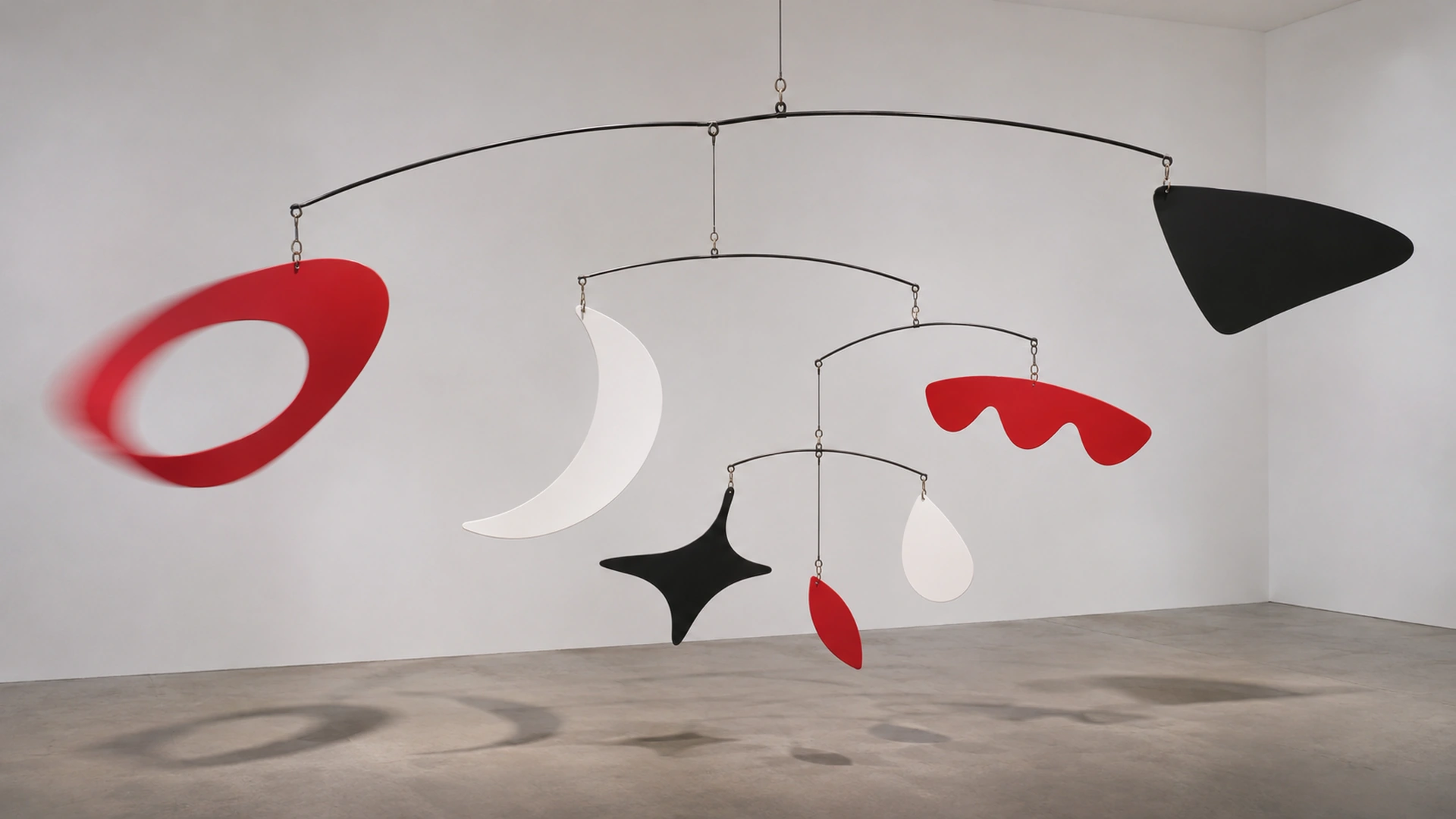
Hanging elements balanced so the smallest breeze changes the composition.
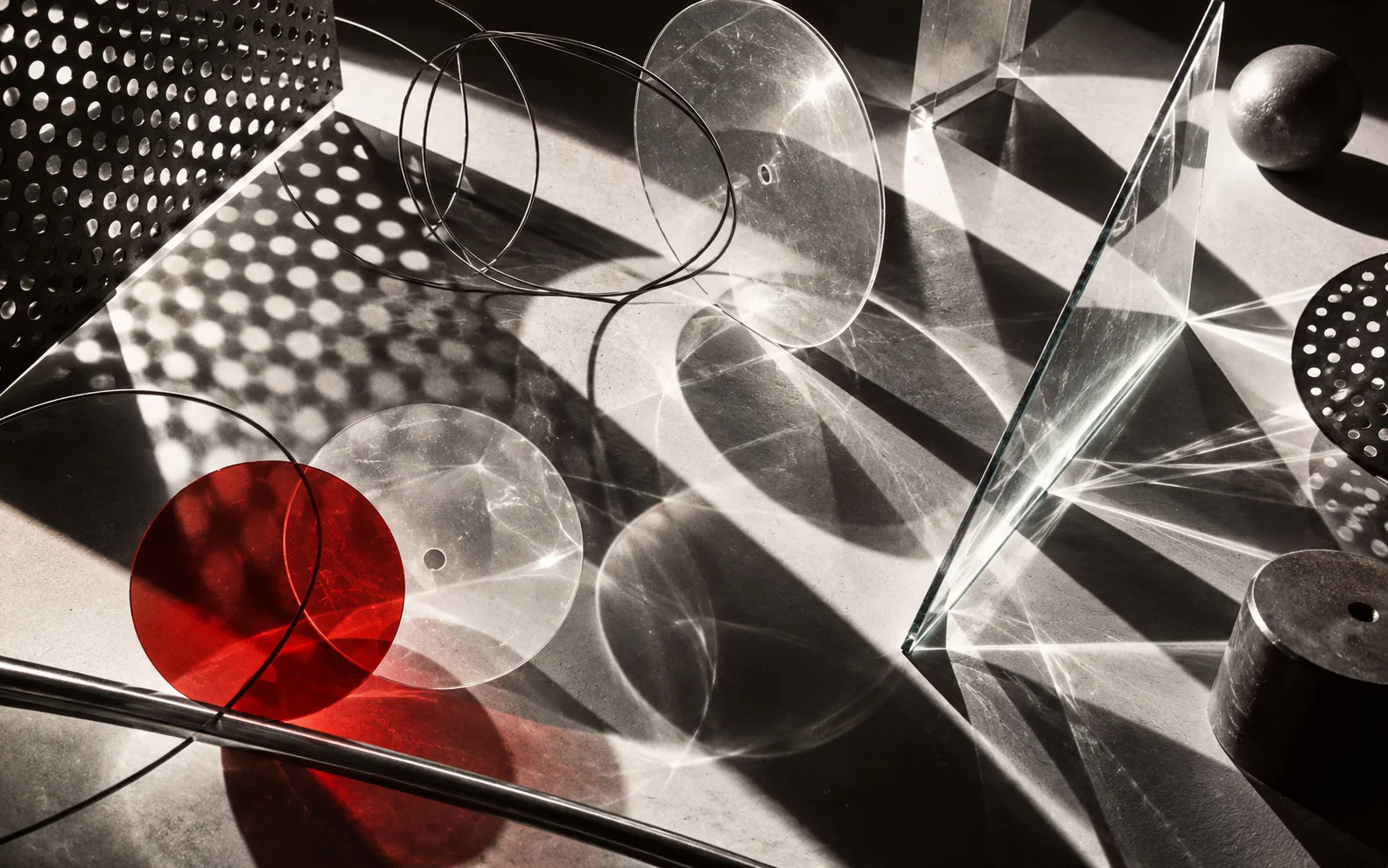
Projected or reflected light that moves and changes over time.
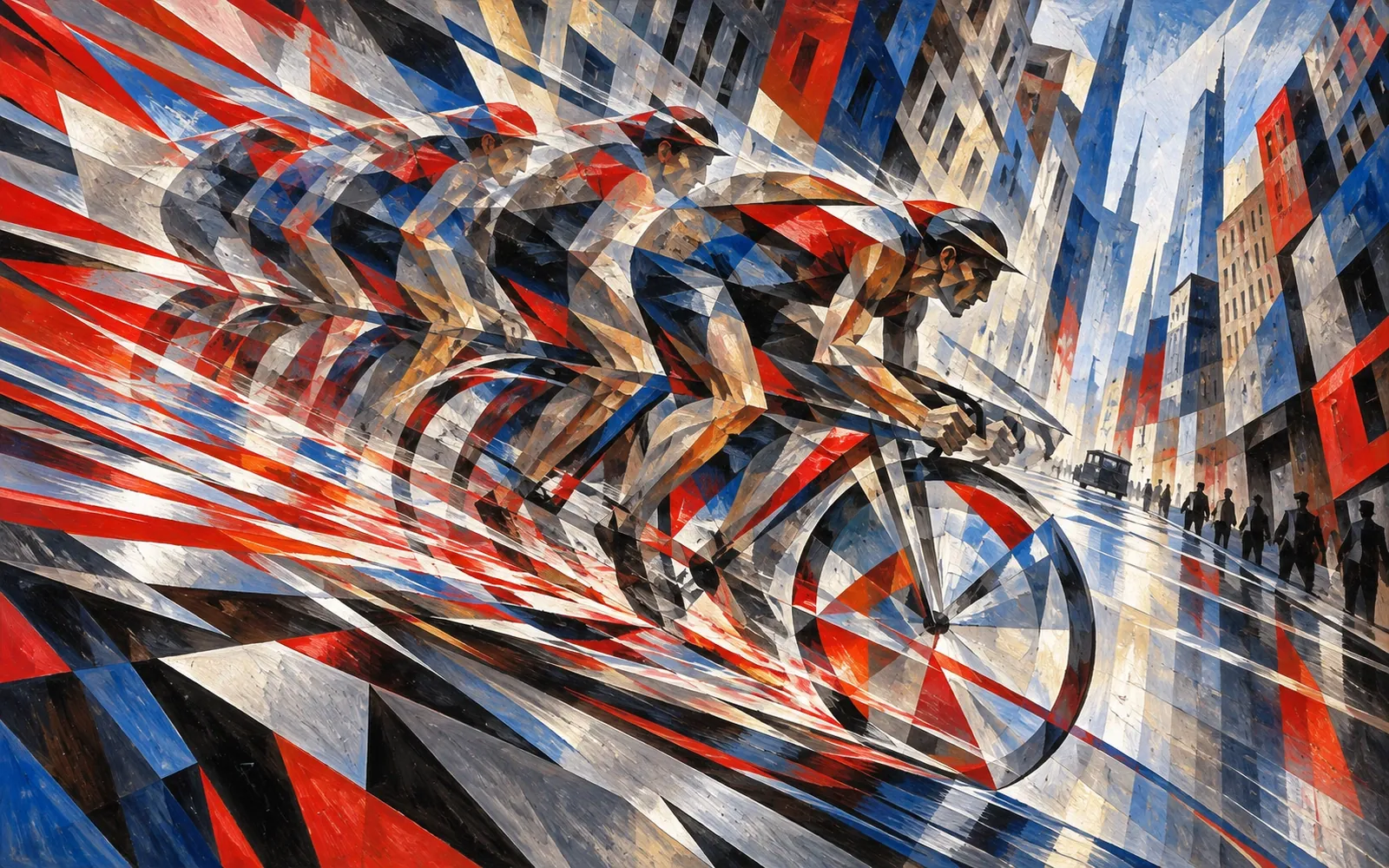
Works that change as you walk past them.
Wire, sheet metal, glass, plastic, motors and lights.
The work is never the same twice; it exists in time as well as space.
Key artists of Kinetic Art
Mobiles of coloured shapes balanced on wires.
Early experiments with movement in sculpture.
Noisy, absurd, self-destructing machines.
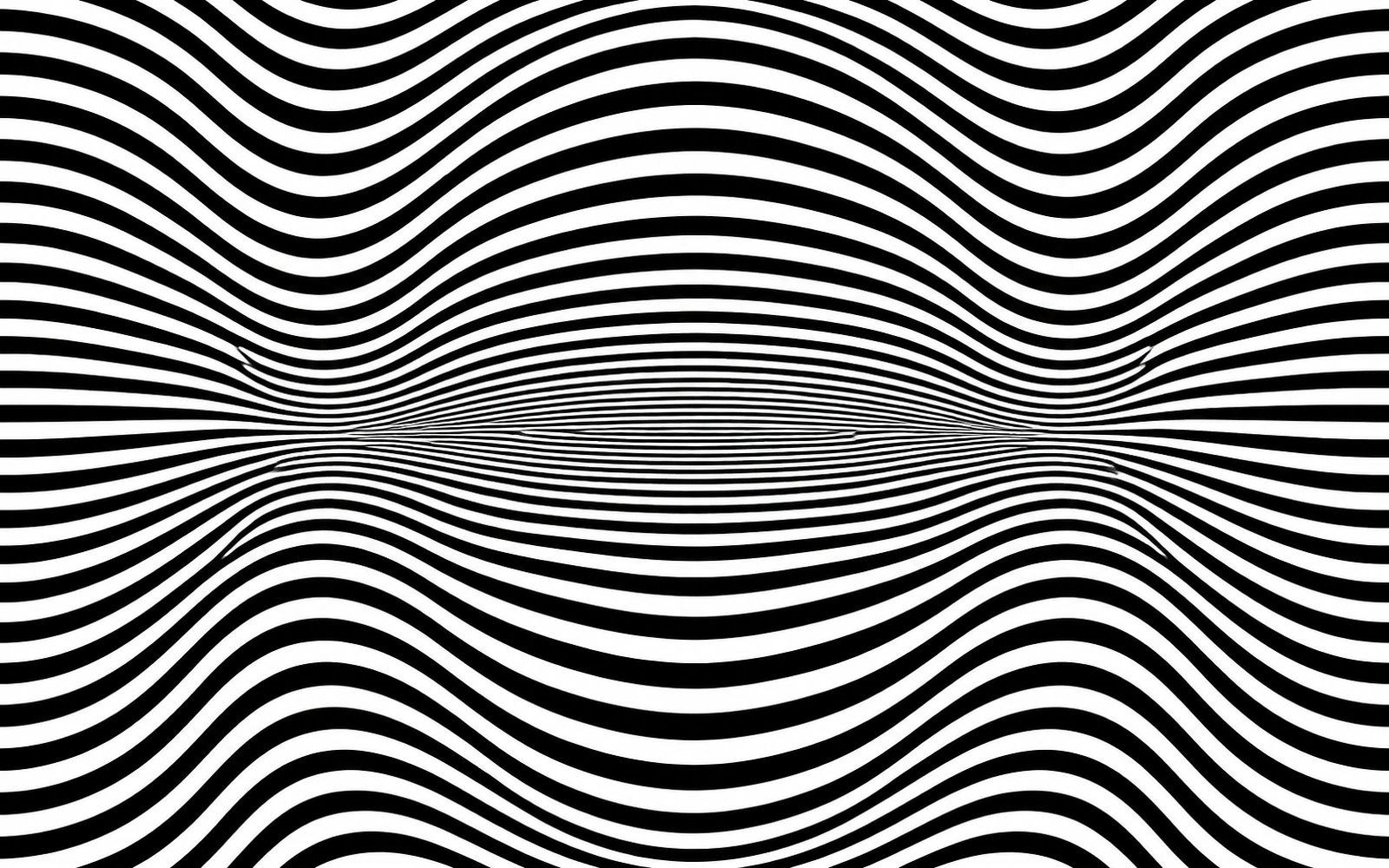
Vibrating lines and hanging rods that shimmer as you move.
How to recognize Kinetic Art
- Elements that move or seem to move.
- Balanced shapes, machines or moving light.
- A work that changes over time.
Where people get it wrong
Kinetic art is often confused with Op Art. Op Art creates the illusion of movement on a still surface; kinetic art usually moves for real, or depends on the viewer's movement through space.
Words to describe Kinetic Art
Precise words for the qualities above. Combine a few of them instead of naming the style or artist alone.
- kinetic sculpture
- hanging mobile
- balanced coloured shapes
- slowly turning forms
- motorised machine art
- moving light installation
- shifting shadows
- viewer-activated movement
- rhythm in time
- delicate wire balance
An original kinetic sculpture photograph: a large hanging mobile of flat red, black and white metal shapes balanced on thin wires in a white gallery, slowly turning, soft shadows moving across the floor, a light motion blur on the outermost shape.
What to take from Kinetic Art today
- Say what moves and what makes it move.
- Describe the speed and rhythm of the movement.
- Describe how light or shadow changes over time.
Questions about Kinetic Art
What is Kinetic Art?
Art that moves, or seems to: mobiles turning in the air, motorised machines, light that changes, and patterns that shift as you walk past.
How do you recognize Kinetic Art?
Elements that move or seem to move. Balanced shapes, machines or moving light. A work that changes over time.
How do you describe Kinetic Art in words or a prompt?
Say what moves and what makes it move. Describe the speed and rhythm of the movement. Describe how light or shadow changes over time.
Hang three light objects of different sizes from a wire and watch them in a breeze. Describe how the composition changes over one minute, as if it were a kinetic sculpture.