Seattle, early nineties
Grunge began as a music scene in and around Seattle in the late 1980s, built around independent labels such as Sub Pop. When Nirvana's Nevermind (1991) became a worldwide hit, the scene's look, cheap, practical and unbothered, went global: flannel shirts, worn band T-shirts, ripped jeans, long johns under shorts, army boots and thrift-store cardigans.
Fashion borrowed it fast. Marc Jacobs' grunge collection for Perry Ellis (spring 1993) put flannel on the runway and famously got him fired. In graphic design the same spirit appeared in David Carson's Ray Gun magazine, with layered, illegible, deliberately broken type, and in photographers such as Charles Peterson, whose blurred, grainy concert photos defined the scene. Grunge returns in waves, each time as a reaction to something too polished.
Visual anatomy of Grunge
Flannel, oversized knits, band T-shirts, ripped denim, slip dresses over T-shirts, combat boots.
Worn, faded, layered, slightly dirty; nothing ironed.
Direct flash, grain, motion blur, tilted framing, overexposed or murky.
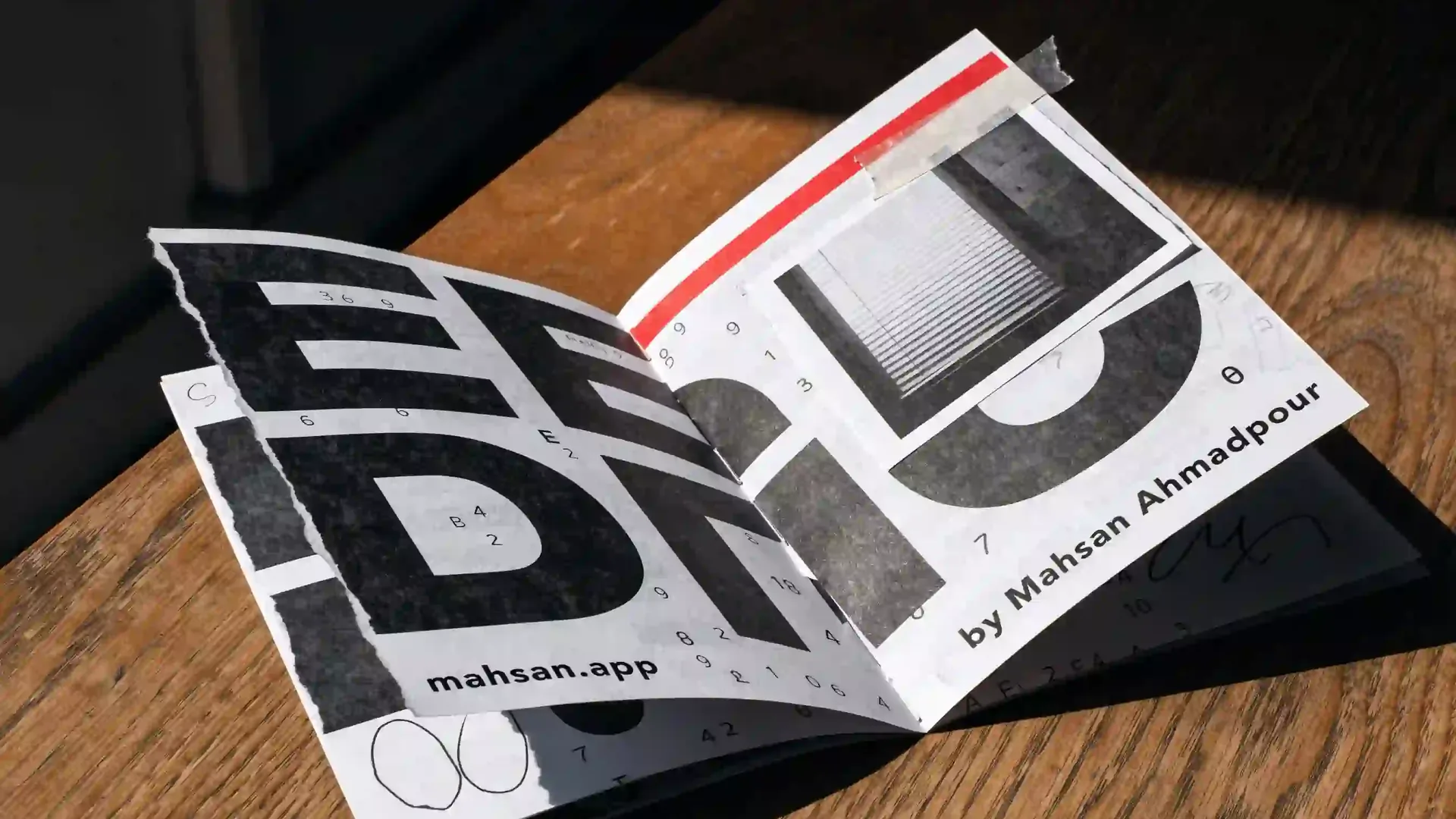
Distressed, overlapping, photocopied, cut-up type; legibility optional.
Washed-out olive, rust, mustard, burgundy, faded black and denim blue.
Rehearsal rooms, basements, small clubs, rainy streets, thrift stores.
Key names
Seattle record label central to the scene from 1988.
Nirvana's album that took grunge to the mainstream.
The runway collection that turned grunge into high fashion.
Art director of Ray Gun (from 1992), famous for broken, expressive typography.
How to recognize Grunge
- Layered, worn, oversized clothes.
- Raw flash and grain instead of polished lighting.
- Faded, muddy colour.
- Type that looks scratched, photocopied or broken.
Where people get it wrong
Making grunge look styled. The point was indifference: clothes from a thrift store, photos taken quickly, type cut up by hand. A carefully art-directed shoot in pristine flannel looks like a costume. Add wear, real flash and imperfection.
Words to describe Grunge
Precise words for the qualities above. Combine a few of them instead of naming the style or artist alone.
- grunge
- flannel shirt
- ripped denim
- thrift-store layers
- combat boots
- direct flash
- film grain
- washed-out colour
- distressed typography
- photocopy texture
- 90s Seattle
- anti-fashion
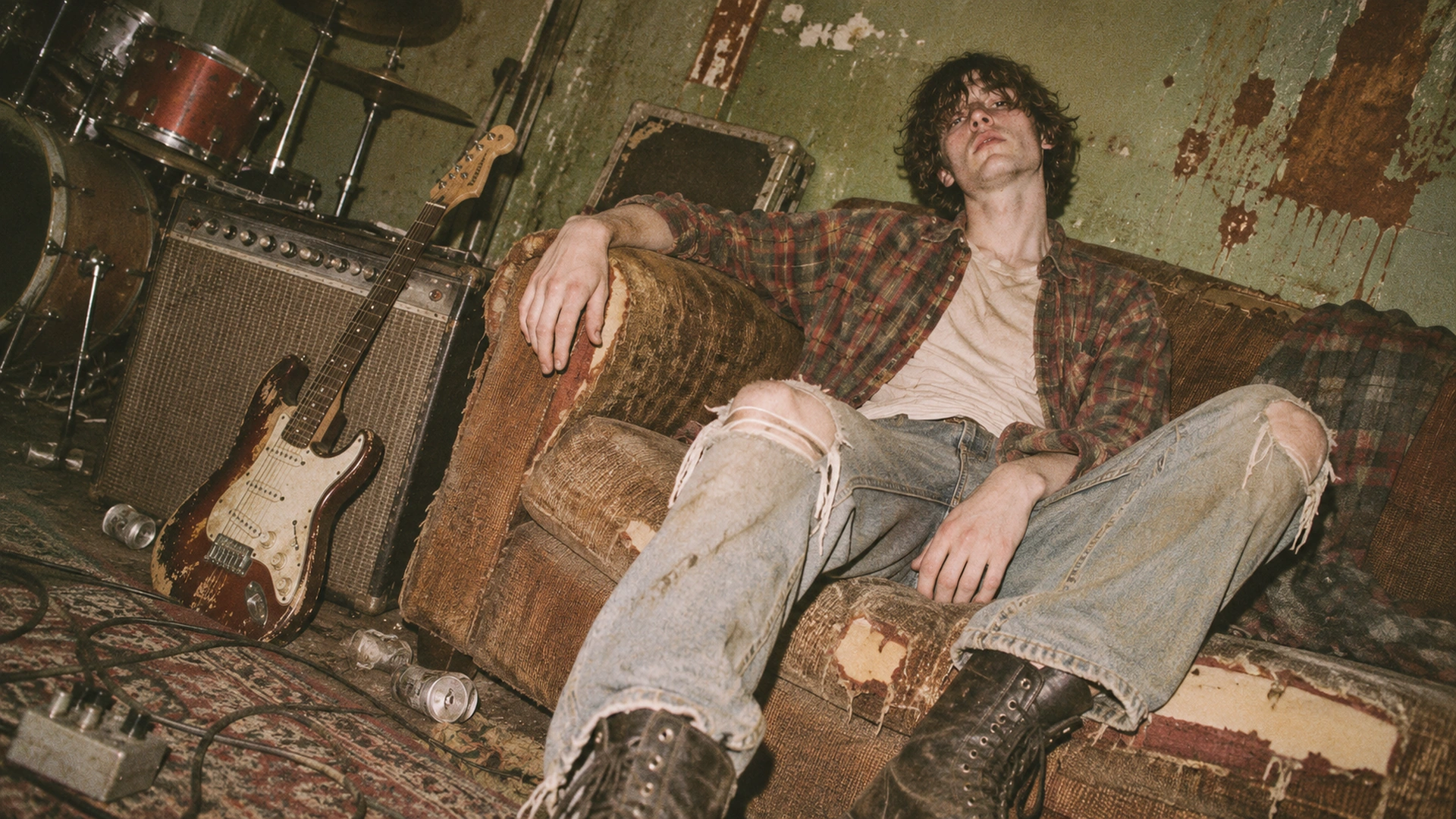
An original grunge photography study: a young musician slumped on a worn couch in a cluttered rehearsal room, faded flannel shirt over a band T-shirt, ripped jeans, combat boots, a guitar against an amp, harsh direct on-camera flash, heavy grain, tilted frame, washed-out olive and rust colours.
What to take from Grunge today
- Describe worn materials: faded flannel, frayed denim, pilled knitwear.
- Ask for direct on-camera flash, grain and a quick, tilted frame.
- Use a washed-out palette of olive, rust and faded black.
- For design: photocopied texture and overlapping, distressed type.
Questions about Grunge
What is grunge fashion?
The early-1990s Seattle look: flannel shirts, band T-shirts, ripped jeans, layered thrift-store clothes and combat boots, worn without polish.
What is grunge typography?
Distressed, layered and deliberately broken type of the 1990s, associated with David Carson and Ray Gun magazine.
Describe a grunge photograph of a friend in five lines: the clothes and their wear, the room, the light from the camera flash, the angle and one imperfection that makes it feel real.
Sources and further reading
- Michael Azerrad, Come As You Are: The Story of Nirvana (1993).
- Lewis Blackwell and David Carson, The End of Print (1995).