Wilderness as scripture
The Hudson River School is the name for a group of American landscape painters active from about the 1820s to the 1870s. It began with Thomas Cole, who painted the Catskill Mountains and the Hudson Valley in New York, and grew to include Asher B. Durand, Frederic Edwin Church, Albert Bierstadt, Jasper Cropsey and Sanford Gifford. The name itself was a later label, first used with some mockery once the style had gone out of fashion.
The painters combined close study of rocks, trees and clouds with grand, often dramatic composition, influenced by European Romanticism and the idea of the sublime. Church travelled to South America and the Arctic, Bierstadt to the Rocky Mountains and Yosemite. Their paintings were celebrated as national images, and today they are also read critically: their empty wilderness often leaves out the Native peoples who lived there, and some served the story of westward expansion.
Visual anatomy of Hudson River School
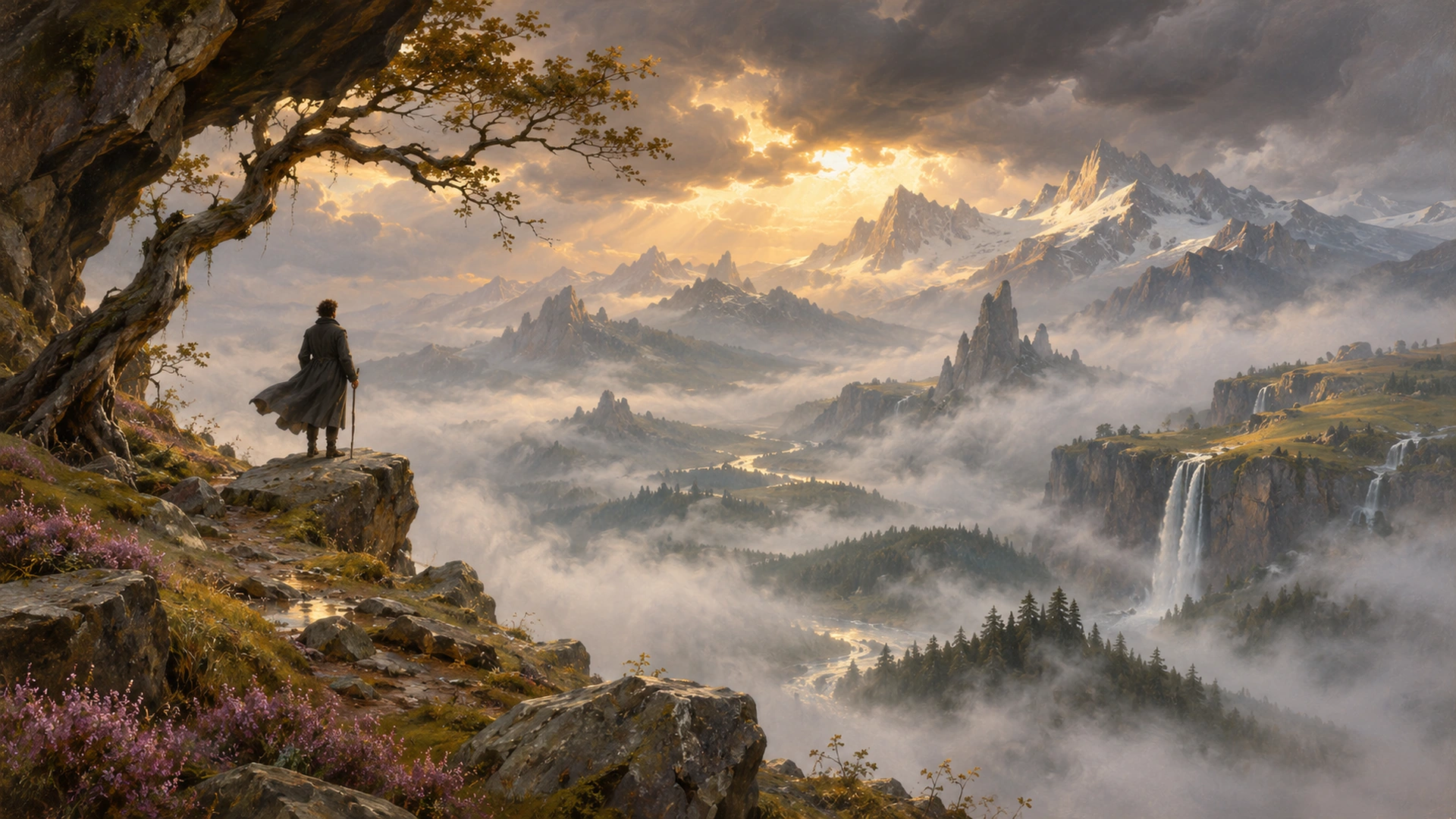
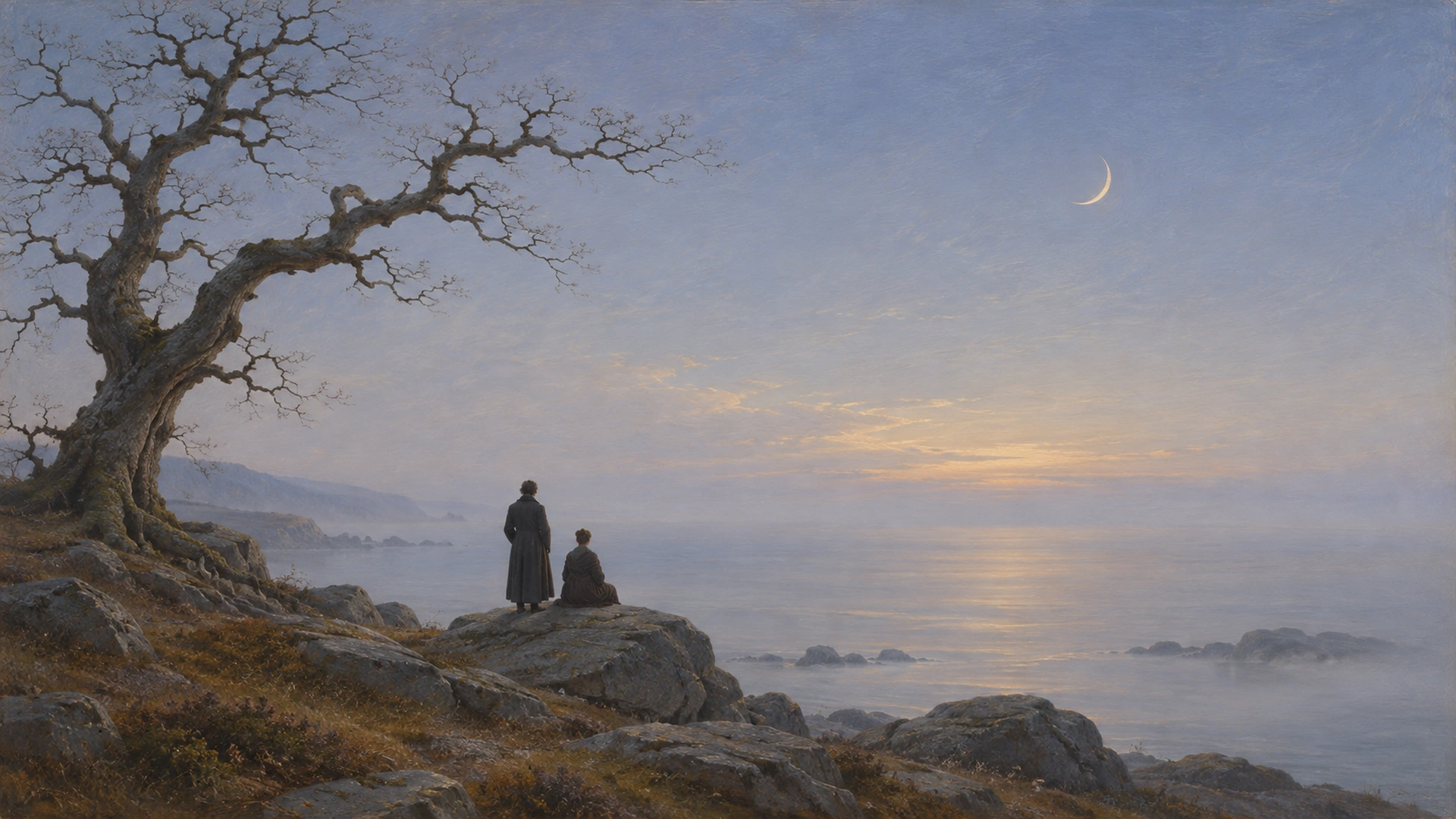
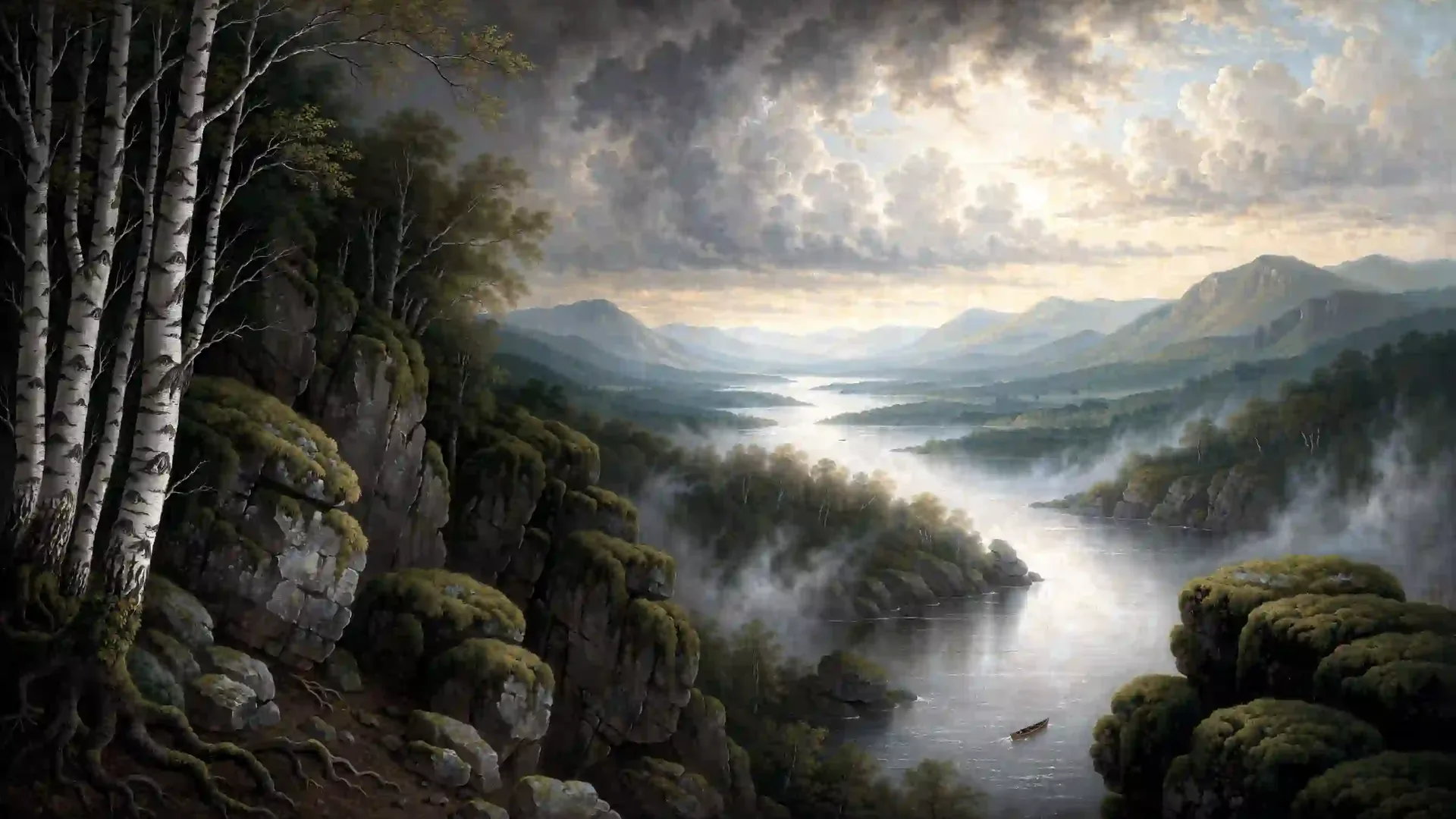
Vast landscapes with small human figures, cabins or boats.
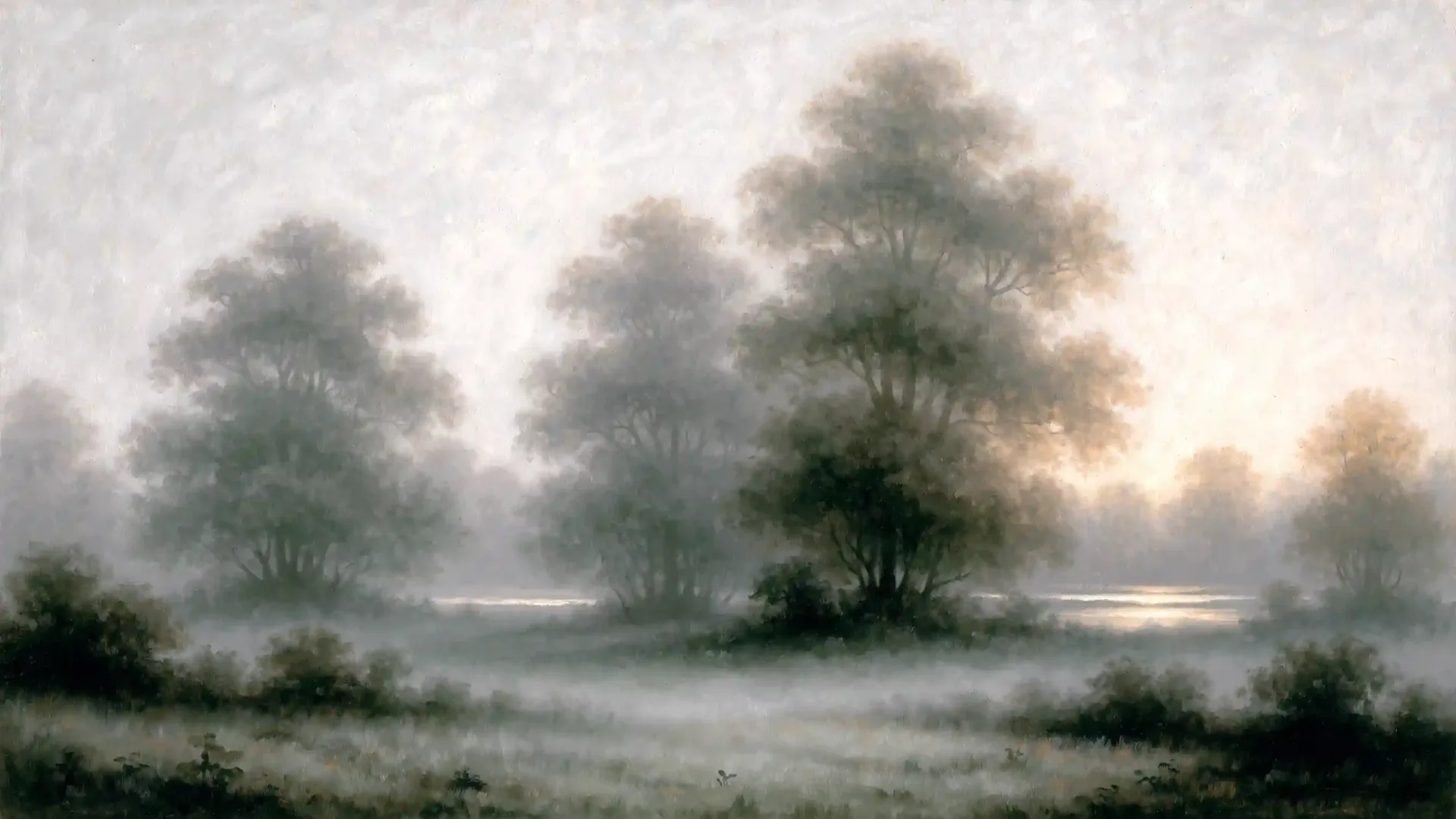
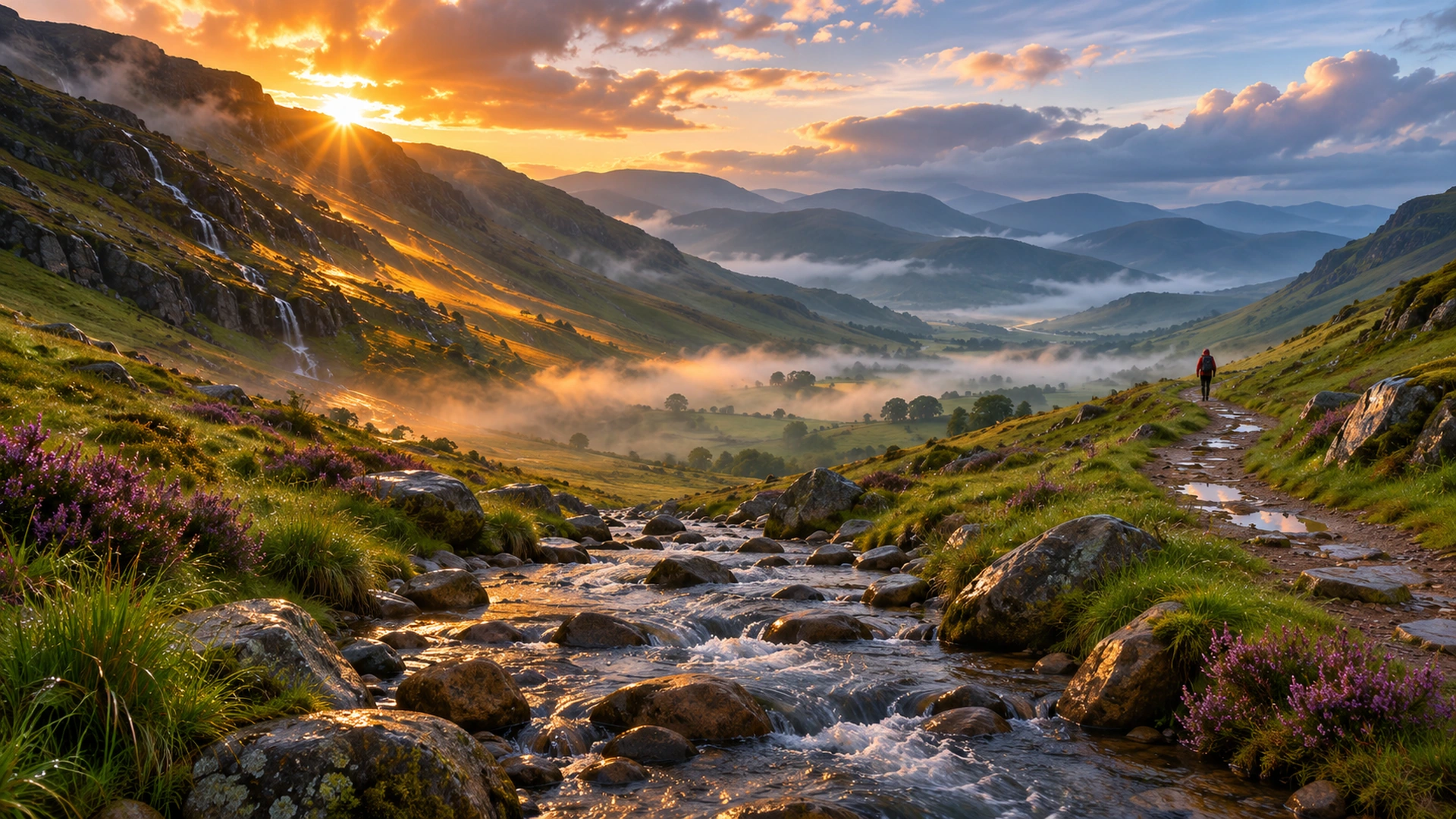
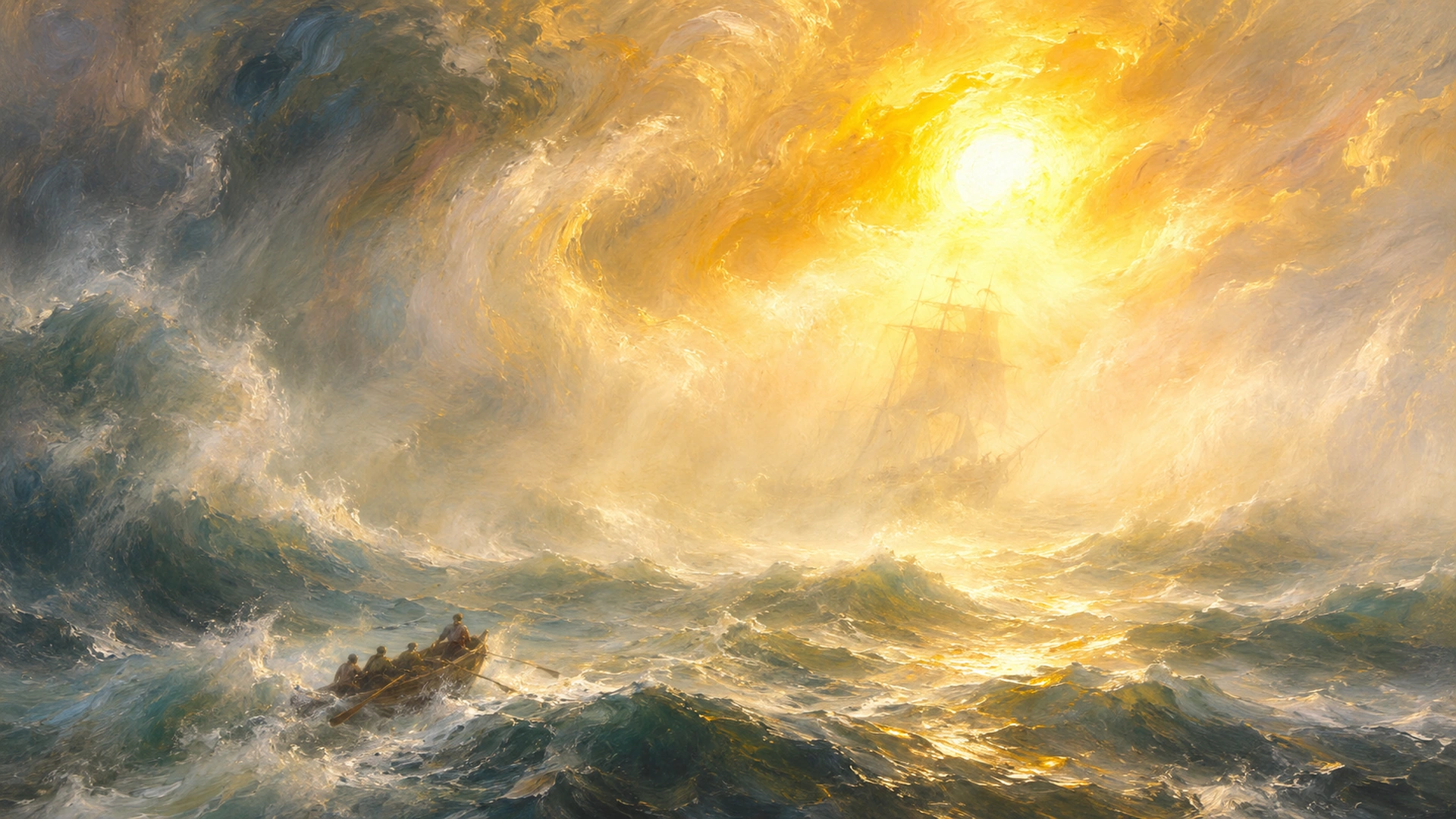
Golden or silver light breaking through cloud, sunsets, glowing haze over water.
Precisely painted trees, rocks and foliage in the foreground.
Framing trees, a winding river or valley leading the eye to a bright distance.
Storms passing, mist rising, rainbows; nature as drama.
Awe, calm reverence, sometimes a warning about what is being lost.
Key works of Hudson River School
A view split between storm-dark wilderness and sunlit farmland, Metropolitan Museum of Art.
Cole and the poet William Cullen Bryant standing on a ledge in a Catskills gorge.
The falls seen at water level, with no foreground to stand on.
A theatrical valley of peaks, lake and light, Smithsonian American Art Museum.
How to recognize Hudson River School
- Large landscape with tiny figures.
- Dramatic, glowing light in the sky.
- Highly detailed foreground nature.
- A river or valley leading to a luminous distance.
- A sense of reverence for wilderness.
Where people get it wrong
These paintings are often read as faithful records of nature. They are carefully composed: mountains were moved, light was heightened, and parts of real places were combined. A second mistake is to see them as politically neutral; the 'untouched wilderness' was often a story that erased people already living on the land.
Words to describe Hudson River School
Precise words for the qualities above. Combine a few of them instead of naming the style or artist alone.
- Hudson River School
- the sublime
- Luminism
- wilderness
- panorama
- golden hour
- atmospheric perspective
- framing trees
- Catskills
- Romantic landscape
A landscape study in the Hudson River School manner: a gorge of birches and mossy rocks opening onto a wide river valley, storm clouds breaking into gold over distant mountains, a tiny canoe on the water, mist rising.
What to take from Hudson River School today
- Give the scale: a tiny figure in a vast scene.
- Describe the light breaking through cloud or haze.
- Detail the foreground: rocks, birches, moss.
- Lead the eye down a river to the bright distance.
The empty land is a sentence
An 'empty' landscape is never only seen; it is told. Every Hudson River painting chooses what to include and what to leave out, and that choice is a story about who belongs in the land. Narrative therapy asks whose story is missing. When you describe or generate a landscape in this style, notice the unsaid as much as the light.
Questions about Hudson River School
What is the Hudson River School?
A group of 19th-century American landscape painters, beginning with Thomas Cole in the 1820s, who painted the wilderness of the Hudson Valley and later the American West with dramatic light and detail.
Who are the main Hudson River School painters?
Thomas Cole, Asher B. Durand, Frederic Edwin Church, Albert Bierstadt, Jasper Cropsey, Sanford Gifford and Thomas Moran.
What are the characteristics of the Hudson River School?
Vast, carefully composed landscapes, glowing light, detailed foregrounds, small human figures and a mood of awe toward nature.
What is Luminism?
A related approach within American landscape painting, with calm water, hazy light and hidden brushstrokes, seen in painters such as Fitz Henry Lane and Martin Johnson Heade.
Find Thomas Cole's The Oxbow in the Metropolitan Museum's online collection. Describe the left half and the right half separately, then write one sentence about what the painting seems to say about the land.
Sources and further reading
- Metropolitan Museum of Art, Heilbrunn Timeline of Art History: The Hudson River School.
- Barbara Novak, Nature and Culture: American Landscape and Painting, 1825–1875, Oxford University Press, 1980.
- Thomas Cole, 'Essay on American Scenery', 1836.
- Thomas Cole National Historic Site, Catskill, New York.