Against the visible
Symbolism began in literature. In 1886 the poet Jean Moréas published a manifesto in Le Figaro calling for poetry that would 'clothe the Idea in sensuous form'. Behind it stood Baudelaire's idea of correspondences, that colours, sounds and scents answer one another, and the poetry of Mallarmé and Verlaine, which suggested rather than named.
Painters took the same path away from Realism and Impressionism, which they found too tied to the surface of things. Gustave Moreau painted jewelled, airless myths of Salome and Orpheus. Odilon Redon drew floating eyes and smiling spiders in charcoal, then turned to dreamlike pastel flowers. Arnold Böcklin painted Isle of the Dead, a cypress island under a darkening sky. Fernand Khnopff, Puvis de Chavannes, Mikhail Vrubel and the young Munch and Klimt all belong to its wide circle.
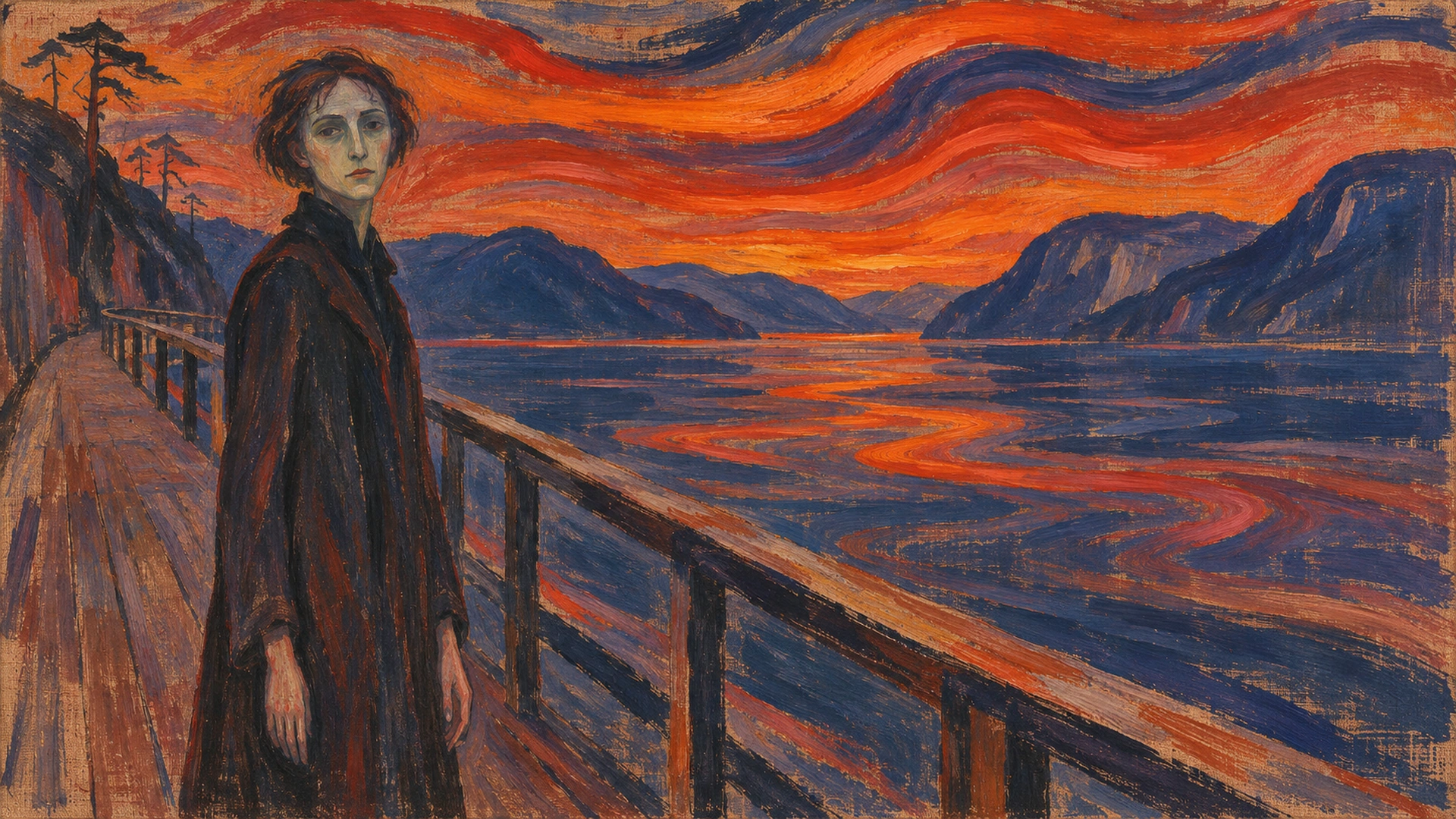
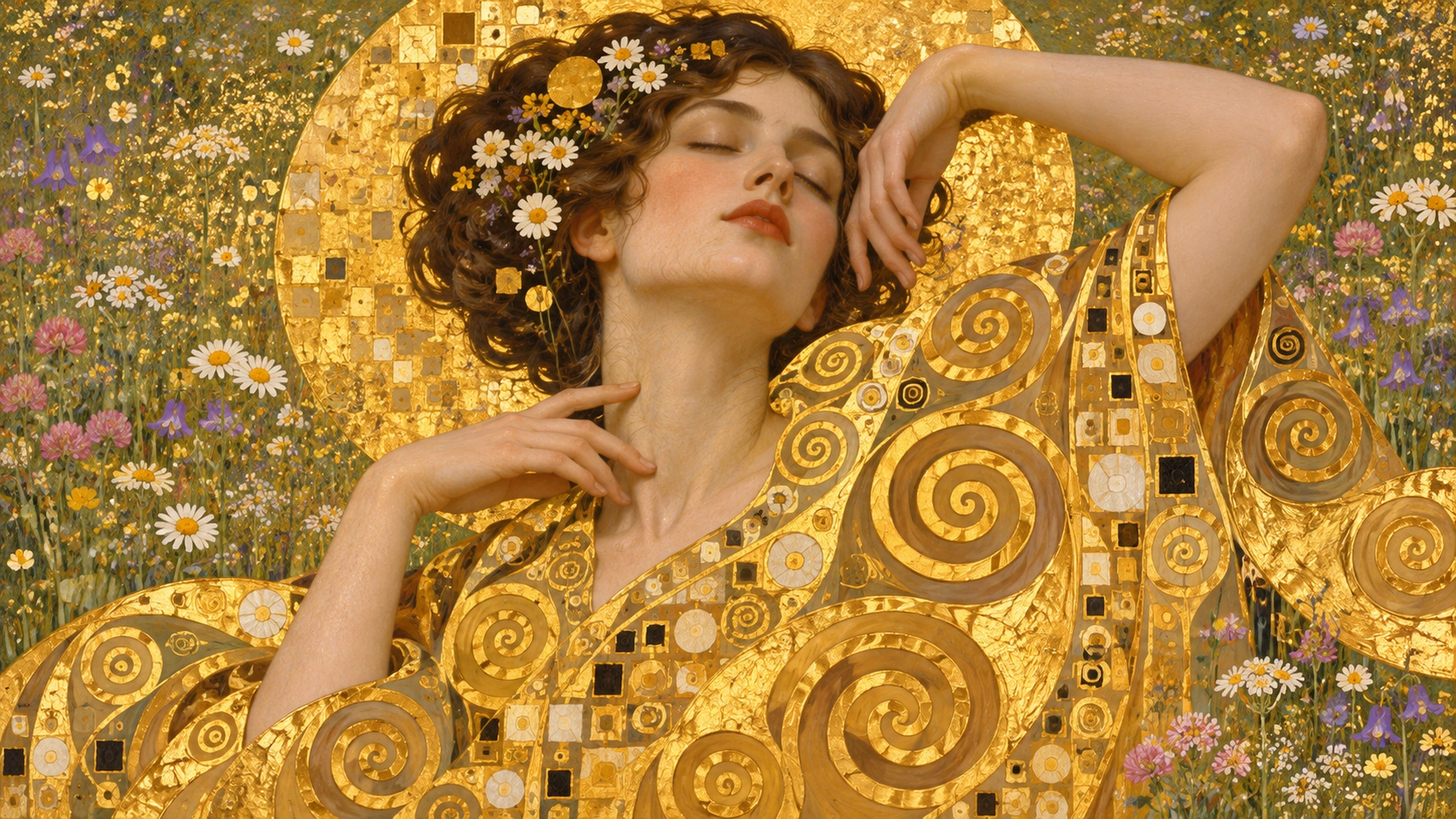
There was no single style. What united them was a subject: the soul, the dream, death, the femme fatale, the sacred, the unknown. Symbolism fed directly into Art Nouveau, Expressionism and, decades later, Surrealism.
Visual anatomy of Symbolism
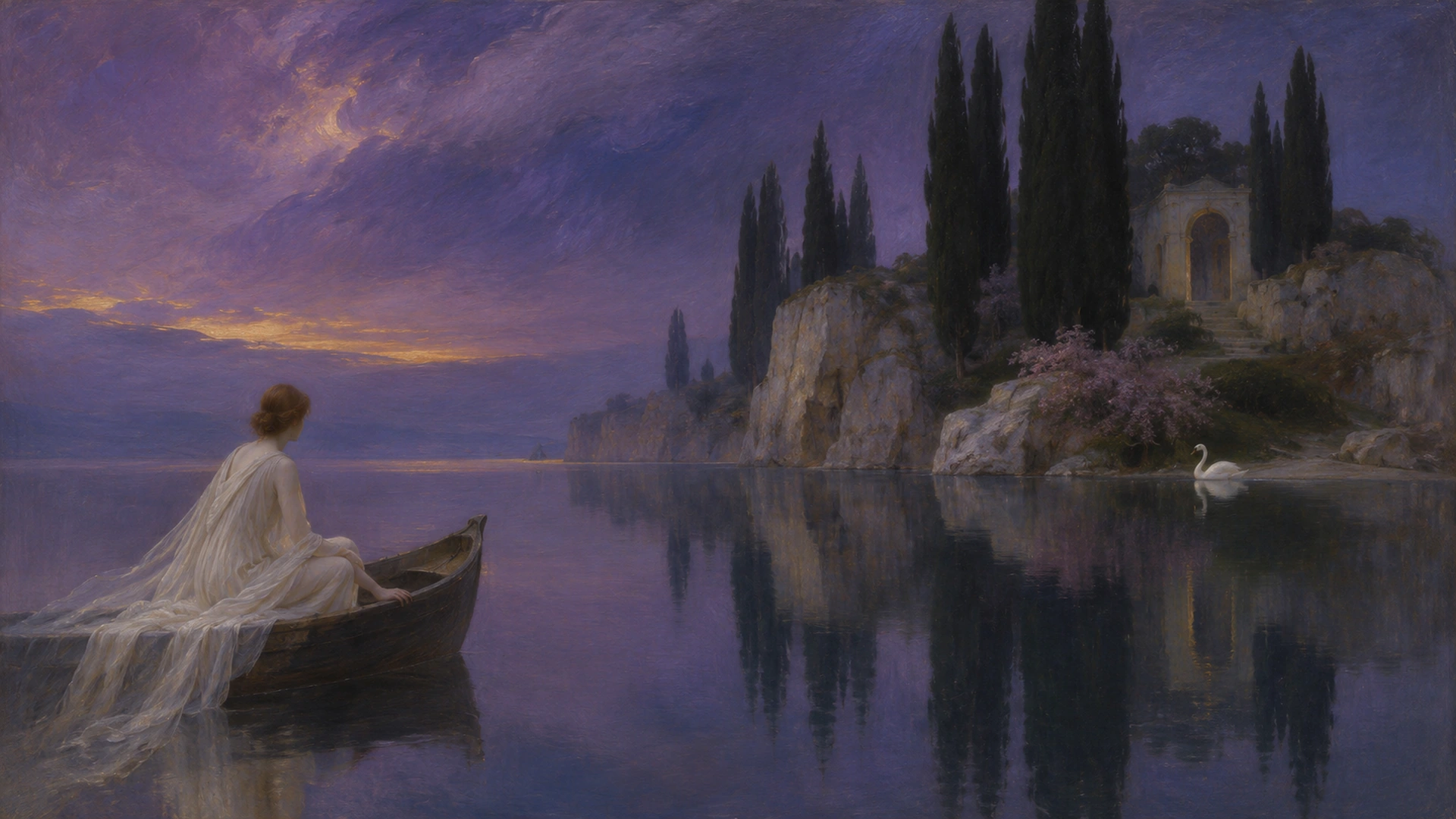
Myth, dream, death, desire and mystery rather than everyday life; figures often from legend or scripture.
Silent, still, suspended; time seems stopped at dusk or in a dream.
Twilight palettes: violet, deep blue, muted gold, pale greens; sometimes jewel-like and glowing.
Pale, androgynous or remote faces, closed eyes, heads without bodies, eyes without faces.
Flattened or unreal: islands, thresholds, shores, interiors with no clear source of light.
Recurring symbols: the cypress, the swan, the lily, the closed eye, the severed head, the sphinx.
Words around Symbolism
Baudelaire's idea that senses and the spiritual world echo each other.
The dangerous, seductive woman, a central and now much-criticised Symbolist figure.
'End of the century': the mood of decadence and anxiety in 1890s Europe.
A related movement prizing artifice, refinement and decline over nature and progress.
How to recognize Symbolism
- A quiet, dreamlike scene with no clear story.
- Twilight light and violet, deep blue or dim gold colour.
- Figures with closed or distant eyes, often from myth.
- Symbolic objects: cypresses, lilies, swans, a lone island.
- A feeling of mystery that the picture refuses to explain.
Where people get it wrong
Symbolism is not the same as 'using symbols', which almost all art does. It is a specific movement of the 1880s–1910s with a shared belief that art should reveal an inner or spiritual reality. It is also not one style: Redon's charcoal noirs, Moreau's jewelled surfaces and Puvis de Chavannes's pale murals look nothing alike.
Words to describe Symbolism
Precise words for the qualities above. Combine a few of them instead of naming the style or artist alone.
- dreamlike
- twilight palette
- violet and deep blue
- mythological figure
- closed eyes
- cypress island
- jewel-like surface
- hushed and still
- fin de siècle
- mystical
- symbolic object
- veiled meaning
A small boat carrying a white-draped figure toward a rocky island of tall dark cypresses at dusk, still water like glass, a violet and deep blue sky with a faint gold edge, no wind, no sound, the scene painted in muted oil as if remembered from a dream.
What to take from Symbolism today
- Describe the mood before the objects: still, hushed, waiting.
- Choose one symbolic object and let it carry the meaning instead of a caption.
- Use twilight colour: violet, deep blue, dull gold.
- Leave the story unexplained; suggest rather than name.
Questions about Symbolism
What is the difference between Symbolism and Surrealism?
Symbolism (1880s–1910s) painted dreams and ideas in a mostly traditional, poetic way. Surrealism (1920s on) built on Freud and automatic techniques to release the unconscious. Surrealists counted Moreau and Redon among their ancestors.
Who are the main Symbolist painters?
Gustave Moreau, Odilon Redon, Pierre Puvis de Chavannes, Arnold Böcklin, Fernand Khnopff, Jean Delville, Mikhail Vrubel, and early work by Edvard Munch and Gustav Klimt.
Is Symbolism the same as Art Nouveau?
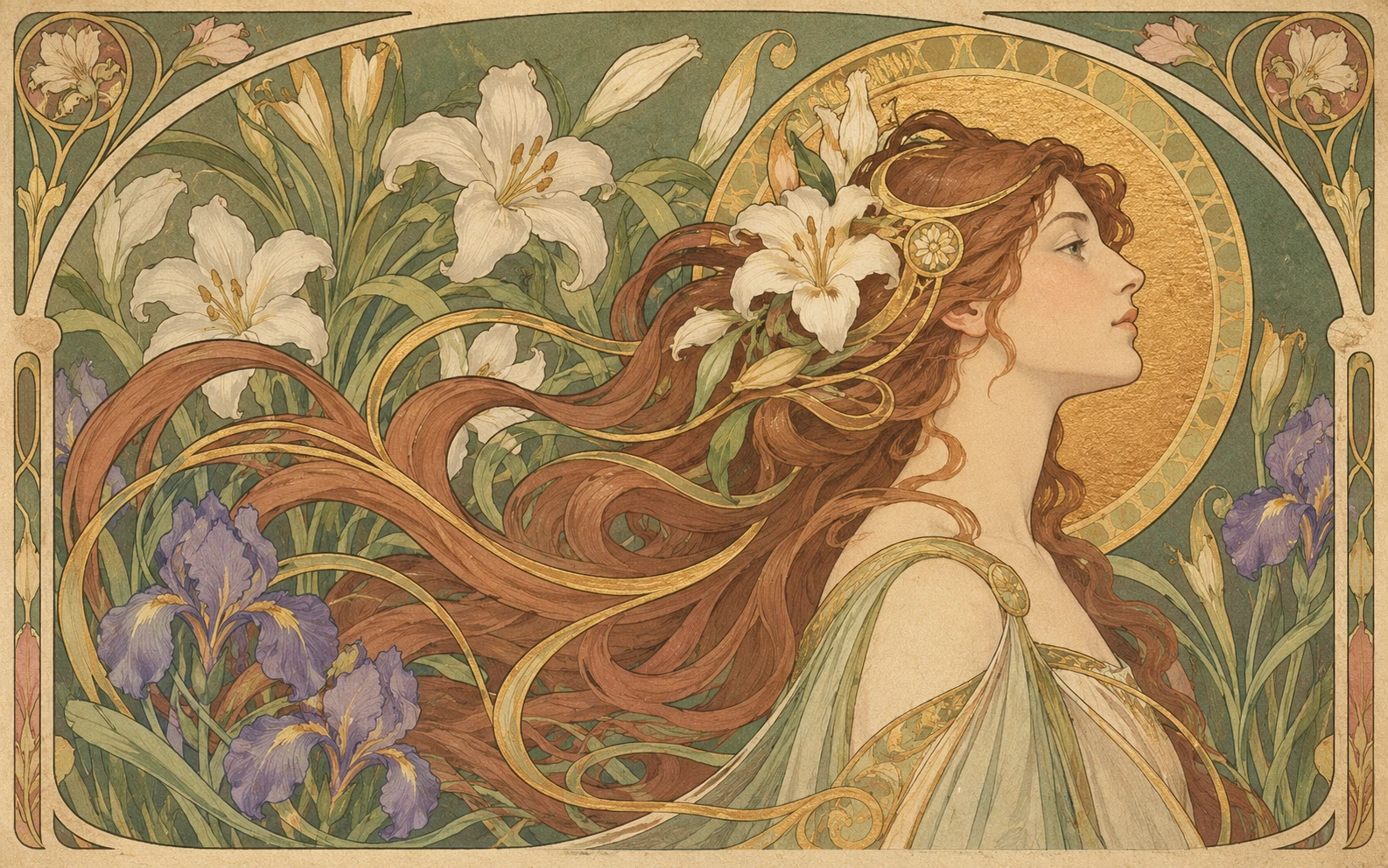
No, but they overlap. Art Nouveau is mainly a decorative and design style of curving lines; Symbolism is a movement about meaning and inner states. Many artists, such as Klimt and Mucha, moved between both.
Look at Böcklin's Isle of the Dead. Describe it in three sentences without naming death, grief or a funeral. Use only light, colour, objects and silence. Then read it back and see whether the feeling arrived anyway.
Sources and further reading
- Musée d'Orsay: Symbolism collection (Moreau, Redon, Puvis de Chavannes).
- Jean Moréas, 'Le Symbolisme', Le Figaro, 18 September 1886.
- Michael Gibson, Symbolism, Taschen, 2006.
- Musée Gustave Moreau, Paris.