Truth to nature, dressed as legend
In 1848 three young students at the Royal Academy in London, Dante Gabriel Rossetti, John Everett Millais and William Holman Hunt, formed a secret group they called the Pre-Raphaelite Brotherhood. They believed art had gone stale since Raphael and wanted to return to the clarity and sincerity of painting before him: bright colour, sharp detail and serious subjects.
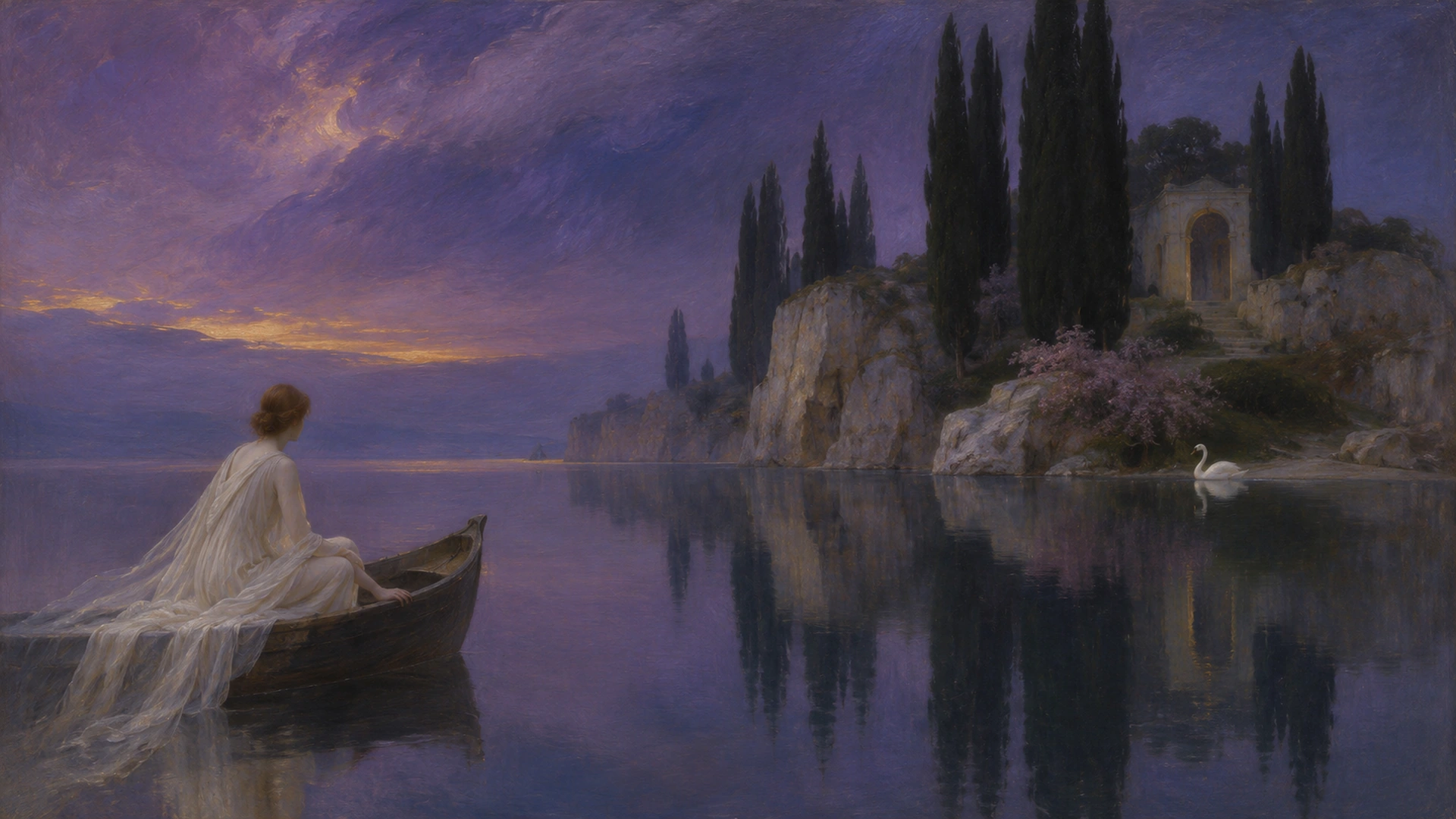
They painted outdoors, leaf by leaf, on a wet white ground that made colours glow like stained glass. Millais's Ophelia (1851–52), with its drowning heroine among exact riverbank flowers, became the movement's icon. A second wave, with Edward Burne-Jones and later John William Waterhouse's The Lady of Shalott (1888), drifted toward dreamy medieval beauty and fed into the Arts and Crafts movement and Art Nouveau. Today the look lives on in fantasy illustration, ethereal fashion editorials and the fairycore and cottagecore aesthetics.
Visual anatomy of Pre-Raphaelites
Jewel-bright, saturated colour painted over a white ground, so it glows.
Every leaf, flower, fabric and strand of hair painted sharply, edge to edge.
Long-necked heroines with masses of flowing, often red, hair and a distant gaze.
Arthurian legend, Shakespeare, Dante, Tennyson, the Bible.
Botanically exact plants and riverbanks, painted outdoors from life.
Dreamy, melancholy, symbolic; time seems suspended.
Key names
Poet-painter of sensual, symbolic women; Proserpine (1874).
Ophelia (1851–52), botanical precision at its height.
Moral, symbolic subjects in intense colour; The Light of the World.
Pale, elongated figures and medieval dreams.
Later follower; The Lady of Shalott (1888).
How to recognize Pre-Raphaelites
- Sharp detail everywhere, with no soft background.
- Glowing jewel-like colours.
- Medieval or literary heroines with long flowing hair.
Where people get it wrong
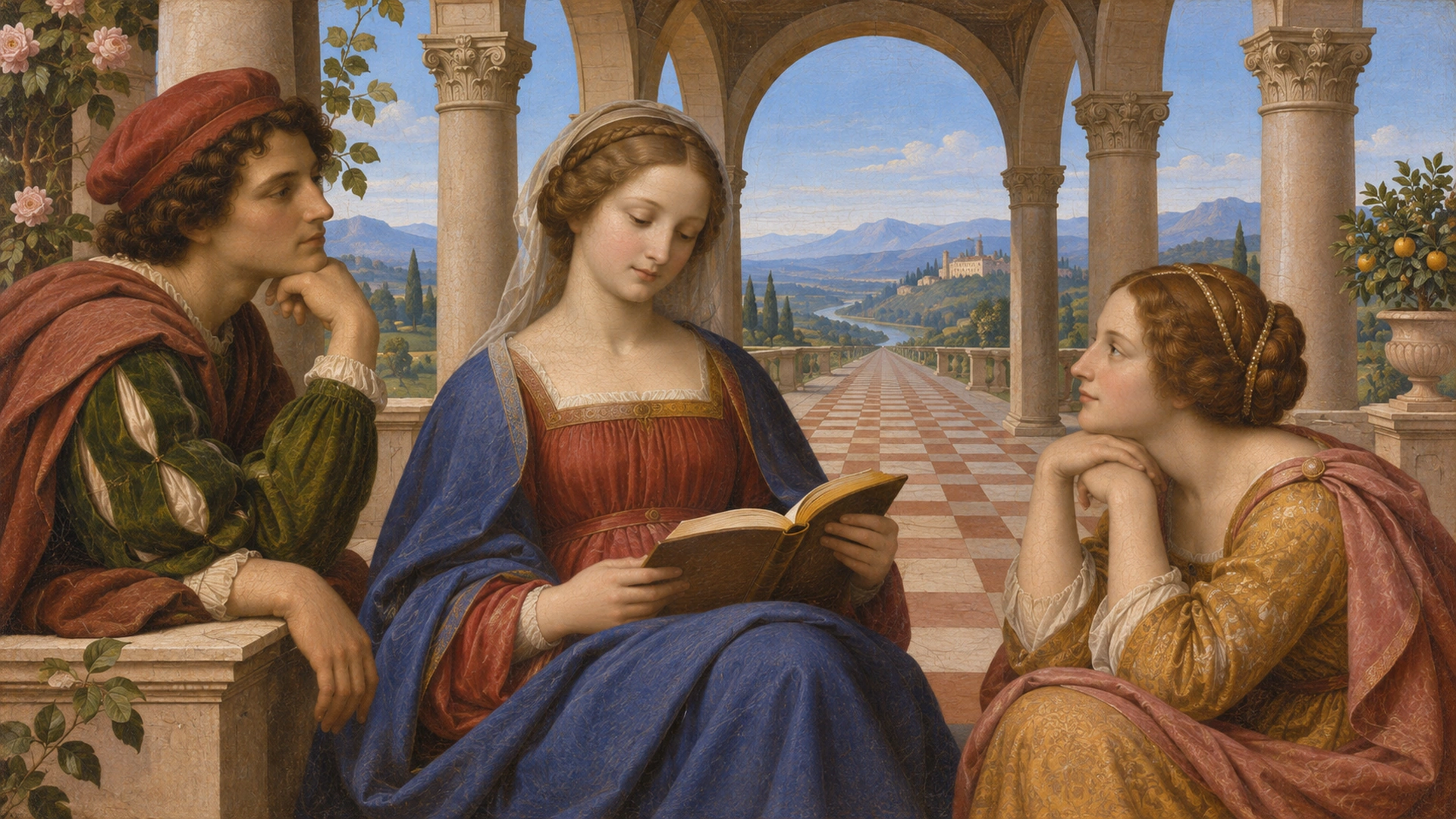
The Pre-Raphaelites are often taken for Renaissance painters because of the costumes and legends. The giveaway is the Victorian intensity: hyper-sharp botanical detail, acid-bright greens and the flat, airless clarity of a 19th-century eye.
Words to describe Pre-Raphaelites
Precise words for the qualities above. Combine a few of them instead of naming the style or artist alone.
- pre-raphaelite jewel colours
- botanical detail edge to edge
- flowing red hair
- medieval heroine
- emerald and ruby velvet
- dreamy melancholy gaze
- riverbank wildflowers
- arthurian legend
- glowing white-ground painting
- suspended time
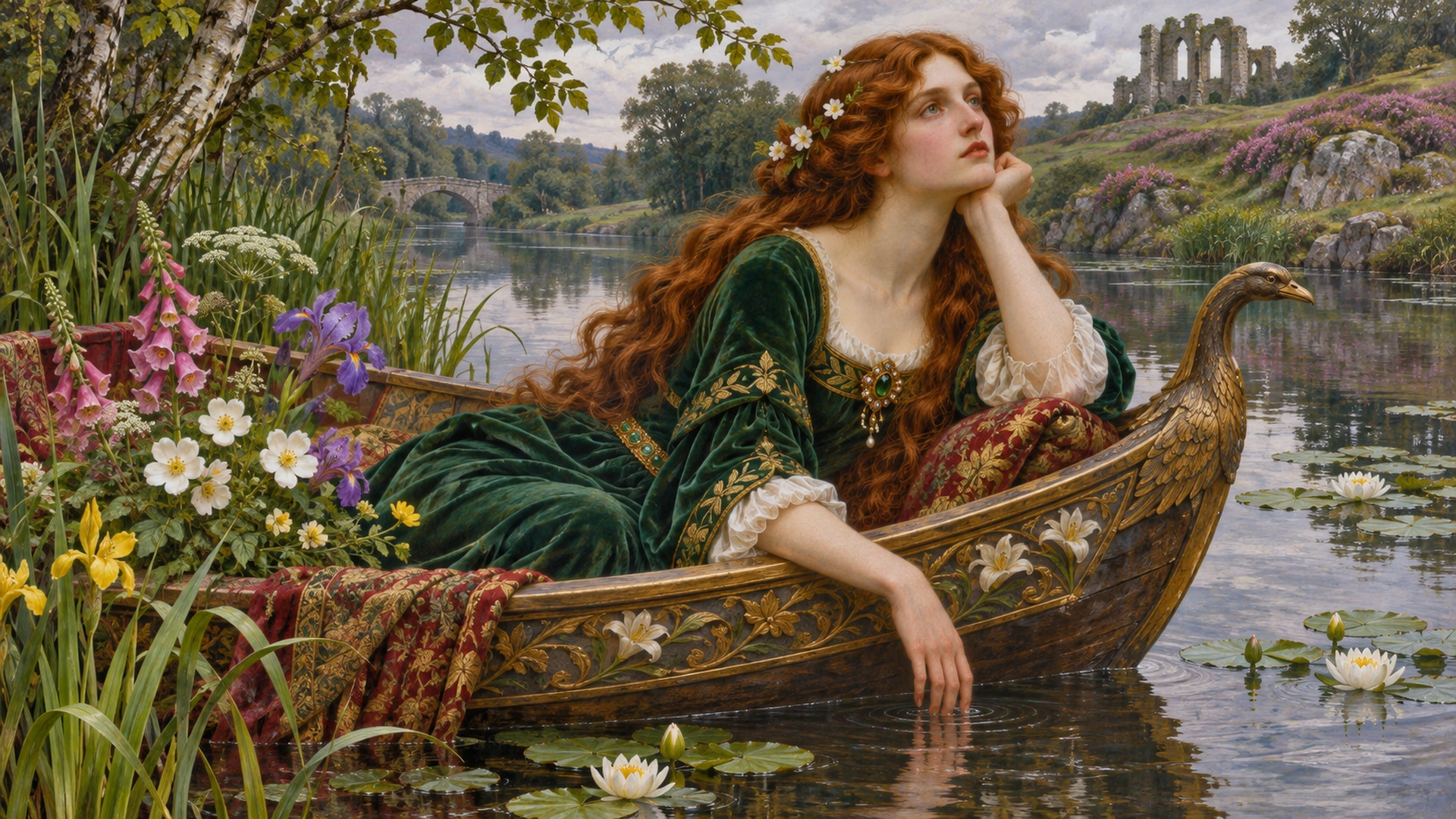
An original Pre-Raphaelite-style painting study: a young woman with long flowing auburn hair in an emerald velvet gown sitting in a small boat among reeds and wildflowers on a still river, every leaf painted in sharp detail, jewel-bright colours, a dreamy distant gaze, soft overcast light. Not a copy of any existing painting.
What to take from Pre-Raphaelites today
- Describe the detail: which flowers and fabrics are visible.
- Name the jewel colours: emerald, ruby, sapphire.
- Give the heroine's pose and gaze and the story behind her.
Questions about Pre-Raphaelites
What is Pre-Raphaelites?
English painters of 1848 who rejected academic rules for jewel-bright colour, every leaf painted from life, and dreamy medieval and literary heroines.
How do you recognize Pre-Raphaelites?
Sharp detail everywhere, with no soft background. Glowing jewel-like colours. Medieval or literary heroines with long flowing hair.
How do you describe Pre-Raphaelites in words or a prompt?
Describe the detail: which flowers and fabrics are visible. Name the jewel colours: emerald, ruby, sapphire. Give the heroine's pose and gaze and the story behind her.
Choose a character from a book or a song you love and describe her or him as a Pre-Raphaelite painting: setting, flowers, colour of the robe, hair, gaze and the moment of the story.