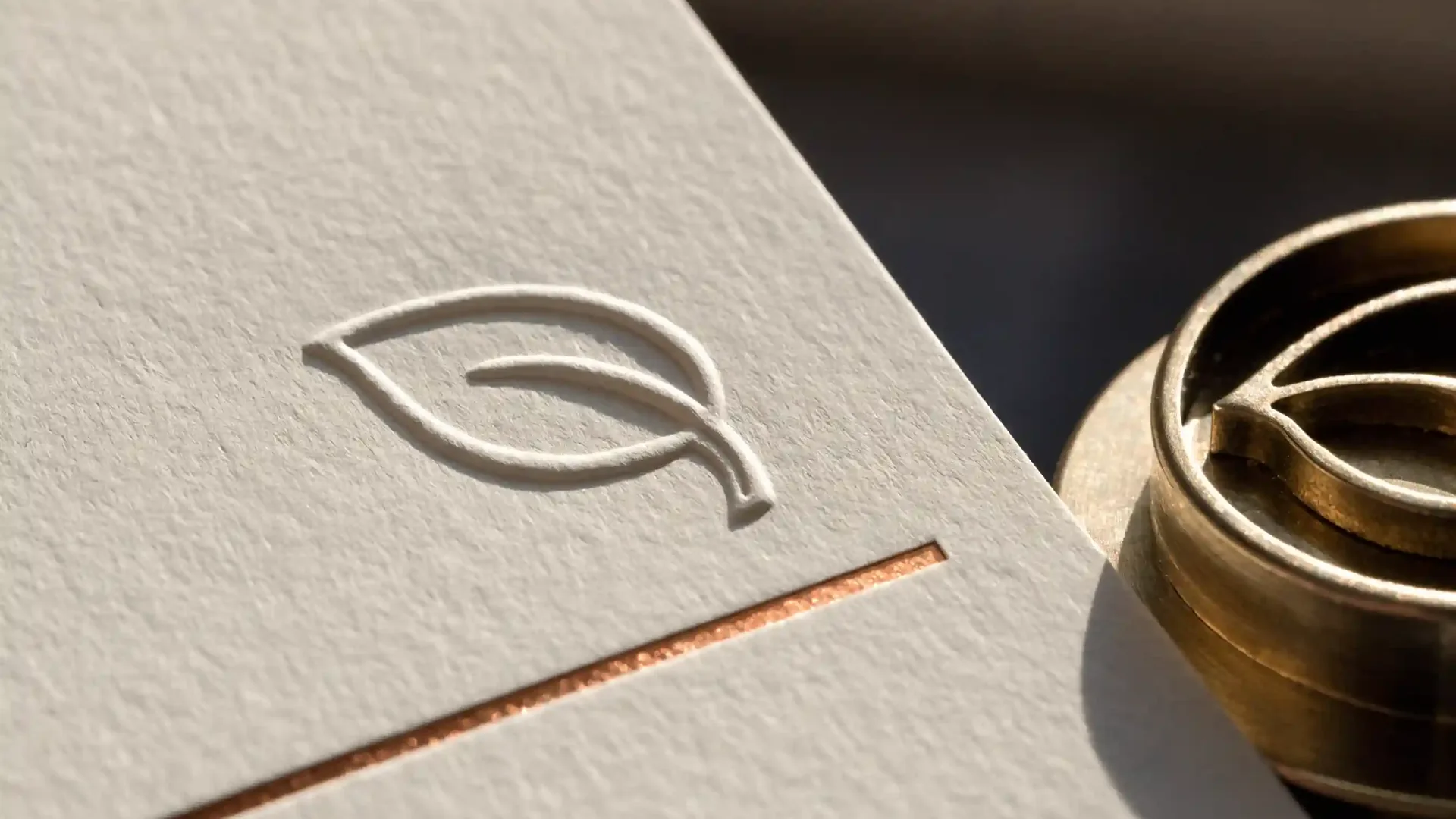
Relief and shine
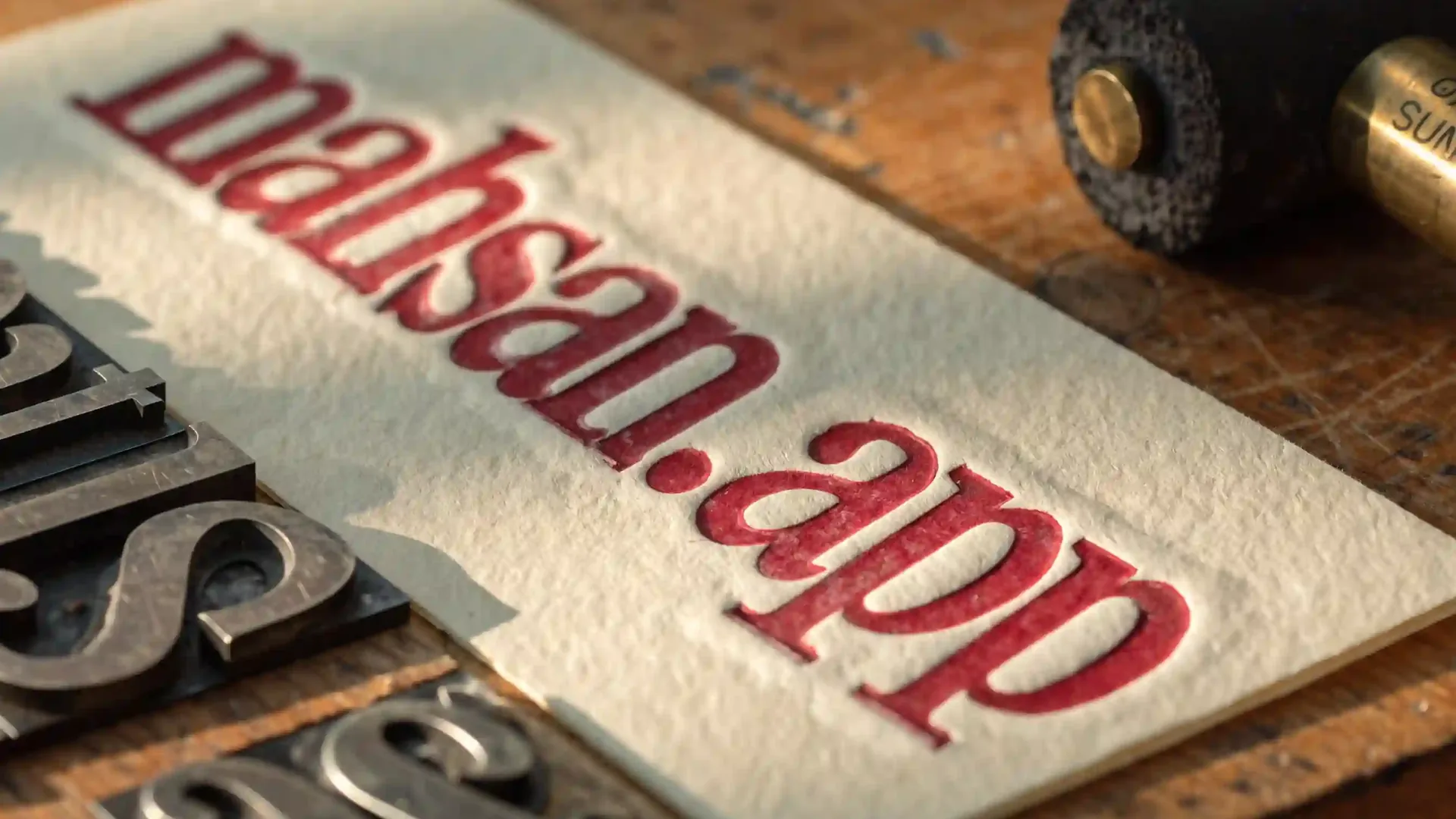
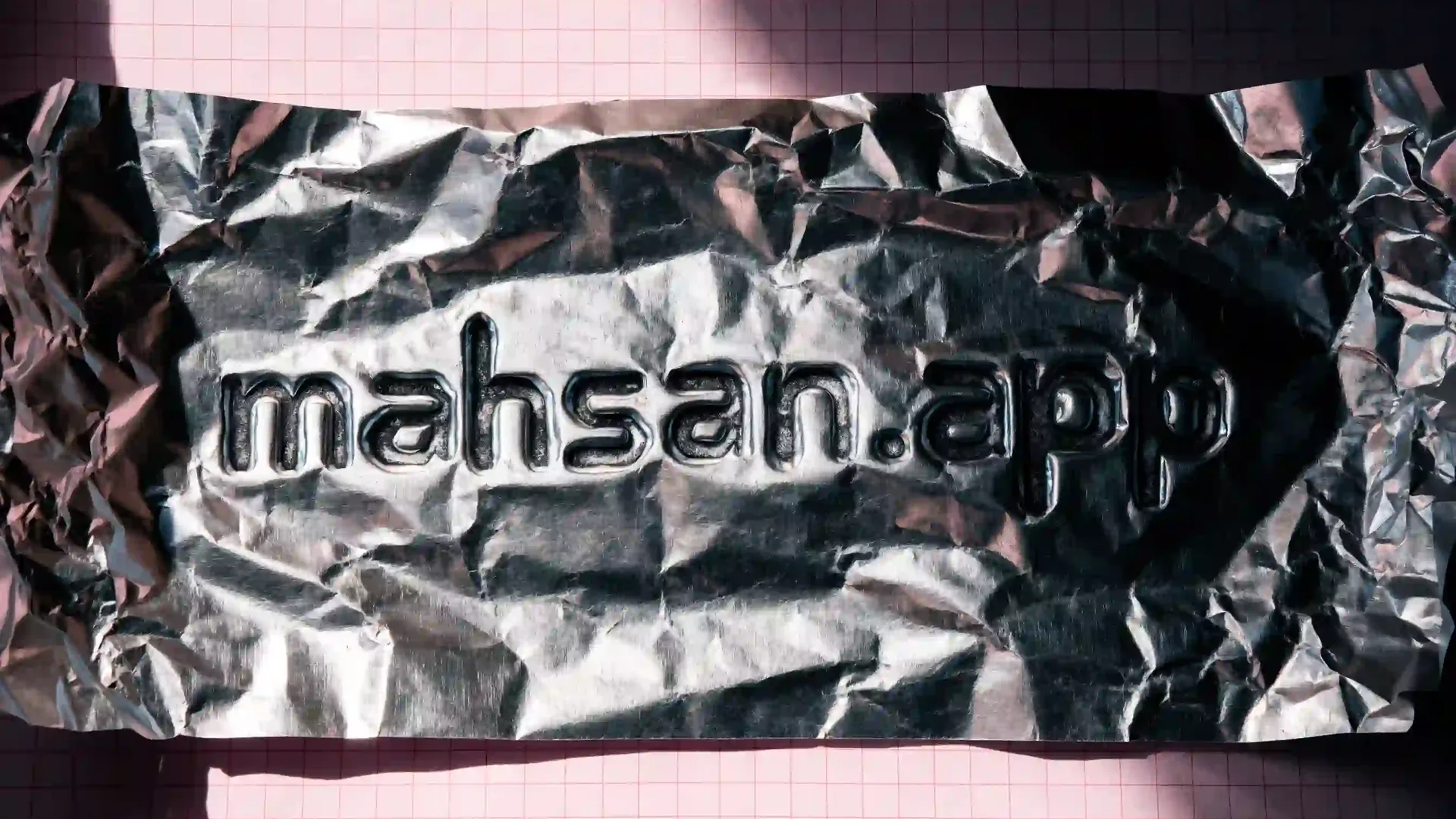
Embossing presses paper between a male and a female die so the design rises from the surface; debossing presses it in. When no ink or foil is added, it is called a blind emboss or blind deboss, and the design exists only as light and shadow.
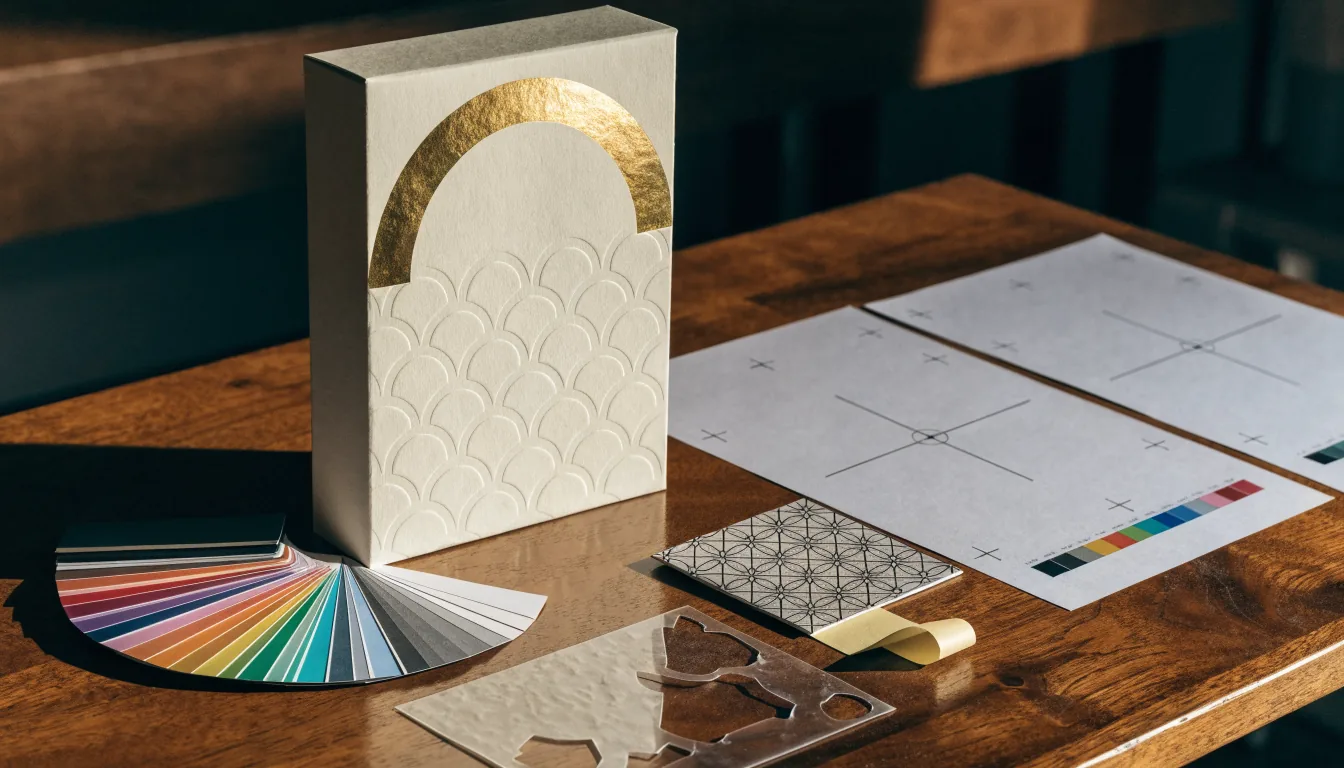
Hot foil stamping uses a heated metal die to transfer a thin film of metallic or coloured foil onto paper, board or leather. It is common on book covers, packaging, invitations and business cards, and it is often combined with embossing so the foil sits on a raised shape.
Visual anatomy of embossing and foil stamping
Raised (emboss) or pressed-in (deboss) shapes with soft or sharp edges.
The design changes as light moves across it; side light shows it best.
Mirror-like gold, silver, copper or matte coloured foil, sharp at the edges.
Thick, soft stocks take relief best; textured papers add contrast.
Embossing shows in reverse on the back of the sheet.
Premium, quiet, ceremonial, made to be touched.
Words around embossing
A raised design with no ink or foil.
The metal plate, male and female, that shapes the paper.
Foil transferred with a heated die.
A multi-level emboss with rounded, carved depth.
How to recognize embossing and foil stamping
- A design you can feel raised or pressed.
- Shadows that move with the light.
- Metallic foil with crisp edges.
- Thick, soft paper.
Where people get it wrong
Embossing and foil are often added to make any design look expensive. They work best on a few elements: a mark, a title, a single line. Too much relief makes paper buckle, and too much foil becomes glare. Digital mock-ups also exaggerate them; ask for a physical proof.
Words to describe embossing and foil stamping
Precise words for the qualities above. Combine a few of them instead of naming the style or artist alone.
- emboss
- deboss
- blind emboss
- foil stamping
- hot foil
- die
- relief
- sculpted emboss
- matte foil
- mirror foil
An emboss and foil study: a thick cream card with a small leaf blind-embossed in the centre and a single thin line of copper foil beneath it, raking side light casting soft shadows.
What to take from embossing and foil stamping today
- Say raised or pressed, and how deep.
- Name the foil and its finish: mirror gold, matte copper.
- Describe the paper and its texture.
- Light from the side to show relief.
Saying it quietly
A blind emboss is a word written in shadow: it appears only when the reader moves. It is the typographic version of the unsaid, present but not announced. Used sparingly, it is the opposite of shouting for attention.
Questions about embossing and foil stamping
What is the difference between embossing and debossing?
Embossing raises the design above the paper surface; debossing presses it below. Both use metal dies.
What is blind embossing?
Embossing without any ink or foil, so the design is visible only through relief and shadow.
What is hot foil stamping?
A finishing process that uses a heated die to transfer metallic or coloured foil onto paper, board or leather.
Find an embossed or foiled card, book or box. Describe it three times: under direct light, under side light and by touch with your eyes closed.
Sources and further reading
- Foil & Specialty Effects Association (FSEA): foil stamping and embossing guides.
- Victoria and Albert Museum: bookbinding and gold tooling collections.
- St Bride Library, London: printing and finishing collections.