Pictures made of time
Embroidery and weaving are among the oldest ways of making images. The Bayeux Tapestry, made in the 1070s, is in fact an embroidery: wool stitched onto linen, about 70 metres long, telling the story of the Norman conquest of England. In the 20th century, the Bauhaus weaving workshop, where Anni Albers studied and taught, treated textiles as modern art and design.
Later artists used cloth to tell stories that had been left out: Faith Ringgold's story quilts, such as Tar Beach (1988), combined painting, text and quilting. In 2003 the writer Betsy Greer coined the word 'craftivism' for craft used as gentle activism. Today embroidered and stitched lettering appears in branding, editorial design and album art, often as a direct answer to smooth digital type.
Visual anatomy of embroidery and textile art
Running stitch, satin stitch, chain stitch, French knots, couching.
Slightly wavering lines, visible thread direction and texture.
Cotton, linen, wool, silk, found fabric, paper, even photographs.
Thread colours side by side rather than blended.
The reverse, with knots and loose ends, sometimes shown on purpose.
Slow, intimate, domestic, patient, sometimes political.
Words around textile art
Closely packed parallel stitches that fill a shape smoothly.
Laying a thread on the surface and fixing it with small stitches.
Betsy Greer's term for craft as a form of activism.
A quilt that tells a narrative in images and text.
How to recognize embroidery and textile art
- Visible thread and stitch direction.
- Slightly wavering lines.
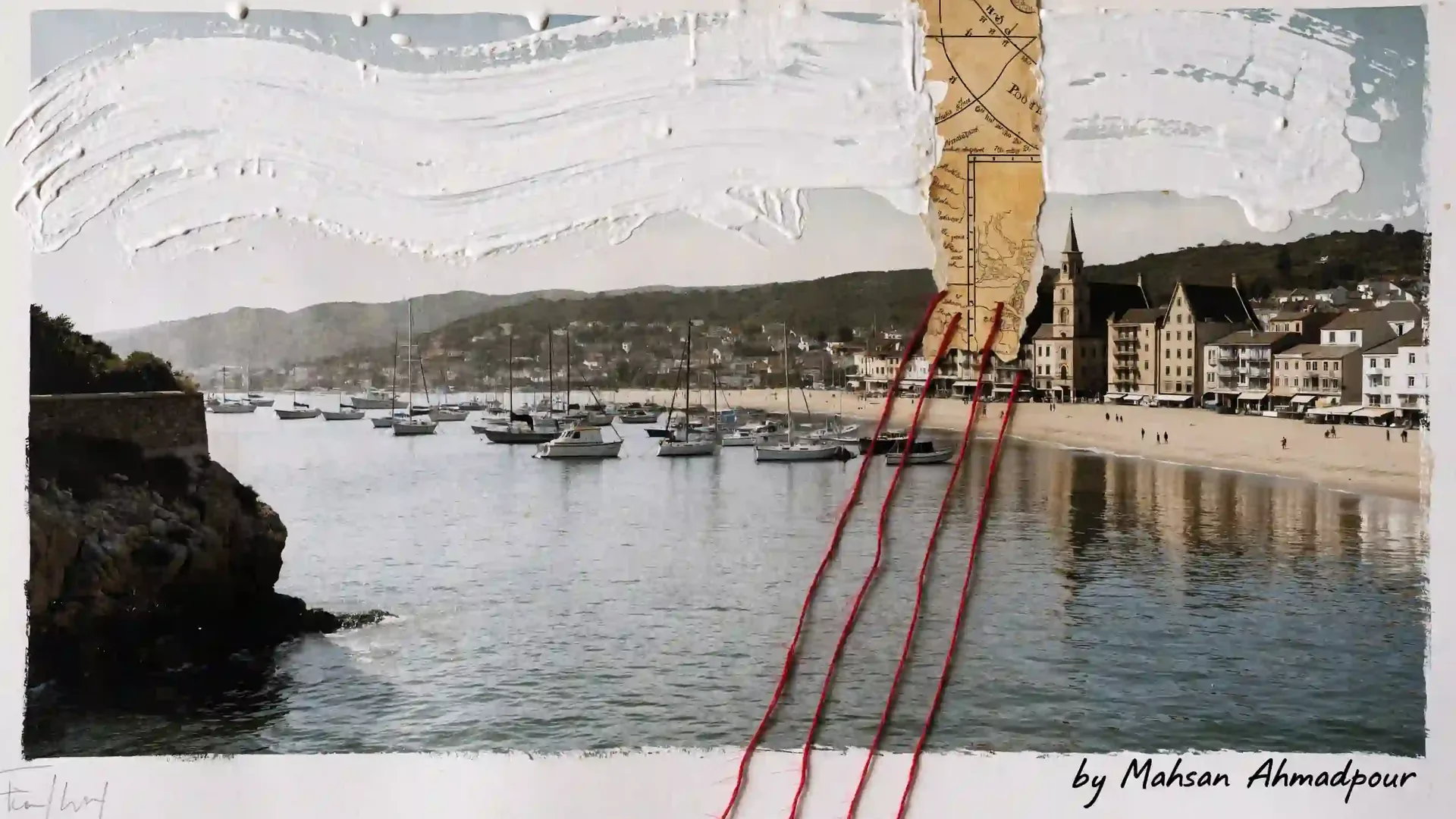
- Cloth texture behind the image.
- Hand-made irregularity in every letter.
Where people get it wrong
Embroidery is often called 'just a craft', separate from art. Museums now collect it as both. In design, a common mistake is a digital 'stitch' brush with perfectly regular stitches; real embroidery varies in tension, length and direction, and that variation is what people respond to.
Words to describe embroidery and textile art
Precise words for the qualities above. Combine a few of them instead of naming the style or artist alone.
- embroidery
- textile art
- running stitch
- satin stitch
- chain stitch
- couching
- quilt
- weave
- craftivism
- fibre art
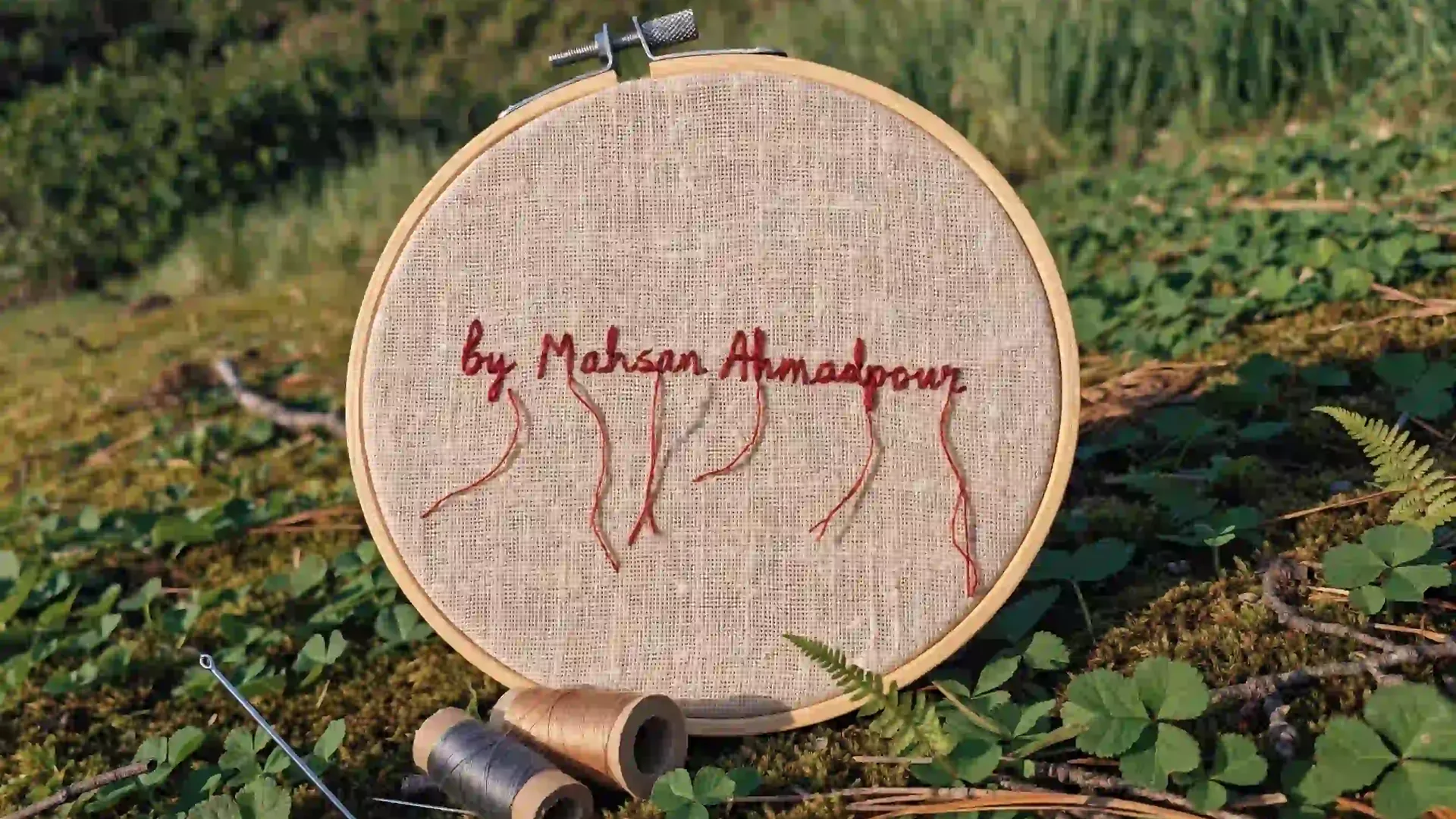
A textile study: the word 'stay' stitched in rust-red chain stitch on undyed linen held in a wooden hoop, a few loose threads hanging, the weave of the linen visible in raking daylight.
What to take from embroidery and textile art today
- Name the stitch and the thread.
- Describe the cloth and its weave.
- Let lines waver slightly.
- Show one loose thread or the back.
Text and textile
'Text' and 'textile' share a Latin root, texere, to weave. A stitched word is a sentence made of time; you can count the minutes in it. For anyone describing or designing with embroidery, that is the core: the image is evidence of attention.
Questions about embroidery and textile art
What is textile art?
Art made with fibres and fabric, including embroidery, weaving, quilting, knitting and felting, used for images, objects and installations.
Is the Bayeux Tapestry embroidery?
Yes. Despite its name it is an embroidery, with coloured wool stitched onto linen, about 70 metres long, made in the 1070s.
What is embroidered typography?
Letters made with stitches on fabric or paper, used in art, branding and editorial design for its handmade, tactile character.
Stitch one word in running stitch on a scrap of fabric, without drawing it first. Photograph the front and the back in daylight and describe the differences.
Sources and further reading
- Bayeux Museum: the Bayeux Tapestry.
- Solomon R. Guggenheim Museum: Faith Ringgold, Tar Beach (Part I from the Woman on a Bridge series), 1988.
- Betsy Greer (ed.), Craftivism: The Art of Craft and Activism, Arsenal Pulp Press, 2014.
- Victoria and Albert Museum: embroidery collections.