From Gutenberg to the revival
Letterpress is relief printing: ink is rolled onto raised surfaces, metal or wood type, or plates, and pressed onto paper. Johannes Gutenberg's movable metal type in mid-15th-century Mainz made it the main way of printing text in Europe until offset lithography replaced it in the 20th century.
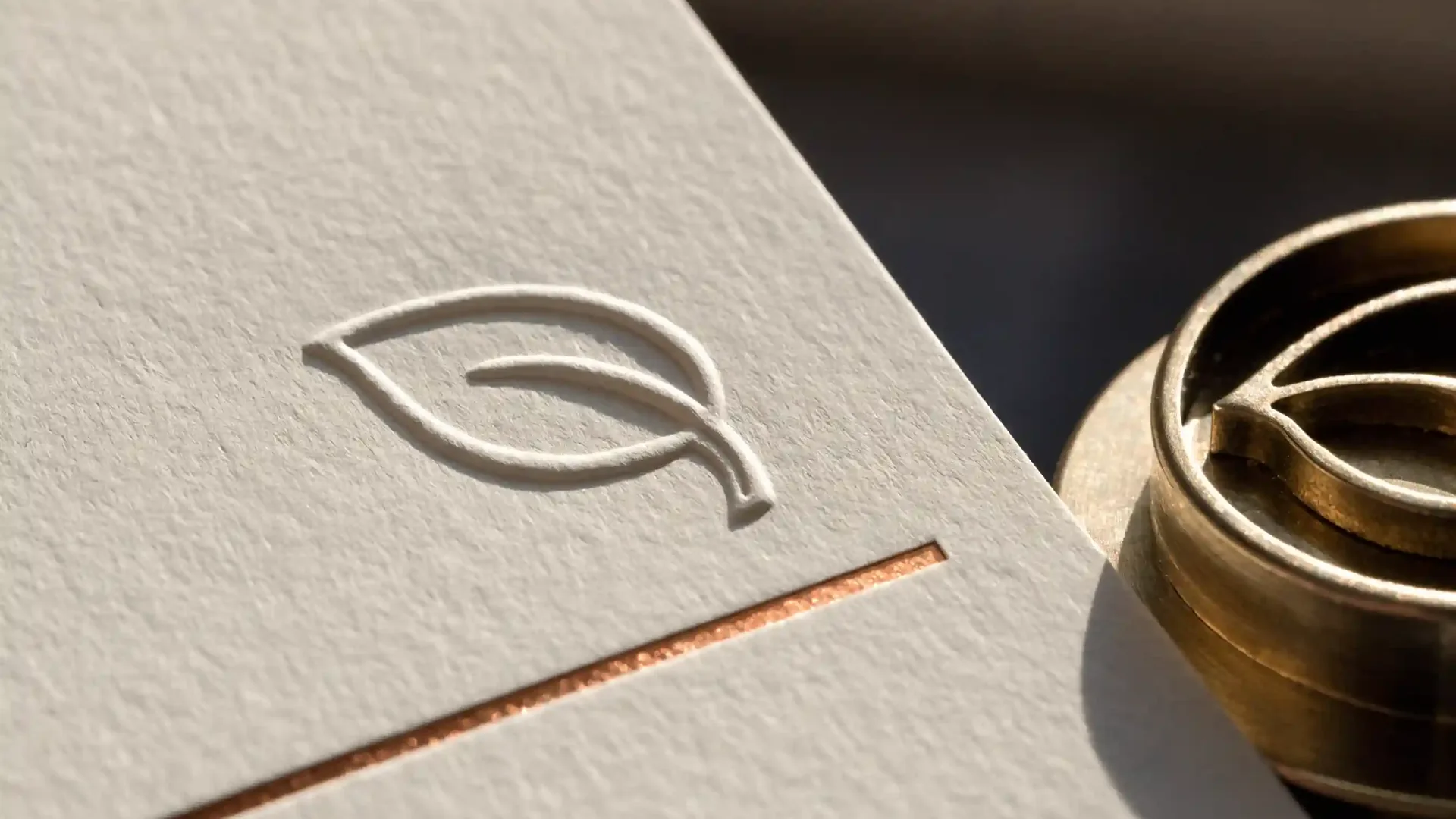
Traditionally, a good printer aimed for a 'kiss' impression that barely touched the paper. The modern revival, from the 1990s, prefers the opposite: a deep impression bitten into soft cotton paper, often from photopolymer plates on old proof presses such as Vandercooks. Shops like Hatch Show Print in Nashville, printing posters from wood type since 1879, became symbols of the craft.
Visual anatomy of letterpress
Letters pressed into the paper, from a light kiss to a deep bite you can feel.
Slight squeeze at the edges of letters, uneven coverage, small specks.
Thick, soft cotton stock that takes the impression.
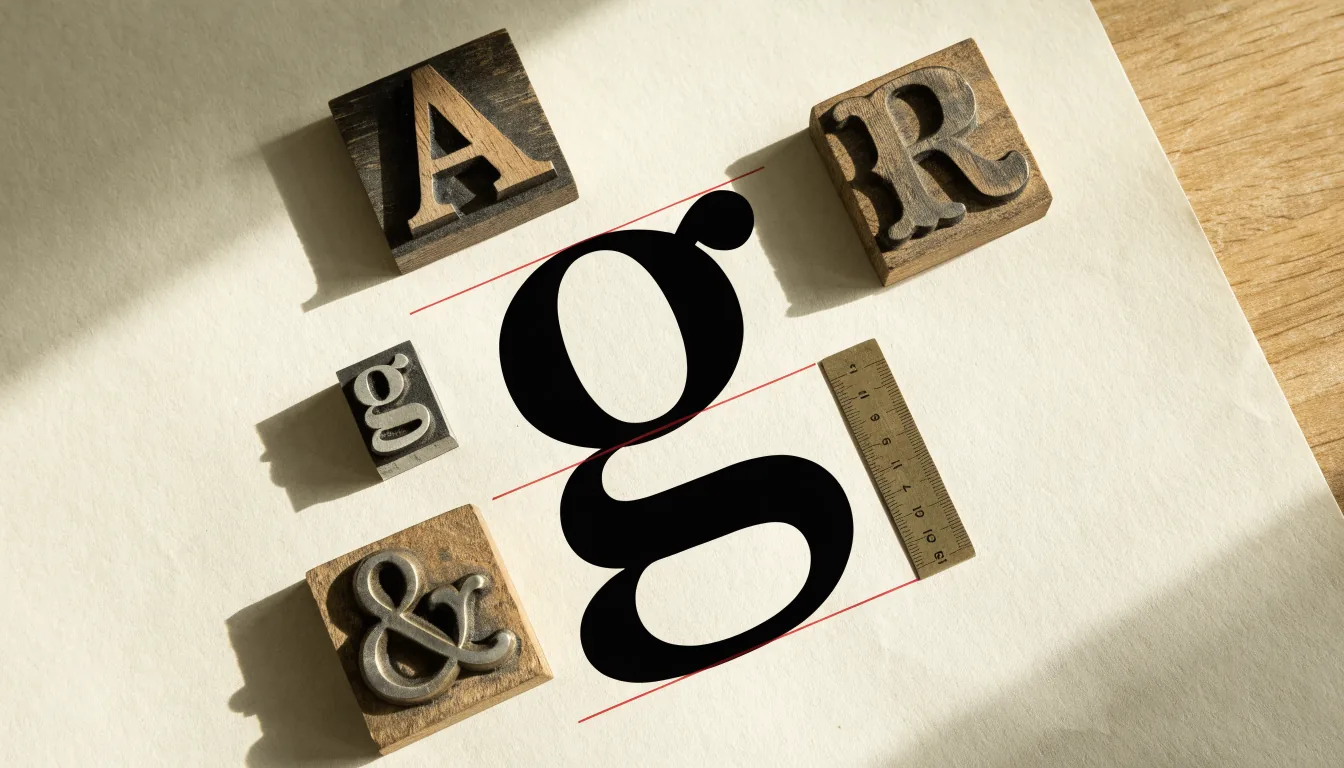
Metal or wood type with its nicks and wear; or crisp photopolymer plates.
Usually one or two flat spot colours, printed one at a time.
Heavy, quiet, permanent, made to be held.
Words around letterpress
Ink touching the paper without denting it, the traditional ideal.
An impression pressed into the paper; letterpress bite is a kind of deboss.
Large letters carved from wood, used for posters.
A modern plate made from digital artwork, used on letterpress machines.
How to recognize letterpress
- Letters you can feel pressed into the paper.
- Slight ink squeeze around edges.
- Thick, soft paper.
- One or two flat colours.
Where people get it wrong
Letterpress is often imitated digitally with a shadow under the text. Real letterpress has a physical dent, a shine where the paper is compressed and tiny irregularities in the ink. It is also not the same as embossing, which raises the paper from behind without ink.
Words to describe letterpress
Precise words for the qualities above. Combine a few of them instead of naming the style or artist alone.
- letterpress
- relief printing
- impression
- kiss impression
- deboss
- wood type
- movable type
- photopolymer
- cotton paper
- spot colour
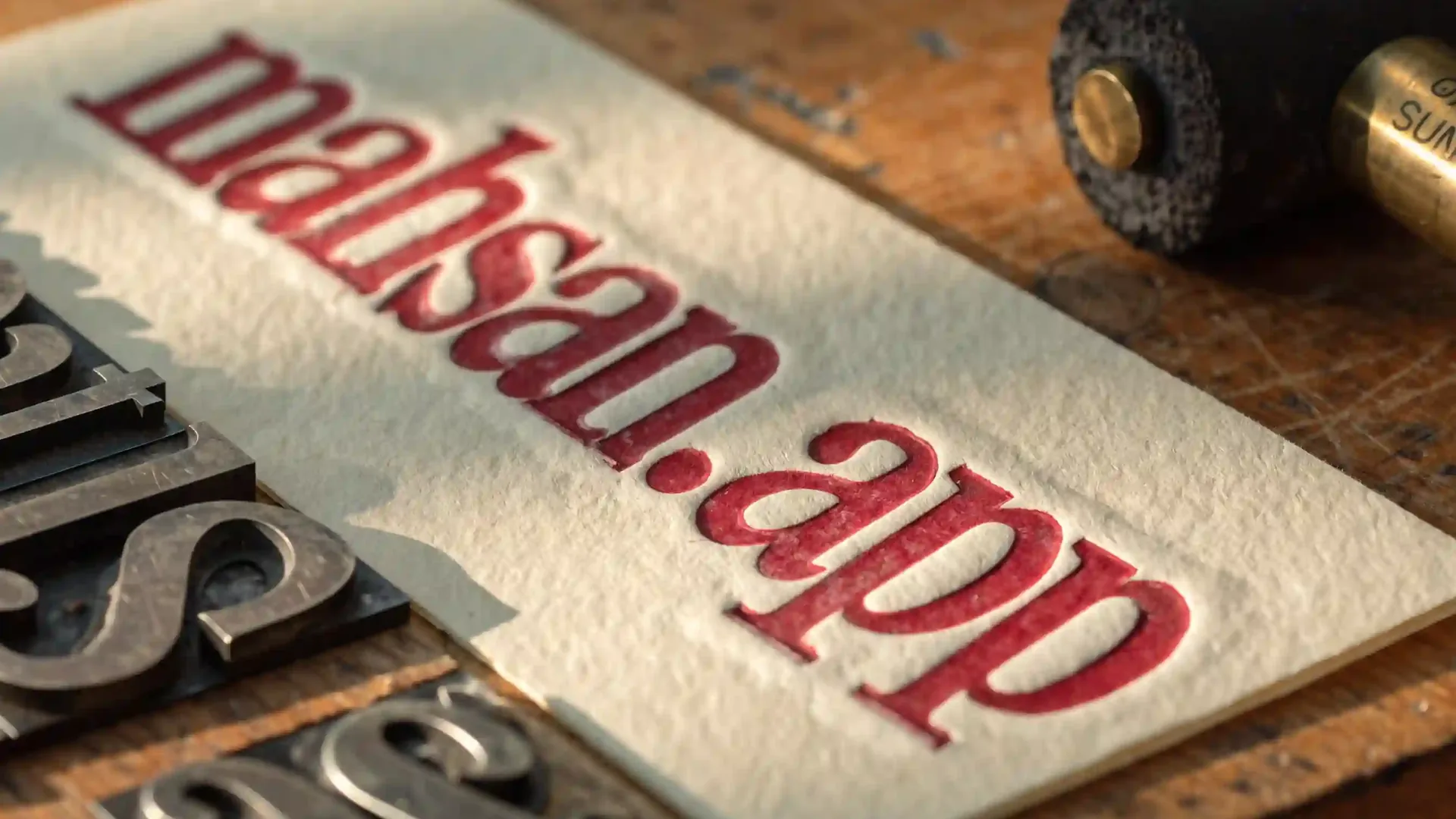
A letterpress study: a thick cream cotton card with the word 'thank you' pressed deeply in one deep red, side light raking across so every letter casts a small shadow, slight ink squeeze at the edges, the dented back visible at the corner.
What to take from letterpress today
- Say how deep the impression is.
- Name the paper: thick cotton, soft, off-white.
- Describe the ink squeeze and specks.
- Light it from the side to show the bite.
Words with weight
Letterpress gives words literal weight: each letter is pressed into the world. It is a reminder that typography is touch as well as sight, and that a sentence set slowly is read differently. In a feed of weightless type, a pressed word says someone meant it.
Questions about letterpress
What is letterpress printing?
A relief printing method in which ink is rolled onto raised type or plates and pressed onto paper. Modern letterpress often presses deeply so the letters are felt as well as seen.
What is the difference between letterpress and embossing?
Letterpress prints ink from a raised surface and can dent the paper. Embossing raises the paper from behind, usually without ink; debossing presses it in.
Why is letterpress expensive?
Each colour is printed separately by hand-fed or slow presses, plates must be made for each design, and thick cotton paper costs more than ordinary stock.
Find a letterpress card or book. Close your eyes and read three letters by touch. Then describe the print in four sentences: paper, impression, ink and light.
Sources and further reading
- Hatch Show Print, Nashville: history.
- Gutenberg Museum, Mainz.
- St Bride Library, London: printing history collections.
- Jessica White, Letterpress Now, Lark Crafts, 2013.