Light beyond sight
Infrared photography records near-infrared light, just past red in the spectrum. Healthy leaves reflect it strongly, so in infrared they glow: white in black-and-white, pink or red in false-colour film. This 'Wood effect' is named after the physicist Robert W. Wood, who published infrared photographs in 1910. Blue sky, which reflects little infrared, turns dark, and water often goes black.
Kodak's Aerochrome, a false-colour infrared film developed for aerial and military surveys, became an art material: its candy-pink landscapes appear on album covers and in fine-art photography. The film is discontinued, but converted digital cameras with infrared filters, and editing presets, keep the look alive in landscape, wedding and music imagery.
Visual anatomy of infrared photography
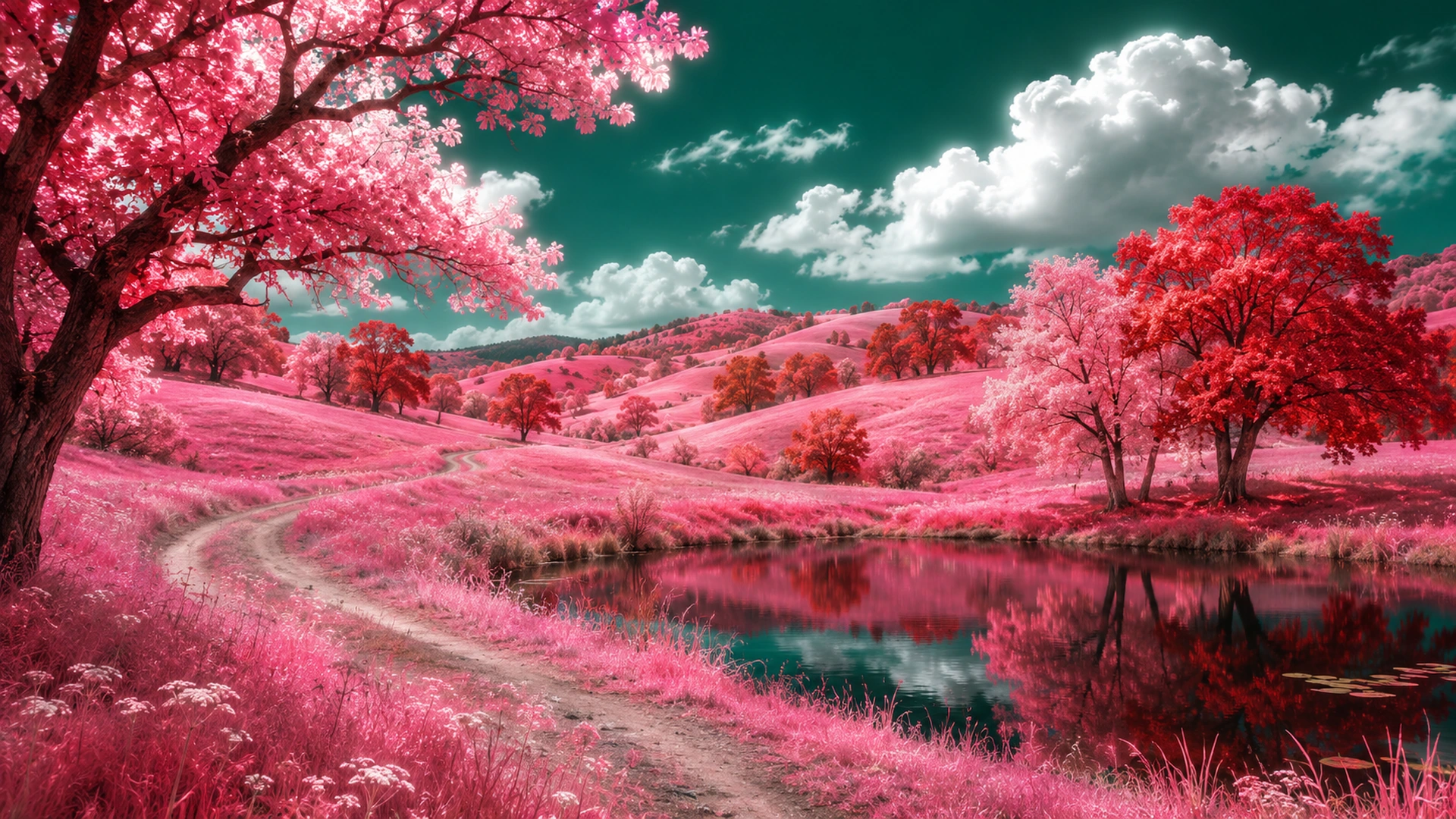
Leaves and grass glow white (black and white) or pink to red (false colour).
Blue skies turn deep grey or near black; clouds stand out bright.
Often dark and mirror-like.
Smooth and pale, veins sometimes faintly visible, eyes dark.
Soft halation around bright areas, grain on film.
Dreamlike, otherworldly, snowy in summer.
Key terms in infrared photography
The bright glow of foliage in infrared, after Robert W. Wood.
Colour infrared where wavelengths are shifted: foliage red or pink, sky blue or cyan.
Kodak's colour infrared film, now discontinued, source of the pink-landscape look.
A common infrared filter that blocks visible light for black-and-white IR.
How to recognize infrared photography
- Glowing white or pink foliage.
- Dark skies with bright clouds.
- Pale, smooth skin and dark water.
Where people get it wrong
Infrared is not a colour filter on a normal photo. The effect depends on what reflects infrared: living plants glow, sky and water darken. A simple pink tint over a landscape misses the dark sky and glowing leaves that make it read as infrared.
Words to describe infrared photography
Precise words for the qualities above. Combine a few of them instead of naming the style or artist alone.
- infrared photography
- glowing white foliage
- false colour pink trees
- Aerochrome look
- near-black sky
- bright white clouds
- dark mirror-like water
- pale smooth skin
- soft halation glow
- dreamlike summer snow
An original false-colour infrared landscape photograph: rolling hills with trees and meadows in candy pink and red, a dark teal sky with bright white clouds, a small black pond reflecting the trees, a dirt road winding through, soft glow around the highlights. No people, no text.
What to take from infrared photography today
- Say black-and-white or false-colour infrared.
- Describe foliage, sky and water separately.
- Mention glow, grain and skin tones if people appear.
Questions about infrared photography
What is infrared photography?
Photographing light just beyond what the eye sees: white or candy-pink trees, near-black skies and glowing skin, from black-and-white IR film to false-colour Aerochrome.
How do you recognize infrared photography?
Glowing white or pink foliage. Dark skies with bright clouds. Pale, smooth skin and dark water.
How do you describe infrared photography in words or a prompt?
Say black-and-white or false-colour infrared. Describe foliage, sky and water separately. Mention glow, grain and skin tones if people appear.
Choose a park you know and describe it as a false-colour infrared photograph: which plants turn pink or red, how dark the sky and pond become, and what stays its normal colour.