What 'film look' actually means
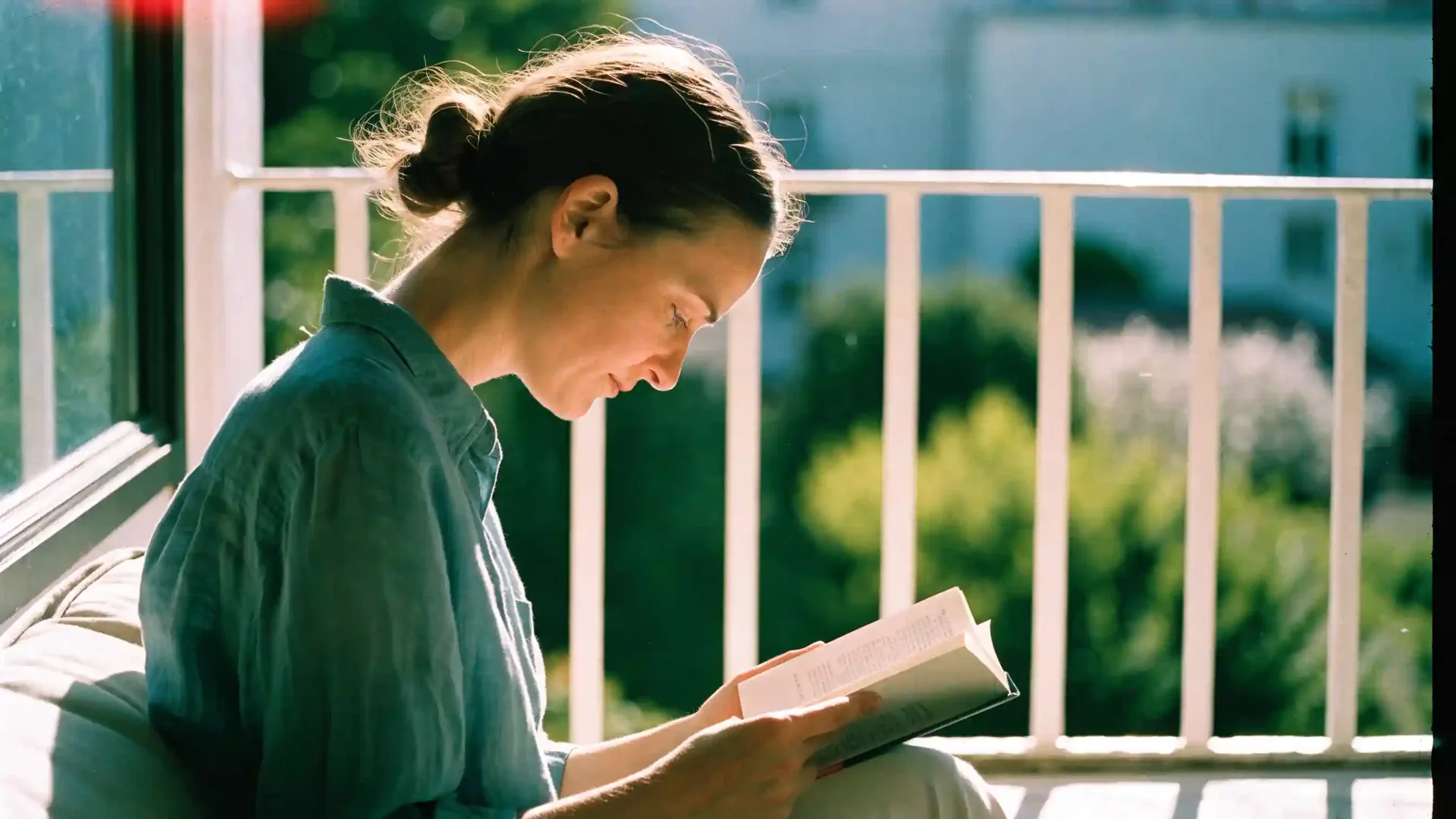
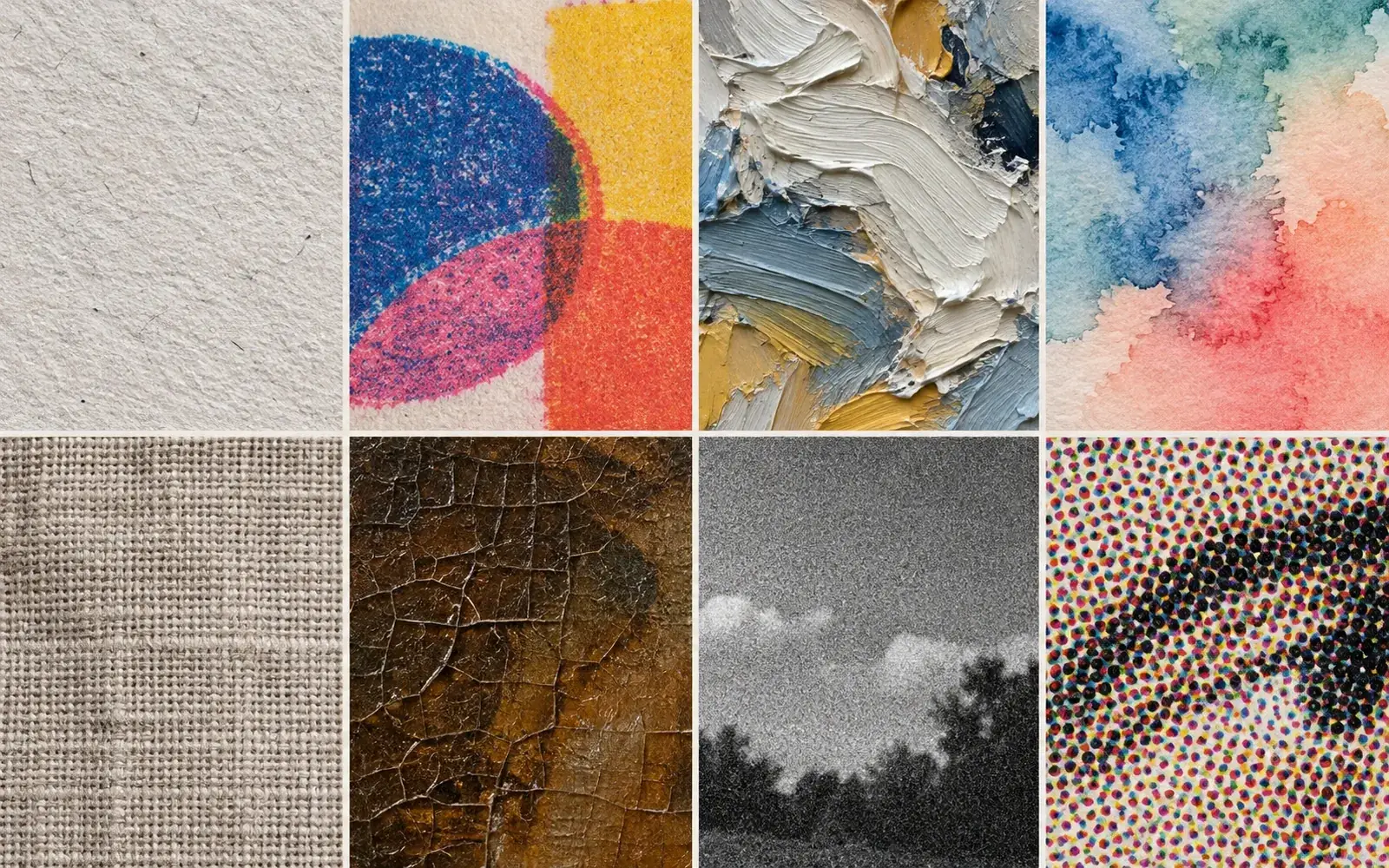
People often ask for a 'film look' or an 'analog feel', but analog photography is not one look. Every film stock has its own colours, contrast and grain; every camera and process leaves its own marks. Photographers and colourists name these looks very precisely, often by the film's brand name.
Knowing a few of these names is one of the most practical ways to describe colour and mood in photographs and images. 'Warm, soft skin tones like Portra 400' or 'tungsten night with red halation like CineStill 800T' says far more than 'vintage'.
Colour film stocks
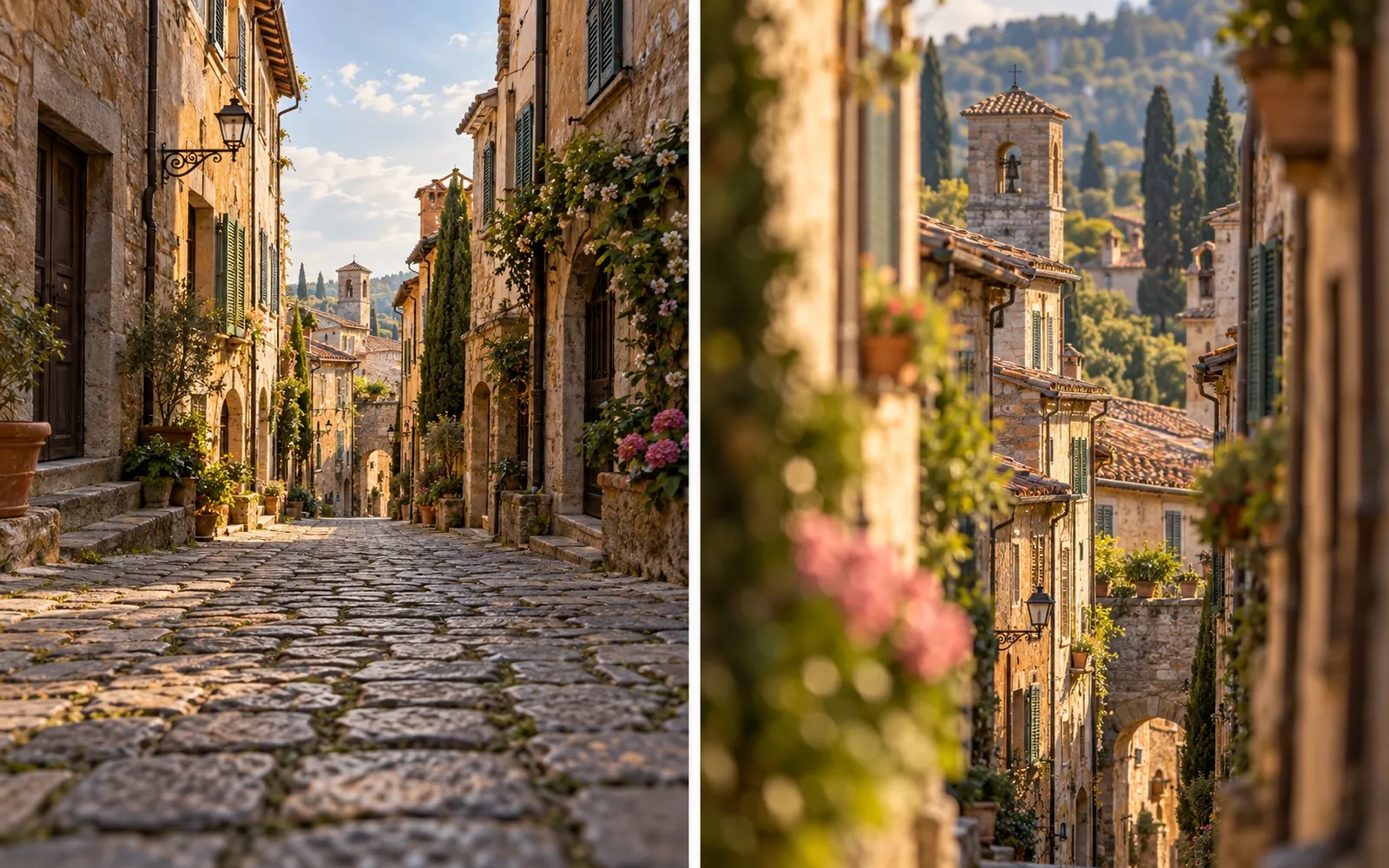
Soft contrast, warm natural skin tones, gentle pastels; the classic portrait and wedding film.
Very saturated, fine-grained colour negative; vivid landscapes and travel.
Cheap consumer film with warm, yellowish nostalgia; the family snapshot look.
Consumer Fuji with cooler greens and slightly cyan shadows.
Slide film with intense saturation and deep contrast, loved for landscapes.
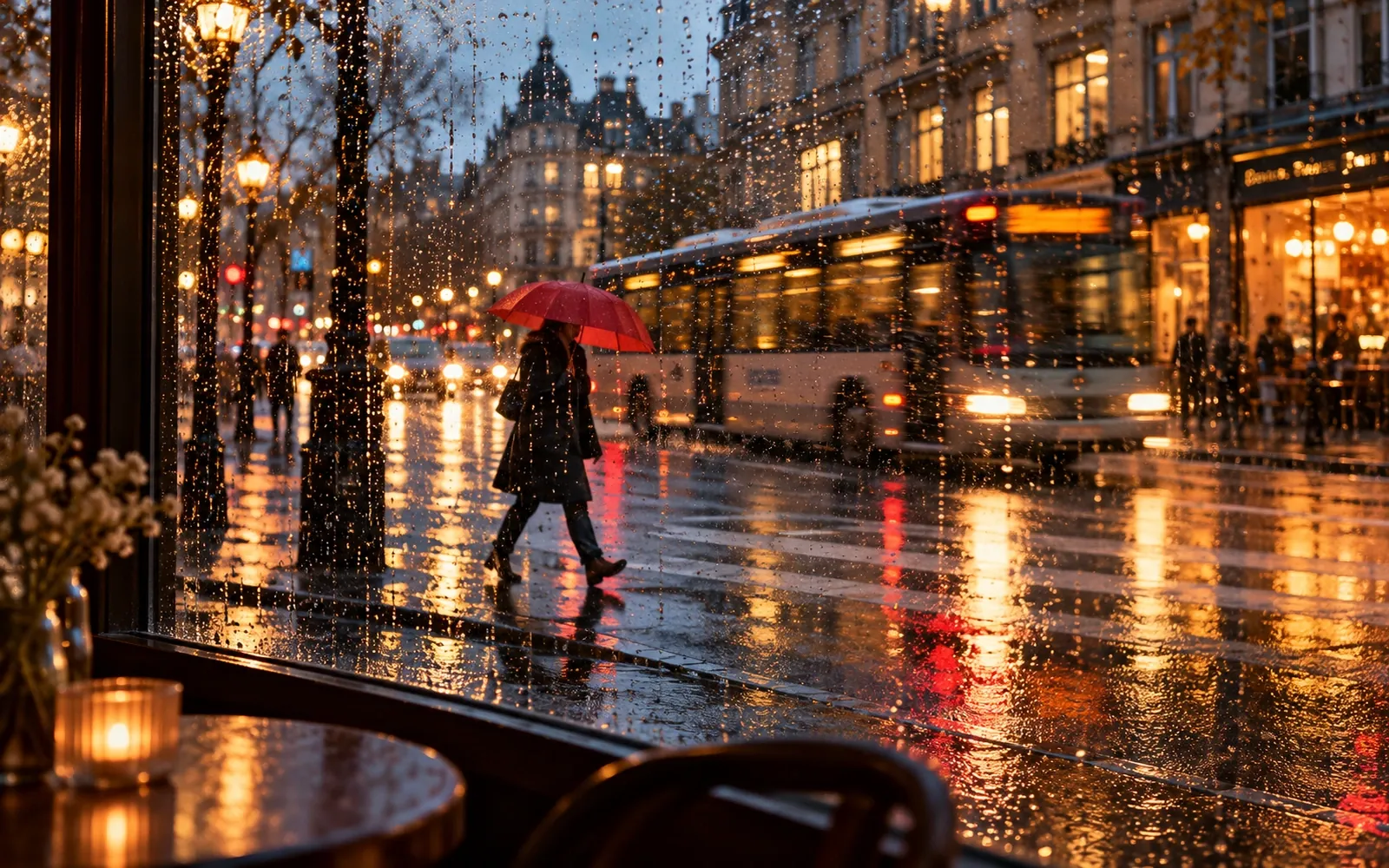
Tungsten-balanced cinema film with red halos (halation) around bright lights; neon nights.
Black and white
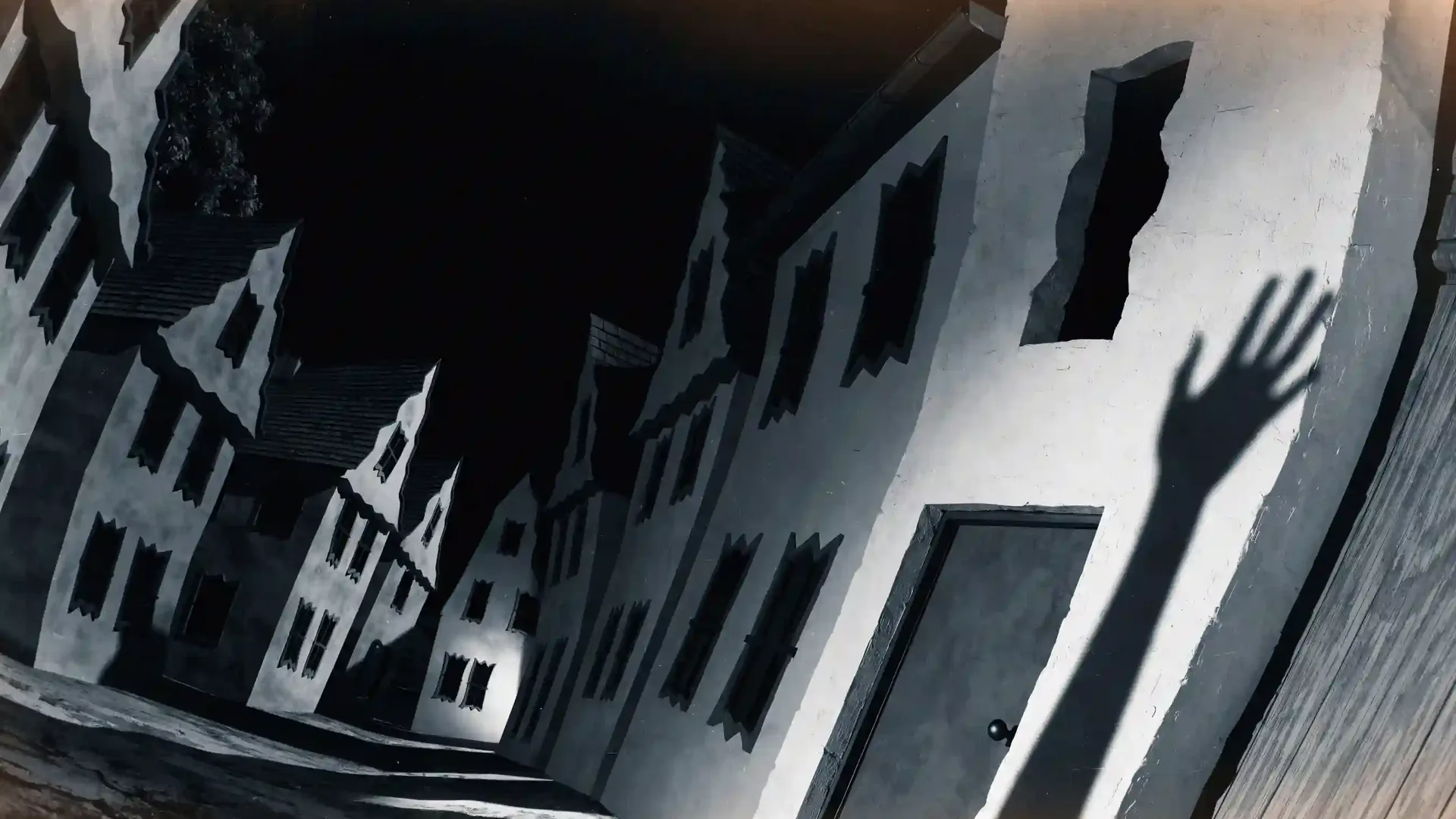
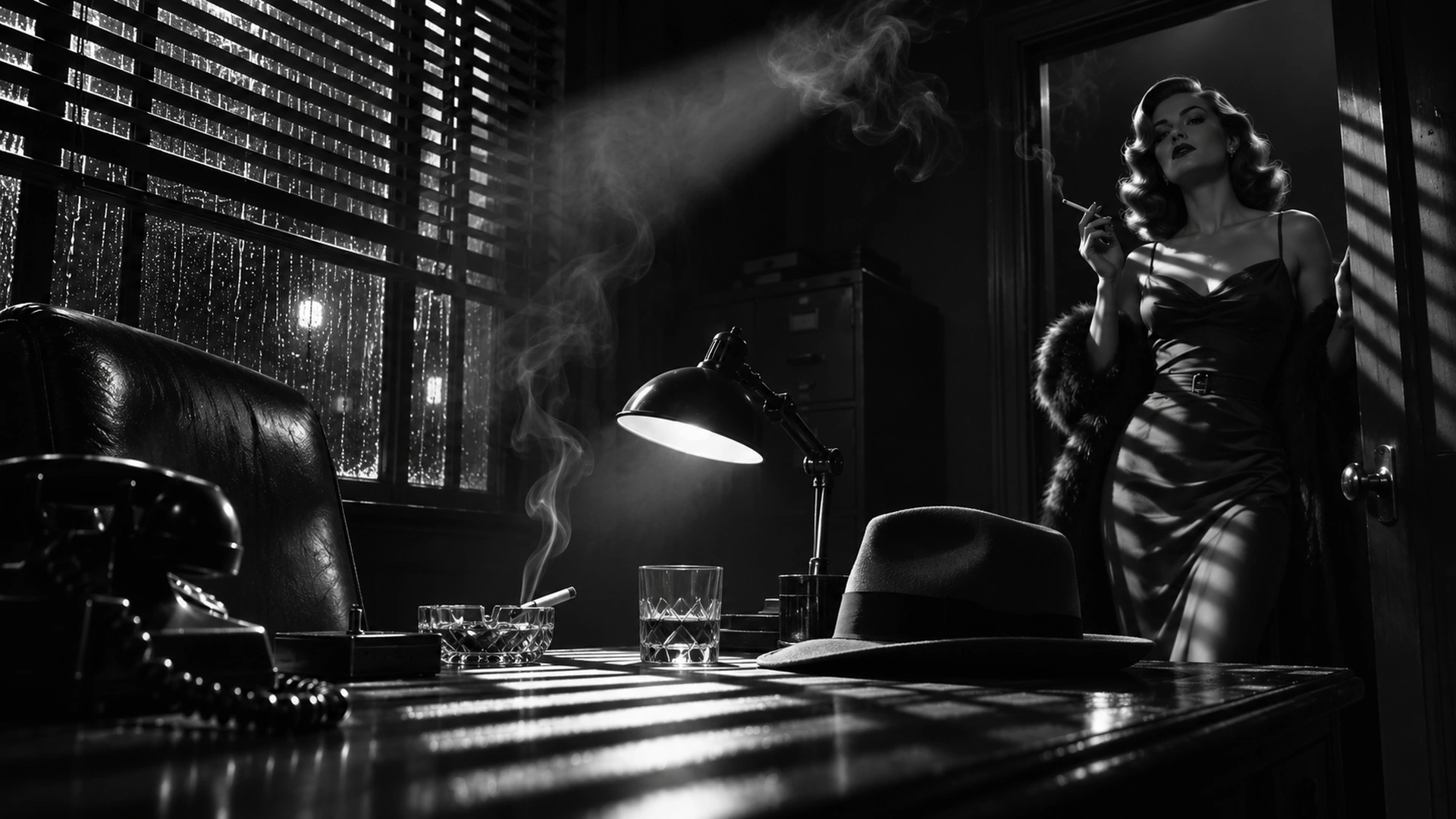
Gritty grain and strong contrast; reportage and street photography.
Flexible, slightly softer black and white with classic grain.
Developing film longer than normal: more contrast and heavier grain.
Instant and toy cameras
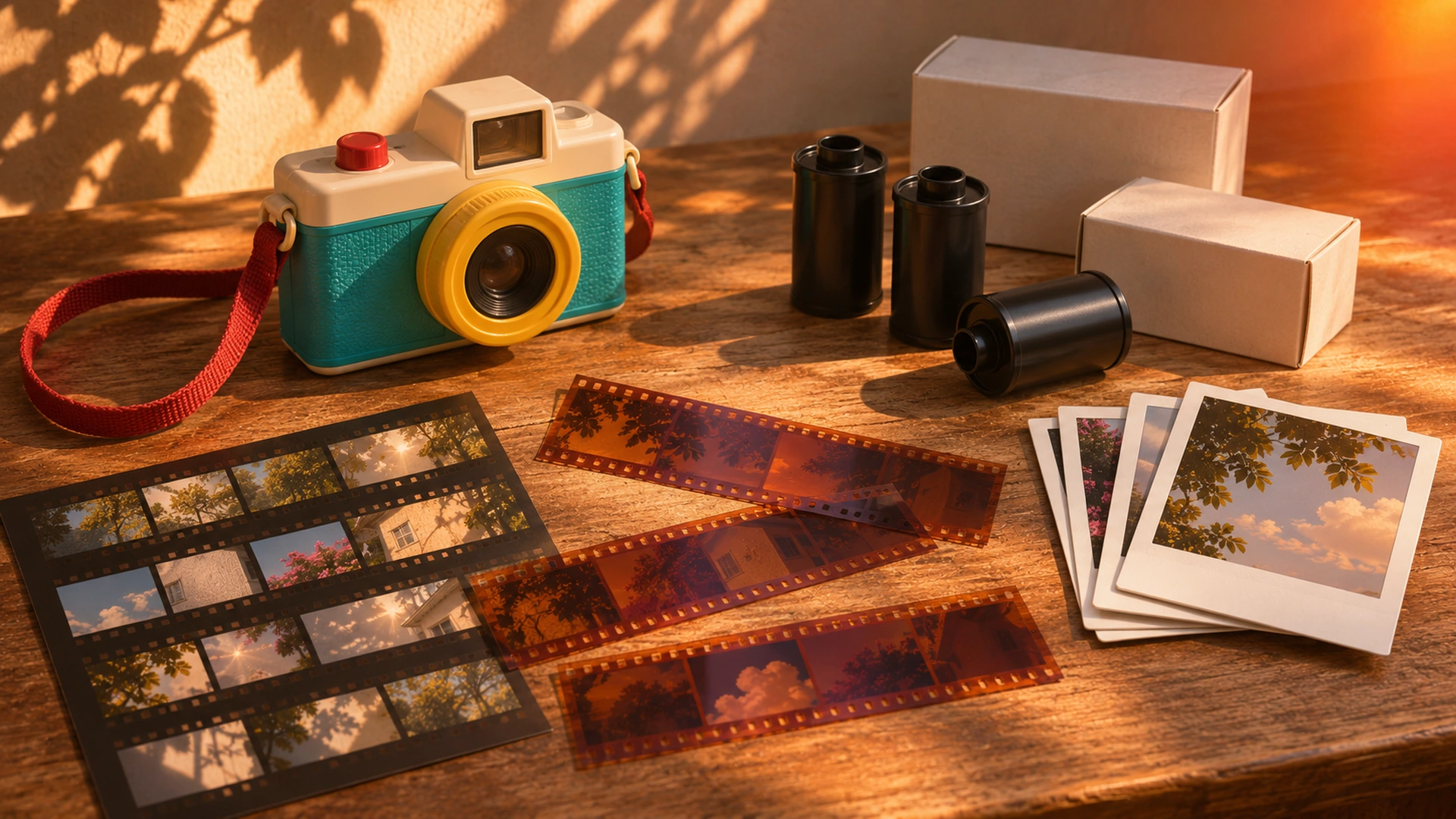
Square instant prints with soft focus, shifted colours and a thick white frame.
Smaller instant prints, brighter and cleaner, with a white border.
Plastic toy cameras: vignetting, soft corners, light leaks and saturated colour.
Hard on-camera flash, dark backgrounds, slight blur; party snapshots.
Processes and accidents
Orange and red streaks where light got into the camera.
A glowing halo around bright highlights.
Slide film developed as negative: shifted colours, strong contrast.
Old film with faded, shifted colours and fog.
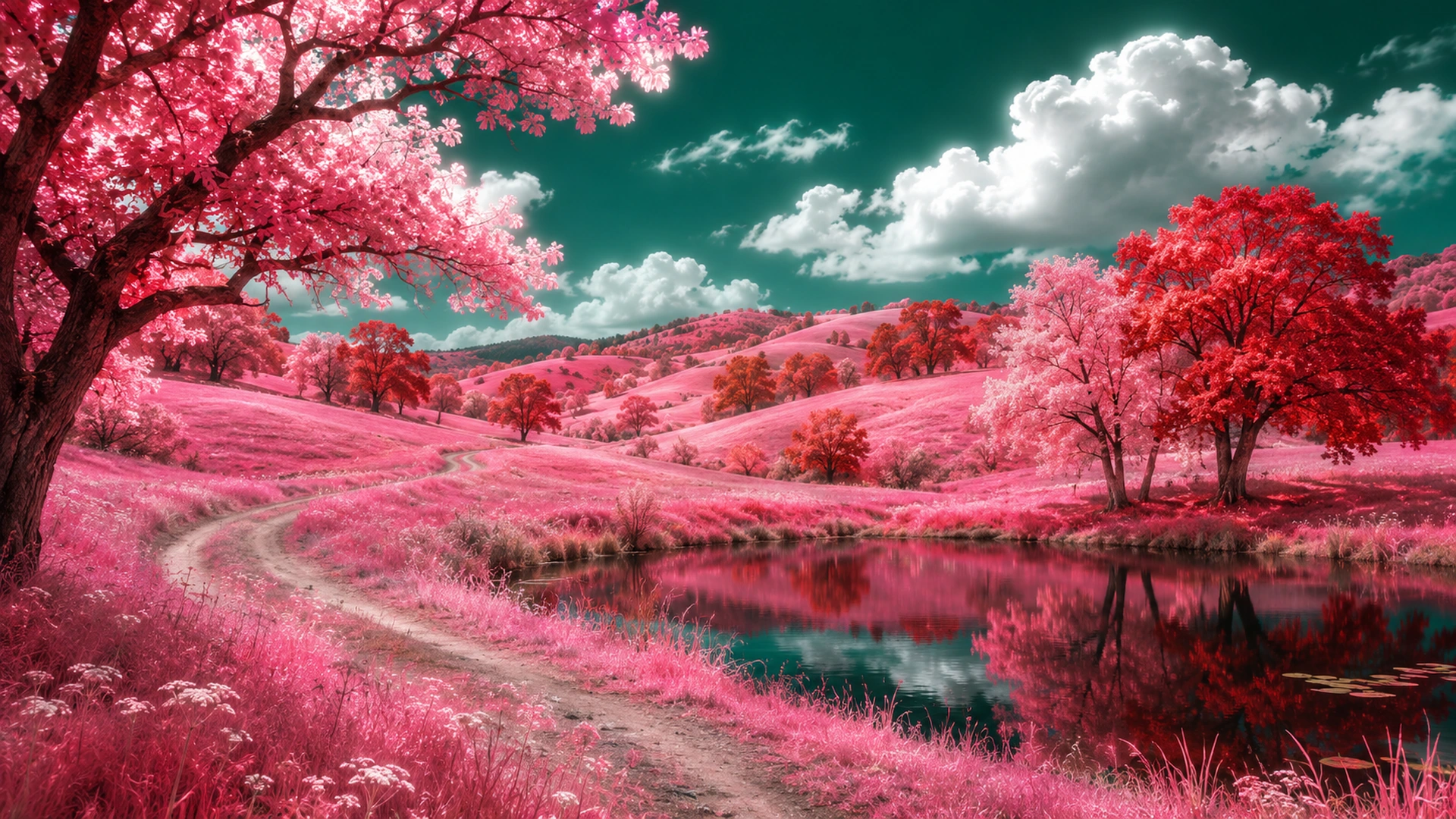
Foliage turned red or white, dark skies; dreamlike landscapes.
Orange digits in the corner from 1990s point-and-shoot cameras.
Words to describe film looks
Precise words for the qualities above. Combine a few of them instead of naming the style or artist alone.
- shot on Kodak Portra 400
- warm soft skin tones
- CineStill 800T red halation
- tungsten night colours
- Fujifilm Velvia saturation
- gritty Tri-X black and white
- Polaroid square instant print
- disposable camera flash
- light leaks
- cross-processed colours
A street portrait shot on CineStill 800T at night: warm tungsten light from a shop window, red halation glowing around neon signs, slightly cyan shadows, visible fine grain, a 35mm frame with soft focus fall-off.
How to describe film looks in words
- Name the stock or camera, then say what it does to colour, contrast and grain.
- Add the light: daylight, flash, tungsten at night.
- Say the print or frame: square instant, 35mm border, full bleed.
Where we usually get it wrong
'Film look' is not just grain and a faded filter. Each look has a specific colour response: Portra is warm and soft, Velvia is saturated, CineStill glows red around lights. Mixing them all gives a generic 'vintage' result.
Questions about film looks
What is film looks?
The names behind the 'film look': classic film stocks, instant photos, toy cameras and darkroom accidents, and what each one does to colour, grain and light.
How do you describe film looks in words or a prompt?
Name the stock or camera, then say what it does to colour, contrast and grain. Add the light: daylight, flash, tungsten at night. Say the print or frame: square instant, 35mm border, full bleed.
Take one photo from your phone and describe it in three film looks: Portra 400, Tri-X pushed to 1600, and a disposable camera with flash. Change only colour, contrast, grain and light.