Golden joinery
Kintsugi, 'golden joinery', is a Japanese method of repairing broken ceramics with urushi, the sap of the lacquer tree, mixed with or dusted with powdered gold, silver or platinum. The lacquer glues the pieces and fills the gaps; the metal makes the lines of the break shine. Instead of disguising the damage, the repair makes it visible.
A popular story traces it to the fifteenth-century shogun Ashikaga Yoshimasa, who sent a broken Chinese tea bowl back to China for repair and received it held together with ugly metal staples, prompting Japanese craftsmen to find something better. Whether or not the story is true, kintsugi grew alongside the tea ceremony and wabi-sabi, which value age, use and imperfection. Today it is also a widely used metaphor, in therapy, design and writing, for healing that does not erase what happened.
Visual anatomy of kintsugi
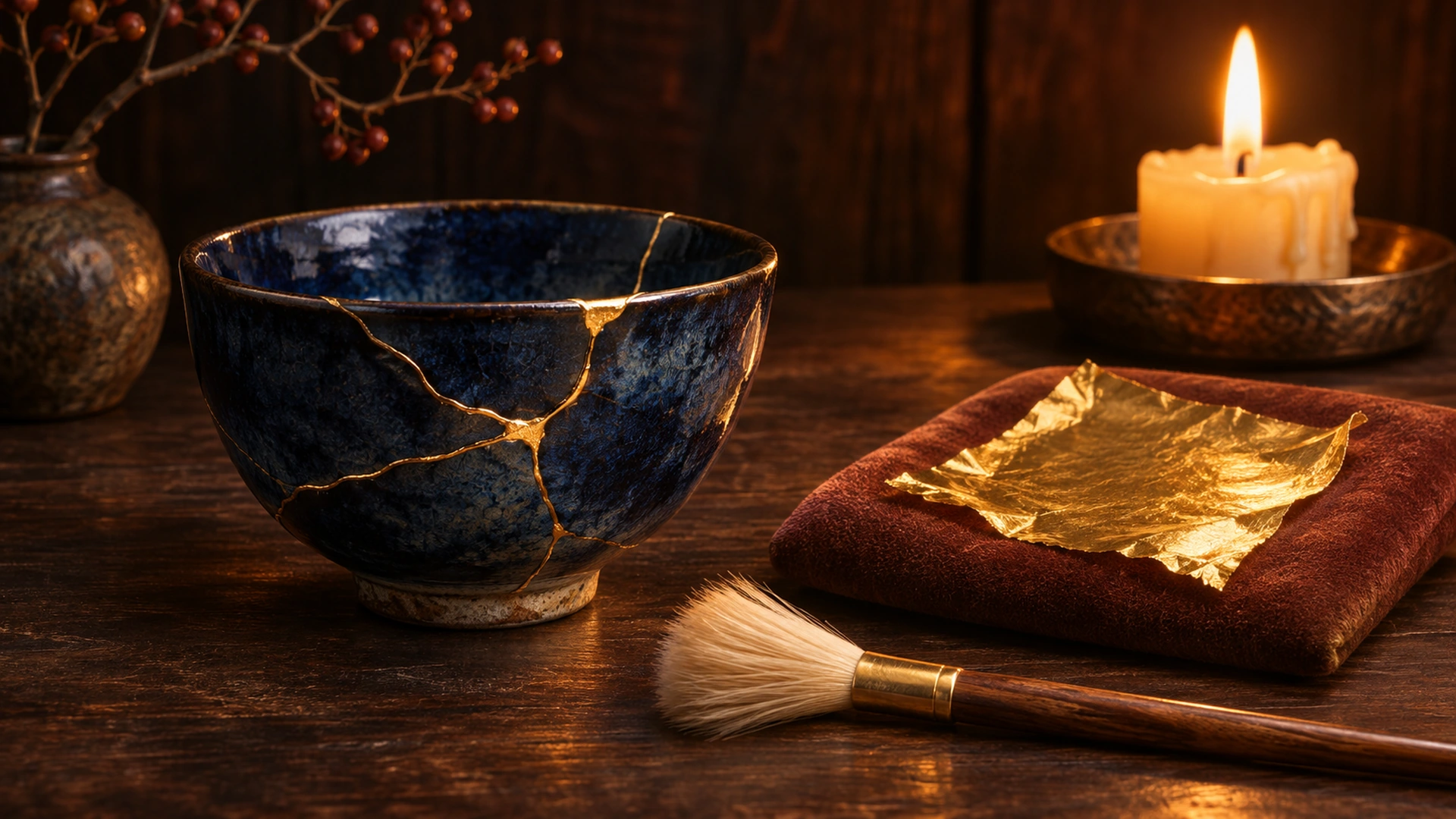
Irregular branching cracks traced in bright gold.
Raised, slightly glossy lacquer seams against matte or glazed clay.
Missing chips filled with gold or with fragments of other pots.
Tea bowls, plates, vases, cups: humble, used ceramics.
Earthy glazes, celadon, black or indigo against warm metallic gold.
Soft light that makes the gold seams glint.
Methods
Hairline cracks filled and traced with gold.
A missing fragment replaced entirely with lacquer and gold.
A gap filled with a shard from a different, mismatched vessel.
Natural lacquer; toxic when raw, slow to cure, durable once hard.
The Japanese sense of regret at waste, often linked to repair.
How to recognize kintsugi
- Branching gold lines across a ceramic surface.
- Seams slightly raised and glossy.
- A humble, used object rather than a luxury one.
- Patches of gold where pieces were missing.
Where people get it wrong
Painting gold lines on an unbroken pot. The gold follows a real fracture, so it branches, wanders and meets edges like a crack, not like decoration. In images, describe the break first, then the gold that traces it. Also, true kintsugi uses lacquer, not glue with gold paint; the difference shows in the soft, raised seams.
Words to describe kintsugi
Precise words for the qualities above. Combine a few of them instead of naming the style or artist alone.
- kintsugi
- golden joinery
- urushi lacquer
- gold seams
- branching hairline cracks
- piece method
- yobitsugi
- celadon glaze
- stoneware tea bowl
- raised glossy seam
- wabi-sabi
- beauty of repair
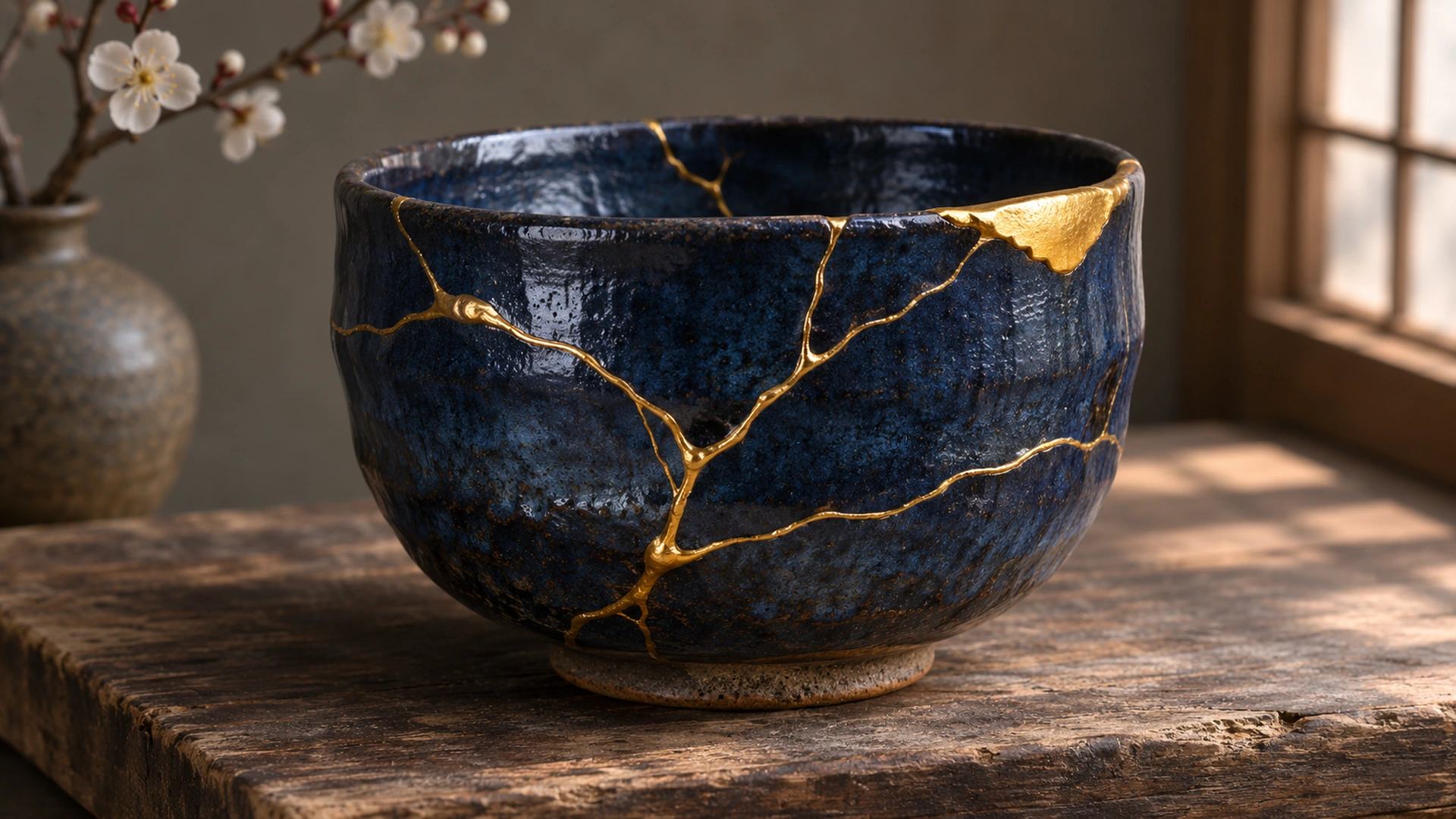
An original kintsugi study: a dark indigo stoneware tea bowl on a weathered wooden board, branching cracks across it traced in raised gold lacquer, one missing chip on the rim filled entirely with gold, soft window light making the seams glint, muted background.
What to take from kintsugi today
- Name the object and its glaze: celadon tea bowl, black stoneware cup.
- Describe the break: branching hairline cracks, a missing chip.
- Say the cracks are traced in raised gold lacquer.
- Use soft light that catches the gold.
Questions about kintsugi
What does kintsugi mean?
'Golden joinery': repairing broken ceramics with lacquer and gold so the cracks are highlighted instead of hidden.
What is the meaning of kintsugi as a metaphor?
That breakage and repair are part of an object's history and do not need to be hidden, often applied to healing in people's lives.
Think of something in your life that was repaired, not replaced. Describe it as a kintsugi bowl in five lines: the shape of the object, where it broke, what filled the gap and how the light falls on the seam. No abstract words.
Sources and further reading
- Christy Bartlett and others, Flickwerk: The Aesthetics of Mended Japanese Ceramics (2008).
- Tomás Navarro, Kintsugi: Embrace Your Imperfections and Find Happiness (2018).