Not a colour, a reflection
On a colour wheel, gold is just a yellow-brown. In life it is something else: a surface that reflects light, changes as you move, glows in candlelight and goes dark in shadow. That's why gold leaf in a manuscript or an icon looks alive, while yellow paint stays flat. Gold leaf is beaten so thin that a stack of thousands is about as thick as a sheet of paper.
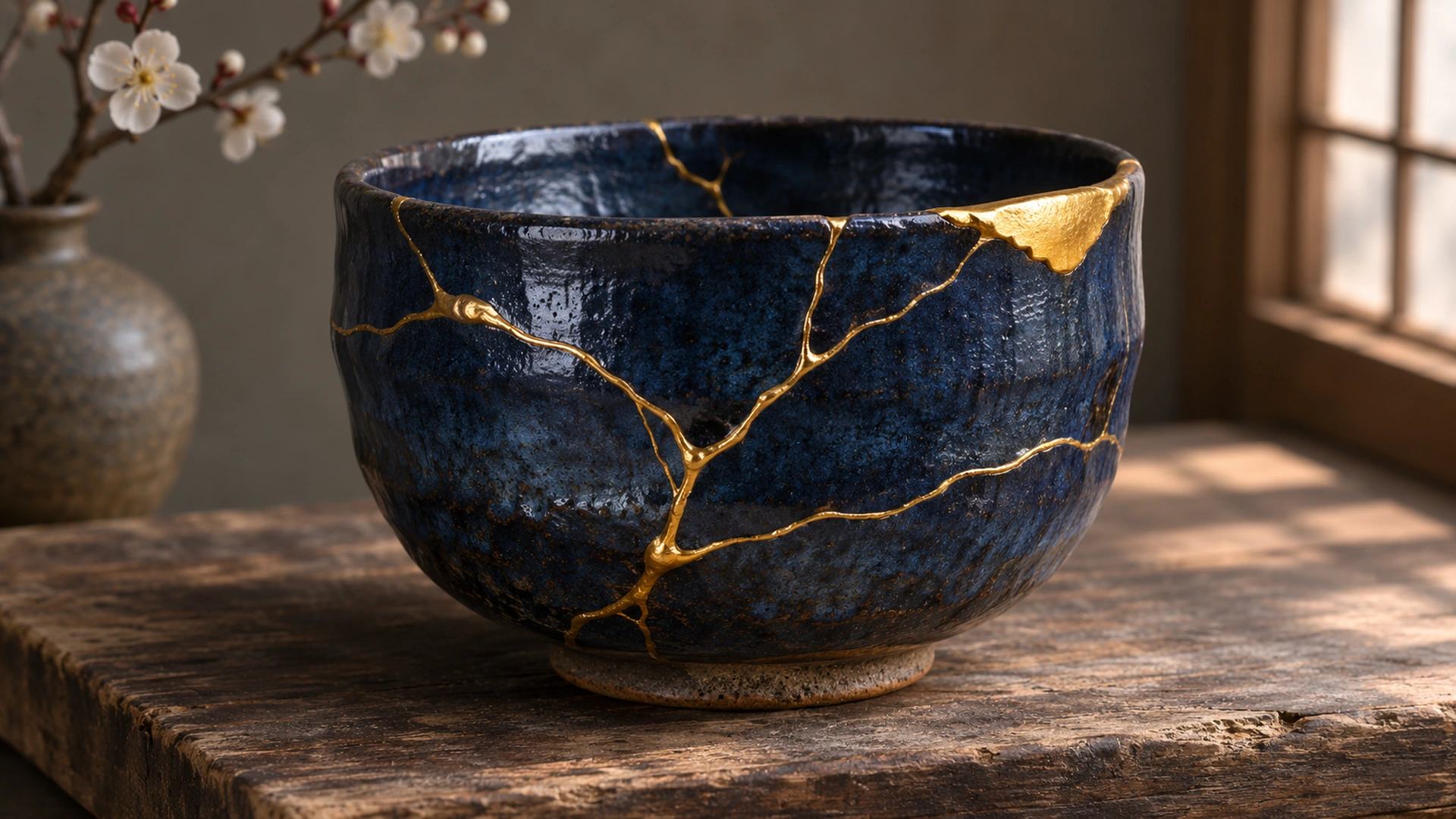
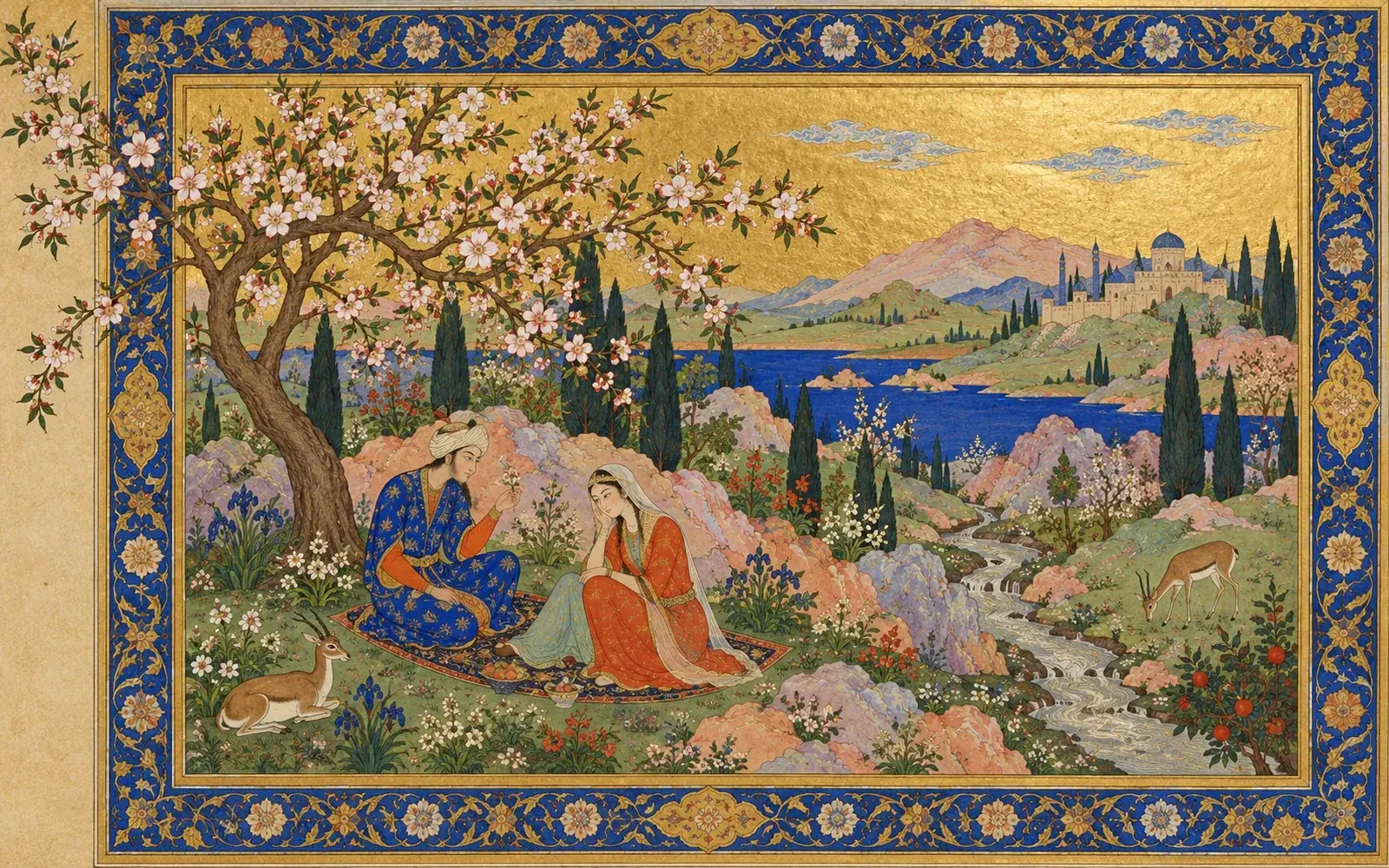
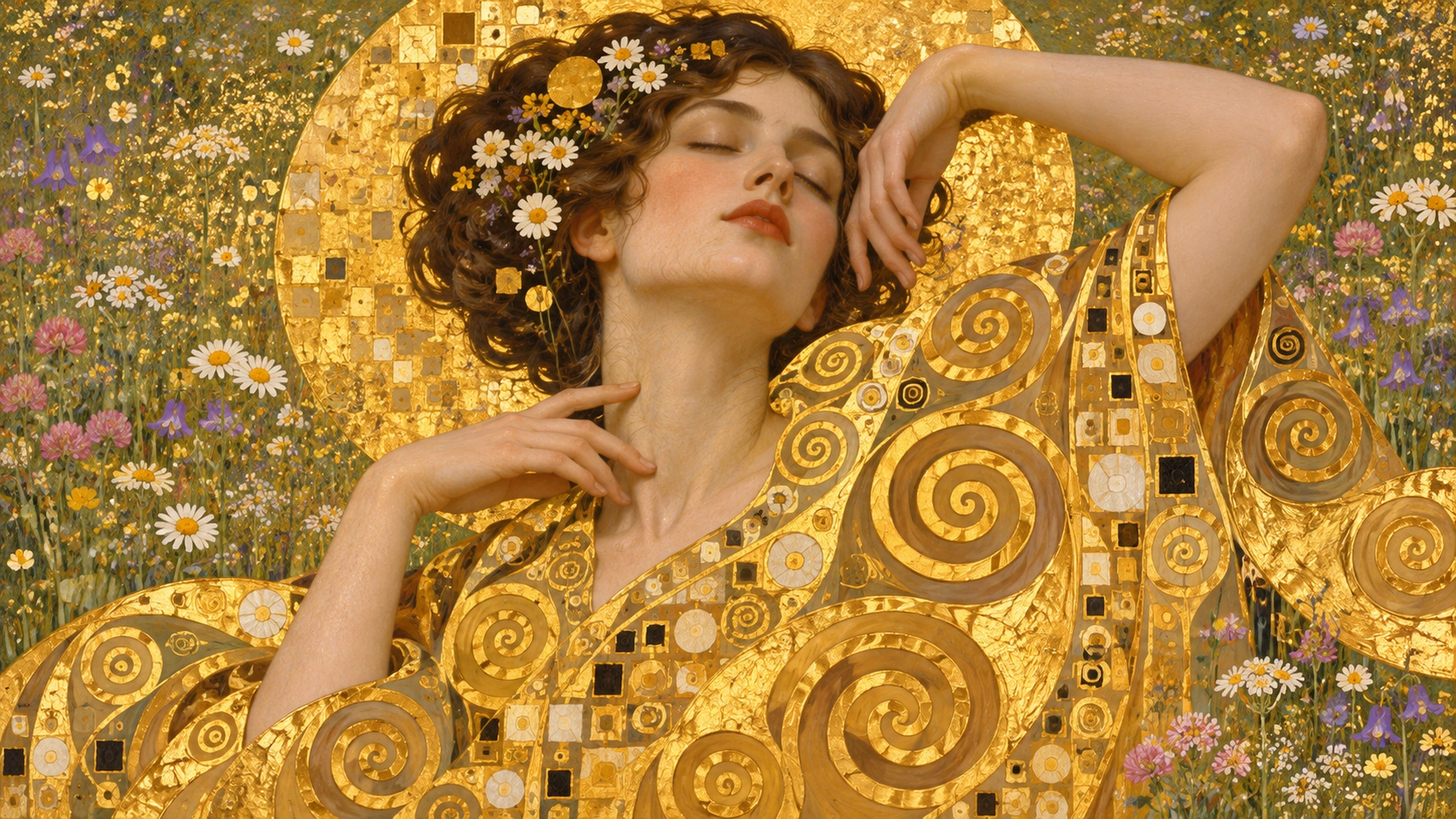
In Persian, zar (gold) and zard (yellow) share an old root, and gold runs through Persian art: tala-hal painted skies, tazhib illumination, gilded tiles. Byzantine mosaics used gold to stand for heaven, Klimt wrapped figures in it, and the Japanese practice of kintsugi repairs broken pottery with lacquer and gold, making the crack the most beautiful part.
Forms of gold
Extremely thin beaten gold applied to a surface; reflective and alive.
Powdered gold mixed with a binder and painted with a brush.
A whole background of gold, as in icons and mosaics.
Gold and colour ornament in manuscripts.
Covering frames, objects or architecture with gold.
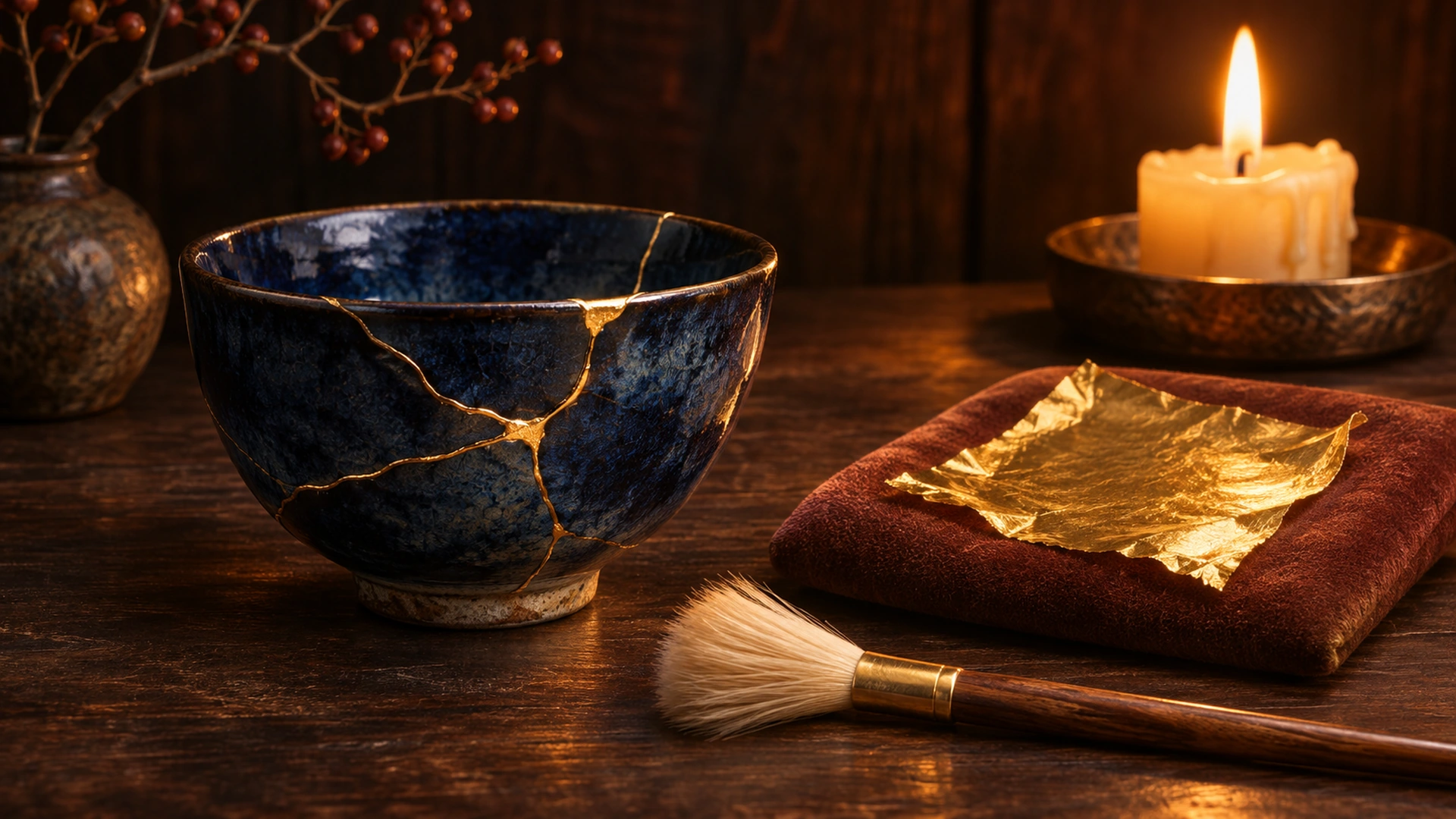
Repairing ceramics with lacquer and gold so the break becomes visible and precious.
How gold behaves
Bright reflections that move with the viewer.
Gold in shadow looks brown or almost black.
Candlelight makes gold glow; cold light flattens it.
Burnished gold is smooth and mirror-like; matte or tooled gold catches light in patterns.
Gold on screens and in print
Digital gold needs gradients and highlights to look metallic.
In print, real metallic effects come from foil stamping or metallic inks.
A thin gold line often looks richer than large gold areas.
Words to describe Gold: Light, Leaf and Repair
Precise words for the qualities above. Combine a few of them instead of naming the style or artist alone.
- burnished gold leaf
- shell gold painted sky
- Byzantine gold ground
- tazhib illumination in gold and lapis
- Klimt-like gold ornament
- kintsugi golden repair
- moving specular highlights
- warm candlelit glow
- gold foil stamping
- thin gold line on deep blue
'A small ceramic bowl repaired with kintsugi: thin branching lines of burnished gold following the cracks, a deep indigo glaze around them, warm low light catching the gold, a dark wooden surface.'
How to describe Gold: Light, Leaf and Repair in words
- Say how the gold is made: leaf, shell gold, foil, paint.
- Describe its light: burnished and mirror-like, matte, glowing, dark.
- Name what surrounds it; gold needs dark or deep colours to shine.
Where we usually get it wrong
Describing gold as 'yellow' or using a flat yellow-brown makes it dead. Gold is defined by reflection and contrast: highlights, darker tones and the deep colours around it, such as lapis blue, black or deep red.
Look at a gold ring, a spoon or a frame under three lights: a window, a lamp and a phone torch. Describe how the gold changes each time, using words for reflection, not only colour.
Sources and further reading
- Victoria Finlay, Colour: Travels Through the Paintbox (2002), chapter on gold.
- Christy Bartlett, Flickwerk: The Aesthetics of Mended Japanese Ceramics (2008).