The oldest image
The first images people made were lines: animals traced on cave walls at Chauvet and Lascaux, figures on Greek vases, the outlines of Egyptian reliefs. Before colour or shading, a line separates a thing from its ground and says where an edge is, even though edges do not exist in nature as lines.
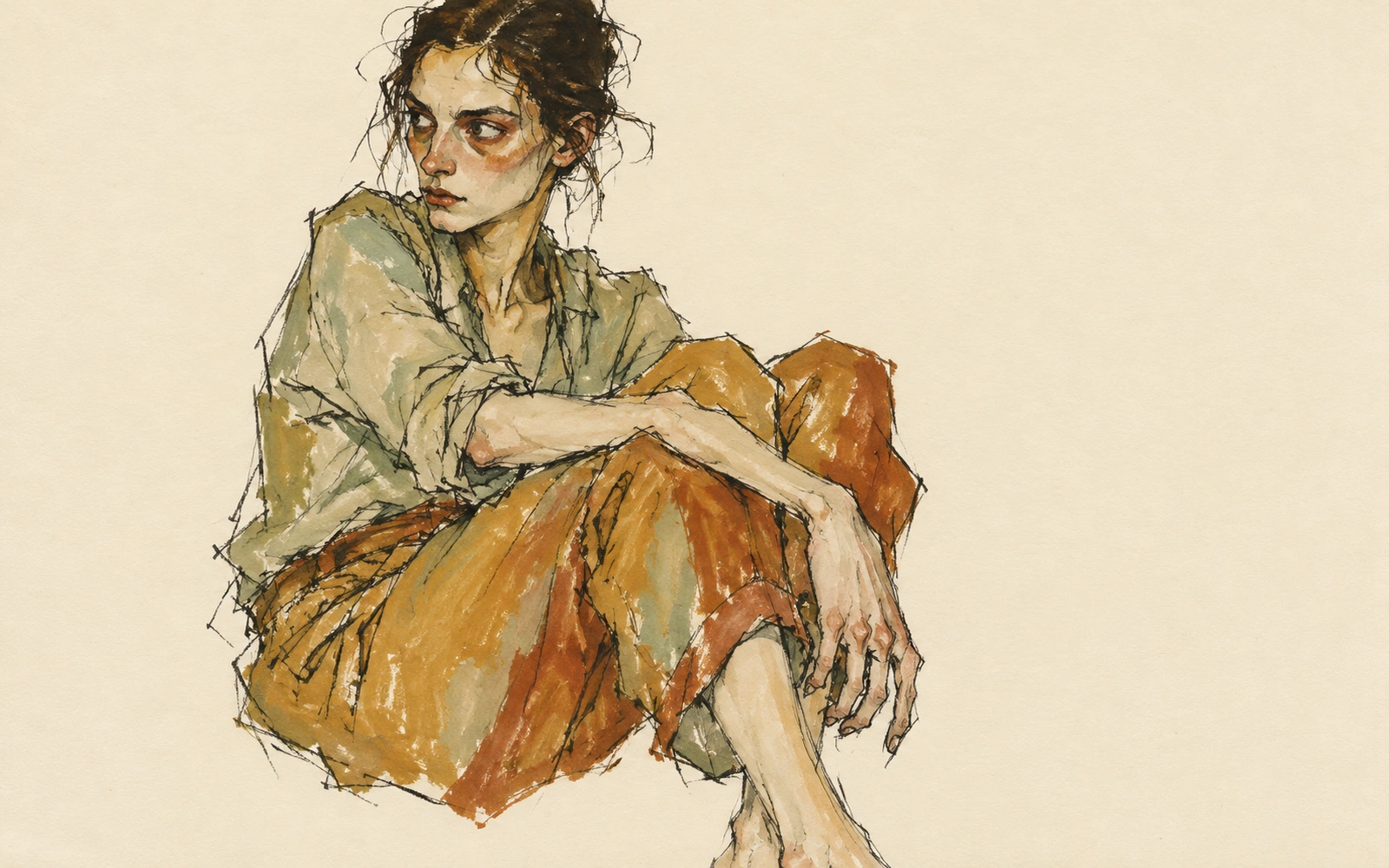
Every tradition developed its own line. East Asian brush painting valued the living, varied line made in one breath. Medieval European manuscripts used fine pen outlines. Dürer and Rembrandt built light from hatching in prints. In the 20th century Matisse reduced figures to a few pure contours, Picasso drew animals in one unbroken line, and Saul Steinberg and Al Hirschfeld made line a form of wit.
Today line art means many things: the clean inked outlines of comics and animation before colour, single-line tattoos and wall art, technical drawings, icons, and the 'one line' minimal portraits that circulate online. What unites them is that the line does all the work.
Visual anatomy of line art
The outer edge of a form, and the inner edges where planes turn.
Thick and thin: heavier lines for near, shadowed or important edges; lighter for far and lit ones.
One unbroken line, or many separate strokes; broken lines can suggest light hitting an edge.
Fast lines are springy and tapered; slow lines are careful and even.
Parallel lines for tone; cross-hatching for darker values; stippling with dots.
The empty paper is part of the drawing; what is left out shapes what is seen.
Words for line
Drawing the edges of forms without shading.
Drawing while looking only at the subject, never the paper.
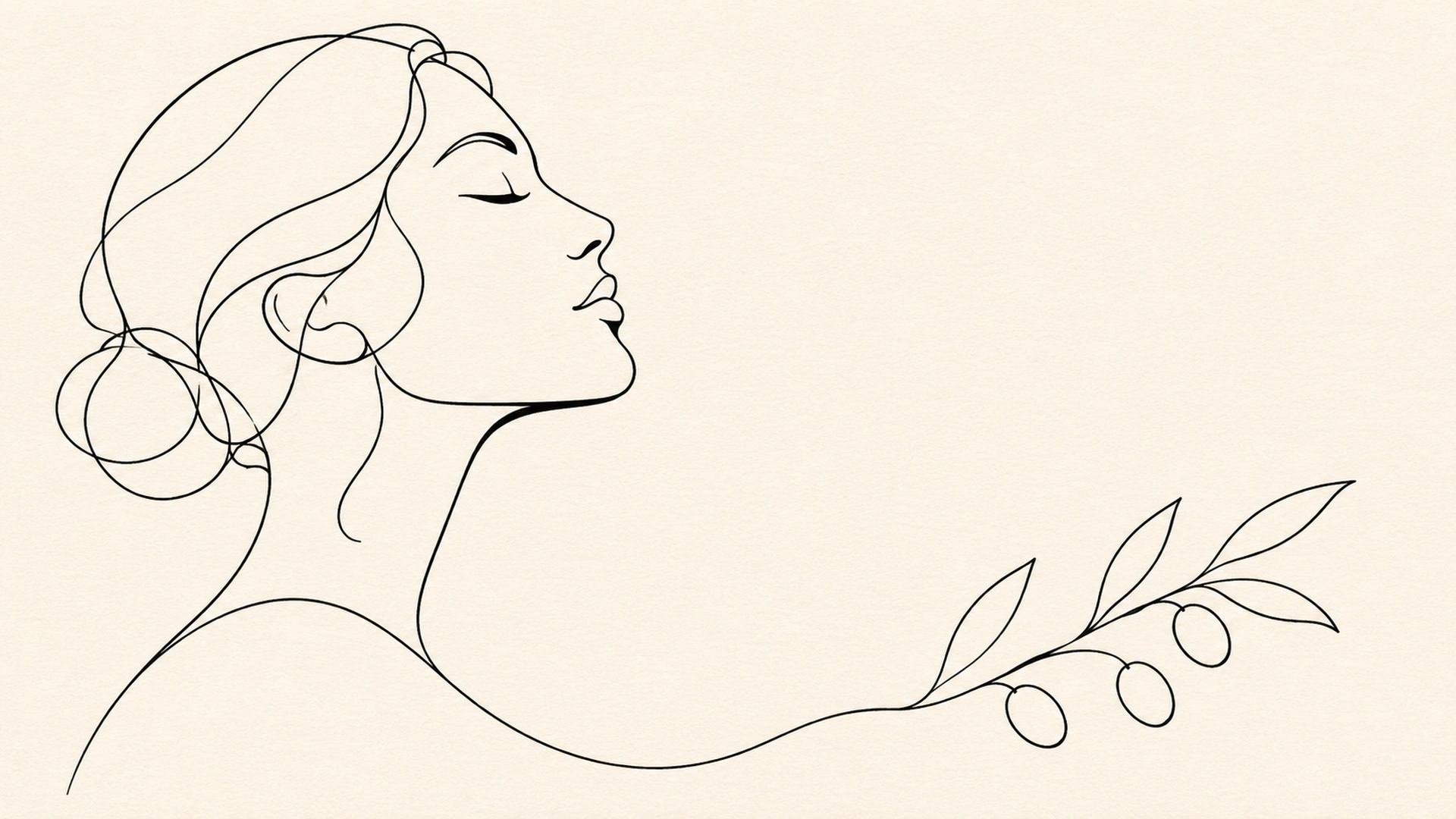
A drawing made without lifting the pen.
The varying thickness of a line, used for depth and emphasis.
How to recognize line art
- No fills, no gradients: only lines on a plain ground.
- Changes of thickness that suggest depth and light.
- Large areas of empty space.
- Either one flowing line or many crisp separate strokes.
- Tone, if any, made by hatching or dots.
Where people get it wrong
Line art is often confused with any black-and-white image or with 'outline'. A uniform, even outline traced around shapes is only one kind, and usually the deadest. Good line art varies weight, speed and continuity. 'Minimalist line art' and 'one line drawing' are specific sub-styles, not the whole technique.
Words to describe line art
Precise words for the qualities above. Combine a few of them instead of naming the style or artist alone.
- clean line art
- single continuous line
- line weight variation
- tapered brush line
- fine technical pen
- contour drawing
- cross-hatching
- stippling
- negative space
- no shading
- black ink on white paper
- minimalist line drawing
A portrait of a woman drawn in a single continuous black line with a fine felt-tip pen, the line thickening slightly under the jaw and around the eyes, no shading, no fill, the hair suggested by three loose loops, lots of white paper around the face.
What to take from line art today
- Specify the line, not just 'line art': thin even pen, tapered brush, broken pencil.
- Ask for line weight variation: heavier underneath and in shadow.
- Say how much empty space to leave.
- Name the tool: technical pen, brush pen, dip nib, pencil, single continuous line.
Questions about line art
What is the difference between line art and a sketch?
A sketch is a quick, exploratory drawing with searching, often messy lines. Line art is usually finished and deliberate: clean, intentional lines, often inked over a sketch, with no colour or shading.
What is line weight in line art?
The variation in a line's thickness. Thicker lines are used for outer edges, areas in shadow, close objects and points of emphasis; thinner lines for interior detail, lit edges and distant things. It gives a flat drawing depth.
How do you describe line art in a prompt?
Name the tool and the line quality, then the amount of detail and space: for example 'single continuous black line, fine felt-tip, no shading, generous white space'. Avoid only 'line art', which gives a generic even outline.
Draw or find a simple object, a cup or a hand. Describe it three times using only line words: once as a slow even technical line, once as a fast tapered brush line, once as one unbroken line. Notice how the object's character changes each time.
Sources and further reading
- Philip Rawson, Drawing, University of Pennsylvania Press, 1987.
- Kimon Nicolaïdes, The Natural Way to Draw, Houghton Mifflin, 1941.
- The Museum of Modern Art: Matisse and Picasso drawing collections.
- Betty Edwards, Drawing on the Right Side of the Brain, 4th ed., TarcherPerigee, 2012.