A place is layers, weather and use
Environment artists in film and games build places in layers: the ground, the big shapes, the light and weather, then the small signs that people or animals live there. A prompt like 'beautiful forest' gives the model nothing to build with. Naming the type of place, its layers of depth, its materials and what has happened there turns a backdrop into a world.
The same structure works for wild landscapes, cities and interiors, and for real or invented places.
Type and structure
Not 'forest' but 'a wet beech forest in autumn', 'a terraced rice valley', 'a 1960s concrete housing estate'.
The big forms: cliffs, dunes, a river bend, rows of towers, a long corridor.
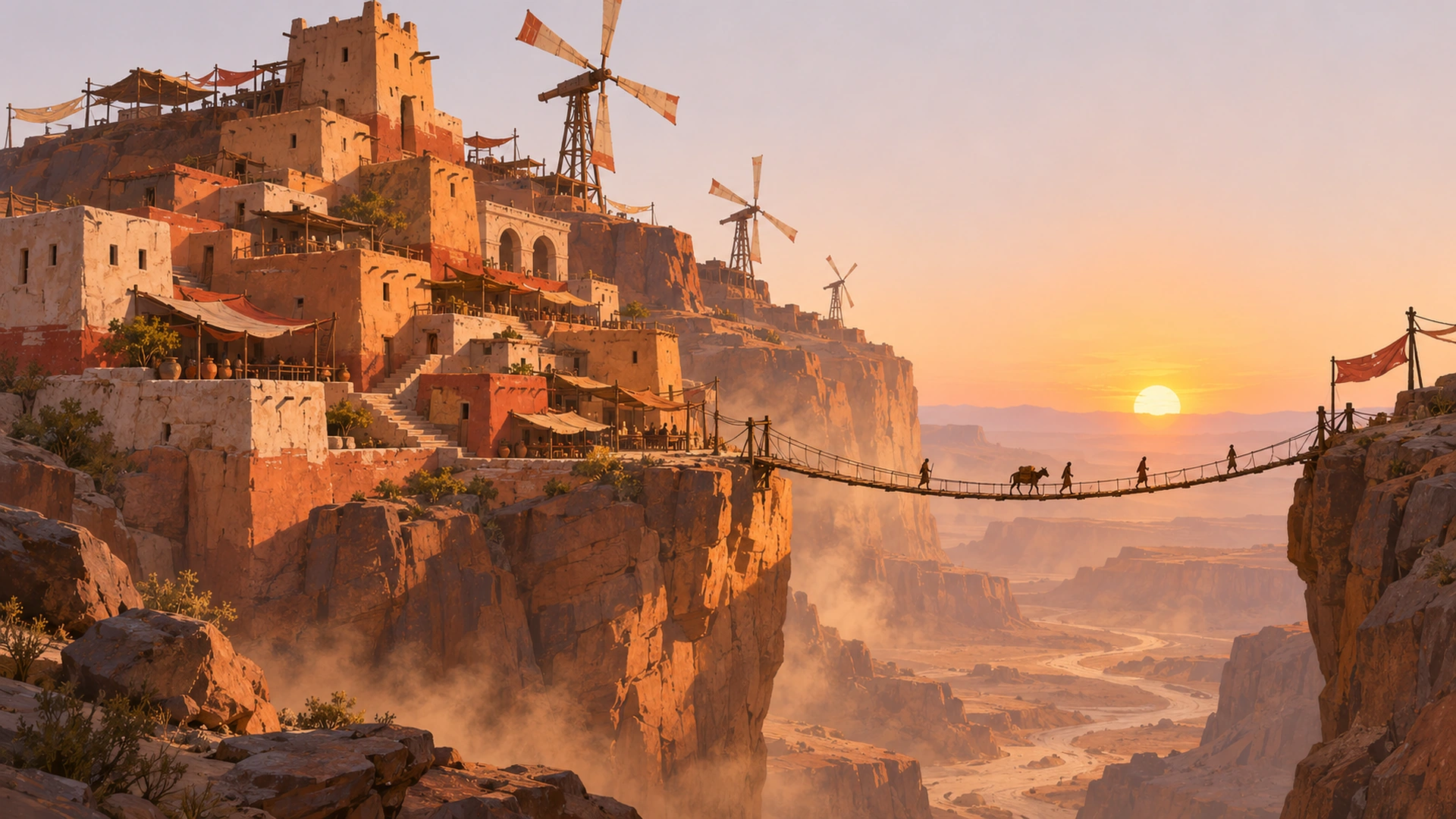
Foreground, middle ground and background: ferns close up, a path in the middle, mountains far away.
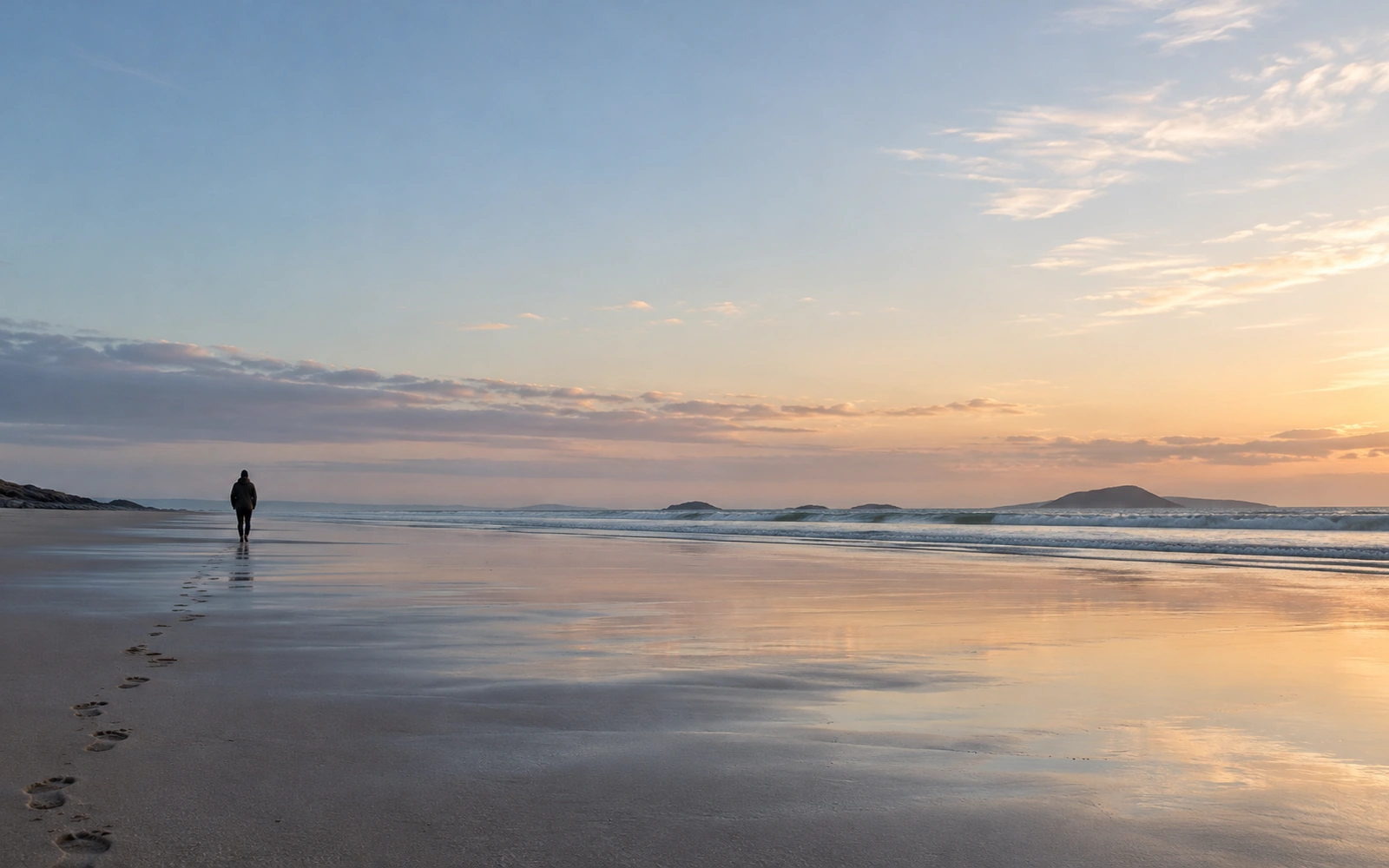
Something of known size, a person, a door, a bicycle, to show how big the place is.
Light, weather and time
Dawn, harsh noon, golden hour, blue hour, night; each changes colour and shadow.
Drizzle, heat haze, low cloud, fresh snow, wind bending grass.
Spring green, summer dust, autumn colour, winter bareness.
Haze makes far things paler and bluer; it is what makes distance believable.
Materials and water
Cracked clay, wet cobblestones, pine needles, black volcanic sand, worn linoleum.
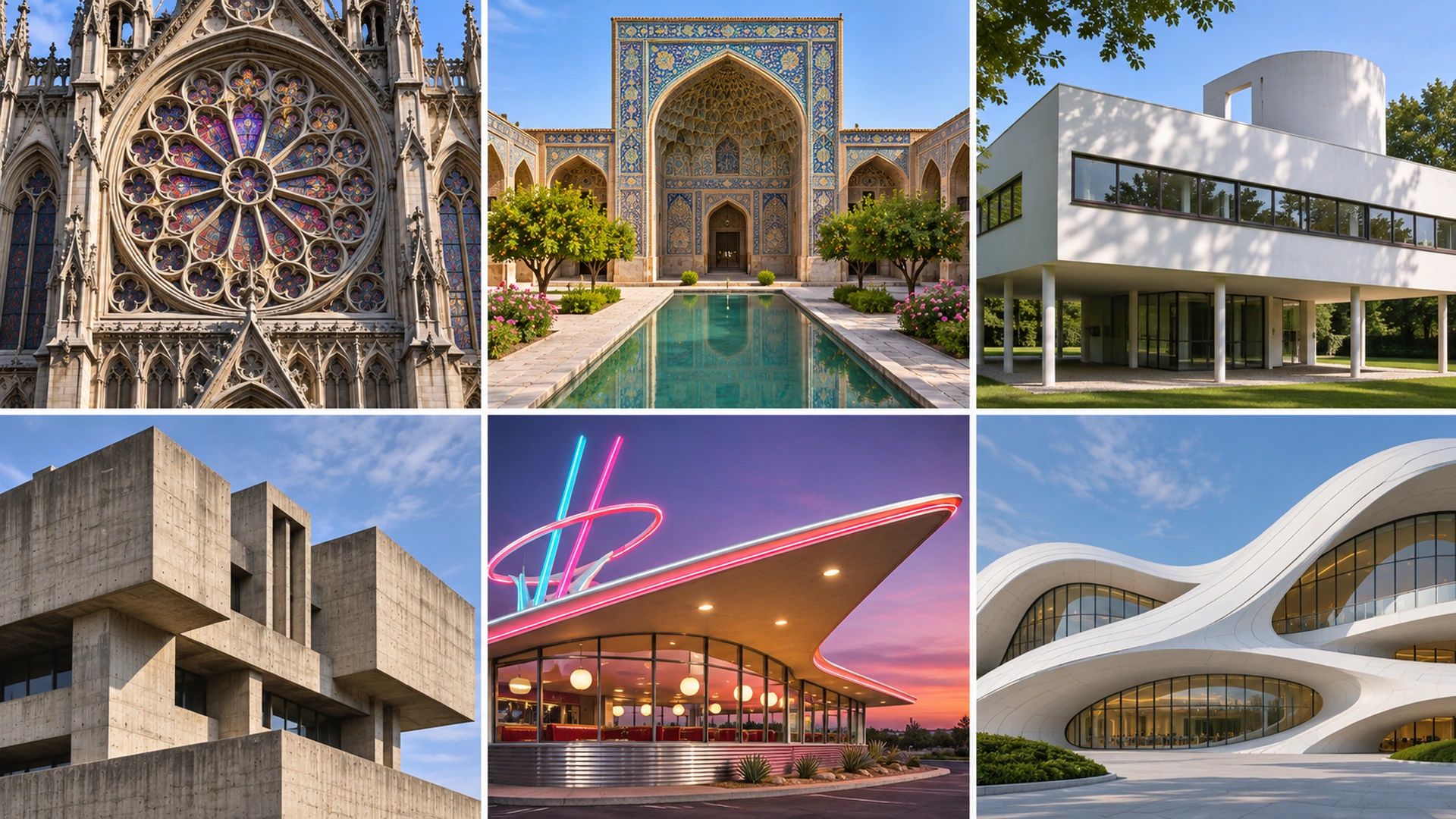
Whitewashed walls, rusted corrugated iron, glass curtain walls, carved wood.
Rivers, puddles, fountains, wet streets: reflections double the light and add depth.
Two or three dominant colours that tie the place together: ochre and sage, grey and sodium orange.
Signs of life and story
Laundry lines, a bicycle against a wall, chairs outside a café, footprints in snow.
Birds, a stray dog, weeds in cracks, ivy on ruins.
Patches, repairs, old signs, layers of paint: places show their age.
One thing to look at: a lit window, a lone tree, a bridge, a figure.
The words to describe it
Precise words for the qualities above. Combine a few of them instead of naming the style or artist alone.
- specific landscape type
- foreground middle ground background
- scale cue
- atmospheric haze
- time of day light
- weather and season
- ground material
- reflections in water
- human traces
- single focal point
Instead of 'beautiful epic mountain village', try: 'A small stone village on a steep terraced hillside in late autumn, morning mist in the valley below, washing lines between houses, a woman carrying bread up a narrow stair in the foreground, snow-capped peaks pale in the far distance, soft grey light.'
How to put it into words
- Name the specific type of place and its big shapes.
- Describe three layers of depth and one object that shows scale.
- Add time, weather and two signs that someone lives or has lived there.
Where we usually get it wrong
Environment prompts often stack 'epic, vast, breathtaking, detailed' and get the same postcard every time. Depth, scale and signs of use make a place believable; adjectives about how impressive it is do not.
Describe a street you know well in three versions: dawn in winter, noon in summer, and night after rain. Keep the place identical and change only light, weather and the signs of life.