Seeing it before it exists
Concept art is the design work done before a film, game or animated series is produced. Concept artists explore what places, characters, creatures, vehicles and props could look like, then refine the chosen directions so modellers, set builders and animators can make them. The field grew with mid-century animation studios and science fiction cinema, and exploded with video games.
Its working methods are very practical: many small thumbnails to explore ideas fast, keyframes that show a mood moment of the story, orthographic sheets with callouts for production, and paintovers on 3D blockouts. Classic names include Ralph McQuarrie, whose paintings shaped Star Wars, and Syd Mead, the 'visual futurist' of Blade Runner. Gen AI tools now appear in early exploration, which makes clear design thinking even more valuable.
Visual anatomy of concept art
Small, fast value sketches to explore composition and silhouette.
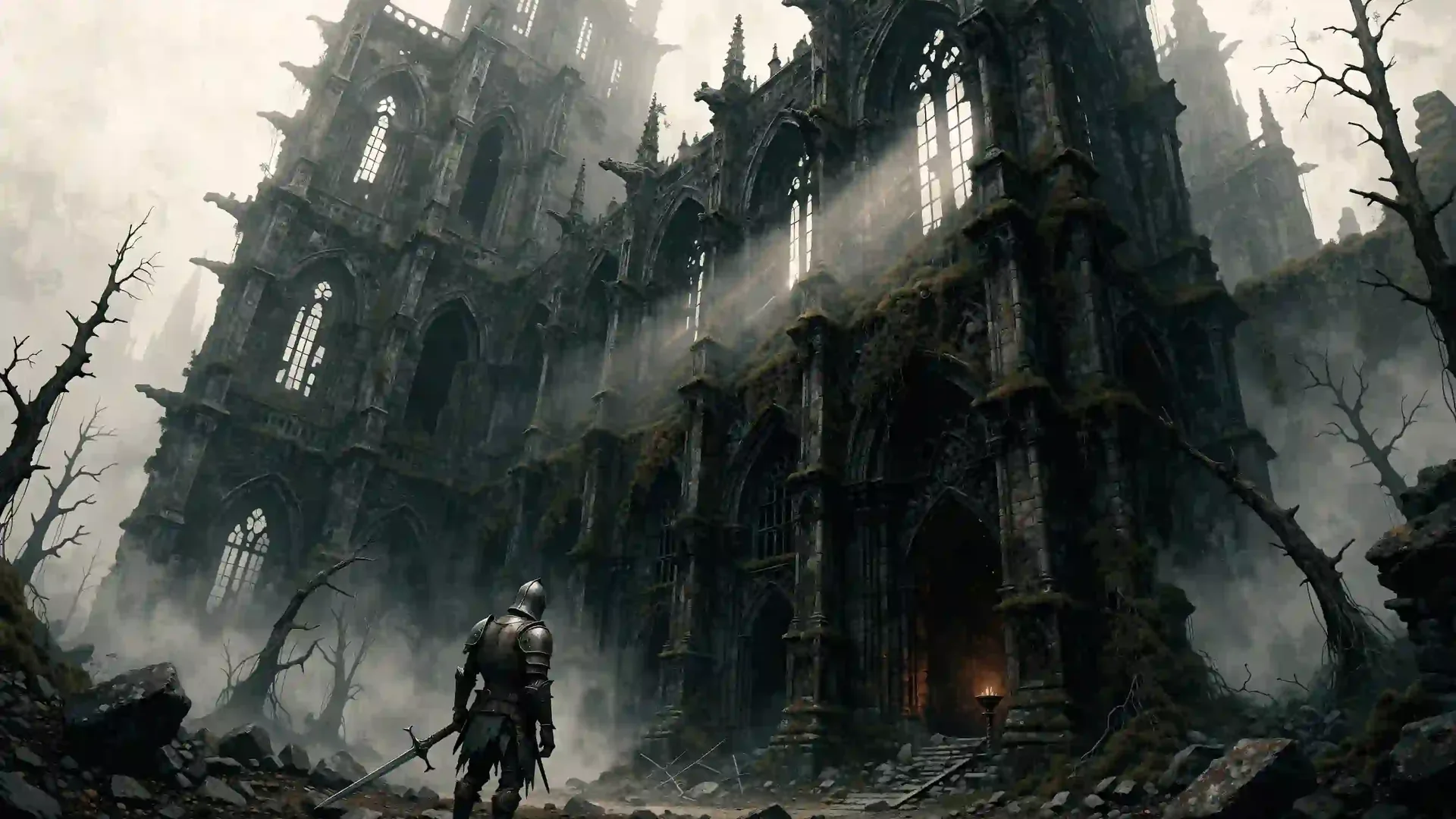
Finished-looking paintings of key story moments, focused on mood and light.
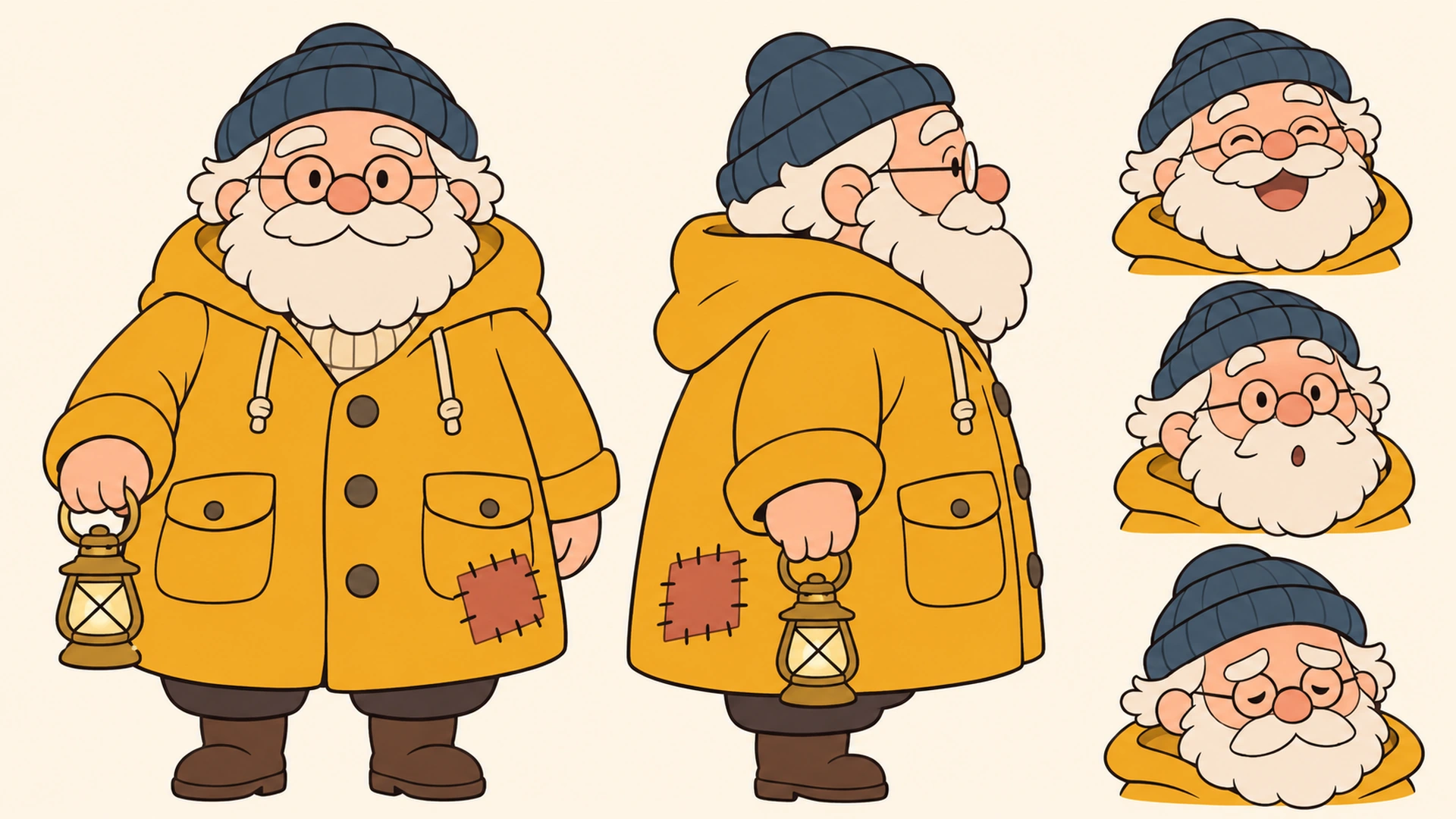
Characters, props or vehicles from several angles, with callouts and materials.
Readable shapes that work in black alone.
Tiny figures or familiar objects to show the size of a world.
Designs that look buildable and usable, with logic behind every part.
Key terms in concept art
The broad phase of exploring a project's look.
Painting on top of a 3D render or photo to develop a design.
A labelled detail showing a material, mechanism or variation.
A collection of references that sets the direction before design.
How to recognize concept art
- Painterly but purposeful images with clear silhouettes.
- Strong scale cues and atmosphere.
- Design sheets with views and callouts.
Where people get it wrong
Concept art is often reduced to 'epic fantasy illustration'. In production it is a design tool: the question is whether a team can build from it. Readable silhouettes, clear materials and logic matter more than polish.
Words to describe concept art
Precise words for the qualities above. Combine a few of them instead of naming the style or artist alone.
- concept art
- environment keyframe
- thumbnail sketches
- character design sheet
- orthographic views with callouts
- readable silhouette
- scale figure
- matte painting
- paintover on 3D blockout
- production design
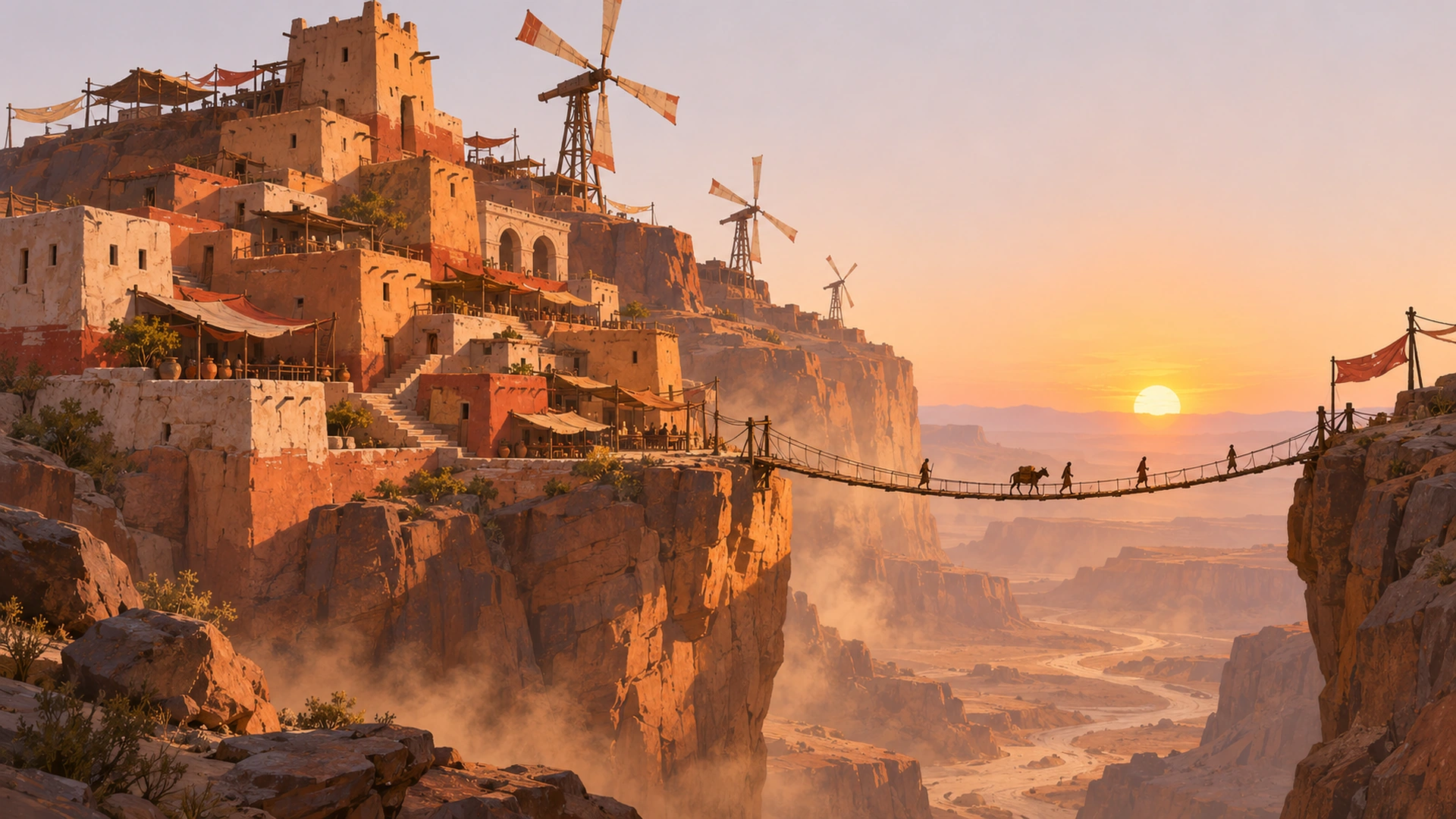
An original environment concept art keyframe: a cliffside town of stacked adobe houses and wind turbines above a dry canyon at sunrise, tiny figures crossing a rope bridge for scale, dust in warm low light, painterly but clear shapes, a strong silhouette against a pale sky. No text.
What to take from concept art today
- Say which deliverable: thumbnail, keyframe or design sheet.
- Describe silhouette, scale cue and light.
- Add function: how the thing is built or used.
Questions about concept art
What is concept art?
Designing worlds before they are built: thumbnails, keyframes, character sheets and prop designs that let film, game and animation teams see an idea before making it.
How do you recognize concept art?
Painterly but purposeful images with clear silhouettes. Strong scale cues and atmosphere. Design sheets with views and callouts.
How do you describe concept art in words or a prompt?
Say which deliverable: thumbnail, keyframe or design sheet. Describe silhouette, scale cue and light. Add function: how the thing is built or used.
Design a small vehicle for a desert courier in words: four thumbnail ideas in one line each, then one chosen design with its silhouette, materials, scale and one callout detail.