Buildings set the scene
In any image, architecture quietly tells you when and where you are, and what kind of world it is. A pointed arch, a turquoise dome, a glass curtain wall or a boomerang roof each carry a whole period with them.
Naming the style, and then two or three of its details, is one of the fastest ways to describe a setting precisely, whether you are writing a film brief, a prompt or a location list.
Historic
Greek and Roman temples: columns, pediments, symmetry and proportion.
Thick walls, round arches and heavy, fortress-like churches (c. 1000–1150).
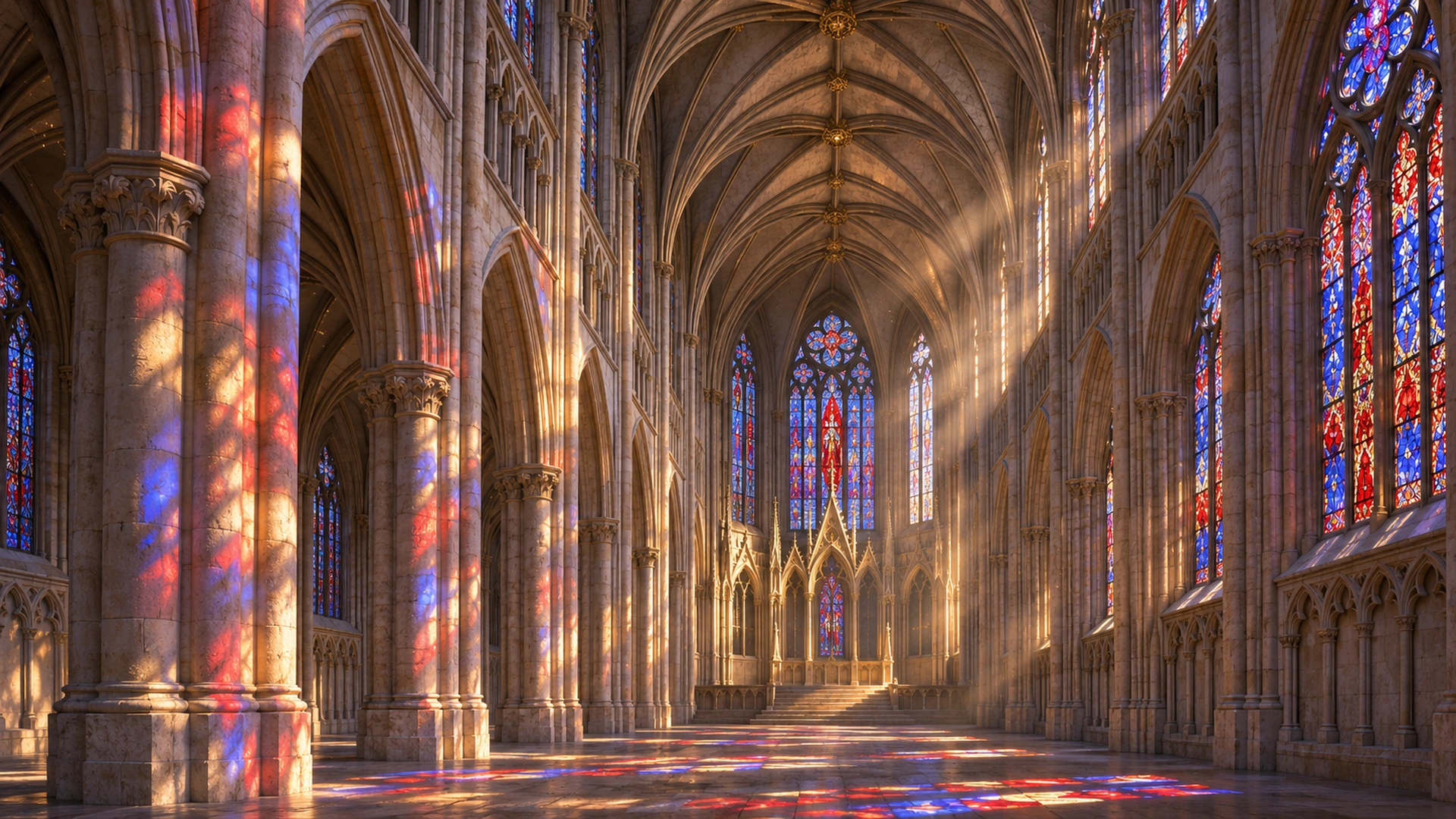
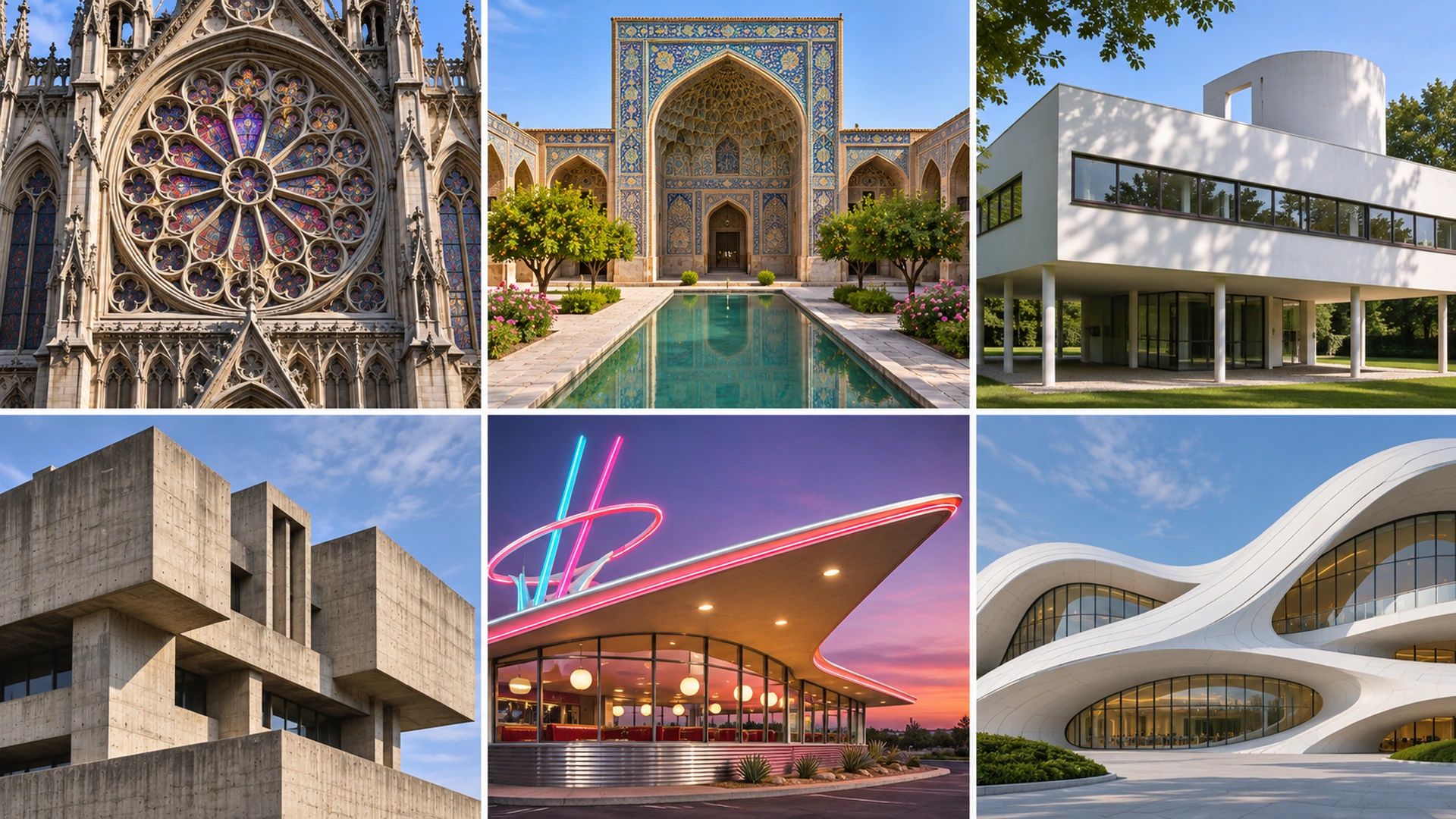
Pointed arches, flying buttresses, ribbed vaults, rose windows and soaring height.
Calm symmetry, domes, columns and proportion revived from antiquity.
Curving facades, drama, gilding and painted ceilings opening to the sky.
19th-century eclecticism: ornate brick, bay windows, cast iron and gingerbread trim.
Islamic and Persian
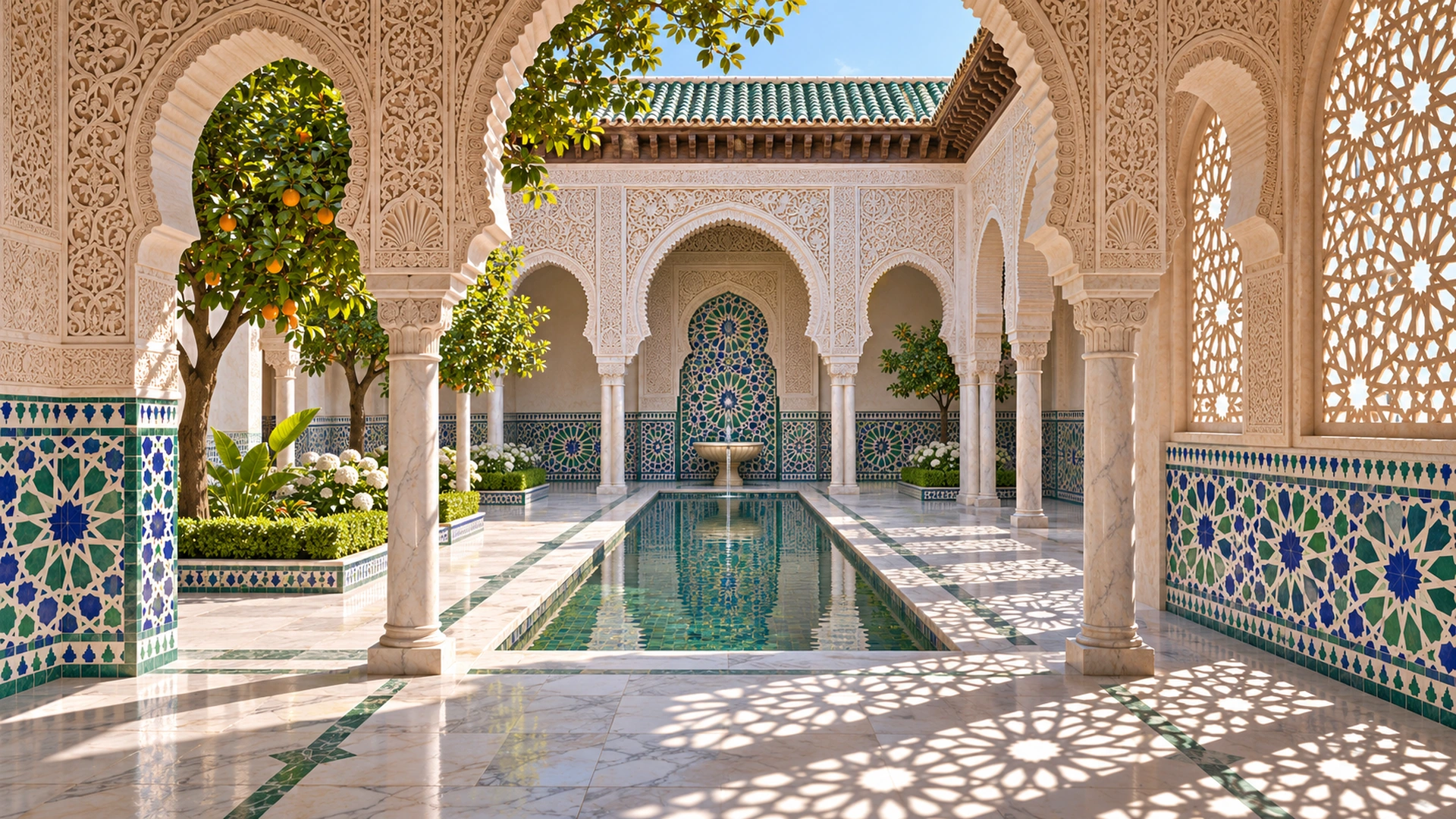
Domes, arches, courtyards and geometric and calligraphic ornament.
A vaulted hall open on one side, facing a courtyard with a pool and garden.
Honeycomb-like vaulting that breaks light into many small facets.
Glazed turquoise, lapis and yellow tiles covering domes and portals.
Towers that catch wind to cool houses in desert cities.
Modern
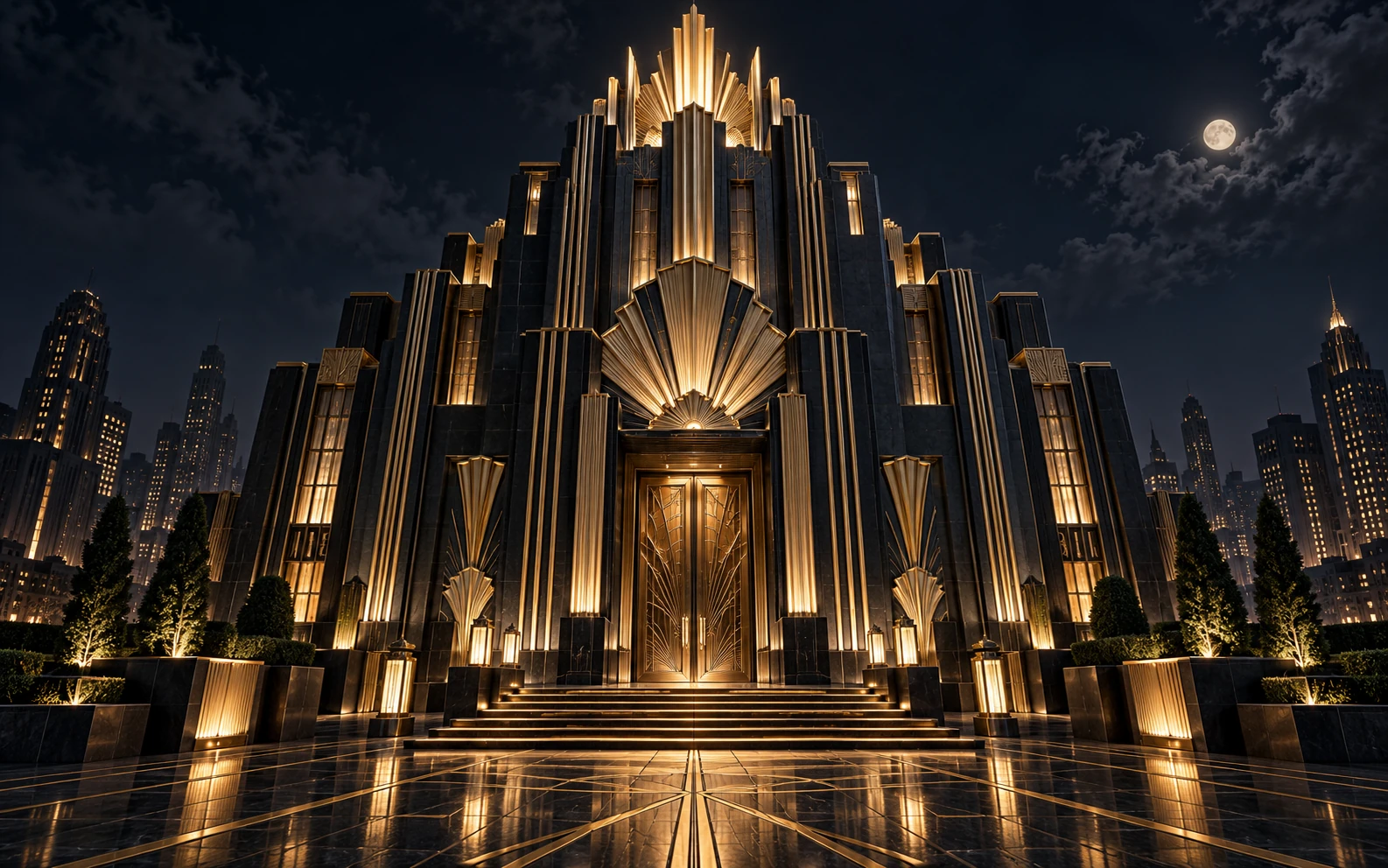
Stepped geometry and sunbursts, then smooth curves and horizontal speed lines.
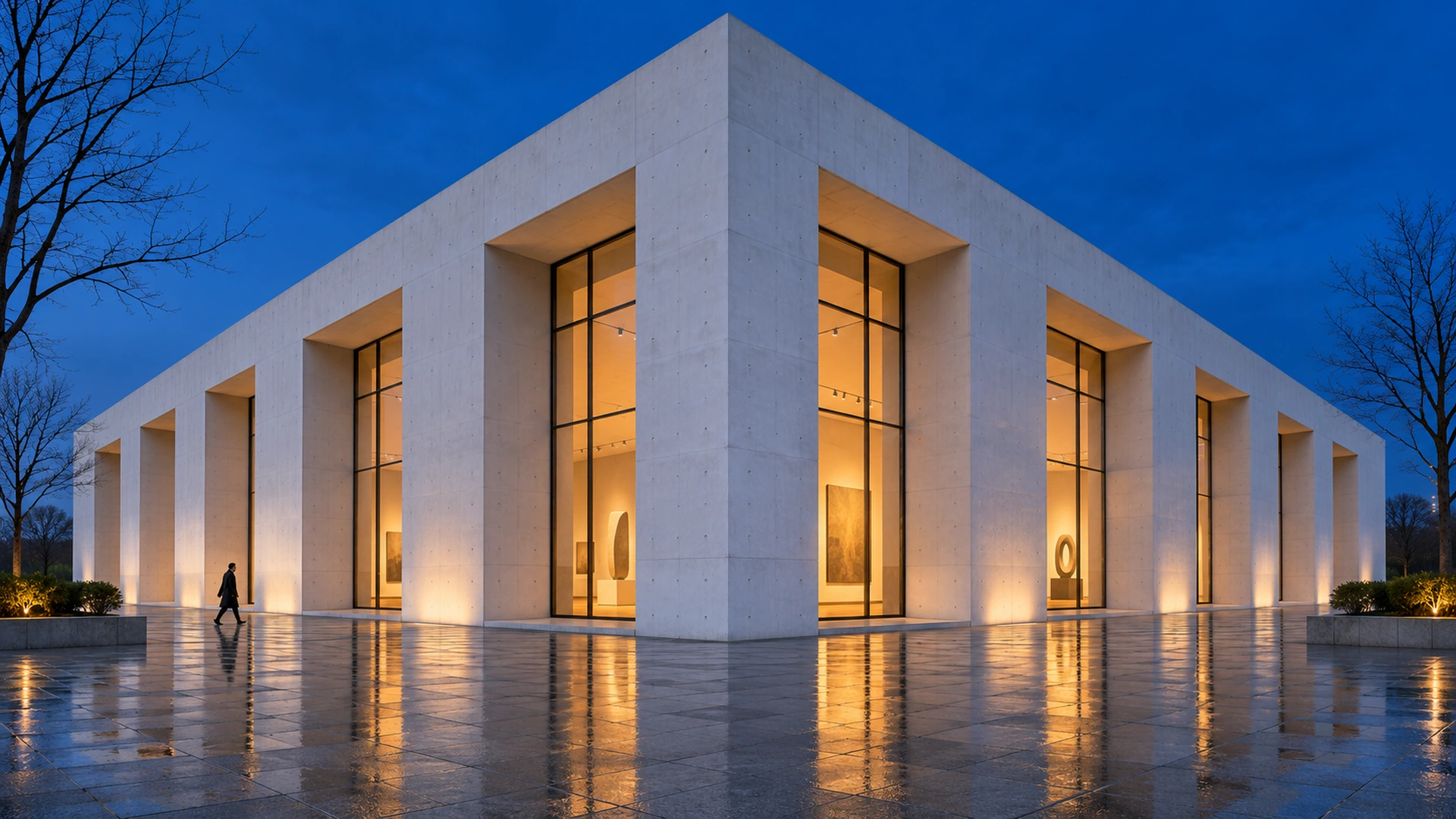
White boxes, flat roofs, ribbon windows, glass and steel; form follows function.
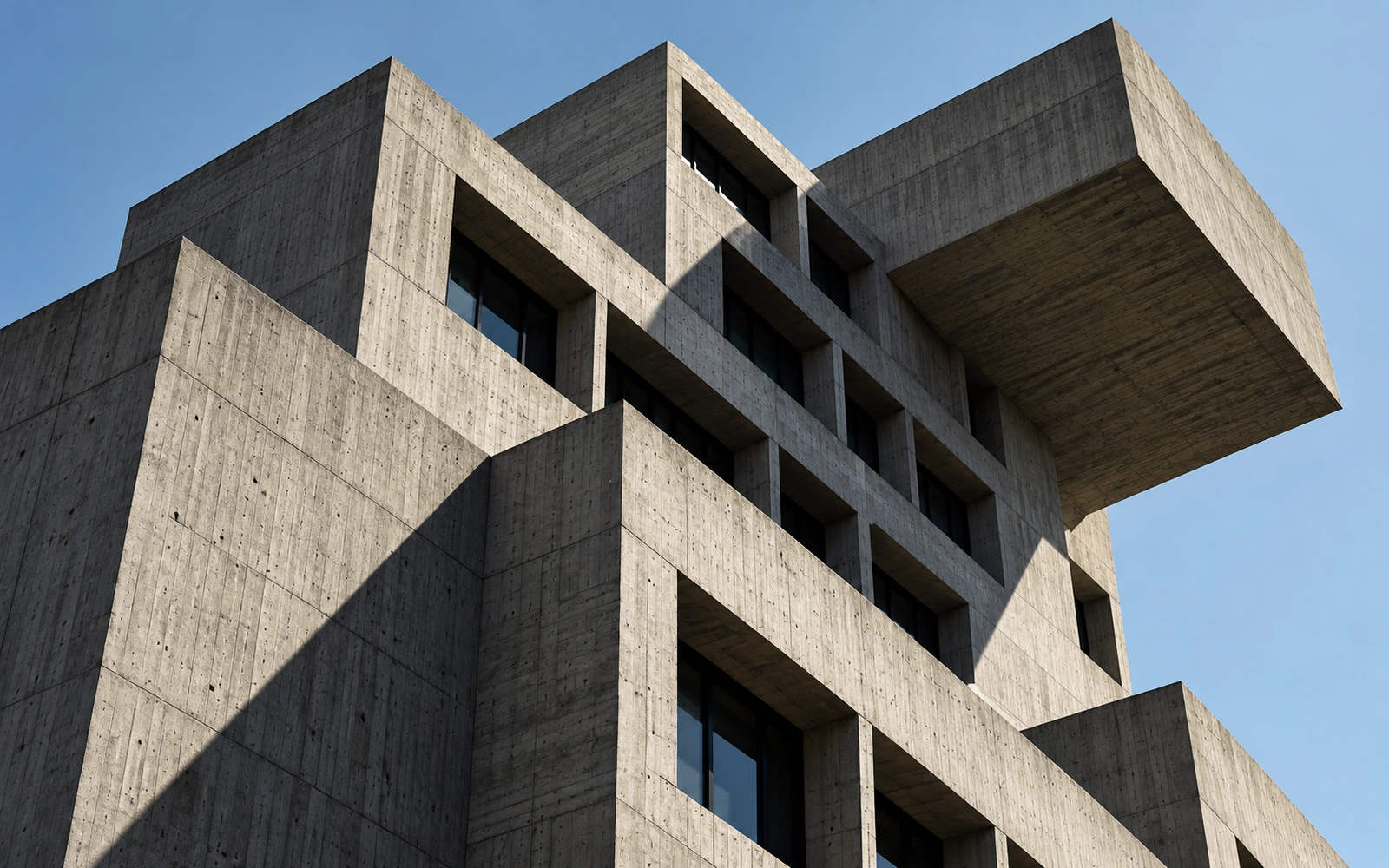
Massive raw concrete forms with deep shadows.
1950s space-age roadside style: boomerang roofs, starbursts, neon and big signs.
Playful historical references, bright colour and ironic ornament.
Recent
Exposed structure, pipes and machinery on the outside, as in the Centre Pompidou (1977).
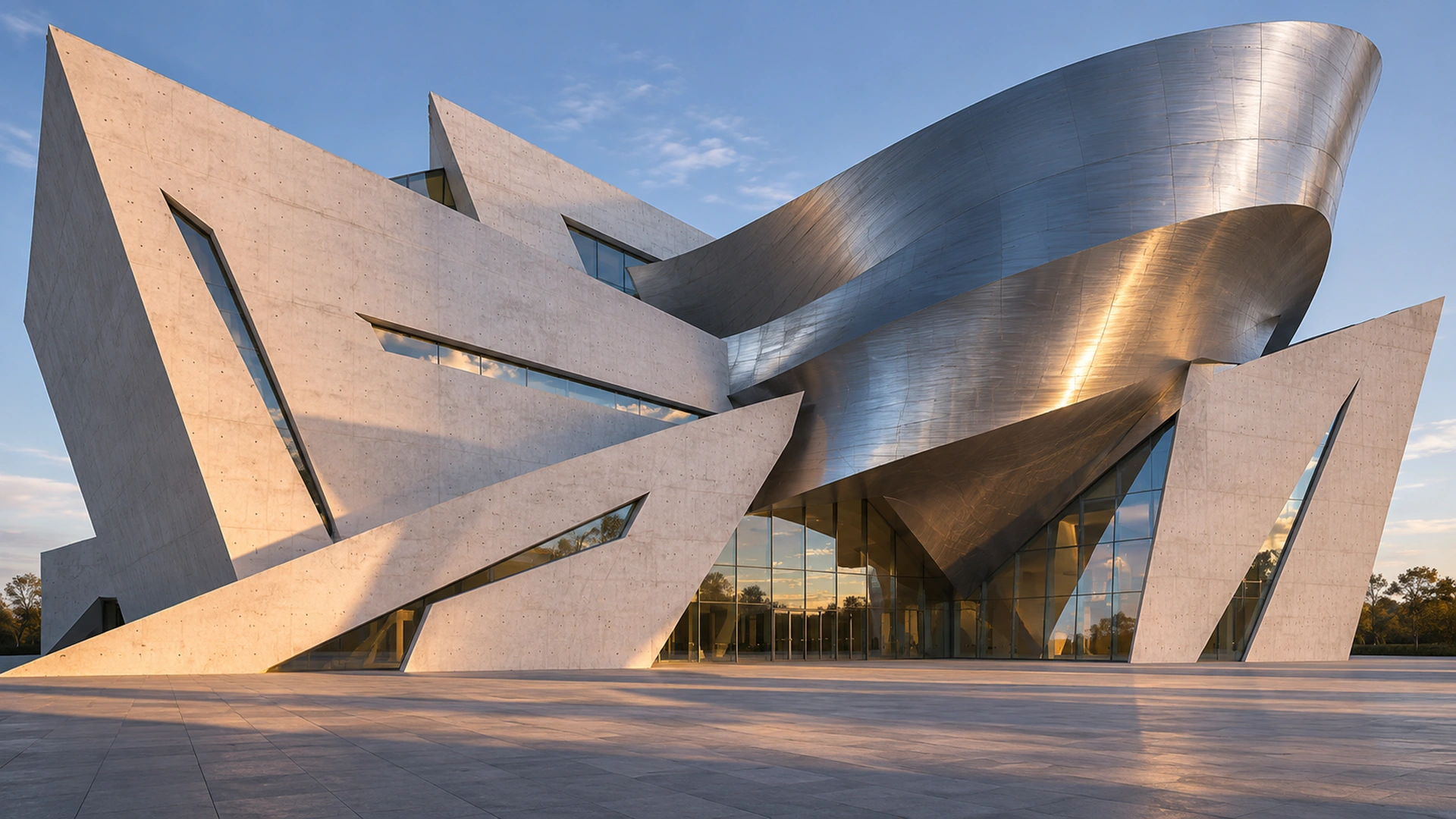
Fragmented, tilted, colliding forms, as in Frank Gehry's Guggenheim Bilbao (1997).
Flowing computer-designed curves, as in the work of Zaha Hadid.
Local, traditional buildings shaped by climate and materials, like mud brick or timber.
Words to describe architecture styles
Precise words for the qualities above. Combine a few of them instead of naming the style or artist alone.
- Gothic pointed arches
- flying buttresses
- Persian iwan and courtyard pool
- turquoise tiled dome
- muqarnas vault
- modernist white box with ribbon windows
- raw concrete brutalism
- Googie boomerang roof
- postmodern playful facade
- parametric flowing curves
A Persian courtyard house at dusk: a tall iwan with muqarnas vaulting facing a long rectangular pool, turquoise and yellow tilework on the arches, a windcatcher against a pink sky, warm lamps lit inside the rooms.
How to describe architecture styles in words
- Name the style, then two details: a pointed arch and rose window, a boomerang roof and neon.
- Add the material and its surface: stone, tile, concrete, glass.
- Say the light and the time of day; architecture changes completely with light.
Where we usually get it wrong
Style names are often mixed up: Art Deco is not Art Nouveau, and Brutalism is not any concrete building. Also, describing only 'old building' or 'modern building' tells almost nothing; one or two precise details do much more.
Questions about architecture styles
What is architecture styles?
From Gothic cathedrals to Googie diners: the architecture styles you see in films, cities and images, and the words that name their shapes.
How do you describe architecture styles in words or a prompt?
Name the style, then two details: a pointed arch and rose window, a boomerang roof and neon. Add the material and its surface: stone, tile, concrete, glass. Say the light and the time of day; architecture changes completely with light.
Choose three buildings on your daily route. For each, write the style if you can guess it, one structural detail, one material and one word for its mood.