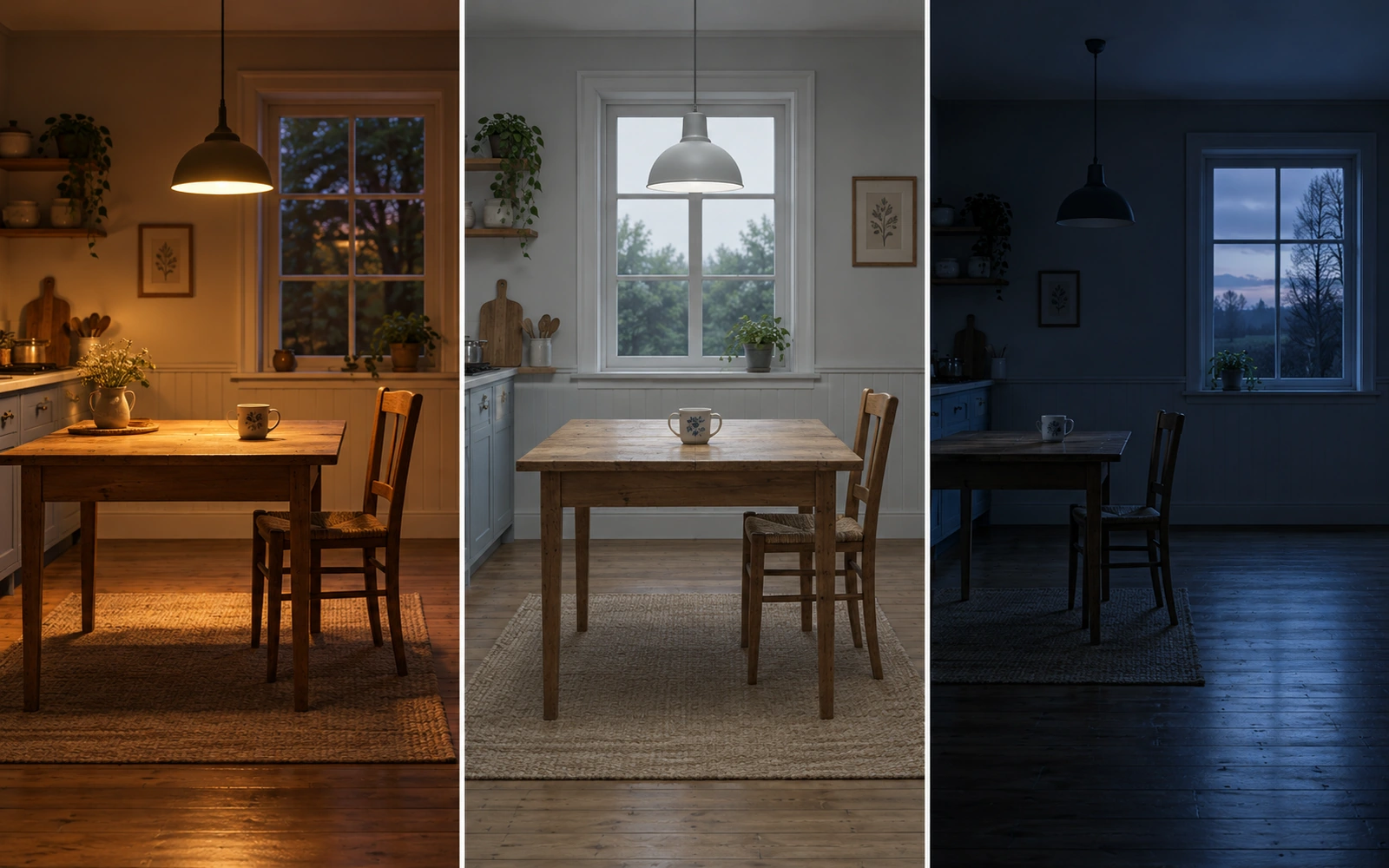
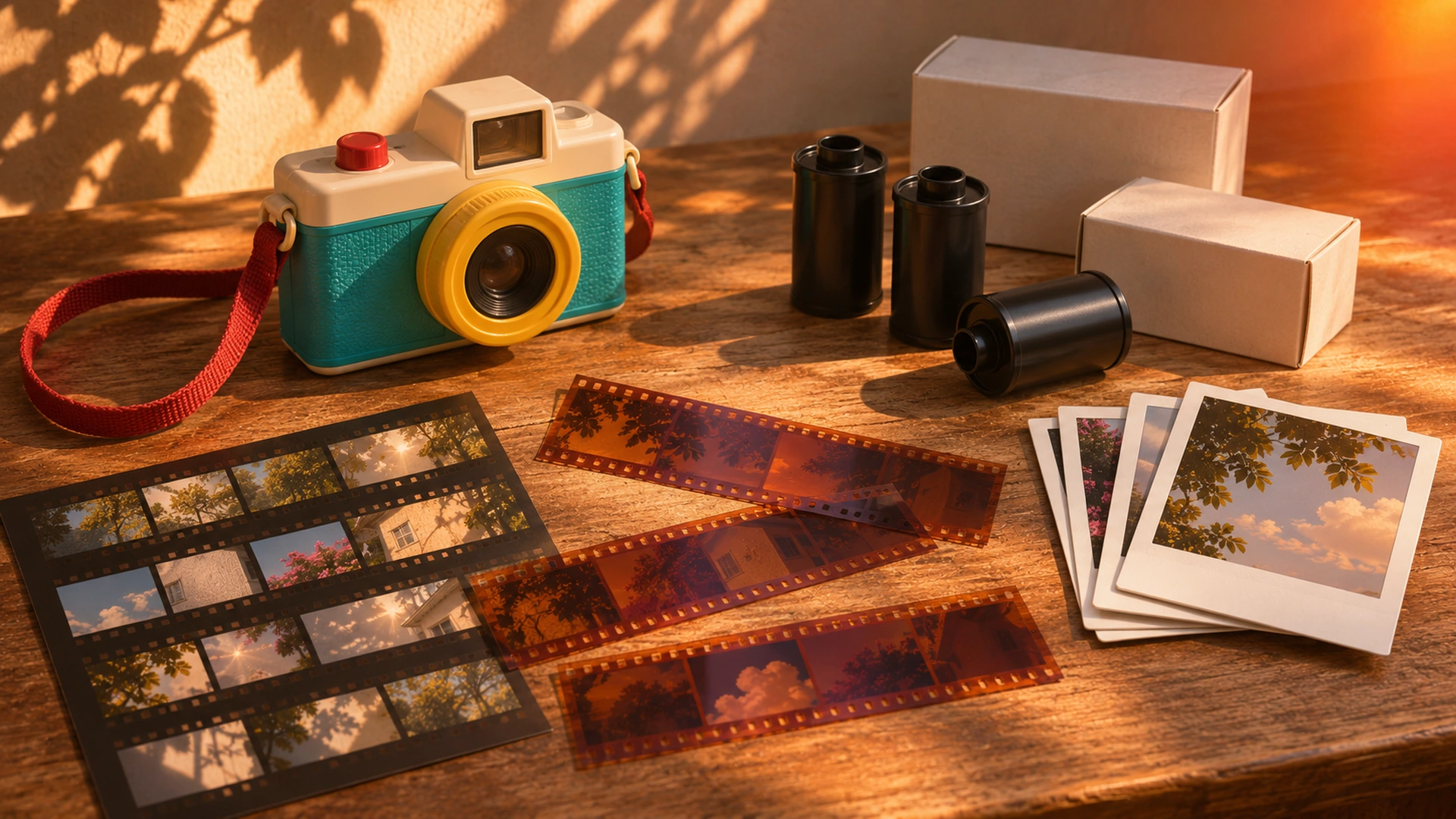
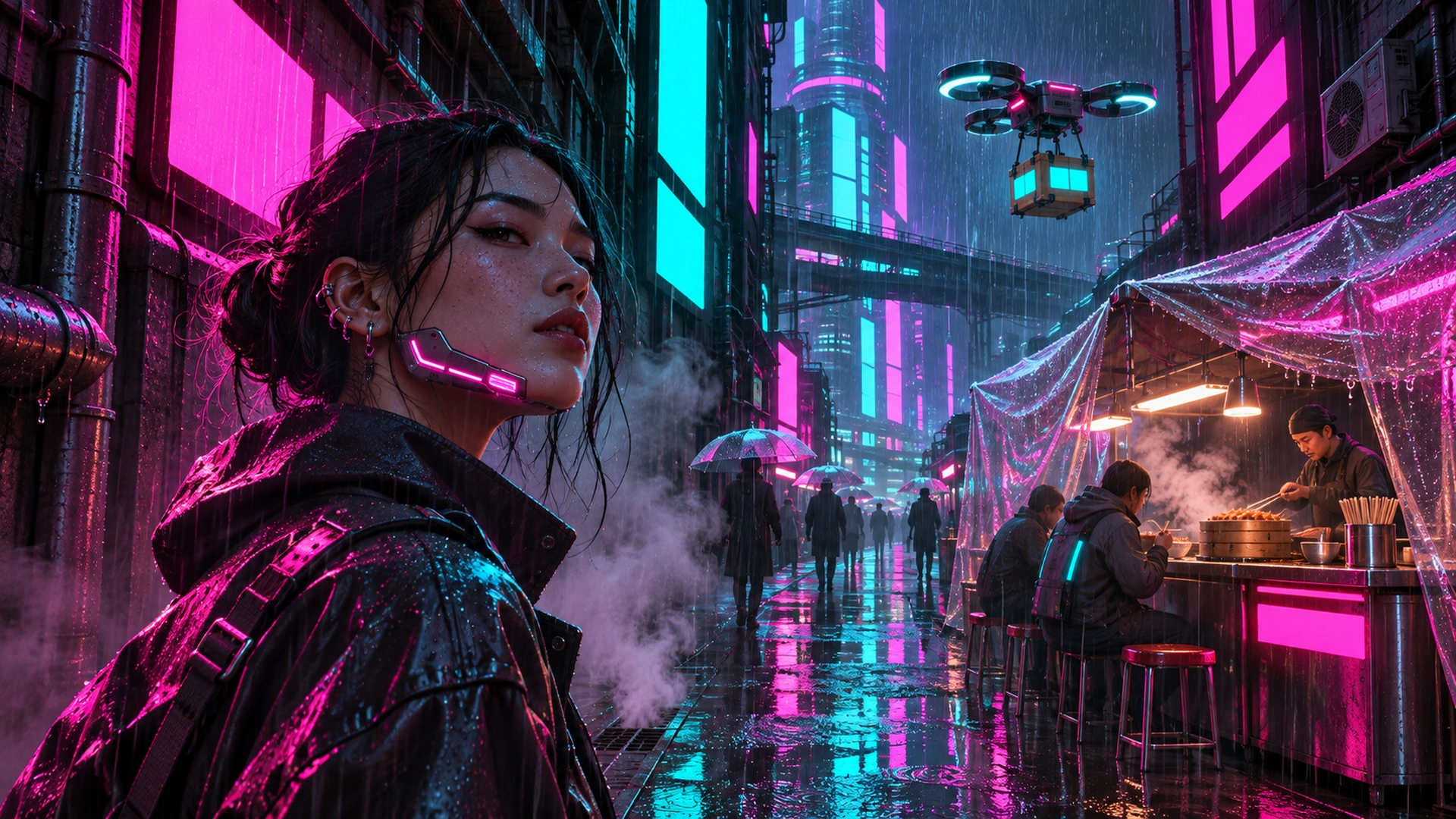
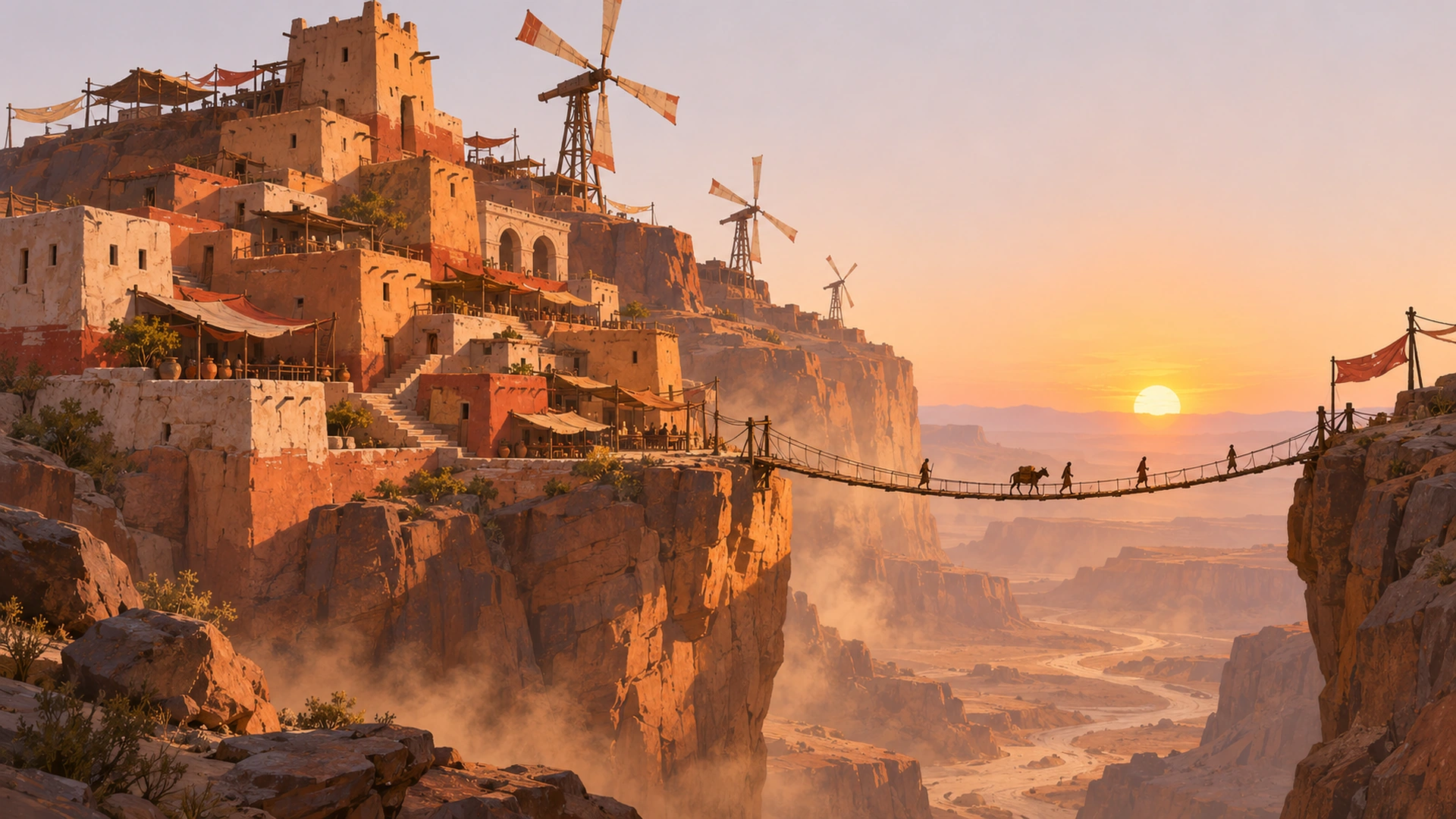
Genres are visual contracts
A genre is a promise to the viewer: this will be wondrous, this will be strange, this will frighten you, this really happened. Film, illustration and games have built strong visual codes for each promise, in light, colour, materials and shapes. Text-to-image models learned those codes too, which is why the word 'fantasy' alone pulls in glowing mist and castles.
To use a genre well, name the specific codes you want instead of the genre label, and decide which cliché you are avoiding. A good genre image keeps the promise but surprises in the details.
Fantasy
Light with an impossible source: glowing plants, floating lanterns, light leaking from cracks.
Old, handmade, natural: moss on stone, hammered bronze, woven reeds, bone, faded silk.
Huge ancient things beside small people: roots like bridges, statues half-sunk in hills.
Ground it in daily life: a market, a kitchen, a laundry day in a magical town.
Science fiction
Specific, functional machines: worn cockpits, cables taped to walls, retrofitted shuttles.
Brushed steel, ceramic panels, carbon fibre, scratched polycarbonate, dust on everything.
Screens, status LEDs, cold daylight through a dome, the glow of a gas giant.
Avoid 'futuristic city' clichés; imagine one ordinary job in the future, like a night-shift repair worker on a space station.
Horror
Fear comes from what we can't see: a doorway in darkness, a figure out of focus.
One thing slightly wrong in a normal scene: a chair facing the wall, too many shoes at the door.
Single weak sources, flashlight beams, underlighting, sickly green-yellow fluorescent tubes.
Daylight horror: an empty sunlit playground or a bright supermarket can be more unsettling than a castle.
Historical
Look at real paintings, photographs and objects from the period before describing it.
Place, decade and class: 'a fish market in Lisbon, 1890s, working women in aprons'.
Match the medium: daguerreotype, autochrome, hand-tinted postcard, fresco, woodblock print.
Models mix centuries and cultures; check costumes, scripts and architecture, and correct them.
Words to describe Prompting by Genre
Precise words for the qualities above. Combine a few of them instead of naming the style or artist alone.
- impossible light source
- weathered handmade materials
- ancient scale
- functional worn technology
- brushed steel and ceramic
- what is hidden in darkness
- one thing slightly wrong
- sickly fluorescent light
- period-accurate medium
- researched historical detail
A genre-specific prompt: 'A night-shift mechanic repairing a cleaning robot in a narrow corridor of a space station, cables taped to scratched ceramic walls, cold blue light from a small round window showing a gas giant, steam from her coffee.'
How to describe Prompting by Genre in words
- Replace the genre word with three specific visual codes.
- Name one cliché of the genre and steer away from it.
- Ground the scene in something ordinary to make the genre believable.
Where we usually get it wrong
Typing only the genre, 'epic fantasy art' or 'sci-fi scene', gives the most average image of that genre: mist, glow, towers, neon. And for historical scenes, vague prompts produce costume-party history that misinforms. Specific codes and real research make the difference.
Pick one ordinary place, a bus stop, and describe it four times: as fantasy, science fiction, horror and a historical scene from a decade you choose. Change only light, materials and one detail each time.